




Memory of Princess Mumbi is a micro-budget sci-fi odyssey that dazzles with invention while simultaneously casting an eye at the very tools that built it.
By Frank Njugi
There are films you watch and, almost immediately, something inside you sits still. Not because of the production polish or any clever seduction of the lens, but because the story is told with such unexpected invention that it startles you awake.
In a film industry as lean and perpetually self-reinventing as Kenya’s, what lingers after the credits of such a film is the insistent vision of an ecosystem figuring itself out and an industry stretching its muscles and daring, with a brightness you feel right in your chest, to imagine where new technology might carry it next.
In Memory of Princess Mumbi, Swiss-Kenyan filmmaker, Damien Hauser, turns towards a retro-futuristic Africa and lets the imagination roam. The film unfolds in the long shadow of a catastrophic war, stitching together a visual tapestry largely conjured through artificial intelligence, and one that feels both eerily speculative and uncannily intimate.
Set in 2093, the film follows Kuve (Abraham Joseph), an ambitious young director determined to document the “Great War of the 2070s”, a speculative conflict that scorched away modern technology and resurrected the African kingdoms. His journey into Umata, the geographic heart of the war’s wreckage, sees him arrive expecting ruin and instead encountering a village that has quietly rediscovered peace.
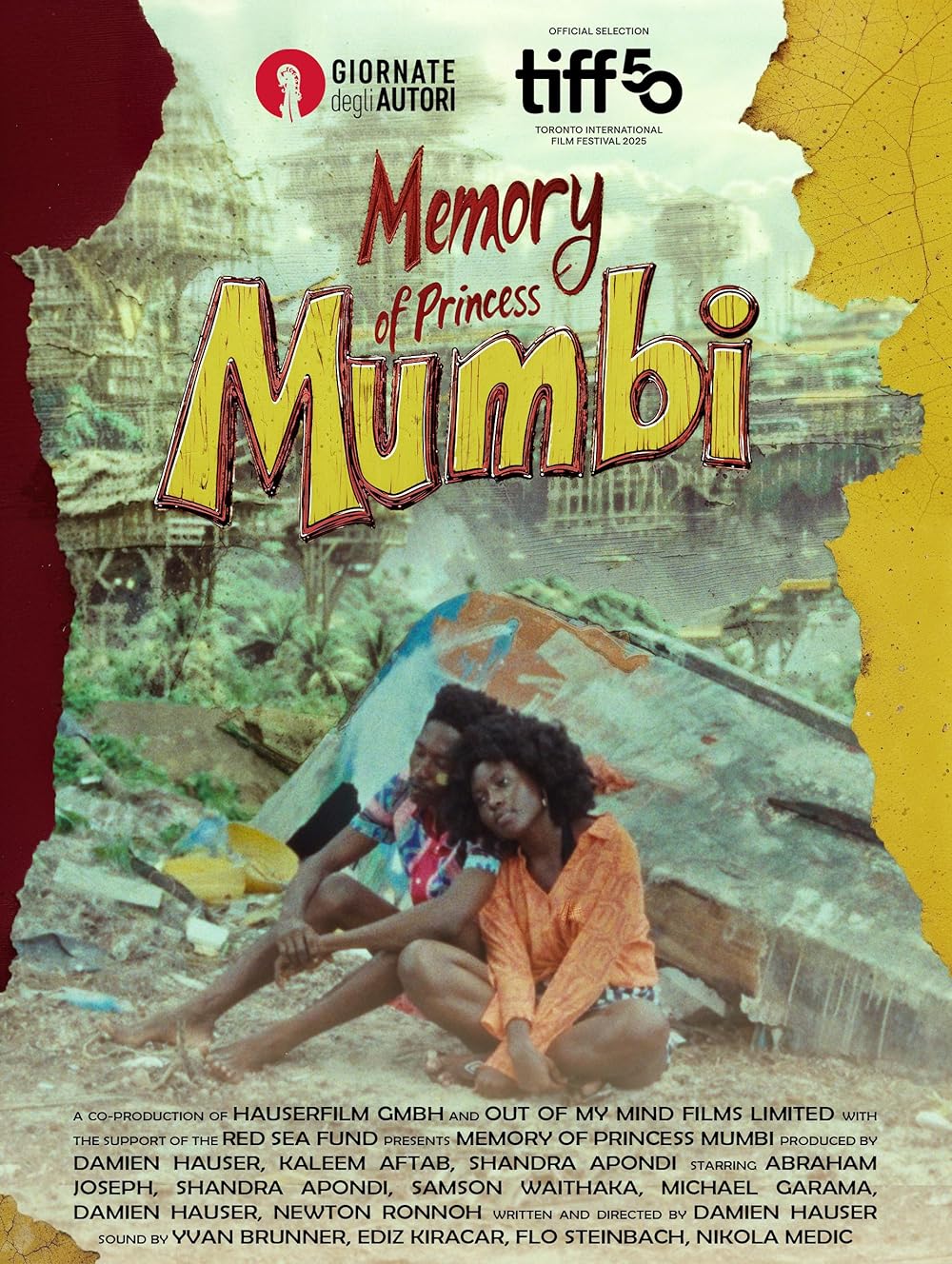
At the centre of Umata, and of the film, is a local filmmaker, Mumbi (Shandra Apondi), the young woman whose calm presence turns this strange new world into something recognisably human. Circling just beyond the connection she forms with Kuve is Samson Waithaka’s character, Prince, bound by an old promise to marry her and supplying the film with its human-scale tension.
Abraham Joseph’s Kuve has a disarming vulnerability, the kind of openness that makes even his missteps feel honest. And Apondi’s Mumbi is Memory of Princess Mumbi’s undeniable anchor, a performance so steady and unforced that you sometimes catch yourself wondering how the rest of the movie manages to keep pace with her.
In a neat twist of self-awareness, Hauser, who gleefully leans on AI for his visual architecture, plants a recurring argument about the ethics of the very technology he is using. Mumbi, at one point, reprimands Kuve for manipulating interviews with AI-enhanced despair, as if misery were a filter he could simply turn on.
Memory of Princess Mumbi pokes the bruise while telling you it is all part of the show. The ambivalence is deliberate, though. AI is too new for anyone to pretend expertise, and Hauser knows better than to sermonise. What he offers instead is a young filmmaker’s honest wrestling match with a tool that both liberates and compromises him, as an argument is staged in real time, with real stakes.
While the global film industry twists itself into knots over the oncoming storm of artificial intelligence—worrying, mostly—Damien Hauser, with more nerve than budget, appears to have stepped into the fray with something startlingly self-assured. Memory of Princess Mumbi is a micro-budget sci-fi odyssey that dazzles with invention while simultaneously casting a wary eye at the very tools that built it.

Of course, the film stumbles a bit. How could it not? It has the unmistakable awkwardness of a one-man production. But here is the thing one would appreciate: the flaws matter far less than the swing. Memory of Princess Mumbi is brimming with invention, refusing to obey any cinematic etiquette, and surprising you with the audacity of its ideas.


Where the industry raises alarms, the film seems to shrug, as if to say that fear has never stopped an African imagination before. And perhaps it is right. AI is not a visitor anymore; it is a tenant. The question now is whether we can teach it to respect the house of our art, or at least help carry the weight of our dreams.
Memory of Princess Mumbi, as a film, might be a testimony to a shifting cinematic landscape, one in which AI does not so much replace tradition as press its thumb against it, testing the grain. The film refuses to polish away the technology’s telltale seams. Instead, it lets them show—from the uncanny swells to those almost-too-perfect contours—like brushstrokes left unhidden on a mural.
Some of this, no doubt, is budgetary reality; the film might not have the luxury of invisible effects. But some of it feels intentional, even philosophical. The artifice becomes part of the aesthetic, a reminder that the Afrofuturistic setting is meant not only to mimic our own, but to reveal the shape of a story we could not scale otherwise.
Rating: 3.5/5
*Memory of Princess Mumbi was recently screened at the NBO Film Festival
Frank Njugi, an award-winning Kenyan Writer, Culture journalist, and Critic, has written on the East African and African culture scene for platforms such as Debunk Media, Republic Journal, Sinema Focus, Culture Africa, Drummr Africa, The Elephant, Wakilisha Africa, The Moveee, Africa in Dialogue, Afrocritik, and others.