


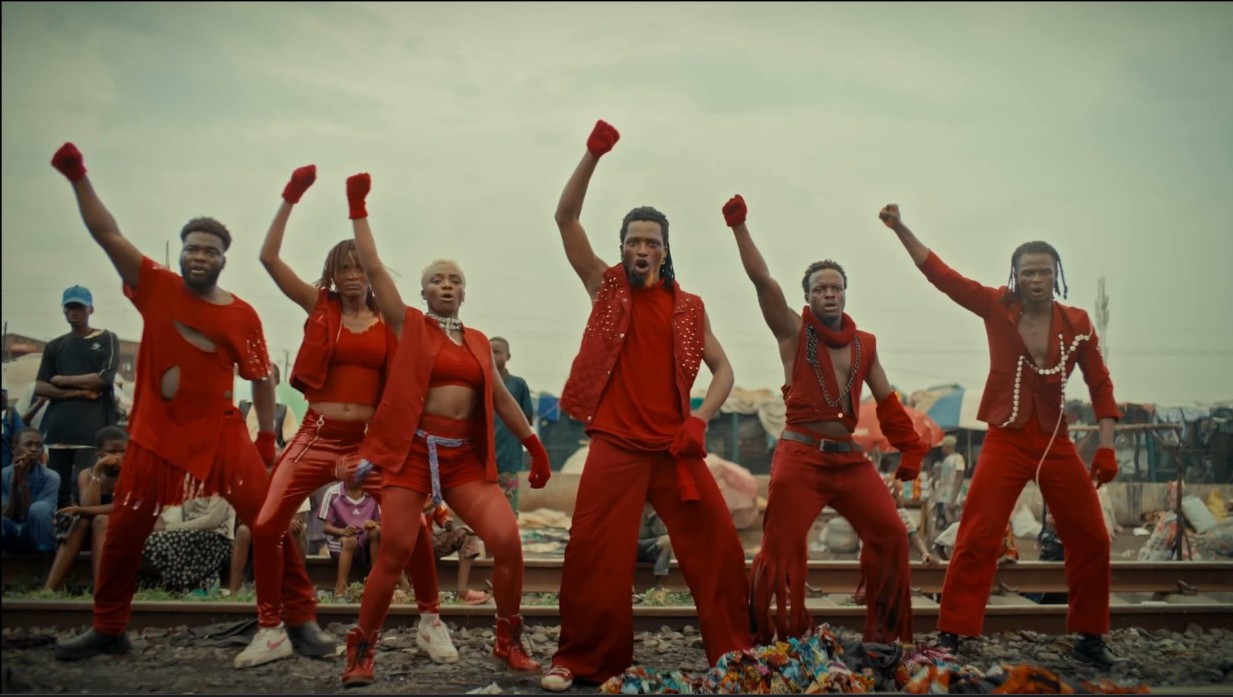

When Nigeria Happens shines a spotlight on the sacrifices that young Nigerians have to make to survive—sacrifice of self, sacrifice of love and of hope, sacrifice of art, innovation and talent.
By Vivian Nneka Nwajiaku
Every film about Nigerian dysfunction can easily be titled “When Nigeria Happens”. From Arie and Chuko Esiri’s Eyimofe (2020) to Afolabi Olalekan’s Freedom Way (2024), films built on this quintessential theme of Nigerian social-commentary cinema centre resilient characters who really just desire better lives but always find themselves suffering great misfortunes caused specifically by the country’s systemic failures. In essence, Nigeria happens to them—a phrase that is now commonly used by citizens of the giant of Africa to describe the condition of being broken by the system.
The same story is told by Ema Edosio (Kasala! (2018); Otiti (2022)) in her third feature, actually titled When Nigeria Happens (2025). The difference is in the how. In Edosio’s version, co-written with Adebayo Oduwole, the nation’s maladies are related through a troupe of poor, sweaty, young contemporary dancers (played satisfactorily by first-time actors) moving through a colourful but overtly difficult and messy Lagos where everybody is angry or suspicious, and recklessness reigns supreme.
The medium is dance, but not just in the obvious sense. There are a few intriguing dance numbers that express the dancers’ frustrations and rebellion, but the dance breakouts are not always well-blended in, and the routines are few compared to the average dance drama. Instead, Edosio relies on rhythm and almost constant movement, bringing dynamism to an onscreen world that is so theatrically composed, it could be an engaging stage musical, but with a raw energy and an unfiltered aesthetic that are reminiscent of Kasala!, her debut feature.
The dance crew is called “Emancipators”, and their identities are hinged on resistance and the shedding of inhibitions, expressed through eccentric hairstyling and costuming, and the mostly drug-related names that they have replaced their birth names with. “Poppy”, “Colos”, “Lighter”, “Pocco”, and “Movement” are led by Fagbo (a name that translates to “smoking”), an idealistic hothead who cares less about making money and more about building a career as a dance revolutionary.
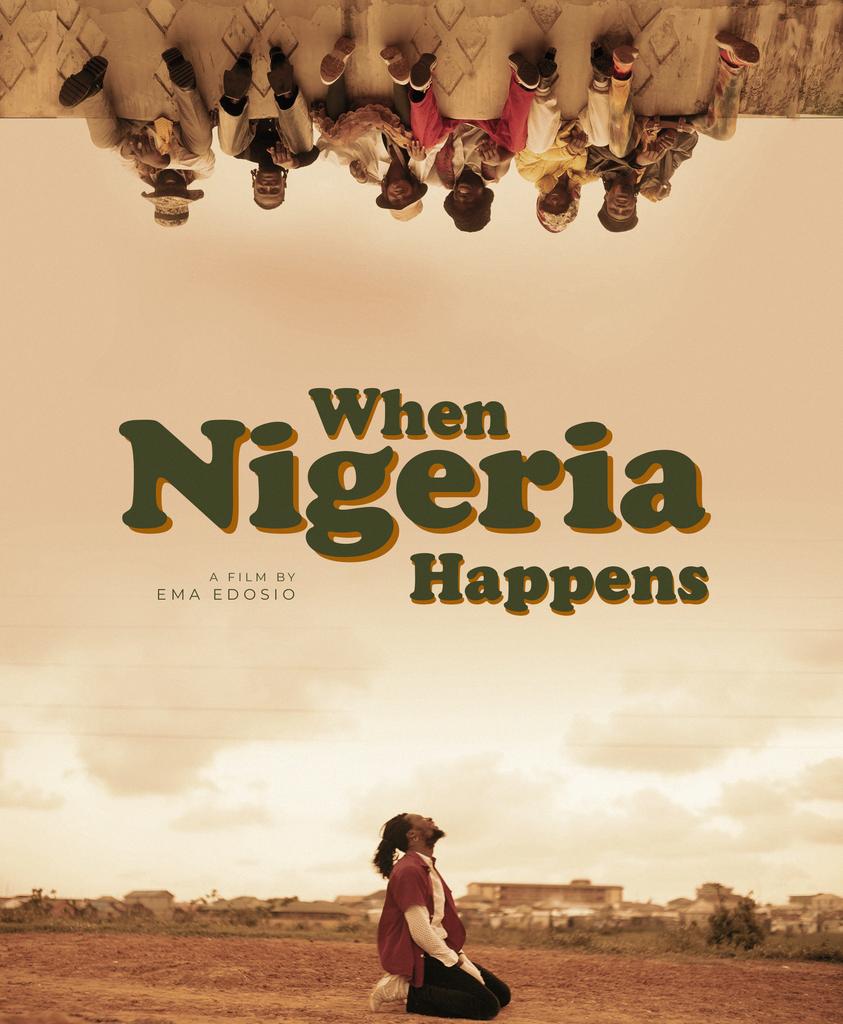
It is Fagbo (Dominic “Domdom” Abella) who takes centrestage in When Nigeria Happens, his grip on his dreams loosening more and more with every curveball that the country throws at him, from non-existent healthcare for his mother (Ego Iheanacho) who suffers from Alzheimer’s Disease, to the shocking consequences of turning to the police for help. Through him, Edosio holds up a mirror to Nigerian society, reflecting the kinds of conditions that can make a young and defiant cautious-optimist go from quoting Kwame Nkrumah to saluting a master.
To get to that breaking point, we have to sit through a meandering second act where Edosio painstakingly paints a stretched-out narrative centred around Fagbo, excluding the rest of his merry band, who feel like background acts in the circus that is Fagbo’s life. Even Pocco (Ruth El Phygo Felix), who plays a central role as his lover who keeps him motivated and ultimately becomes the final domino that comes crashing down, also falls to the sidelines. We must import assumptions from real life, and not merely rely on the film, if we are to understand Pocco’s discontent when it rears its ugly head as the film reaches its climax.
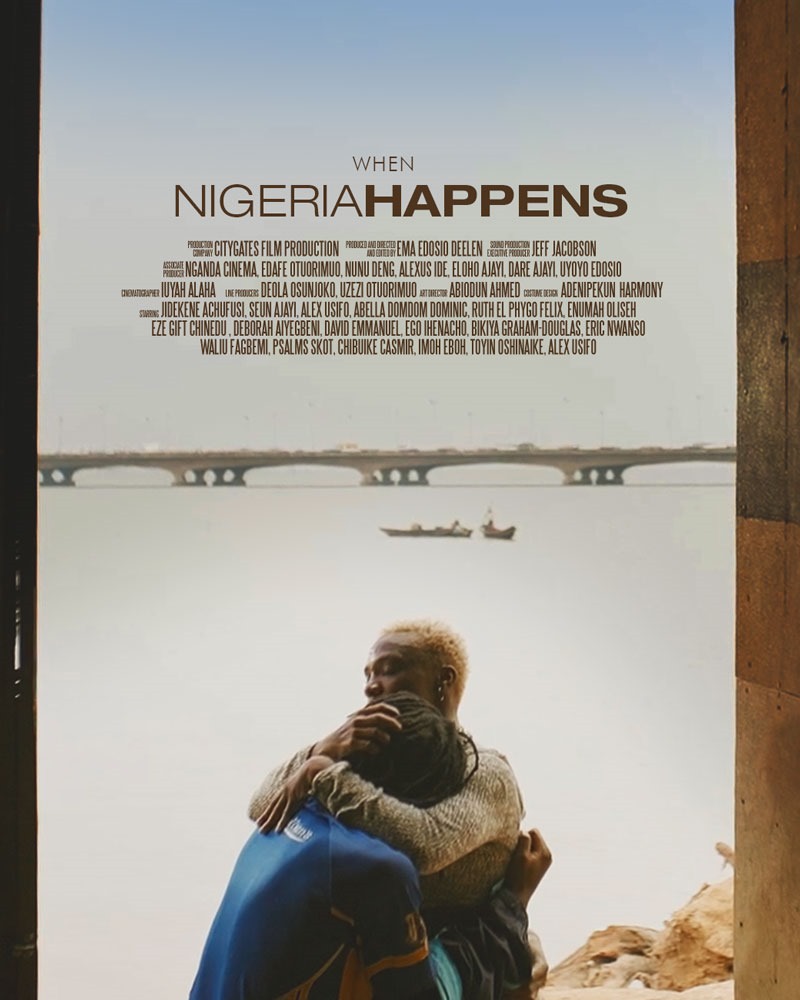
Its shortcomings notwithstanding, When Nigeria Happens shines a spotlight on the sacrifices that young Nigerians have to make to survive—sacrifice of self, sacrifice of love and of hope, sacrifice of art, innovation and talent. “Last last, all of us go wake up face real life,” says Fagbo’s cousin, James (Seun Ajayi), who was once nicknamed after Jay Jay Okocha but is now content with life as a security guard. He says it wistfully, while holding on to the hope that Fagbo still has a chance to succeed at the future he insists he is building. But it lands as the pained words of a man who has been beaten into conformity and who knows within him that there is no escape, even for an idealist like Fagbo.


The themes are heavy. Yet, there are several funny moments that provide relief, even in the midst of abject rot. It is remarkable that humour can be found in any of the situations in When Nigeria Happens. But such is the nature of Nigerian dysfunction. It coexists comfortably with comedy. Whether in how Nigerians depend on humour as a coping mechanism or in the inherent ridiculousness of life and living in the contraption that is Nigeria.
Rating: 3.8/5
* When Nigeria Happens officially premiered at the 2025 Locarno Film Festival, where it was the first African film to open the Open Doors Section. Prior to Locarno, it had a private screening at the S16 Film Festival in 2024. It also screened at the 2025 Ake Arts and Book Festival and the 2025 Ibadan Indie Film Awards.
Vivian Nneka Nwajiaku is a writer, film critic, TV lover, and occasional storyteller writing from Lagos. She has a master’s degree in law but spends most of her time watching, reading about and discussing films and TV shows. She’s particularly concerned about what art has to say about society’s relationship with women. Connect with her on X @Nneka_Viv