

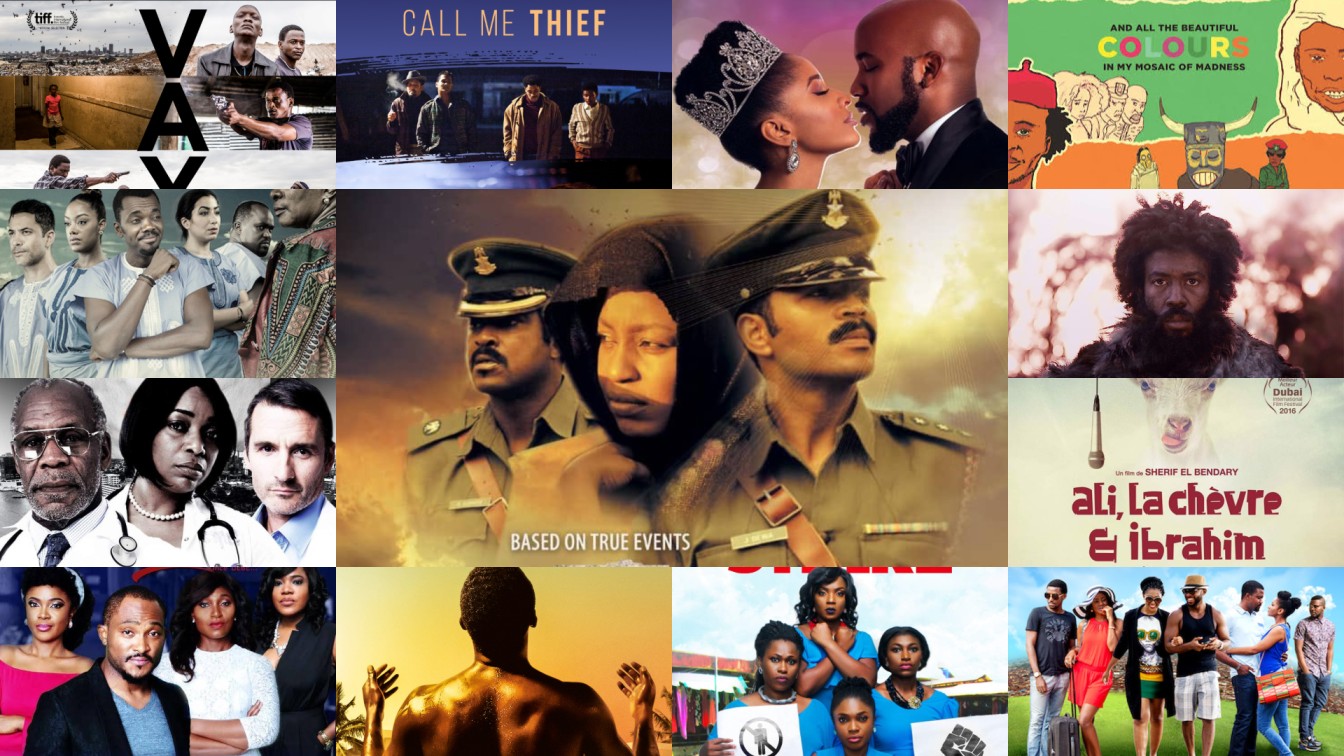

Revisiting these 25 African films from 2016, now turning ten in 2026, offers a snapshot of a formative year — one that quietly laid the groundwork for where African cinema stands today.
By Joseph Jonathan
A decade is a long time in cinema, but in the context of African films and the African film industry, ten years can feel almost disorienting. Looking back at 2016 from 2026, it is striking how much has changed; not just in how African films are made and circulated, but in how they are imagined, financed, distributed, and discussed across the continent and the diaspora. That these films are already ten years old feels surprising precisely because African cinema has moved so quickly since then.
In 2016, the industry stood at a crossroads. Netflix became available across Africa, accelerating conversations around streaming, access, and global audiences. The Toronto International Film Festival (TIFF) selected Lagos as its City to City focus, signalling growing international curiosity about Nollywood and urban African storytelling. The same year, the Hollywood in Focus programme, backed by Relativity Education and the U.S. Department of State in partnership with the African Technology Foundation, trained 67 African creatives in Los Angeles, including Nigerian actor, OC Ukeje, reinforcing the idea that African cinema was entering a more visibly global phase.
Ten years later, these moments read less like isolated milestones and more like early signs of a larger shift. Africa’s film industry has since expanded its ambitions, sharpened its craft, and diversified its voices. Revisiting these 25 African films from 2016, now turning ten in 2026, offers a snapshot of a formative year — one that quietly laid the groundwork for where African cinema stands today.
’76 (Nigeria)
Izu Ojukwu’s historical drama revisited the aftermath of Nigeria’s 1976 military coup with emotional restraint and political sensitivity. Rather than spectacle, ’76 focused on domestic spaces and personal consequences, foregrounding the human cost of state violence.
Its critical acclaim — including multiple AMAA and AMVCA wins — reaffirmed the viability of serious historical filmmaking in Nollywood.
93 Days (Nigeria)
Directed by Steve Gukas, 93 Days dramatised Nigeria’s successful containment of the 2014 Ebola outbreak through the lens of frontline health workers.
Dedicated to Dr. Ameyo Adadevoh ( a physician who played a key role in the containment of Ebola in Nigeria), the film became a rare example of Nollywood engaging public health history with urgency and respect. Its restrained storytelling and ensemble performances earned it major award recognition and lasting relevance.
Vaya (South Africa)
Akin Omotoso’s multi-strand narrative follows characters navigating Johannesburg’s promises and dangers. Premiering at TIFF and earning multiple AMAA and AMVCA wins, Vaya captured the city as both dream and threat, resonating across borders.
Ali, the Goat and Ibrahim (Egypt)
Sherif El Bendary’s understated road film explored friendship, grief, and emotional healing through quiet observation. Set against Egypt’s rural landscapes, the film resisted melodrama, opting instead for gentle rhythms and lived-in performances.
Its emotional honesty helped cement its reputation as a festival favourite and a touchstone for Egyptian independent cinema.
Beyond Blood (Nigeria)
Greg Odutayo’s Beyond Blood stands out as one of 2016’s quieter Nigerian romantic dramas, choosing emotional interiority over melodrama. Anchored by Kehinde Bankole, the film centres on Moji, a woman whose personal and professional certainties begin to fracture when intimacy, loyalty, and moral clarity collide.
Rather than aestheticising pain, Beyond Blood allows its heavier themes—exploitation, addiction, and ethical compromise—to sit uncomfortably within its romantic framework. The film’s power lies in its restraint: it resists spectacle, trusting performance and mood to carry its emotional weight. Nearly a decade later, it remains notable for its seriousness of intent and for treating romantic drama as a space for moral inquiry, not escapism.
Clash (Egypt)
Mohamed Diab’s Clash confined its narrative almost entirely to the back of a police truck during Egypt’s political unrest, using spatial restriction to heighten tension and ideological conflict.
Premiering at the Cannes Film Festival Un Certain Regard, the film demonstrated how African and Middle Eastern cinema could merge formal experimentation with urgent political commentary.
Couple of Days (Nigeria)
Tolu Lordtanner’s romantic comedy leans into simplicity, using a brief getaway as a framework for exploring intimacy, compromise, and modern relationships. Its modest scale and conversational tone reflected a growing strand of Nigerian cinema in 2016; one interested in urban romance and emotional realism rather than spectacle. Set over a short escape from Lagos, the film follows three couples who head out for a seemingly carefree weekend, hoping for rest, romance, and reconnection.
As the trip unfolds, unresolved tensions, jealousy, and long-suppressed truths gradually come to the surface, testing each relationship in unexpected ways. Anchored by an ensemble cast led by Lilian Esoro and Adesua Etomi, Couple of Days allows conflict to emerge through proximity and dialogue rather than dramatic set pieces. The film’s strong audience reception on release underscored the commercial potential of intimate romantic comedies, and nearly a decade on, it remains a telling snapshot of Nollywood’s mid-2010s turn toward relationship-driven storytelling.
Call Me Thief (South Africa)
Daryne Joshua’s feature debut centres on Abraham, a young man whose imprisonment for a petty crime becomes the unlikely setting for personal transformation. Thrown into a harsh prison environment, Abraham discovers that his gift for storytelling allows him to command attention, earn protection, and gradually elevate his status among seasoned gang members.
Selected as South Africa’s entry for the Best Foreign Language Film at the 2017 Academy Awards, the film marked Joshua as a filmmaker attentive to character and voice, while reaffirming African cinema’s capacity to turn intimate storytelling into social commentary.
Okafor’s Law (Nigeria)
Omoni Oboli’s controversial romantic drama sparked debates about consent, gender politics, and power dynamics.
Regardless of reception, the film became a cultural talking point, illustrating Nollywood’s capacity to provoke national conversation.
The Last of Us (Tunisia)
Directed by Ala Eddine Slim, The Last of Us follows N., a migrant whose journey from Sub-Saharan Africa toward Europe unfolds across shifting landscapes of desert, sea, and dense forest. After travelling by boat and surviving a violent attack while hidden in a smuggler’s truck, N. escapes into an unfamiliar woodland where language, direction, and time seem to dissolve.
The film gradually abandons conventional narrative markers, allowing the journey to take on a more internal, spiritual dimension. Premiering at the 2016 Venice Film Festival, where it won the Luigi De Laurentiis Award for First Feature and the Prize for Best Technical Contribution, The Last of Us stands out for its austere visual language and near-wordless storytelling.
The Arbitration (Nigeria)
Niyi Akinmolayan’s legal drama examined workplace harassment and institutional power through the lens of a corporate dispute.
Stylish and commercially appealing, the film marked a shift toward sleek, issue-driven Nollywood thrillers.
Green White Green (Nigeria)
Abba T. Makama’s debut feature is a loose, observational coming-of-age film that follows three teenagers suspended in the long, uncertain wait for university admission. With little structure beyond time passing, Green White Green captures the in-between space of youth—where ambition, boredom, frustration, and hope exist side by side. Rather than pushing its characters toward dramatic resolutions, the film allows their restlessness and indecision to define the narrative.
Shot with a naturalistic eye and driven by raw, unpolished dialogue, the film often feels closer to lived experience than constructed drama. Its focus on stalled aspirations, migration fantasies, and the quiet anxiety of not knowing what comes next has only grown more resonant over time. Nearly a decade on, Green White Green remains one of the most perceptive portraits of Nigerian youth in contemporary cinema and a key early marker of Makama’s voice within the country’s independent film scene.
Wives on Strike (Nigeria)
Directed by Omoni Oboli, Wives on Strike used comedy and satire to confront child marriage at the height of the #ChildNotBride movement. It follows a group of market women who deny their husbands sex in a bid to stir them into standing up for a young girl, who was compelled by her father to marry a man against her will.

Its blend of humour and activism resonated widely, proving Nollywood could entertain while engaging social issues. The film’s success spawned sequels and cemented its place in popular Nigerian cinema.
Kati Kati (Kenya)
Mbithi Masya’s surreal drama explores questions of life, death, and unfinished business through a liminal afterlife space where its characters are forced into uneasy reflection. Set in a desert-like purgatory that resists clear explanation, Kati Kati blends abstraction with emotional immediacy, allowing grief, guilt, and longing to surface without conventional narrative anchors.
The film premiered at the Toronto International Film Festival, where it won the Prize of the International Federation of Film Critics (FIPRESCI) for the Discovery programme, and was later selected as Kenya’s entry for the Best Foreign Language Film at the 2017 Academy Awards. Its international reception helped broaden perceptions of Kenyan cinema, positioning Kati Kati as a film unafraid of philosophical inquiry and formal experimentation within African storytelling traditions.
New Intentions (Uganda)
Directed by Kennedy Kihire, New Intentions reflected the ambitions of Uganda’s growing film scene, often dubbed “Ugawood”.
With multiple local award nominations, the film represented a generation of filmmakers pushing for visibility and narrative confidence within emerging industries.
A Mile in My Shoes (Morocco)
Said Khallaf’s drama explored urban precarity and moral compromise in contemporary Casablanca.
Selected as Morocco’s Oscar entry, the film blended social realism with personal tragedy, reflecting broader anxieties about class and aspiration.
The Wedding Party (Nigeria)
Directed by Kemi Adetiba, The Wedding Party became a box-office phenomenon, redefining commercial success in Nollywood.


Beyond its glamour and humour, the film expanded cinema audiences, launched a franchise, and demonstrated that Nigerian films could dominate local box offices while attracting global attention. Ten years on, it remains in the top 10 highest-grossing Nollywood films of all time.
Wùlu (Mali/Senegal)
Daouda Coulibaly’s debut feature traced a young man’s descent into drug trafficking, blending crime thriller elements with social critique.
Premiering at the 2016 Angoulême Film Festival and earning multiple awards, Wùlu signalled a confident new voice in Francophone African cinema.
The CEO (Nigeria)
Kunle Afolayan’s corporate-set thriller tells the story of five top executives invited to what appears to be a luxury corporate retreat, only to discover that one of them will emerge as the company’s new CEO. As alliances shift, egos clash, and personal ambitions surface, the film transforms the polished, high-end setting into a tense arena of quiet sabotage and strategic manoeuvring.
Beyond its suspenseful plotting, The CEO reflected Nollywood’s growing fascination with elite spaces and global aesthetics, signalling a period of stylistic ambition and genre experimentation. Though reactions were mixed, the film underscored Afolayan’s interest in combining commercially appealing narratives with formal sophistication, marking an important moment in the evolution of contemporary Nigerian cinema.
Happiness Is a Four-Letter Word (South Africa)
Directed by Thabang Moleya, the film explored friendship, romance, and modern womanhood in Johannesburg.
Its commercial success and eventual Netflix sequel highlighted the increasing viability of African women-centred ensemble dramas.
Just Not Married (Nigeria)
Uduak-Obong Patrick’s award-winning romantic comedy follows Duke, a financially struggling undergraduate who enlists the help of his friend Lati and his crush Keji to execute a clever scheme: stealing cars under the guise of preparing for a wedding.
As their modest criminal enterprise escalates beyond their control, the three friends are forced to confront the consequences of their choices, blending humour, suspense, and social commentary. The film reflects evolving urban attitudes toward ambition, independence, and relationships, cementing its place within Nollywood’s growing romcom canon.
Rain (Uganda)
Daniel Mugerwa’s Rain tackled sexual violence and its aftermath with emotional directness.
The film stood out for centring survivor perspectives and challenging silence around taboo subjects in East African cinema.
Slow Country (Nigeria)
Eric Aghimien’s gripping social drama follows a homeless teenage mother, played by Ivie Okujaye, who becomes ensnared in prostitution and drug trafficking for seven years in a bid to provide a better life for her son. When she attempts to break free, her ruthless boss, portrayed by Sambasa Nzeribe, refuses to let go of his most trusted “cash cow,” plunging her back into danger.
Premiering at the 2016 Africa International Film Festival (AFRIFF), where it won the Audience Choice Award, the film also earned Nzeribe the AMVCA for Best Actor in a Drama. Slow Country stands out for its grounded performances, ethical complexity, and unflinching look at survival and moral compromise.
Oloibiri (Nigeria)
Curtis Graham’s environmental drama confronted the human cost of oil exploitation in the Niger Delta.
With strong award recognition, the film positioned Nollywood within broader conversations about resource politics and ecological injustice.
Ghana Must Go (Ghana/Nigeria)
Directed by Frank Rajah Arase, Ghana Must Go is a cross-border romantic comedy that follows Ama, a London-based Ghanaian woman, who brings her Nigerian boyfriend Chuks home to seek her parents’ approval.
What begins as a simple introduction quickly escalates into familial conflict, as Ama’s father refuses to bless the union, citing historic tensions between Nigeria and Ghana stemming from the decades-old “Ghana Must Go” debacle. The ensuing events test the couple’s commitment, exposing cultural differences, generational perspectives, and national pride—all delivered with humour and charm.
Joseph Jonathan is a historian who seeks to understand how film shapes our cultural identity as a people. He believes that history is more about the future than the past. When he’s not writing about film, you can catch him listening to music or discussing politics. He tweets @Chukwu2big