

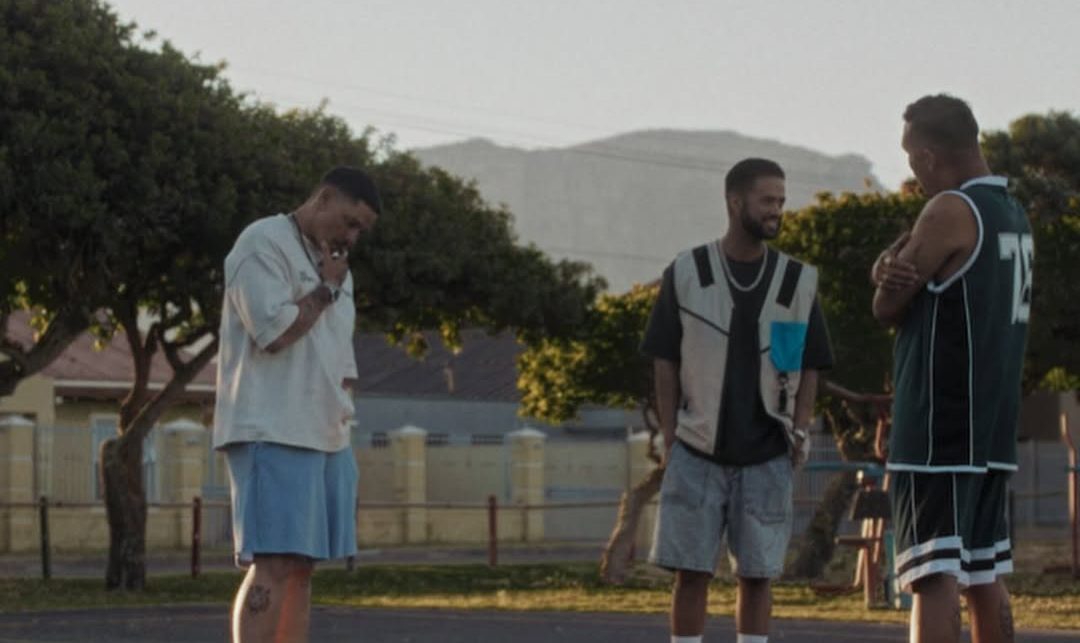


The Heart is a Muscle is a film made with care—perhaps too much care in some places, not enough structure in others—but its honesty is unmistakable.
By Joseph Jonathan
While watching The Heart is a Muscle, written and directed by Imran Hamdulay in his feature debut, I couldn’t help thinking about a verse from the Holy Bible (Lamentations): “Our fathers sinned and are no more, but we bear their iniquities”. The line returned again and again as I watched Ryan (Keenan Arrison) struggle beneath the weight of a past he never chose. The film doesn’t quote scripture, yet it lives in the emotional terrain of that lament, tracing how pain, violence, and unspoken histories seep from one generation into another.
Ryan is a young father who has worked hard to build a tender domestic life with his wife, Laila (Melissa de Vries), and their five-year-old son, Jude. Yet, beneath the surface of this loving family portrait lies the simmering violence of his upbringing: a childhood threaded through with gangs, rage, and a learned reflex toward harm. When Jude goes missing at a family gathering, the fragile equilibrium Ryan has constructed cracks open, and all the old ghosts come roaring back.
Hamdulay structures his film as an intimate character study, allowing Ryan’s unravelling to unfold with slow, painful clarity. His questionable decisions in the film’s early moments—rash, aggressive, sometimes frightening—are framed not as moral failings but as emotional reflexes, instinctive responses shaped by years of survival in a world where gentleness was never an option.
Arrison embodies this contradiction with striking nuance; his performance trembles between tenderness and threat. He is heartbreakingly torn between the man he was raised to be and the father he is desperately trying to become. The tension is constant, alive, visible even in the quietest scenes. Opposite him, Melissa De Vries grounds the film as Laila, bringing a moving emotional honesty to every moment. Her grief, her frustration, her hope, they all land with weight.

One of the most revealing scenes takes place in the ruins of a burned house, where Ryan tells his father that the memories have burned away with the walls. The reply is gentle but compelling: the memories remain in the ashes, in the plants pushing up through the char. Ryan insists he would rather forget.
That small exchange quietly maps the terrain of the film. Time alone does not heal wounds; forgetting is not the same as mending. As the title suggests, the heart—like any muscle—must ache before it can grow stronger.
Hamdulay’s filmmaking bears the texture of lived experience. There is an emotional familiarity in the locations, the dialogue, and the dynamics between men who love one another yet refuse to speak their pain until forced. The community the film represents is not aestheticised or flattened; it feels observed from the inside. This authenticity is one of the film’s greatest strengths. But it is also where the cracks begin to show.
The Heart is a Muscle is beautiful, yes, but it occasionally tries to say too much about too little. At 86 minutes, The Heart is a Muscle attempts to juggle childhood trauma, cycles of violence, male friendship, masculinity, fatherhood, guilt, penitence, and redemption, yet some of these threads fray for lack of space.
Several narrative choices feel truncated. Ryan’s friends, introduced with depth and promise in the first act, disappear for a long stretch, though their relationship holds the key to one of the story’s most compelling moral questions: what does loyalty mean when it is forged in violence? These men carry each other’s sins—one even serving time for a crime Ryan committed, but the film only brushes the surface of the intimacy and pain embedded in that history.

Similarly, the bond between Ryan and Jude, the emotional centre of the film, is undercut by how little time we see them together. We are told about Ryan’s love for his son more often than we are shown it, and the few tender moments—strong as they are—cannot fully shoulder the emotional weight of the climactic breakdown.
There are narrative detours that dilute the impact: a scene in a fish-and-chips shop that adds little; ocean imagery that feels symbolically heavy but untethered to context. The film’s final shift—Ryan’s sudden emotional breakthrough and gesture toward healing—arrives faster than the story earns. It is not unconvincing, but it feels accelerated, as if the film runs out of time just as Ryan begins to understand the depth of his own damage. The last five minutes drift into landscape imagery that is beautiful but somewhat empty, closing the story with mood rather than resolution.
And yet, even with these stumbles, The Heart is a Muscle retains a powerful emotional core. The performances are so lived-in that they compensate for the narrative gaps. The sincerity of Hamdulay’s script, even when the dialogue leans a little too deliberately symbolic, gives the film a heartbeat that never quite fades.
Nowhere is this clearer than in Ryan’s interactions with Andre, the man he assaults in panic while searching for Jude. Ryan tries to make amends through gestures—paying for treatment, taking Andre and his son to lunch, buying groceries—but never manages to say the words that matter: “I’m sorry”.
This inability, this emotional illiteracy, speaks to a broader portrait of masculinity that The Heart is a Muscle navigates with surprising clarity. Ryan’s world is one where men show love through sacrifice, violence, or provision, but never vulnerability. And the moment he finally utters those words, stripped of performance, becomes one of the film’s rare moments of true catharsis.

The Heart is a Muscle is a film made with care—perhaps too much care in some places, not enough structure in others—but its honesty is unmistakable. It reaches for catharsis even when it doesn’t fully achieve it, and its ambition, though slightly beyond its grasp, is anchored by performances that blur the line between acting and confession. Hamdulay’s debut is not perfect, but it is deeply felt, culturally resonant, and emotionally courageous. It understands that breaking a cycle is not a single climactic moment but a long, uneven struggle, full of setbacks and small victories.
In the end, The Heart is a Muscle leaves you thinking less about the neatness of its narrative than about the raw humanity at its centre. Ryan’s journey lingers because it reflects something painfully familiar: the difficulty of healing wounds inherited long before we could speak, the weight of intergenerational trauma, the hope that love—messy, ferocious, imperfect—might be enough to change us. If the heart is indeed a muscle, then this film insists that strength comes not from forgetting the pain but from learning to feel it fully.
Rating: 3.7/5
*The Heart is a Muscle had its world premiere at the Panorama section of the 74th Berlin International Film Festival (Berlinale) on 17 February 2025, where it won the Ecumenical Jury Prize. It was selected as the South African entry for the Best International Feature Film at the 98th Academy Awards.
Joseph Jonathan is a historian who seeks to understand how film shapes our cultural identity as a people. He believes that history is more about the future than the past. When he’s not writing about film, you can catch him listening to music or discussing politics. He tweets @Chukwu2big