

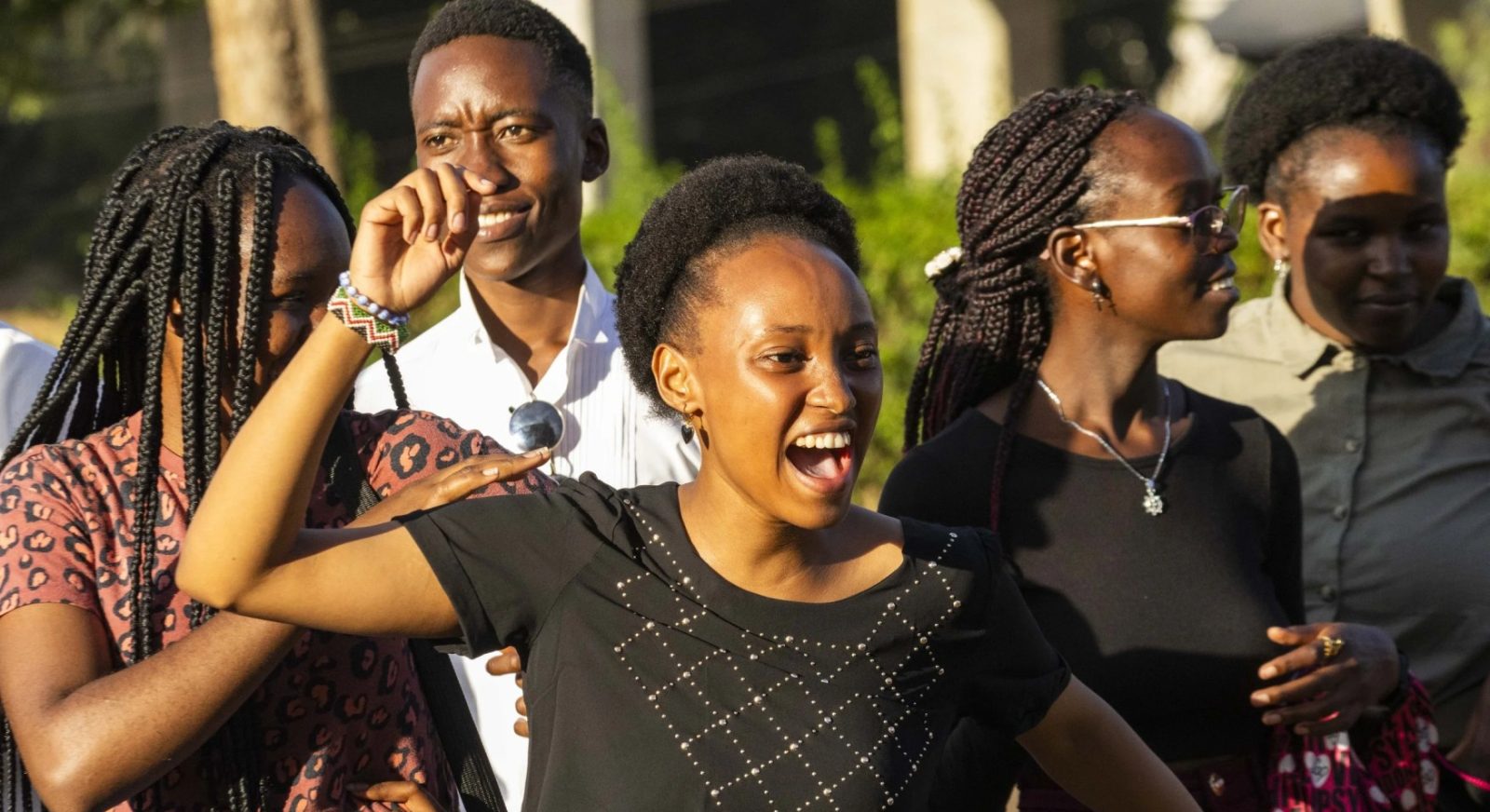

For many, soft life is just another impossible aspiration that quietly reinforces the same capitalist logic: you must destroy yourself first to deserve rest. There is still little room for the ordinary life—the slow life—the life that doesn’t trend.
By Sameera Kherdin Bashir
On social media, success comes with a filter. It shows up shiny, posed, and always seemingly ahead of schedule. A twenty-three-year-old “CEO.” A TikTok dancer who “blew” overnight. A forex trader claiming to have retired their parents in Ruaka at twenty-five. Every scroll confirms the same message: you are behind.
In Kenya today, from the streets of Nairobi and Mombasa to university towns like Eldoret and Nyeri, young people carry a quiet anxiety beneath the bravado of hustle culture. The dream is no longer just survival. It is speed. It is visibility. It is wealth before thirty. And if it does not arrive quickly, it feels like personal failure.
But the Kenyan dream, once rooted in education, community, patience, and slow collective being reshaped into something sharper, riskier, and far more unforgiving. This new dream promises that anyone can ‘make it’. It rarely tells the truth about who does.
The Rise of the Hustle Gospel in Kenya
“Hustle” was once a language of survival in Kenya. It described the mama mboga at dawn, the jua kali artisan in Gikomba, the matatu conductor shouting for passengers in the rain. Hustle meant improvisation in a country where the systems are thin, and certainty is rare. It meant dignity through effort.
Today, hustle has turned to performance. We are told to monetise everything: our talents, our bodies, our opinions, even our pain. Rest is framed as laziness. Soft life is marketed as the reward, but only after total exhaustion. You must burn first before you are allowed to breathe.
The irony is that Kenyan youth are embracing a work ethic imported from economies that already failed them—and stripped of the safety nets that once softened its brutality. In a country where healthcare is expensive, job security is fragile, and social protection is thin, hustle culture becomes more violent.
So, the youth gamble harder. Others gamble with technology and start-ups in co-working spaces along Ngong Road. Still, others on sports betting apps that have advertisements running every five minutes on local television. Others on the internet are famous. Others on migration routes to the Gulf, Europe, and North America—routes that quietly swallow wrists at construction sites and voices in kitchens. Success stories go viral. Failure disappears without comment.
The Tyranny of Comparison
Social media did not invent comparison, but it has weaponised it. You are no longer in competition with Form Four classmates, your Eastlands neighbourhood, or even your university class. You are now competing against curated versions of thousands of strangers whose starting points you would never fully understand. The pressure feels deeply personal, but it is structural.
The young graduate in Kibra scrolling through luxury apartments in Dubai does not just feel envy; they feel betrayed—by education, by patience, by the promise that hard work would eventually pay. They studied. They queued for HELB (a Kenyan government body that provides loans, scholarships, and bursaries to students pursuing higher education in universities and TVET institutions). They applied for internships that paid nothing. They were told to “start small”. Yet, the promised life did not arrive. So, they ask arguably the most dangerous question of our time: Am I a fool for trying the honest way? So, disillusionment comes as ideology.

When Survival Turns into Performance
In Kenya, survival has always been a matter of negotiation. Hustle culture has added spectacle to that struggle. Now, you must not only survive, but you must also look successful at it. You borrow to look rich. You take Fuliza (a Kenyan mobile overdraft service by Safaricom) to show that you are progressing. You curate your life online to hide how close you are to collapse. You keep quiet about failure, because vulnerability does not convert into engagement.
Young content creators burn out before they stabilise. Young entrepreneurs drown in debts they call “investment”. Young professionals feel inadequate even when they are employed in a country where unemployment stalks nearly every household. It is not only an economic tragedy. It is psychological. We are raising a generation that believes exhaustion is proof of purpose.
The Politics of “Making It” in Kenya
Not everyone starts at the same starting line. Yet hustle culture claims the track is flat. Access in Kenya still runs on old lines: elite schools, family connections, inherited land, proximity to politicians, foreign passports, and last names serving as open doors. The new dream maintains that these structures do not exist. It tells the child of a domestic worker in Kayole that discipline alone can flatten decades of inequality. This is not empowerment. It is a myth.
By individualising success, we also individualise failure. If you do not make it, it becomes a personal moral weakness instead of a social condition. The system is absolved. The individual is blamed. It is an ideology fit for a failing economy: it shifts responsibility downwards, away from policy and governance, away from structural reform.
Betting, Forex, and the Illusion of Quick Money
Nowhere is this desperation more visible than in Kenya’s gambling economy. Betting shops line busy streets. Forex “mentors” flood Telegram groups. Online influencers sell the fantasy of passive income while standing next to rental cars and borrowed apartments.
To many Kenyan youths, gambling no longer seems like a form of recreation but a last resort. When formal work is scarce, when wages stagnate against rising rent, when corruption mocks merit, fast money becomes not just temptation but a survival strategy. Yet, the house almost always wins. What’s left is debt, shame, and silence.


Soft Life as Protest or Escape?
This burnout has bred a counter-narrative: “soft life”. It denies sacrifice. Soft life celebrates ease, pleasure, and rest. In Kenya’s online spaces, it is often reified in brunches in Kilimani, curated weekend getaways, and pastel-filtered calm. But even soft life is often repackaged as another performance, rather than a real reimagining of value.
Only a few can really afford softness. For many, soft life is just another impossible aspiration that quietly reinforces the same capitalist logic: you must destroy yourself first to deserve rest. There is still little room for the ordinary life—the slow life—the life that doesn’t trend.
What Kenya Is Losing Quietly
In our obsession with making it fast, Kenya is losing something dangerous to lose: the dignity of gradual becoming. We’re losing respect for the quiet professions. We are losing patience with slow growth. We are losing the wisdom of elders whose lives unfolded without viral peaks. We’re losing the community to competition.
Another cost is sameness: the same dreams, the same metrics, the same imported definitions of success. The fisherman’s son in Siaya now only dreams of crypto. The teacher’s daughter in Nakuru now dreams of influencing. No shame in ambition, but something disappears when whole generations chase the same narrow image of worth. Diversity of purpose is social resilience. We are quietly chipping it away.
Redefining the Kenyan Dream
The older Kenyan dream was not perfect, but it was collective. It imagined progress across families, across villages, across generations. It is believed that education, land, and steady work could slowly lift many. The new dream is solitary. It says: alone earn or alone lose. But nobody ever really does it alone.
Every success rests on invisible labour—parents, teachers, cleaners, security guards, internet cables, matatus that get us to work, roads we did not build ourselves. Hustle culture erases this support system to promote the myth of the lone genius. Perhaps the most radical act in Kenya today is to widen the meaning of success again. Also, success could mean: Stability without fame. Purpose without luxury.
Employment that feeds you without taking your soul. Growth that is invisible but real. A life that doesn’t need to be validated to be valid. The Courage to Be Ordinary. There is quiet resistance in ordinariness. To choose a small, stable life in a nation addicted to spectacle is not laziness. It is defiance. It is saying: I refuse to destroy myself to prove my worth. Kenyan youth deserve ambition with no self-destruction. They deserve to have shame-free dreams. They deserve progress, not humiliation. Not everyone will be great. But all people have the right to live in dignity. And perhaps that is the Kenyan dream we need to recover—not the fantasy of becoming untouchable, but the reality of becoming whole.
Sameera Kherdin Bashir is a Kenyan writer exploring youth culture, inequality and the myths of success. She is a published author, and her debut was featured in Qwani04.