


Among the selections are African titles from Nigeria, Ghana, Egypt, Libya, Tunisia, Sudan, Ethiopia, and the Democratic Republic of the Congo, including Olive Nwosu’s Sundance-selected debut feature, Lady.
By Vivian Nneka Nwajiaku
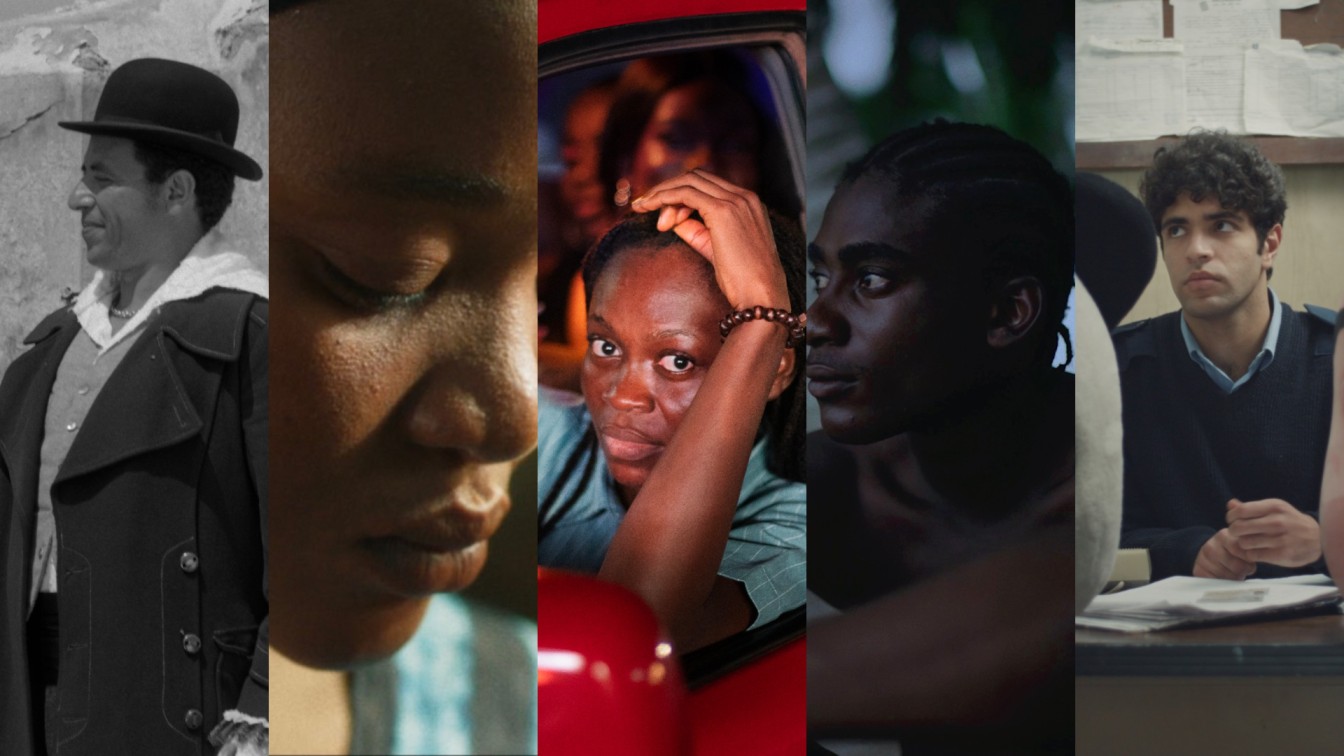
The Berlin International Film Festival has announced the full lineup of films selected to screen in the Panorama, Forum, and Forum Extended sections of its 76th edition, set to hold in February, 2026. Among the selections are African titles from Nigeria, Ghana, Egypt, Libya, Tunisia, Sudan, Ethiopia, and the Democratic Republic of the Congo, including Olive Nwosu’s Sundance-selected debut feature, Lady.
A United Kingdom/Nigerian co-production starring Jessica Gabriel’s Ujah, Amanda Oruh, Tinuade Jemisey, Seun Kuti, and Bucci Franklin, Lady follows a fiercely independent young female taxi driver who meets a band of flamboyant sex workers in the sprawling metropolis of Lagos, with their sisterhood pulling her into both danger and joy and setting her on a journey toward her own transformation. The Panorama screening at the Berlinale will mark the film’s European premiere following its upcoming world premiere at the Sundance Film Festival this January.
Also selected to screen in the Panorama section is Paradise (Canada/France/Ghana), the debut feature by Academy Award-nominated Canadian director, Jérémy Comte. The film bridges two worlds across continents, as the enigmatic captain of a burning cargo ship binds together the fates of a family in the bustling Ghanaian capital of Accra and another in a quiet Canadian town. Paradise will make its world premiere at the festival and stars newcomers Joey Boivin Desmeules and Daniel Atsu Hukporti, alongside Evelyne de la Chenelière.

Similarly, making its world premiere in Panorama is Safe Exit (Egypt/Libya/Tunisia/Qatar/Germany), directed by Egyptian filmmaker Mohammed Hammad. Starring Marwan Waleed, Noha Foad, and Hazem Essam, the psychological thriller follows a young security guard grappling with the trauma of his parents’ murder in the religious and ethnic violence that has been unfolding in the Arab region for decades.
Among the Panorama documentaries is Enough Is Enough (Trop C’est Trop), a French–DR Congo co-production making its world premiere. The debut feature of Congolese director, Elisé Sawasawa, the documentary plunges into the chaos of the city of Goma, capital of North Kivu in the Democratic Republic of the Congo, where three decades of war have left seven million people displaced and ten million dead.
Afrocritik previously reported on Enough Is Enough as part of the Berlinale’s early announcements, which also included South Africa’s Black Burns Fast, the debut feature by Sandulela Asanda. Black Burns Fast will make its international premiere in the Generation 14plus section following its world premiere at the Durban International Film Festival in 2025. The film follows Adorkable Luthando, whose seemingly ordinary year as a scholarship student in a prestigious boarding school is disrupted by the arrival of a new girl who ignites her suppressed desires and threatens her sense of self and her relationships.

In the Forum section, Nigerian filmmaking collective, The Critics, make their Berlinale debut with the world premiere of Crocodile (New Zealand/Nigeria), a documentary described as “chronicling their reality while blasting into wild imagined worlds.” The young-art collective—comprising Raymond J. Yusuff, Godwin Josiah, Ronald Yusuff, Victor Josiah, and Richard Yusuff, among others—uses makeshift gear to conjure homemade sci-fi spectacles. Crocodile is directed by The Critics alongside New Zealand and Berlinale alum, Pietra Brettkelly.
Black Lions – Roman Wolves (Ethiopia/USA), a documentary by acclaimed Ethiopian director and Berlinale alum, Haile Gerima, will also have its world premiere in the forum section, marking the filmmaker’s first feature since 2008’s Venice-winning Teza. Decades in the making, Black Lions – Roman Wolves is a documentary described as a sweeping survey of Italy’s brutal colonial legacy in Ethiopia and a monumental reckoning with suppressed history.
Nigeria is again represented in the Forum Expanded section with the international premiere of Muscle (Italy/United Kingdom/USA/Germany/Nigeria), a documentary short by British-Nigerian filmmaker Karimah Ashadu. Muscle captures Lagos bodybuilders through close-ups of inflated muscles, bulging veins, and glistening skin blur into abstract forms, reflecting on the shifting embodiments and representations of the Black male body.

Also screening in Forum Expanded, in its world premiere, is Yurugu – Invisible Lines (DR Congo/Belgium/USA), a documentary short exploring the re-membering of what was dis-membered by the colonial project. Congolese filmmaker, Petna Ndaliko Katondolo, and Belgian audiovisual anthropologist Laurent Van Lancker draw on dreamscapes, ritualised practices of sharing, and ancestral rhythms to render visible the previously invisible lines that once held communities and ecosystems in sacred balance.
Two African classics will also feature in the Forum Expanded section: Atteyat Al Abnoudy’s 1972 Egyptian documentary, Oghneyet Touha Al Hazina (Sad Song of Touha), and Hussein Shariffe’s 1975 Sudanese documentary, The Dislocation of Amber.
Oghneyet Touha Al Hazina offers a dream-like portrait of life on the streets of Cairo, accompanied by the voice of poet Abdel Rahman El-Abnoudy, while The Dislocation of Amber captures the ruined port city of Suakin through visual imagery, symbolism, abstraction, and the melodic voice of the late Sudanese singer Abdel-Aziz Dawoud.
Additionally, the Berlinale Classics section will host the world premiere of the digitally restored version of Ahmed Bouanani’s 1979 post-colonial Moroccan feature, Assarab (Mirage). The film centres on a poor villager who tries his luck in the big city after serendipitously finding a bundle of money. There, he encounters a range of people also hoping for a better life.

Also recently announced is the Berlinale Special Presentation of Tutu, a UK documentary directed by American Emmy Award winner and Academy Award nominee, Sam Pollard. The film chronicles the life of South African theologian and anti-apartheid activist, Archbishop Desmond Tutu, through never-before-seen archival footage and first-hand accounts from those who knew him best.
Meanwhile, previously announced short film selections include the world premiere of Les Âmes du Fouta (Souls of Fouta), a France and Senegal co-production directed by Alpha Diallo. The film follows a mother who takes matters into her own hands when a father refuses to bury their son in the family’s village graveyard, believing that his soul has become “impure” due to his death from an overdose in the distant metropolis of Dakar.

Two foreign shorts with African narratives will also screen at this year’s edition of the Berlinale. In Gaël Kamilindi’s Rwanda-related Taxi Moto (Switzerland/France), premiering in the Berlinale Shorts section, the director has to reimagine his queer romance film in a different location when it is cancelled in his home country. And in Belinda Kazeem-Kamiński’s Nursery Rhymes. (Holy) Water (Austria/Italy), making its international premiere in Forum Expanded, children’s play is intertwined with the memory of the forced baptism of three African girls in 1855 Bruneck, Tyrol.
The 2026 Berlinale will run from 12th to 22nd February, 2026 in Berlin, Germany. The Competition and Perspectives sections are expected to be announced on 3rd February, 2026.