

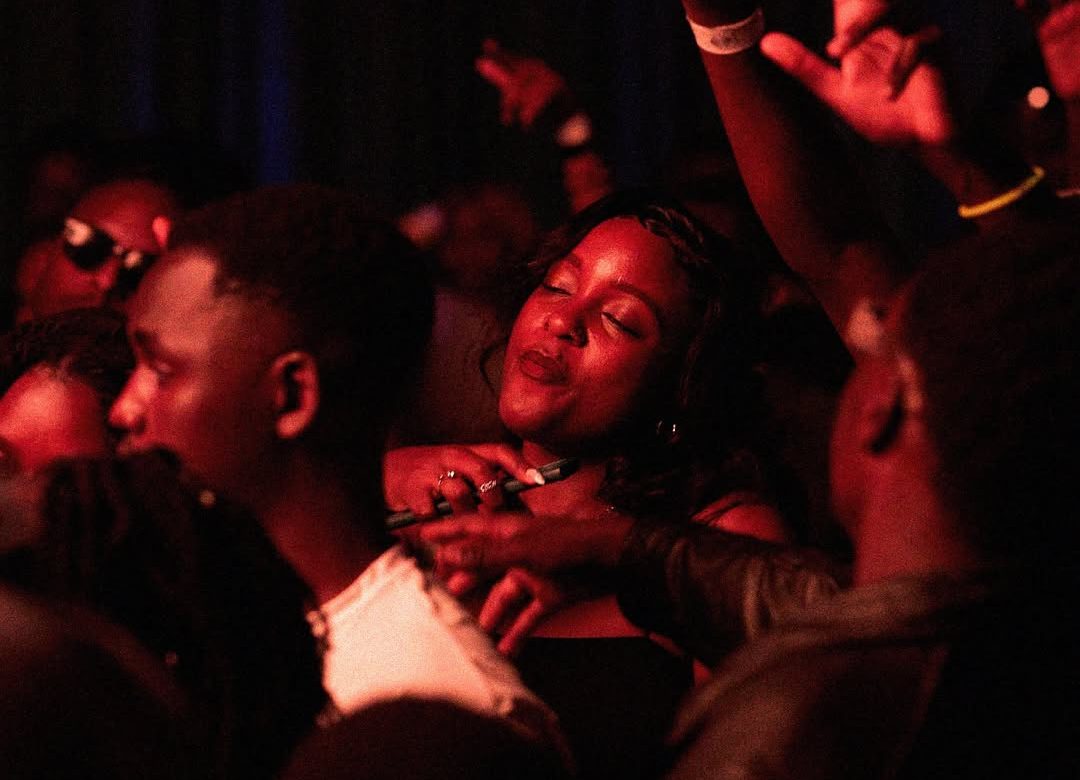

Kenyan Oontz culture has become the clearest evidence that Kenyan electronic music no longer adjusts itself to global expectations, but instead inserts itself as it is.
By Frank Njugi
The kick drum drops. The hi-hat snaps back. That’s it. No melody needed, no lyrics to negotiate with. Electronic music has always been honest about this. In Kenya, this sound once arrived coded as an imported taste, associated with expatriate nightlife and a kind of cultural tourism that happened in Nairobi but did not belong to it.
Then came the shift in attitude, as people started calling it Oontz—more of a shorthand. A way of saying: we know this sound, we’ve always known it, let’s stop pretending otherwise. The “oon” is the kick drum, the downbeat that lands. The “tz” is the hi-hat, the shaker, the nervous shimmer riding above the weight. It’s what keeps the beat from becoming authoritarian.
Electronic music has always had mouth-sounds; global scenes reduce machines to syllables all the time. What is specific about the Kenyan case is how the name Oontz stopped being merely descriptive of a sound and became declarative of a genre, and its subsequent subculture. Local artistes like Tina Ardor have, in the past, framed it simply by saying, “Oontz is just what House is called here”.

Before the word Oontz began circulating with any confidence, electronic music in Kenya existed in a state of productive uncertainty. It appeared in rare experiments. This was before the formation of Santuri Safari around 2014 by Kenyan cultural activist Gregg Tendwa and British DJ David Tinning. Santuri Safari was an incubation that leaned into this experimentation and, instead of importing the EDM sound and localising it after the fact, moved the tools themselves—digital software—to sit alongside elders and folk musicians. The traditional instruments of these musicians, such as the nyatiti and the orutu, which previously were not dressed up for electronic consumption, were looped, stretched, and pulled into repetition until they revealed new rhythmic personalities.
The collective also became busy joining the dots, tracing a circuitry between underground parties across East Africa, from the spin-off monthly Santuri Society in Dar es Salaam to Kampala’s explosive Hatari Voltage events. Nairobi, too, revealed itself as a fast-growing scene, its various strands suddenly legible when they converged at the Rift Valley Festival on the banks of Lake Naivasha.
Santuri would link up with various acts, including renowned Kenyan folk artiste, Makadem, who at the time was fresh from representing Kenya globally at platforms such as the Smithsonian Folk Festival. Recording with Esa Williams in a studio built on a campsite overlooking the lake, they worked ideas into being live, adding layer upon layer. They developed sounds from loops of the nyatiti woven together with live percussion, the music expanding as it tested its limits.
A track, “Salaam”, later found its audience at the Rift Valley Festival, where it was performed to a rapt crowd of 400. Esa triggered loops and added effects, while Makadem supplied live vocals and nyatiti, stretching the moment into an extended, hypnotic twenty-minute jam.
Elsewhere, the collective did even stranger things. Santuri’s Embaire Umeme EP, created with the Mugwisa International Xylophone Group, centred the massive Ugandan embaire xylophones—an instrument not known for subtlety. They are large, communal wooden xylophones from the Basoga people, played by multiple musicians, often between three and eight, simultaneously. Through electronic distortion and loop-based structures, their scale became rhythmic architecture, proving that electronic music did not require delicacy to be modern. It could be heavy, percussive, or unapologetically physical.

Around all these recordings and more, a culture of process took shape. Crucially, the experimentation was not allowed to calcify into a boys’ club. Through Femme Electronic, established in collaboration with DJ Rachael Kungu—a pioneering Ugandan DJ—from 2016 onwards, gender inclusion was built into the scene’s early infrastructure, and female artistes like Coco Em would later move through electronic spaces with authority.
Outside these sessions, the events themselves mirrored the music’s unsettled status. They took place in spaces far removed from polished venues. The crowds were small, techno-forward, and deeply committed.
When the world shut down in 2020, this Kenyan electronic scene lost its favourite alibi: the imported DJ. The steady justification for aesthetic dependency—this is how it’s done elsewhere—collapsed overnight. What remained was an unavoidable question: who is this music actually for?
Lockdown turned the scene inward. There was no crowd to impress and no foreign dancefloor to imagine. Producers were left with Nairobi as their primary audience and time as their only luxury. Home studios replaced stages as laboratories. Collaboration became local by necessity. Artistes stopped chasing a hypothetical global ear and began refining sound with a more intimate addressee in mind: the Kenyan listener who already understood the rhythm.
Out of this moment arose Safari Oontz. Formed through a collaboration between the creative agency Aduma and Sauti Sol’s Sol Generation, the collective made explicit what lockdown had already suggested: that electronic music could be produced for Kenyans, by Kenyans, and about Kenya, without apology.
Tracks from this period sampled tradition and reorganised it. Indigenous rhythms were not laid on top of beats as ornament; local lyricism was folded into the grid itself, forcing the 4/4 framework of Electronic Dance Music (EDM) to stretch and accommodate cadence and ancestry. Electronic music began speaking in Kenyan accents.
By walking away from expensive international headliners, Safari Oontz challenged one of nightlife’s oldest assumptions: that legitimacy must be imported at great cost. Their events, such as Rituals, proved the opposite. Local line-ups did not diminish scale; rather, they showed that what had once been framed as risk turned out to be solvency. The gatekeeping logic of foreign validation collapsed under its own expense.

If Safari Oontz supplied the ideological spine, Oontztopia—founded in 2022—expanded the body. Where Safari Oontz leaned into heritage and continuity, Oontztopia widened the aperture: tech-house, EDM, faster BPMs, younger crowds. Less reverence, more velocity. This Kenyan variation of a genre—Oontz—did not need to sound one particular way to mean something. It could hold a contradiction.
This was where the movement clarified itself. Oontz had become both a container and a cultural signal, flexible enough to include fashion, nightlife ethics, and social responsibility alongside music. By the mid-2020s, initiatives such as Oontztopia’s Butterfly Button, which integrated mental health support into entertainment spaces, made it clear that the scene was no longer content with merely providing escape, but was actively redesigning the conditions of gathering itself.


By 2025, Kenyan Oontz had walls. Real ones. Engineered ones. Built to contain sound properly. This was the moment the culture began insisting on permanence. You could see it in the architecture before you heard it in the music.
Clubs like Muze in Westlands, Nairobi, did not just host electronic nights; they were designed for them. The Mist and Shelter functioned as counterweights—less polished, more volatile—spaces where experimentation remained central rather than decorative. Together, they formed an ecosystem with an audience that was already fluent.
Then came scale. KODA and Masshouse, with capacities stretching to thousands of bodies, made visible what had been true for years: there was demand. The argument wrote itself. Subcultures become cultures when buildings are designed specifically to house their sound. Money followed architecture the way it always does.
By late 2025, Oontz events ranked among Kenya’s highest-grossing live entertainment offerings. What had once survived on DIY logistics and collective goodwill now operated within structured sponsorship ecosystems. Brands like Jägermeister entered as financiers. Platforms such as HustleSasa integrated ticketing and merchandise into something resembling a supply chain. The shift, from passion projects to revenue pillars, from parties to economic drivers with downstream effects, was complete.
And yet, the most striking thing about all this is how little it has resembled a global EDM spectacle. Kenyan Oontz has resisted the visual clichés—the drop choreography, the anonymous headliner worship, the sense that the crowd exists only to validate the stage. Artistes such as Sofiya Nzau, with her Kikuyu House, Idd Aziz, and Suraj have not been presented as exceptions or breakout stars. They are treated as what they always were: carriers of a sound that already belonged to the room. Local-language vocals threaded through House arrangements, and load-bearing percussion, have produced a music that does not perform Kenya but assumes it.

By the time these Kenyan artistes stepped onto global stages in 2025, the anxiety that may once have accompanied export had evaporated. Sofiya Nzau at Tomorrowland, Idd Aziz at Burning Man—the Kenyan sound arrived intact, authentic to itself, and legible to the world. The aesthetic held; it did not thin out abroad. Kenyan Oontz culture has become the clearest evidence that Kenyan electronic music no longer adjusts itself to global expectations, but instead inserts itself as it is.
As of early 2026, Oontz is no longer a scene orbiting recognition but a system—both economic and cultural—capable of sustaining itself. That kick drum landing. And a hi-hat snapping back. We once treated that sound as background noise, imported with the equipment that produced it. Something to dance to, not something to stand on. But cultures do not announce themselves fully formed. They accumulate meaning quietly, through repetition, through use, through insistence.
What Kenyan Oontz has become was never guaranteed. Most subcultures, when they succeed, face a choice that they rarely survive intact. They can dilute themselves for scale, or they can harden into nostalgia. The sound is still there, unchanged in its essentials. The oon still grounds the body. The tz still releases it. But around that pulse now exists a full infrastructure. And the work is not finished. Oontz is still becoming a record of how Kenyan culture chose to meet a global music culture without erasing its accent.
Frank Njũgĩ, an award-winning Kenyan writer, culture journalist, and critic, has written on the East African and African culture scene for platforms such as Debunk Media, Republic Journal, Sinema Focus, Culture Africa, Drummr Africa, The Elephant, Wakilisha Africa, The Moveee, Africa in Dialogue, Afrocritik, and others.