

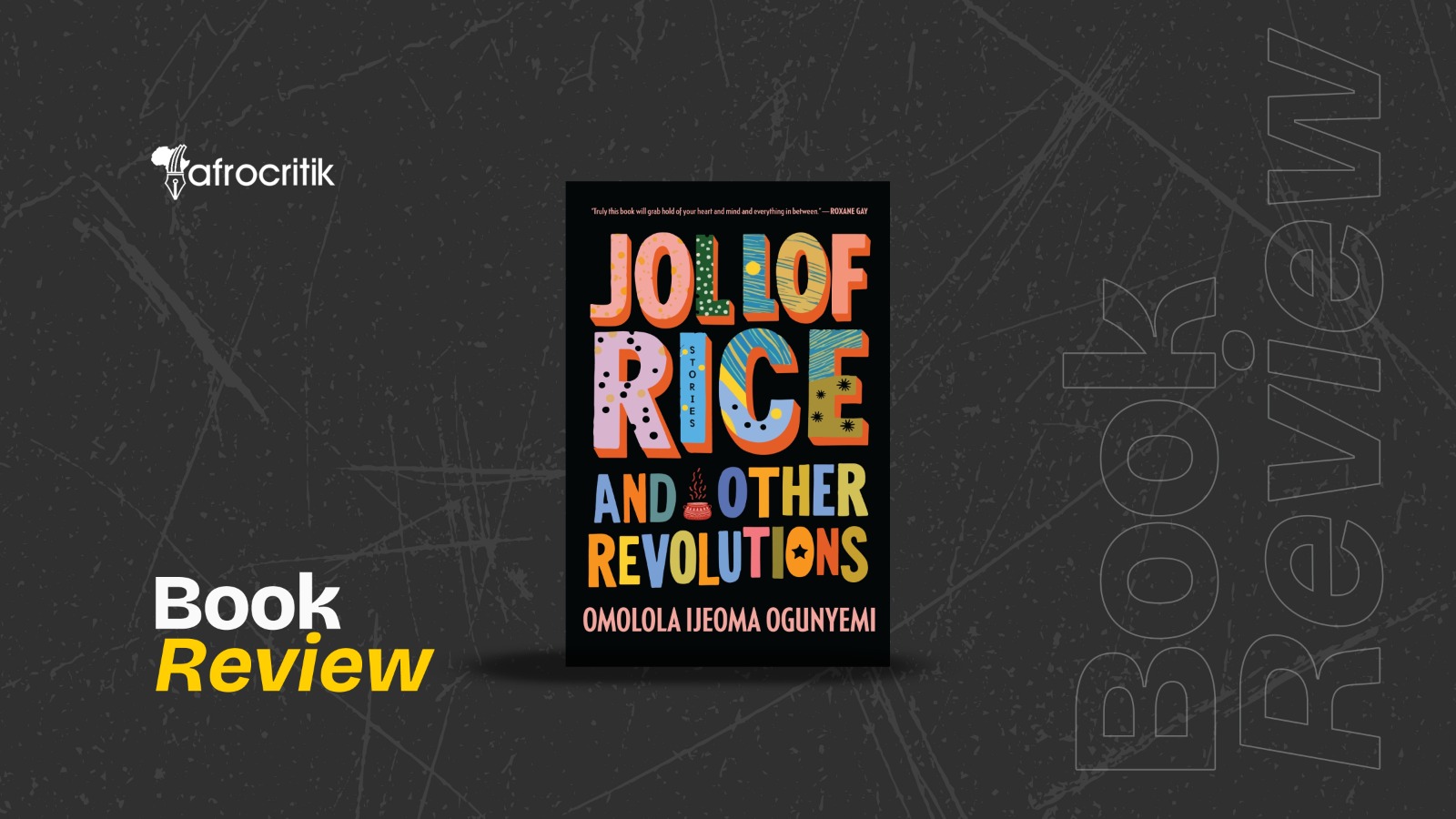


Omolola Ijeoma Ogunyemi presents an array of women, each caught up in events seemingly bigger than them in Jollof Rice and Other Revolutions. Yet, they all manage to triumph by the story’s end.
By Azubuike Obi
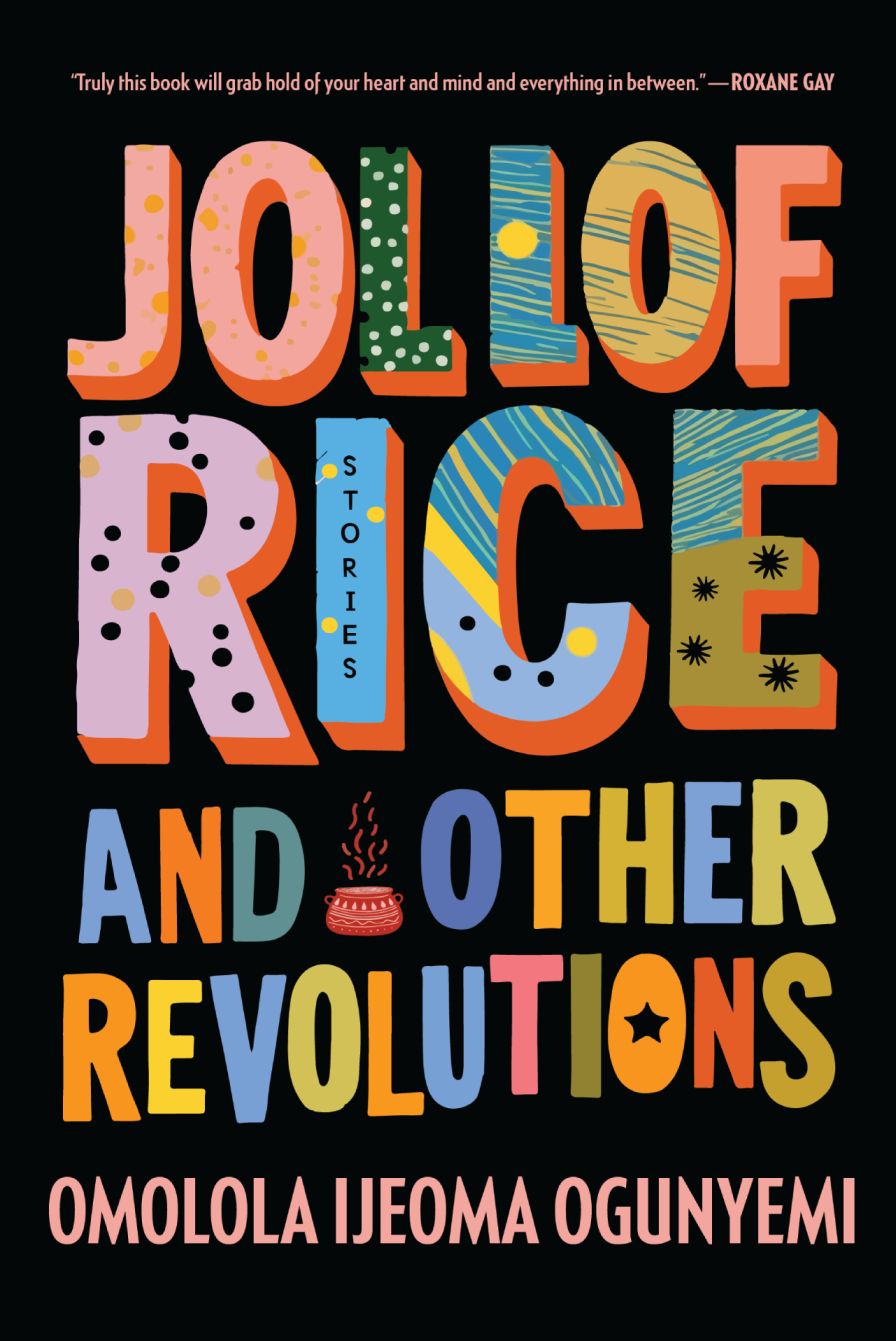
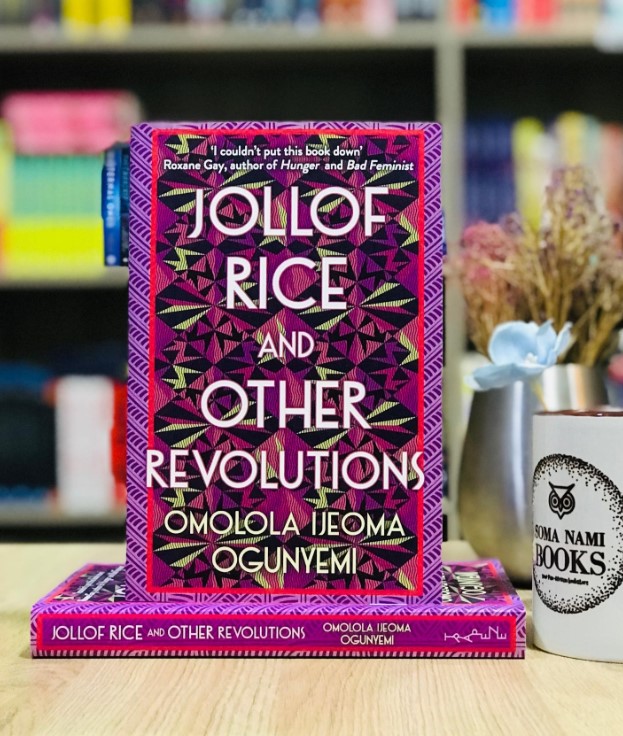
Omolola Ijeoma Ogunyemi’s Jollof Rice and Other Revolutions (2026), four years since its publication by Amistad in the US, has just now been made available to a Nigerian audience by Masobe Books. This is a thing commendable. However, it begs many questions, particularly on what this means for home-grown talents: what is the fate of the Nigerian writer writing about home from home? Do our writers need to first be certified in the West before we consider them worthy of being published at home? And what does this say of our so-called publishing infrastructure?
The interlocked novel spans over the course of a century, and its primary lens is trained on three women—Nonso, Remi and Aisha—as they navigate love, motherhood, friendship and family, flitting between Nigeria and America.
The opening story, “Fodo’s Better Half”, is set in colonial Nigeria and charts over thirty years of history. The setting is not just background but is intricately linked to the events of the plot. Adaoma is a single-minded woman whose mother died bringing her to the world. And so, Adaoma is raised by an indulgent father. The story is, however, beyond this, as Ogunyemi moves across time with a feline energy, examining what motherhood means (and the peculiar ways one comes to it) amidst the forces of religion, culture, class, and the legacy of colonial structures.
“messengerRNA” takes place in a somewhat dystopic future, and reimagines a new Nigeria, one where there is “eighteen Christian states in southern Nigeria, two Christian and two Islamic states in the middle belt, and eighteen Islamic states up north”, where hydrogen jets can travel from Ibadan to New York in mere hours, one where the political directly intersects with the personal. Heavy on backstory, it follows the final days of Aisha’s life.
With a sharp contemporary reportage voice, the title story fully sets the interlocked novel in motion. The narrative voice is engaging right from the onset, then takes an even darker turn, smacking the reader in the face with the unfairness of it all. Set in an all-girls boarding school in 1986, the story follows four friends, three of whose revolutionary actions will deliver consequences of unequal measure, rippling through the school and their lives, subsequently shaping the rhythm of the book.
In the way in which all of the stories coalesce to form a tangible whole, in its preoccupations with women and friendship and family, Jollof Rice and Other Revolutions is reminiscent of Chika Unigwe’s Better Never Than Late (2019). But in places where Unigwe is interested in the integral immigrant experience, Ogunyemi is not. In Jollof Rice and Other Revolutions, we find no sociological analysis on inter-racial dating and marriage; no explanation of the quotidian reality of immigrant life. These stylistic choices bring a freshness and vibrancy that is hard to miss.
Ogunyemi understands the subtlety of police brutality, the way it morphs in different contexts; the manner with which its motivations change, yet at its heart, the cruelty speaks the same language, whether in Nigeria or in America. In the eponymous story, Aisha admits that she started the entire ruckus, yet police officers refuse to take her alongside her classmates, simply because they know her father from the papers. While class is a motivating factor in Nigeria, race is in America. In “Reflections from the Hood of a Car”, just after the narrator is stopped on the highway in America, his head slammed against the hood of a car, for perceived disrespect, he reflects:
“My body spasms and it feels like everything inside me is fighting to come up. I’m shaking, undone, my very being violently rejecting the scene we left behind. My silence. My acceptance. My shame. Swallowed, buried deep because what I really want—oh, what I want is to wrap my hands gently around DiSorbo’s neck, tilt his head back just enough that he can see me. Really see me. No tutu like ice, my raw feelings, just the two of us, that arrogant smirk off his face, replaced with a dash of fear and definitely, respect. An understanding of who I am, my place in this world, as well as his. But the guns make that impossible, bullets and fear equal death every time because my face will never evoke his son, his brother, his father, his uncles, his teenage self, carefree, living on the edge before the rigours of the police academy made their mark.”
In “Area Boy Rescue”, Lagos comes alive, pulsating in the remarkably rendered voice of Nonso’s housekeeper, Blessing. Where the narrative voice in “Guardian Angel of Elmina” falters, that of “Area Boy Rescue” succeeds. Thoroughly so. With the character of Blessing, we witness some of the author’s most acute renditions of class and the inherent struggles that lie within a capitalist system.
How does one hold back against forgetting, even if remembering comes with its own pain? How do you continue living after the life of your only daughter is sniffed out, in such an unfair, cruel manner? Set months after the devastating event in “Jollof Rice and Other Revolutions”, the narrator in the evocative “Goody, goody” not only ponders, but actively lives through this suffering.
Ogunyemi presents an array of women, each caught up in events seemingly bigger than them. Yet they all manage to triumph by the story’s end. She doesn’t suffer her characters merely for the sake of it; in each story, she sets them up for something bigger, ahead, in the future, without losing sight of that end. So that at the end they all come to a sudden realisation, an epiphany of sorts— in many ways a form of redemption: in “Czekolada”, after a fray with a junkie, Aisha realises the place of her long-time boyfriend in her life; Remi, after years of vying for his approval, calls out her father for being absent in her adolescent years; and likewise, in “Last Stop, Jibowu” Nonso decides to move back home following years of dissatisfaction and numbness in America.
“Last Stop, Jibowu” follows Nonso, now a “high-achieving, unhappy thirty-five-year-old.” Through the course of her journey, from her hometown of Anioma-Ukwu to Lagos in public transportation, Nonso, who has lived in America since she was eighteen, negotiates love, loss and motherhood. And, as is characteristic of the stories contained in the collection, redemption comes for her at the end. Here, Ogunyemi delivers virtuosic storytelling and dazzling imagery.
It is important to note that all of the principal characters in Jollof Rice and Other Revolutions are classed women. Their problems are not existential, but that does not make the stakes any less high. With money out of the way, matters of the heart take centre stage— the familiar friendships we hold onto, children and what their absence erodes in the life of one who desires them, and the prickly hills that abound in familial ties.
However, the three women feel the same. There is barely an individuality to each of them; in their adult lives, they all embody very similar, if not the same, spirit. Their backgrounds are different in details that are of little consequence. Their desires are the same, the contours that colour their lives of the same shade.
Ogunyemi’s strength lies in her ability to tap into each character, so that in places where they are too similar, a distinguishable narrative voice carries the stories. The better stories in Jollof Rice and Other Revolutions all have such a remarkable voice: “Goody, goody” fully inhabits a grieving mother; “Area Boy Rescue” is unmistakable in its rendering of Lagos through the vantage point of Nonso’s housekeeper; Nonso’s fears could not have been better chronicled than what we encounter in “Last Stop, Jibowu”. Jollof Rice and Other Revolutions is a triumph of voice-driven storytelling.
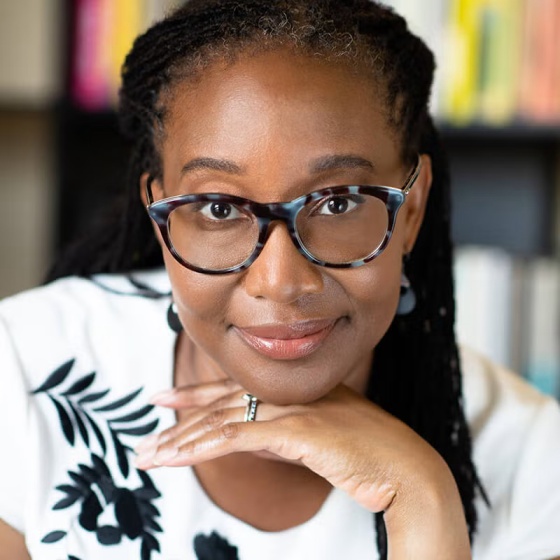
Azubuike Obi is an Igbo storyteller who believes in the transformative power of language. His fiction and nonfiction have appeared online and in print in The Republic, Efiko Magazine, Afapinen, Afrocritik, Naira Stories, and elsewhere. He was nominated for Chika Unigwe’s Awele Creative Trust Award and H.G Wells Short Story Competition in 2024, and is currently pursuing a Bachelor’s degree in English Language and Literature.