


Aníkúlápó: The Ghoul Awakens pulled together over 50 actors, 100-150 crew members, with more than 700 extras, all of whom were accommodated, fed and compensated.
By Adedamola Jones Adedayo
When Netflix platformed Aníkúlápó in 2022, it felt like a fresh epic breath. The film’s status as an Original was a silent validation, an assurance that myth-inspired, culturally grounded stories from this side of the world had universal potential when deliciously packaged and nobly distributed.
This was not the filmmaker Kunle Afolayan’s first attempt at repurposing folklore and superstition. He’s done so with Irapada (2006). He did so, to an appreciable degree of excellence, aiming for real glory, with The Figurine, a 2009 psychological thriller about an ominous effigy-like goddess that is central to a love triangle and the existential crisis among a small group of family and friends.
Afolayan is noted to have spent over ₦50,000,000 (approximately $330,000) on The Figurine, bankrolling the project with personal savings and loans from financial institutions. Released in the cinemas, the film generated ₦30,000,000 in domestic box office revenue, becoming the highest-grossing Nigerian film ever made, until Ijé overtook it in 2010. The film journeyed to the Pan African Film & Arts Festival (PAFF) in Los Angeles and the London African Film Festival and dominated the big screens, eventually coalescing into a subject of interest for evergreen discourses in Nigerian cinema and academia. The Figurine instituted New Nollywood and became the go-to role model—the face of anti-cliché storytelling—in a fledgling sub-industry.
Aníkúlápó remotely followed the mythic playbook of The Figurine, flirting audaciously, sometimes incautiously, with Yoruba culture. It didn’t seem destined to unseat or obscure the forebearer, whether in timing, grit or relevance.
Yet, as new-age streaming smiled at Aníkúlápó, it exposed to other local filmmakers the utilitarian and ubiquitous prospects of traditional epic storytelling. In 2023, when I interviewed Afolayan in person at his Ikeja office, the conversation drew symmetrical lines between his theatrical heritage, personal convictions (including irreligious sentiments) and craft.
About two years earlier, he had entered into an undisclosed multi-title arrangement with Netflix that covered funding for a few years. He was now about to release Ijogbon, and even though enough attention settled on the fast-approaching film that was his first young adult story, our talk branched into the then-vague future of Aníkúlápó.
Netflix, perhaps amused by the traction of the 2022 film, had okayed a series, a previously uncharted terrain for the filmmaker. Afolayan’s vision was a refurbished indigenous narrative with Game-of-Thrones-esque ambitiousness. Whether this vision has blossomed or atrophied is a topic for another day, but there’s no denying that the franchise has awakened the consciousness of cinephiles not only to the veracity of the Yoruba worldview but also to the technical and commercial decisions that go into such productions.
The latest instalment of the franchise, Aníkúlápó: The Ghoul Awakens, comes after the release of Aníkúlápó: Rise of the Spectre and marks the second season in the series. The show continues the story already established in the previous parts, but this time around, without its seductive protagonist, who loves to cut corners.
Besides the plot, it is worth paying attention to the structure, technical, and financial behind-the-scenes decisions that went into the recent production. This shift towards world building become even more apparent while the series remains connected to the 17th century, alluding to realities of those times, such as the socio-political setup of the Oyo Empire, the trans-Atlantic slave trade, and a strong belief in forest demons.
For a show that looks back at history even while buttering it with fiction, the fate of realism rests on visual elements, sound components, and its overall production management.
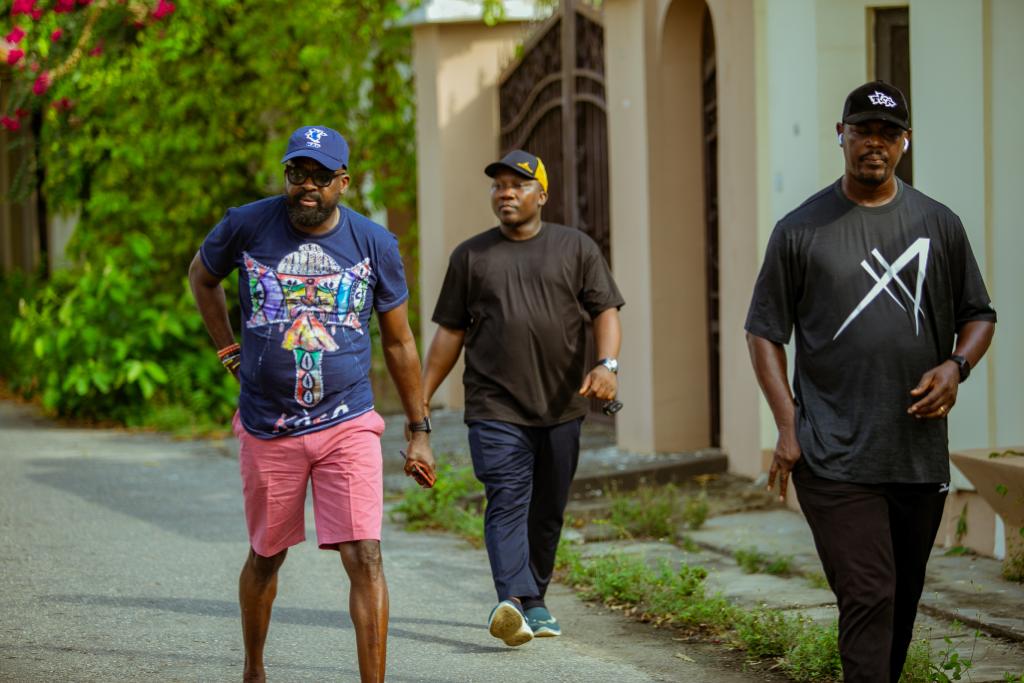
Sulaimon Omobolaji worked together with Sadiq Adebayo as production manager on Aníkúlápó: The Ghoul Awakens, with the former handling mostly the creative and technical part of the project. The synergy between them, Omobolaji says, was natural, as they prioritised work ethic and constant communication. “I’m usually the first to arrive on set and the last to leave, making sure everything is aligned creatively for the day and constantly checking in with him on actors and plans so we stay in sync,” he says.
“When Mr. Kunle Afolayan reached out to me, he said the project was very big in terms of the vision and scale, and that it couldn’t be handled by just one person,” Omobolaji recalls over a Google Meet call with me, citing his broad experience and a previous work relationship (on Recall, a psychological thriller also produced and directed by Kunle Afolayan) as instigators of the current liaison with the filmmaker. He also worked on Season 3, which, according to Afolayan in a social media video, was filmed simultaneously with the current season and will be released not too long after on Netflix.
Omobolaji’s filmography includes Ojukokoro: Greed (2016), Kofa (2022), and TV series Life and Dirt (2024) where he served as production manager; Dazzling Mirage (2014) as production assistant; The Black Book (2023), Orah (2024) and the 2026 Sundance Special Jury Award for Acting Ensemble winner Lady (2026) as production coordinator; and Meeting Funmi’s Parents (2024) which he co-produced with Kevin Luther Apaa.
Principal photography for Aníkúlápó: The Ghoul Awakens took place across Nigeria and Ghana, with the Afolayan-owned KAP Film Village and Resort, Oyo state, serving as the central location and Ghana providing landscapes for the historical sites captured in the series. The production team barely had problems filming at KAP Village since it was primarily designed for that purpose. But Ghana’s was a different experience. Much of the logistics rested on the production manager. Because filming in Ghana was relatively expensive, the production team had to maximise their time by planning effectively, obtaining necessary government clearances and documentation and working in intervals of about a week.
A major challenge they encountered was during the scouting period in Ghana. Omobolaji had flown into the country, whereas some of the crew members went with the equipment by road. On arrival at Accra, he couldn’t reach them, only to soon find out that the crew members had been detained at the border, with their equipment impounded.
“I had to drive from Accra to Aflao, which is about four hours, just to sort things out,” Omobolaji says. “By luck, I met a new customs controller who helped us. We had to redo paperwork, payments, and clearances, and it took almost the whole day. After that, we still had to travel back to Accra that same night. It was stressful, especially since we were meant to start filming in less than 24 hours. But with proper planning, documentation, and preparation, we were able to manage it and move forward.”
Production managers in film are essentially responsible for the day-to-day managerial or administrative activities on a film or television project. Often required to work from pre-production to post-production, they manage below-the-line personnel and carry out the daily tasks of budgeting, scheduling and logistics.
Their job includes facilitating the transportation of cast and crew from one location to another and working with heads of departments on the production to look after the physical and mental well-being of staff. A production manager is directly responsible to the line producer and production accountant, to whom they report costs and make estimations about future expenses.
Omobolaji, like other serious behind-the-scenes professionals, has a routine that he follows. Being usually the first person to arrive on set, he verifies set equipment, including camera, lighting and other technical gear, after which he confirms the availability of cast and crew members. Once everything is in place, he communicates with the director, sending pictures of the entire arrangement. The director then arrives to give his blocking and instructions, while the production manager steps aside for the assistant directors to take charge.
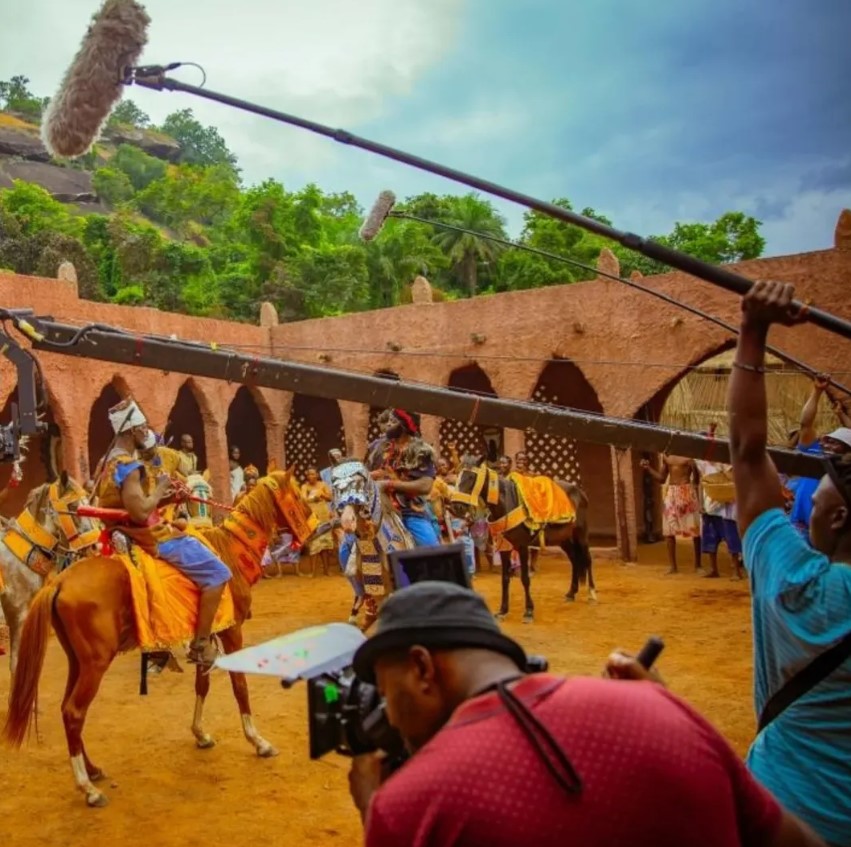
Aníkúlápó: The Ghoul Awakens pulled together over 50 actors, 100-150 crew members, with more than 700 extras, all of whom were accommodated, fed and compensated. “Then you consider transportation, technical equipment, and VFX”, Omobolaji adds. From his own evaluation, the production management budget gulped about $1,000,000.
For allocating funds efficiently across departments, both production managers created a strategy to ensure accountability. Departments in need of funds first needed to submit a proper budget breakdown that was reviewed and adjusted for clarity before they provided respective invoices. Expenses had to be corroborated with receipts reflecting agreed figures, down to such seemingly small costs as transport.
All of this planning and budgeting could have been seamless, save for a few hiccups that threatened. One particular incident had to do with transportation. It was an off day before a new week of filming that was scheduled to take place in town rather than on the main set. Omobolaji had confirmed the night before with the transport captain that all vehicles had been serviced and were ready, only to realise by daybreak that the vehicles weren’t ready.
This led to the scramble for alternative transportation, with more time and money lost in the process. “We were meant to move by 7 a.m., but we didn’t get to set until around 8:30 or 9 a.m.,” Omobolaji recalls. “It cost us an additional 3 to 4 million naira, and the director was understandably not happy.”

Feeding also caused a little operational problem. That morning, the welfare team came under pressure as some crew members did not get breakfast on time. The production manager then found out the sudden increase in the number of people planned to be fed from 150 to 200, which was because some actors had come around with their personal assistants and drivers.
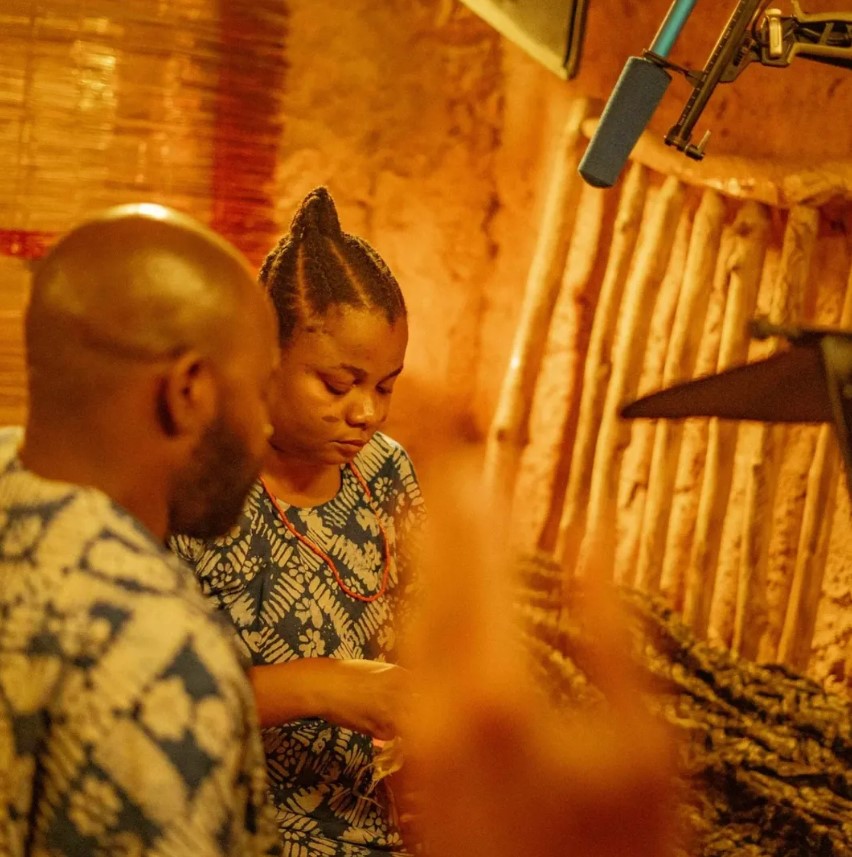
Creating the soundscape for Aníkúlápó: The Ghoul Awakens required engaging critically with the show’s narrative, themes and visual language. In this case, Paul Adu, the show’s sound recordist, partnered with Anu Afolayan, the re-recording mixer, aligning with the director’s broader vision to give the series its sonic identity.
“We employed a combination of location recording, Foley, and sound design to build a rich and immersive audio environment,” Adu explains. “My focus was on capturing the distinctive sonic textures of the film’s settings, using a variety of microphones and recording techniques to achieve authenticity and detail. Anu, on the other hand, concentrated on sound design, music scoring, and the final mix.”
Usually, in film and television, the sound recordist or mixer takes responsibility for all the sounds recorded while shooting, including dialogue and sound effects. Before production commences, they engage the producer and director to communicate and agree on expectations and deliverables that will best suit the director’s style. While filming, their role is to ensure that audio and dialogue from boom microphones are properly captured. They are also involved in the post-production stage, where extra sounds are added, and speech may be improved with the aid of ADR (automated dialogue replacement).
“Dialogue was primarily captured using boom microphones, which remain my primary source for audio acquisition, with lavalier microphones deployed as reinforcement in challenging recording conditions,” Adu reflects on his experience with Aníkúlápó: The Ghoul Awakens. “In post-production, layered sound effects and FX processing were applied to heighten the atmosphere and sustain narrative tension”.
In the previous installment Aníkúlápó: Rise of the Spectre, Teledalase’s voice stands out as the soundtrack composer for the opening sequence of each episode. She created and performed multiple original songs that formed part of the project’s score album, including tracks like Eledumare, Ayanfe, Aje and Iwa Lapo. This score supports the emotional, cultural and spiritual atmosphere of the narrative, with the Yoruba-language opening theme particularly pointing to the influence of the divine in the journey of humans.
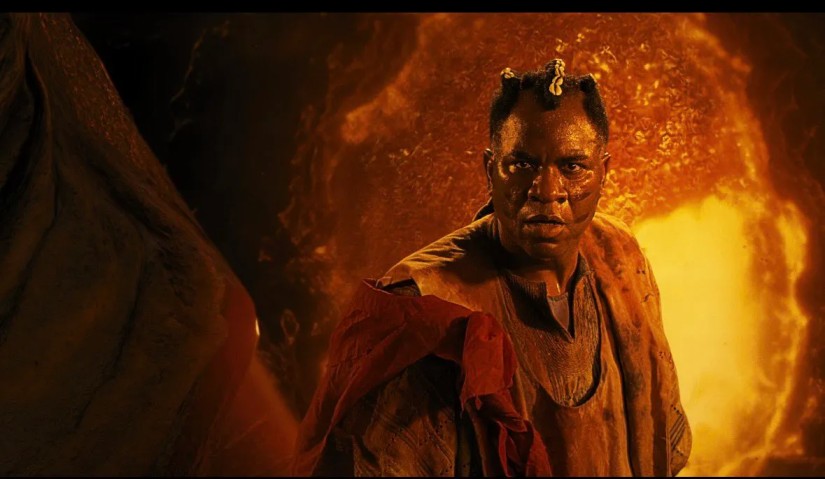
The ghoul is probably the most distinctive character in Aníkúlápó: The Ghoul Awakens. This character is the alter ego of Basorun Ogunjimi, portrayed by Owobo Ogunde. At the sight of any human in its domain, the ghoul’s form switches from the physically attractive Basorun persona to a dreadful humanoid with red-hot, smoky eyes and soot-black face, thanks to special visual effects.
The voice and movement take on a fearsome growl, like a ferocious predator lurking in the wilderness, poised silently to pounce on its unsuspecting prey. “To realise the ghoul’s movement,” Adu explains, “we recorded combinations of animal hides, wooden creaks, and other atypical textures, which were later processed and layered to produce an unsettling and distinctive sound”.
This internationality in sound effects is not limited to the ghoul, as Adu deliberately chose unconventional materials to generate bespoke sound effects that contributed to realism. “We also utilised contact microphones to extract unusual resonances from everyday objects such as metal pipes and wooden boards,” he adds.
The renewed interest of Nollywood in the epic film genre may be linked to audience engagement and distribution opportunities offered by both local and global streaming platforms. Traditional values, culture and myth appear to be the driving force of these narratives. Equally significant, however, are the production values of the film and TV projects.
Producing an epic film set in the indigenous social environment requires a decent understanding of the history of the region, because that will eventually inform the visual and sound choices that the project adopts. This is what franchises like Aníkúlápó call attention to. While the storytelling and production are not without conspicuous flaws, the lesson for filmmakers is that storytelling thrives not only on the product but also on the process, and that without the right administrative and technical hands, building an immersive cinematic landscape is an illusion.
Adedamola Adedayo is a film journalist and critic with special interest in African cinema. Through writing and audiovisual mediums, he creates conversations around cinema in Africa and the Diaspora. You can find him on Instagram @jonesthegoodboy and X on AdedamolaAdeda4.