


At a moment when politics presses hardest on daily East African life, the music that once named injustice, mocked power, and educated its listeners seems to have misplaced its nerve.
By Frank Njugi
For the past year or so, East Africa has been living in a state of heightened political anxiety. For example, in Kenya, political instability and civil unrest were said to have overtaken economic volatility as the primary security concerns heading into 2026. Injustice across East Africa now looms larger in the public imagination, alongside unemployment.
Moments like this have historically summoned East African music into action, taking on the role of both witness and agitator. And yet, right now, our popular music, once the region’s most reliable form of civic speech, sounds curiously disengaged.
The songs seem to keep you dancing even as the ground shifts beneath you. There lies the paradox: at a moment when politics presses hardest on daily East African life, the music that once named injustice, mocked power, and educated its listeners seems to have misplaced its nerve. One is left wondering: has a society under pressure lost its sonic conscience?
It is well known that music has never been neutral. Long before it became content, songs instructed, teaching people how to feel, what to fear, and where to look. Folk songs carried warnings and lessons disguised as melody. And by the time genres like hip-hop arrived fully in the 1980s, they understood themselves as reportage, and as a running commentary from the streets the state preferred not to see.
“The Message” by Grandmaster Flash & The Furious Five was a canonical example of music as social diagnosis, and the record is known to have diagnosed the pressures of poverty and despair endured by African American communities, without the softening lie of escape. That is what music does at its best: it becomes a function of seeing clearly, of putting language to power, insisting that pleasure does not have to come at the cost of truth.
Kenya understood this instinct. When Hip-Hop took root two decades later in Nairobi, it arrived with a sense of that duty. Kalamashaka’s Tafsiri Hii sounded like a public briefing on Nairobi’s inner-city street life, a narration of the postcolonial disappointment that hung over everything like exhaust.
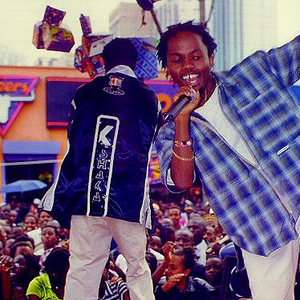
A few years later, Ukoo Flani Mau Mau’s album Kilio Cha Haki would push even closer to the bone, turning Nairobi life into testimony. These artistes were not flirting with politics; politics was the air their music breathed. And in those days, legitimacy seemed to come from taking a position. It appeared that artistes were expected to stand for something, to carry an issue on their back and make it audible.
Then something loosened. In Kenya, Kapuka and Genge slid in as lighter, looser, insistently physical genres. In Tanzania, Bongo Flava was quietly breaking with its Ujamaa hangover, learning to move in the thinner air left behind by the 1990s and their structural adjustment sermons. The music was taking a breath.
Moi was gone, the future briefly looked improvable, and dancing might have felt like proof that the hard days had ended. But moods, like governments, overstay. This release calcified into a habit. What began as a temporary holiday from politics and social issues turned into something permanent, and the music seems to have kept smiling even as the old pressures now creep back in.
Here we are again. East Africa bristles with anxiety as our democracies falter, and young people walk the streets heavy with disappointment. The old pressures have returned, perhaps this time sharper and louder, amplified by the social media age. Yet, to judge by our music, one could hardly notice.
The charts are crowded with party tracks, love songs, and beats built for escape. Almost every East African song that made our Top 100 African Songs of 2025 was either a very good party song, a lovely love song, or a prolific rap track proclaiming individual progress and bravado while neglecting the collective state of things. Our streets are tense, but our soundtracks are cheerful. And this begs the question: why hasn’t the music caught up with the moment?
Part of the answer lives in government offices, where music seems to go to die quietly. In Kenya, the Communications Authority of Kenya (CA) patrols the airwaves; in Tanzania, the Tanzania Communications Regulatory Authority (TCRA) does the same. All the bans these offices have imposed on music have arrived dressed up as virtue, morals, decency, culture, and in language so elevated it floats above argument.
“Vulgarity” becomes a stand-in for political discomfort, a tidy way to punish what power cannot debate. Tanzanian rapper and activist Nay Wa Mitego knows this terrain well. His outspokenness has kept him in recurring conflict with BASATA (the National Arts Council of Tanzania), the arts gatekeeper that prompts the TCRA to enforce its bans. He has been arrested multiple times between 2017 and 2025, charged and warned for songs that refuse to behave, from “Wapo” to “Nitasema”, which dared to point out injustices.
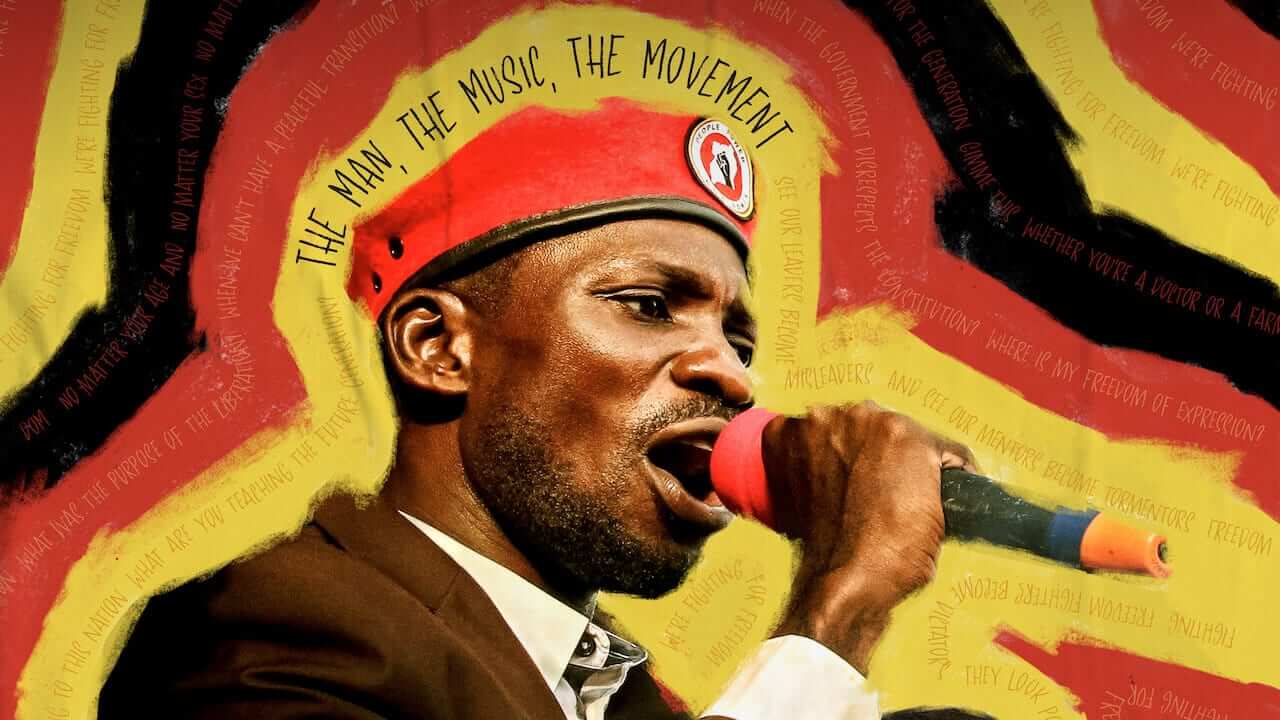
A look at Uganda shows how the consequences of such bans begin to resemble a warning label. When, in 2017, the song “Freedom” was pulled by the Uganda Communications Commission (UCC), Uganda’s equivalent of the CA and TCRA, it was not really about the song; songs are easy to ignore. It was about the singer, Bobi Wine, whose popularity had begun to harden into political weight. This became even clearer when he eventually emerged as the country’s main opposition figure in the 2020s.
Music, in his hands, had crossed the line from expression to leverage, and the state responded by pretending it was merely enforcing taste. This is how repression works at its most efficient: it does not need to silence everyone; it only needs to make an example.
Bongo Flava, the genre in which Nay Wa Mitego sings, once understood itself as a kind of translation service, with earlier artistes such as Saleh Jabir and later Professor Jay turning social reality into language young people could recognise as their own. It carried critique, but somewhere along the way that instinct was misplaced. Contemporary Bongo Flava has perfected the pose of detachment, implying that distance is sophistication.


Modern Flava artistes such as Diamond Platnumz have displayed a careful leaning towards power, and towards the comfort of not being noticed for the wrong reasons. Their music still smiles even as Tanzania grapples with the aftermath of a horrific election day in 2025, staying agreeable and keeping its hands clean. That cleanliness has become a position, telling you exactly who the music is no longer speaking for.
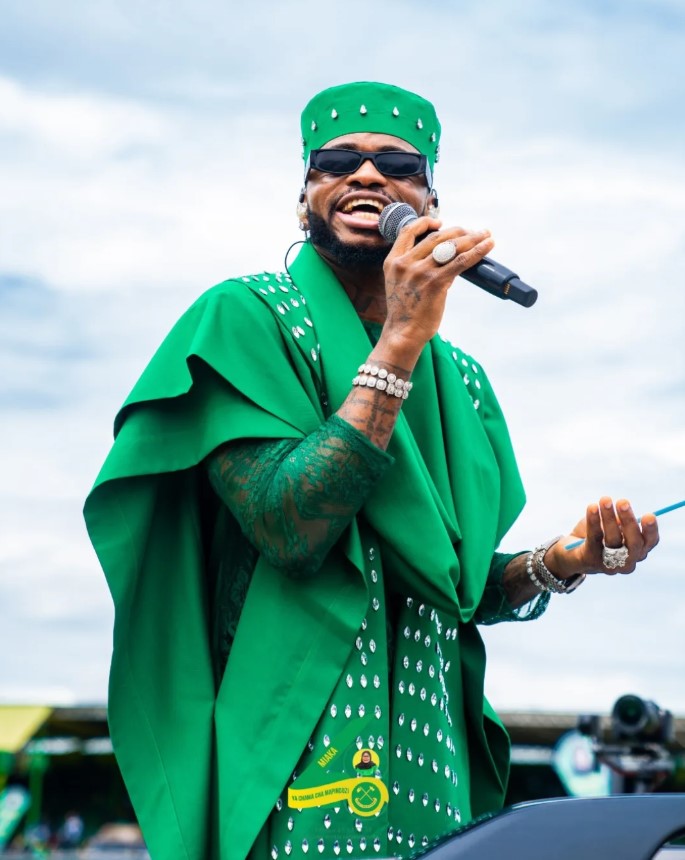
And if the state does the silencing loudly, the market has learned to do it politely. Radio and television do not ban political music; they simply do not need it. Party anthems, lifestyle hits, songs engineered for immediate pleasure keep ratings tidy and advertisers calm. Figures like the aforementioned Diamond Platnumz, or the endlessly rotating cast of Gengetone and Arbantone acts in Kenya, have become symbols of efficiency: their music is algorithm-friendly, frictionless, perfectly legible to platforms that reward mood over meaning.
Nothing is forbidden. Everything is just… elsewhere. Conscious music has not been chased out; it has simply been drowned out by noise, nudged to the margins by an economy that mistakes popularity for relevance. The effect is the same as censorship, only cleaner.
You can see this most clearly by looking at who survives at the margins. Artistes like Nay Wa Mitego have held on to the old nerve—bold, politically charged, stubbornly didactic when necessary. He says what he means and pays for it in reach; the numbers tell their own story. Consciousness, it turns out, does not travel well in an attention economy calibrated for comfort.
Around him orbit softer approximations: moments of seriousness that feel less like conviction than timing. Otile Brown releases a song called “Africa”, a sudden geopolitical gesture from an artiste whose catalogue has otherwise treated love as everything—constant and apolitical. Sauti Sol’s “Tujiangalie” resurfaces as a callback, a song that can do numbers because the times demand the illusion of reflection, even as the more recent work of the band members slips back into disengagement.
Which brings us back to the paradox we started with: a region under pressure, and its soundtracks that keep looking away. The absence of conscious music relevant to the chaotic days we are living in can easily be misread as apathy, as though artistes and audiences have simply grown tired of thinking.
But it feels closer to constraint than indifference. There is a narrowing of what can be said, what can travel, and what can be rewarded without consequence. When music withdraws from its civic role, a society does not just lose protest songs; it loses a shared language, a way of remembering together, the habit of naming injustice aloud before it hardens into normalcy.
Frank Njũgĩ, an award-winning Kenyan writer, culture journalist, and critic, has written on the East African and African culture scene for platforms such as Debunk Media, Republic Journal, Sinema Focus, Culture Africa, Drummr Africa, The Elephant, Wakilisha Africa, The Moveee, Africa in Dialogue, Afrocritik, and others.