


To recalibrate the balance of cultural authority, African music publications must be adequately resourced and treated as primary sources.
By Abioye Damilare Samson
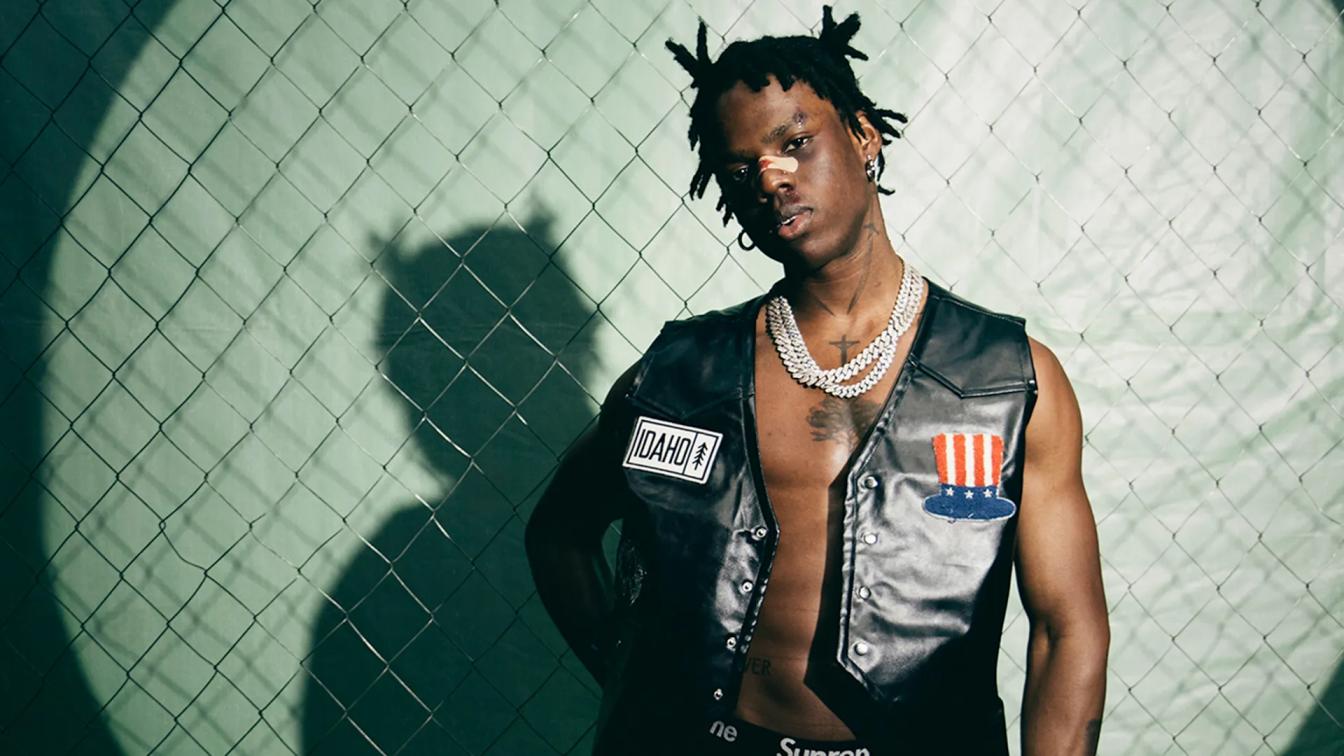
In the early hours of Sunday, February 15th, Billboard reshared an article titled “25 Biggest One-Hit Wonders of the 21st Century” on their Twitter page. The piece ranked Rema’s global hit, “Calm Down” Remix featuring Selena Gomez, at number six, making him the only African artiste on the list. It has since sparked widespread outrage among fans, culture critics, and industry stakeholders alike.
To quote the writer’s blurb on Rema’s entry: “After releasing the original ‘lo-lo-lo-lo-lo-wo-wo-wo-wo’-ing version of “Calm Down” in 2023, Nigeria’s Rema noticed it breaking on the Billboard U.S. Afrobeats Songs chart. He took a swing and recruited Gomez for the female vocal and, shockingly, she agreed”.
The condescension embedded in that language is not subtle. It finds a way to diminish both the song and the artiste in a single breath by reducing a carefully constructed Afrobeats record to an onomatopoeic joke and also ‘maliciously’ frames Selena Gomez’s participation as an act of benevolence rather than a creative decision between two established artistes.
In contrast, Gomez herself told a different story at the height of the remix’s global ascent. In 2023, she shared a photo of the two of them on Instagram and wrote, “This man has changed my life forever. Rema, thank you for choosing me to be a part of one of the biggest songs in the world”. Her words directly contradict the writer’s suggestion that her involvement was an act of charity; if anything, they illuminate the reciprocity of the collaboration and the scale of the record’s global impact.
It is telling that even at the time of that assessment, “Calm Down” had already become one of the most-streamed Afrobeats records in history, amassing billions of plays across platforms worldwide. Rema had headlined major festivals across Europe, sold out arenas in Africa, and fundamentally shaped the sound of contemporary Afrobeats alongside his peers. He had scored multiple chart-topping hits across the continent and maintained a consistent presence on streaming platforms worldwide.
Even at the time of writing this piece, his feature on Don Toliver’s “Secondhand” had debuted at number 29 on the U.S. Billboard Hot 100. And yet, because his subsequent releases didn’t crack the American Hot 100 — a chart that reflects the listening habits of one country and relies heavily on radio airplay in a market where African artistes face structural barriers to consistent rotation — he is labelled a one-hit wonder.
Beyond this individual case, the Billboard article is only a symptom of a deeper, more insidious problem: the persistent framing of African music success through metrics and value systems built for entirely different cultural and commercial ecosystems.
The “one-hit wonder” label applied to Rema is particularly instructive because it exposes how precarious it becomes when Western institutions are treated as the sole arbiters of global musical achievement. More importantly, it raises a question that African music must urgently confront: who gets to define the narratives around our art, our artistes, and what success truly means in our industry?
Afrobeats to the World and the Narrative Battle That Comes With It
To be clear: the pursuit of foreign markets in 2026 is not vanity. It is an economic and strategic imperative that any serious artiste or label operating in today’s music industry would be reckless to ignore.
According to the IFPI Global Music Report 2025, the United States remains the world’s largest recorded music market, accounting for a disproportionate share of global revenues. Streaming revenue from Western platforms still dwarfs what artistes earn from African streams, often by factors of ten or more. Tour economics in Europe and North America offer guarantees and ticket prices that far exceed what most African venues can sustain.
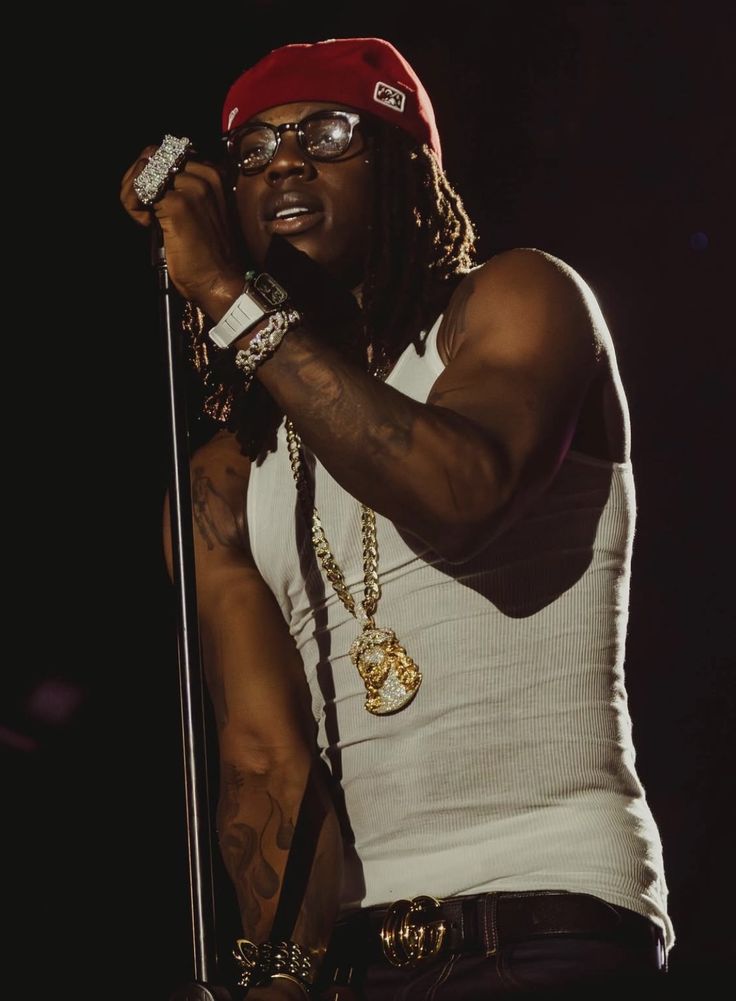
A placement on flagship playlists like Spotify’s RapCaviar or Apple Music’s global charts can transform an artiste’s earning potential overnight. Going global is not a betrayal of African music. It is one of the most powerful things that has ever happened to it, and Afrobeats’ rapid conquest of international markets over the last decade is proof that the music is more than ready for the world.
But global ambition comes with a tax that is rarely discussed honestly. When you take your music into foreign markets — when you actively pursue American radio, collaborate with Western pop stars, and campaign for Hot 100 placement — you are entering someone else’s ecosystem on their terms. What this means is that when your art enters a foreign market, that market will categorise it by its own logic, measure it by its own metrics, and file it wherever it sees fit.
If you intend to sell your music to various climes, you cannot be entirely surprised when they label it as they choose. That is not an excuse for condescension or misrepresentation. But it is a brutal reality the industry must reckon with honestly, rather than meet with outrage alone. The question is never whether to go. The question is how to go without losing yourself in the translation.
The real question, then, is not whether African artistes should go global. They absolutely should, and they will continue to do so. The question is whether African institutions — media, charts, award bodies, criticism — are strong enough and credible enough to hold the narrative steady while this happens.
The Cost of Ceding the Narrative
The consequences of this become clear when you look at how Western institutions have historically engaged with African music. The condescension in Billboard’s language is not an isolated lapse in editorial judgment. It reflects a colonial intellectual framework that still governs much of the Western media’s approach to African cultural production. The implicit assumption is that American chart success represents validation and legitimacy, while everything else is preliminary, or doesn’t quite count.
This logic is visible in the Grammy Awards’ introduction of the “Best African Music Performance” category in 2023. Rather than integrating African artistes into existing categories where they could compete on equal footing — ‘Best New Artist’, ‘Record of the Year’, ‘Album of the Year’ — the Recording Academy created a separate category that lumps the entire musical output of a continent into a single competitive space. In doing so, it signals that African music can be recognised, but only within carefully contained boundaries that do not threaten the existing hierarchy.
When Western validation becomes the primary measure of success — when breaking into American radio is treated as more significant than dominating African charts for months, when a Grammy nomination generates more celebration than winning the Headies, AFRIMMA, the Soundcity MVP Awards, or other continental and local awards — the industry effectively devalues its own metrics, its own markets, and its own musical traditions.
The casualties of this imbalance are already visible. African genres like Juju, Rumba, Makossa, Apala, and Highlife, which once thrived and evolved across the continent, now struggle to maintain continuity after their pioneers pass, partly because cultural attention has shifted toward whatever travels best and stands the greatest chance of cracking Western markets.


Reclaiming the Centre of Cultural Authority
The problem of who defines African music success — and on whose terms — is not one that more streams or more crossover hits will solve on its own. It is an institutional problem, and it demands an institutional answer. Billboard did not invent its authority over global music discourse. It inherited a structural advantage built over decades of infrastructure, distribution, advertising revenue, and institutional credibility.
That advantage has been maintained because no comparable African institution has yet been accorded the ‘legitimacy’ it deserves at that scale. And that is the critical distinction, not that the institutions don’t exist, but they haven’t been taken seriously enough to matter in the rooms where decisions are made.
African music journalism, significantly, is producing sharper, more contextually aware criticism than at any point in its history. At Afrocritik, we’ve been doing the rigorous work of situating African music within its proper cultural and historical frameworks, analysing it with nuance, celebrating innovation, and holding artistes to high standards.
Other homegrown platforms — Native Mag, Pan African Music, OkayAfrica, Culture Custodian — have built spaces that treat African popular culture as worthy of serious intellectual engagement, documenting the scene, archiving key moments, and building the historical record that will allow future generations to understand the evolution of the continent’s music.

Significantly, TurnTable Charts, launched in 2020, stands out as one of the most significant structural innovations in recent years, publishing weekly charts based on data aggregated from streaming platforms, television, and radio across the continent.
It provides accurate, timely insight into what truly resonates in African markets, capturing the shifting nuances of popularity across regions and demographics. These platforms are better equipped than Western outlets to assess what African artistes are accomplishing because they understand the context, influences, and stakes.
To recalibrate the balance of cultural authority, African music publications must be adequately resourced and treated as primary sources. African award institutions must carry genuine weight beyond their home regions. And African artistes and fans must celebrate continental chart dominance with the same fervour reserved for Hot 100 breakthroughs, recognising that winning the Headies is a milestone and not a stepping stone toward “real” recognition.
Every time the industry waits for Pitchfork, Rolling Stone, or Billboard to validate what is already excellent, the hierarchy is reinforced, and African music remains trapped in the position of supplicant and its achievements filtered and often diminished by foreign lenses.
Abioye Damilare Samson is a music journalist and culture writer focused on the African entertainment industry. His works have appeared in Afrocritik, Republic NG, NATIVE Mag, Newlines Magazine, The Nollywood Reporter, Culture Custodian, 49th Street, and more. Connect with him on Twitter and IG: @Dreyschronicle