

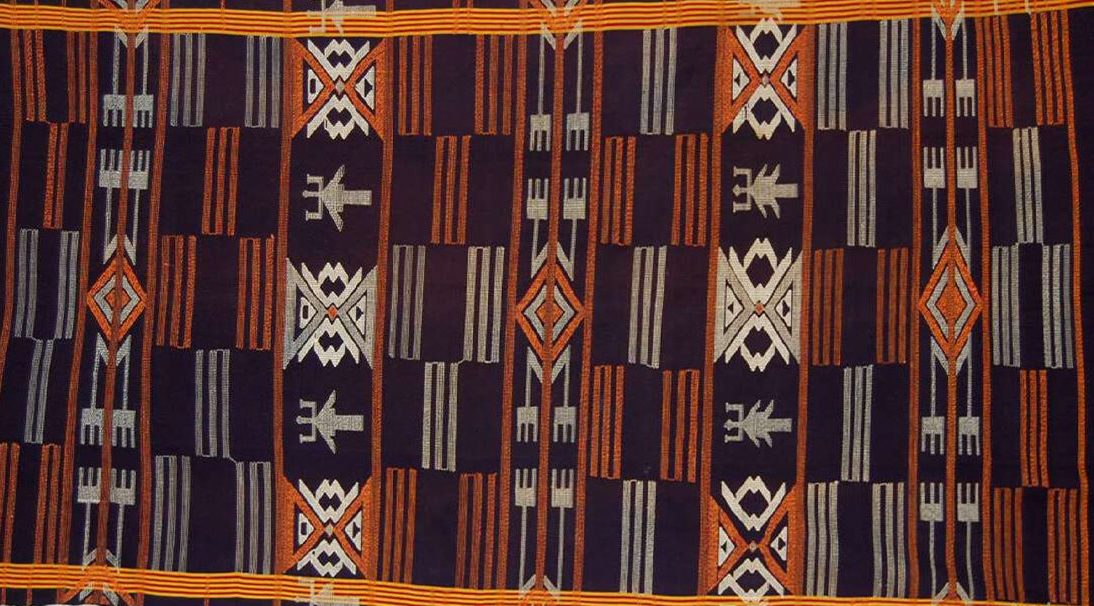

The Akwete cloth is usually made into wrappers for women, and it is a textile-making practice traceable to the late nineteenth century.
By Iruoma Chukwuemeka
I
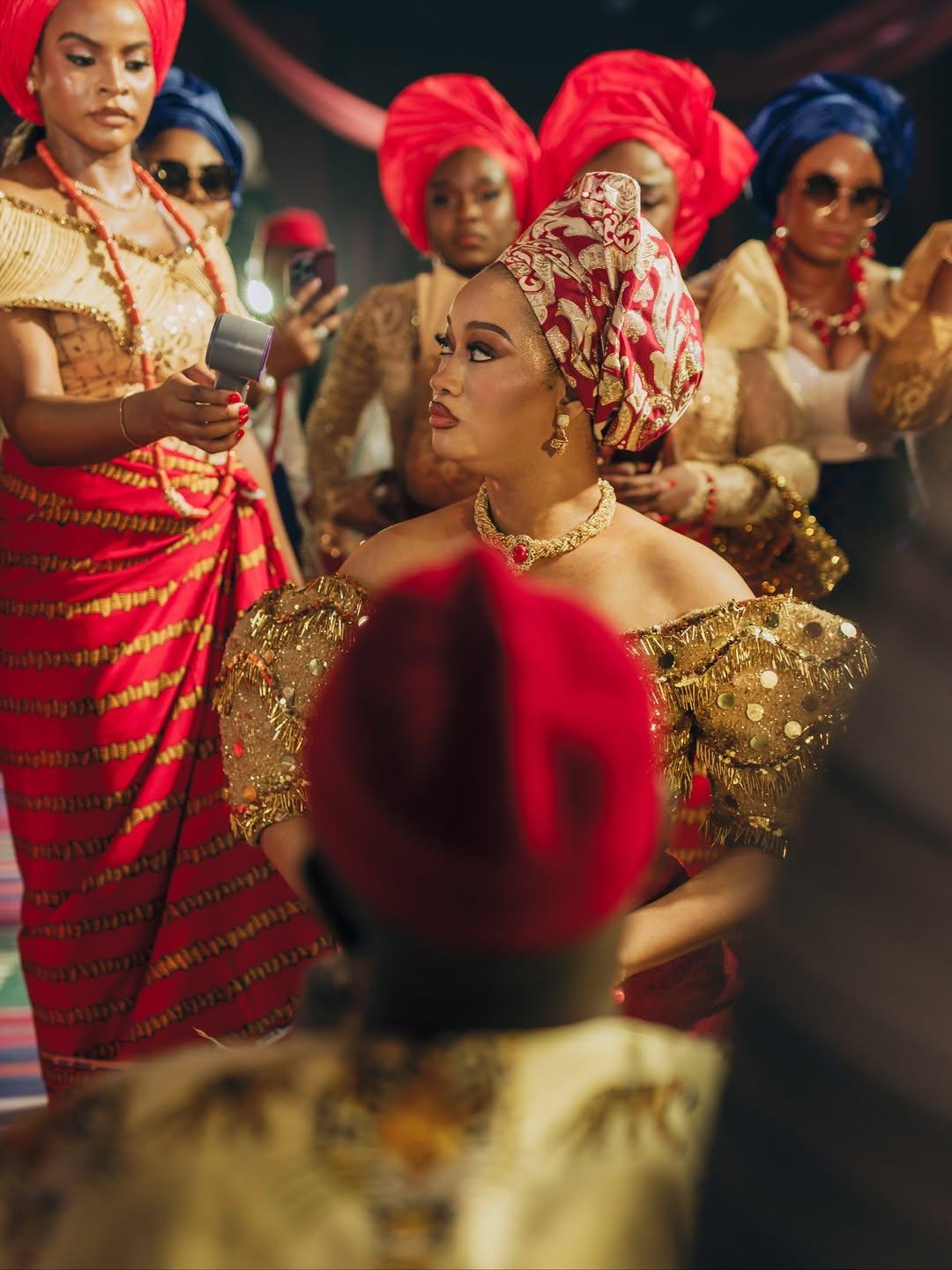
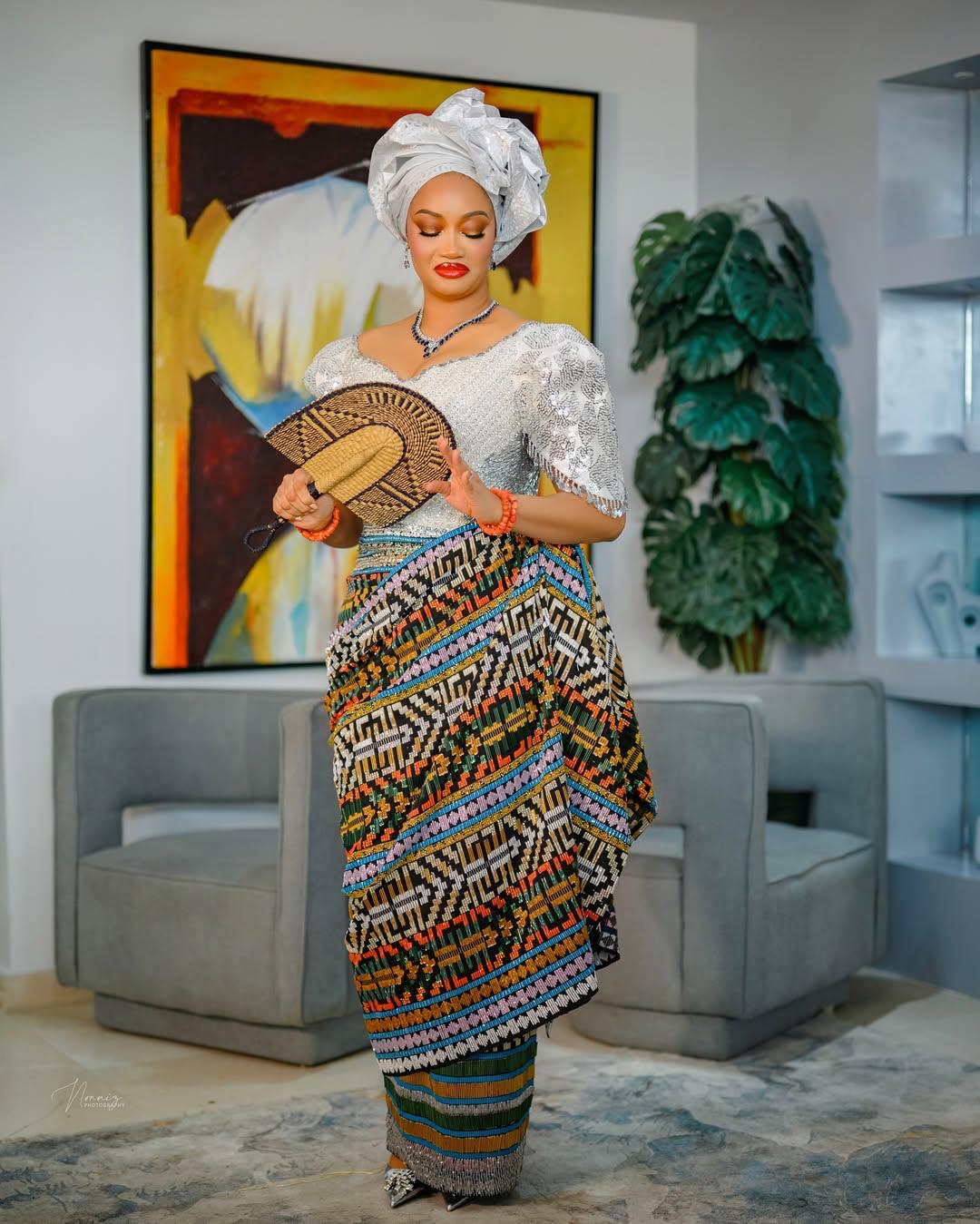
When Dr. Sharon Ifunanya Madueke showed up at her traditional marriage ceremony to Shawn Faqua, Nollywood actor and media personality, in a white sequinned blouse and Akwete wrappers, the internet threw up in nostalgia. Sharon’s bridesmaids equally ditched the regular corset-themed lace dresses for lace blouses and double-layered Hollandaise wrappers.
The entire ceremony carried an authoritative Igbo theme, which could only be admired and perhaps envied by viewers. Donning the two-wrapper Akwete fabric in big 2025 was evidently symbolic. While many claimed that the bride’s chosen theme was paying tribute to Uzoamaka Power’s Women’s August Meeting look at the 2025 AMVCA Cultural Day, others praised its novelty and thoughtfulness. But looking more closely, Sharon’s Igbo bridal aesthetic was an outburst of a quiet revolution that had been simmering for years.
I grew up wearing neat okrika — the local name for second-hand jean skirts, dresses, faded blouses and jerseys that my mother could afford to buy when it was time to change our casual wardrobe. Holding the new perfumed secondhand clothes as a child, there was an excitement, however innocent, that I now had something fresh to wear.
At the moment, it did not matter that we rarely bought newly manufactured clothes, unless it was Christmas or a birthday celebration. I came to see these hand-me-downs as proper attire, and the clothing we wore during Cultural Day at school to be traditional, occasional wear. Even when I received new outfits, they arrived in English. As a teenager newly forming self-esteem, I also dreaded wearing ankara fabric, because it was odd, uncommon, and reserved for cultural events where people were required to be celebratory or elaborate in appearance.
It did not occur to me that the scarcity of African prints and our native designs was the gradual, forceful erasure of our identity as a people. A 19th-century Catholic, Anglican, Methodist, and Baptist missionaries expected Nigerian converts to wear modest European-style clothing. Since their understanding of Christianity was garbed in European culture, they provided European dress to the new converts, particularly the ones that should be worn to school and the church. Add this to the heavy European presence in Nigerian governance at the time. Thus, our fashion scene became flooded with vogue in Italy, Paris, and London, with little to no reference to our local heritage.
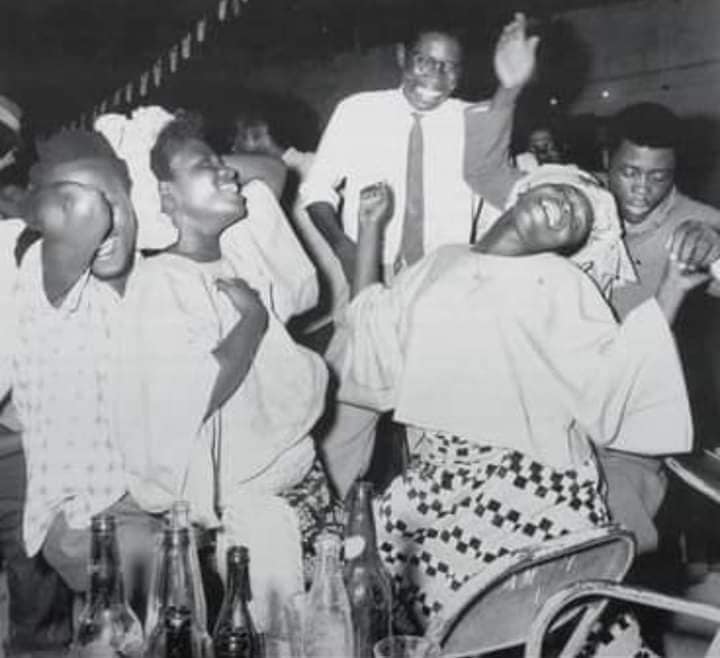
The Middle class embraced British couture in its entirety, while the upper political class wore a mix of English wear and native fashion, with the latter mostly borne from a need to identify with the uneducated Nigerian populace. As more Nigerian people became educated and travelled abroad, this contact had a profound effect on public taste. Ladies gravitated from wearing iro and buba to the club, to donning mini-skirts. Men ditched the agbada or lace for jeans trousers.
This is not unreasonable behaviour. A 2025 Economics paper reveals that trade, production, consumption, and design have become increasingly tied to globalised systems since the late 20th century. Along with global social fashion dynamics, continuous academic and cultural exchange also resulted in the normalisation of European attire as standard professional outfits locally. The domination of clothing stores, shops, and boutiques selling jeans, T-shirts, face caps, Turkish wears, and French suits, and the delegation of native prints for ceremonies or church services – all markers of western supremacy.
Meanwhile, the link between making quality clothing in Nigeria as well as the inability of Nigerians to purchase new imported wears was unclear, but existent. A 2017 report showed that large imports of cheap textiles from China, which particularly surged during trade liberalisation in the 1990s, are strongly linked to the downfall of the Nigerian textile industry.
The lack of infrastructure, incessant poverty, poor electricity, smuggling, and a perceived lower quality for locally-made Nigerian clothes made imported wear (especially secondhand) even seem more accessible. So much so that Nigeria gradually became a dumping ground for most smuggled fabrics from China.
The Akwete is a South-Eastern member of the class of hand-woven fabrics produced across Nigeria. The Aso-Oke, Okene cloth, Adire-Eleko, Akara, Popo, and Ishan belong to this family. The Akwete is a decorative cloth made from processed sisal-hemp, raffia, and cotton, having complex weave designs forming intricate geometric patterns.
The Akwete cloth is usually made into wrappers for women, and it is a textile-making practice traceable to the late nineteenth century. Igbo women weavers led by legendary weaver Dada Nwakwata, in the village of Akwete, a community in Abia State, began weaving this on a vertical wall loom, one of the widest in Nigeria. The coarser raffia Akwete was used by masquerades and as headgear for warriors, while the hemp material is used to weave ropes and handbags. The more comfortable and colourful spun cotton Akwete is used to weave cloth for everyday wear.
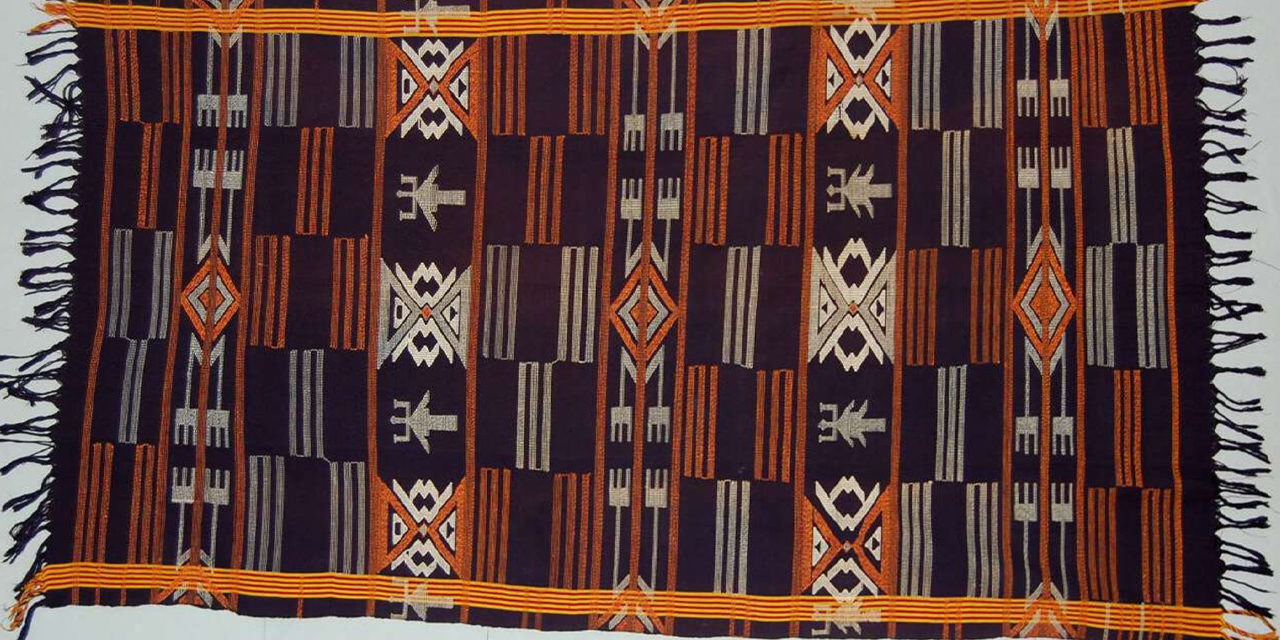
The Akwete fabric also reminds you of the Ghanian Kente, another cloth produced with the same loom weaving technique. The weavers claim there are over a hundred motifs, worn for different occasions and often signalling class disparities in some cases. Nearly every Igbo mother today has the Akwete wrapper as an asset to mark their marriageable and childbearing status. Some of these textiles can outlive generations without rotting. When British Prime Minister Theresa May visited Nigeria in 2018 to sign economic agreements with the then-President Muhammadu Buhari, she wore an Akwete jacket made by Emmy Kasbit.
Before Sharon’s wedding to Faqua in 2025, the fast fashion trend in Nigeria was already under threat. Critics were already coming for the Western and Asian fashion industries, which keep churning out tonnes of homogenised designs that mostly end up as waste to be dumped in developing countries. Everyone was already getting the gist. It was no longer cool to own a pair of secondhand jeans. Stores along Balogun market in Lagos were quietly replacing their imported designs with colourful boubou gowns, adire wide-legged pants and matching tops, native prints shorts, ankara beach wear, and so on.
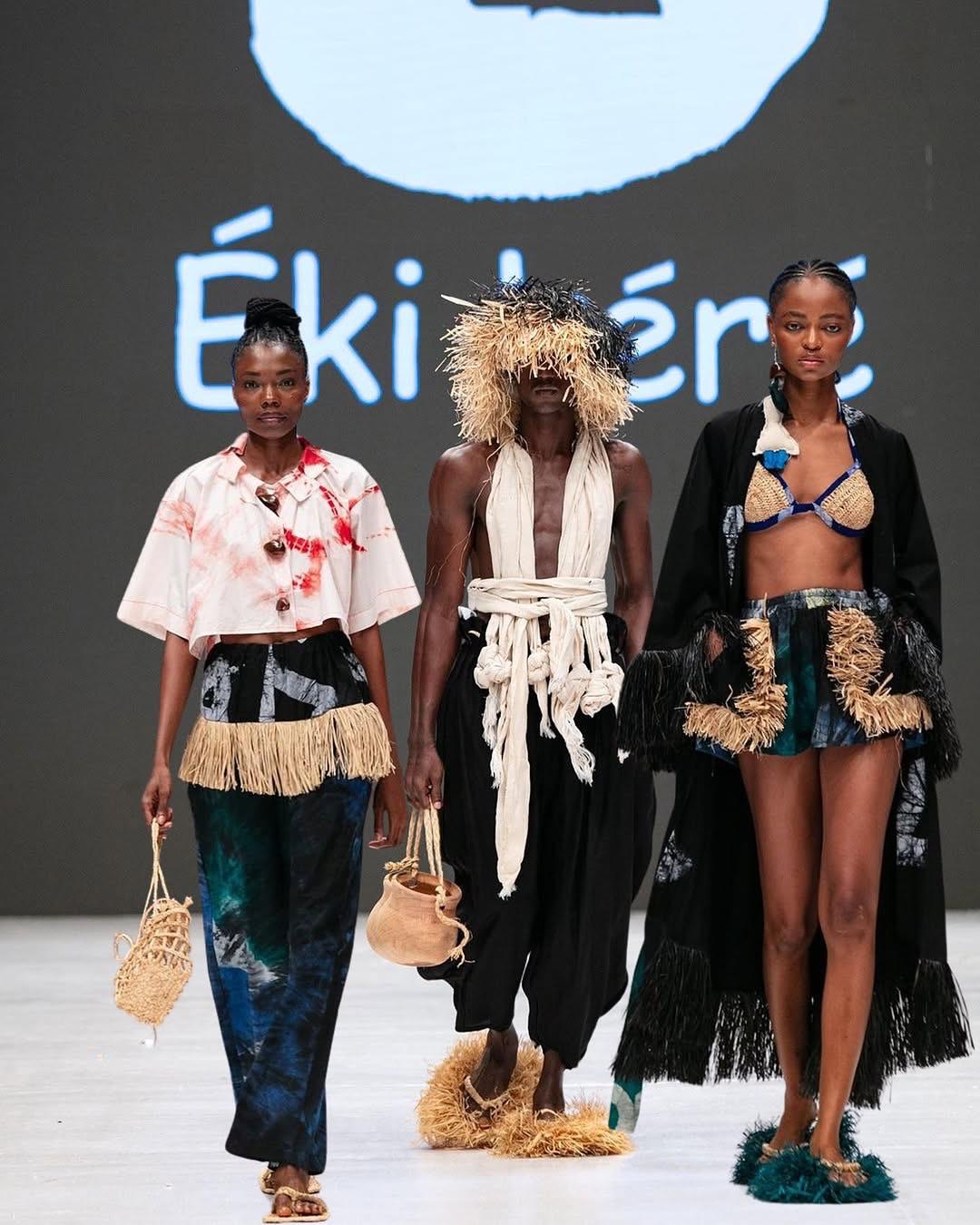
Fashion houses across the country were rebranding to serve the new market of people seeking African prints and sustainable fashion. Indigenous brands like Orange Culture, Dyelab, and Éki Kéré, began to pop on people’s lips. Social media waxed colourful with showcases of custom designs like the Adanne dress, the Modupe Two-piece suit, and the Farida embroidered boubou.
Public taste evolved from mass production to distinctive and customisable clothing collections. Ready-to-wear (RTW) and Made to Order (MTO) brands were popping up on Instagram ads, rolling out their exclusive collections for customers to select from, but mostly made with local fabrics.
Fashion from Africa began to gain global prominence as modern Nigerian designers like Lisa Folawiyo, Mai Atafo, Veekee James, and Ugo Monye were innovating for the world. As a teenager, I remember walking home every weekday from school in Surulere, past the big Yomi Casual in Surulere, a celebrity designer I know styled comedian AY Makun, among other celebrities at the time.
II
Modern Nigerian fashion in its current presentation is reflective of Nigeria’s recent identities and the people’s belief and approach to contemporary style. Millennials and Gen Zs are acutely aware of their roots and reflecting this in their changing appetites for fashion items. We’re gradually embracing and revealing ourselves in the most tangible forms. The supremacy of our native productions is reemerging in the minds of Nigerians, especially with apparel. There is no aspect of couture or clothing that African textiles have not penetrated: baggy pants, tailored suits, urban streetwear, evening gowns, and knitwear.
Fashion, in the context of this essay, doesn’t only mean clothing, but also other accessories that people use to adorn themselves, such as bags, footwear, rings, necklaces, anklets, and headgear. Hand-woven fabrics like the Aso-Oke, Okene, and Akwete that were worn as wrappers around the waist are now being reimagined as apparel. Using African-inspired art, intricate beadwork, hand-dyed textiles, colourful embellishments, couture tailoring, and contemporary ankara prints, Nigerian designers have been able to locate the intersection between our heritage and modern fashion.
Despite this laudable feat, not everyone is excited about this shift in the balance of fashion power. Every often, while scrolling through X, I am greeted by outrage from Nigerian users on the ubiquitous nature of adire baggy pants or clothes made with native fabrics. One user tweeted, “Tired of seeing Adire trousers in Lagos lol.” Another said, “Everybody is just sewing the same godamn thing in the name of luxury RTW. If it’s not adire/aso oke twopiece, it is boubou, or baggy pants. Please #bringbackcreativity.”
These types of comments are hinting at the same thought; they find it cringeworthy that outfits in our native fabrics are now commercialised as fast fashion. Wardrobes full of jeans and T-shirts are now steadily replaced by all sorts of colourful local fabrics, and dressing in modern Nigeria has become an avenue for declaring cultural allegiances.
You can hardly walk past any street in Nigeria without coming in contact with one person in ankara print. And for many young Nigerians, reclaiming their ethnic affiliations has become a need, so the fashion industry in Nigeria has equally capitalised on these desires, outputting local merchandise in industrial volumes as our international counterparts have always done.
Each time I walk through the streets of Balogun and Idumota markets in Lagos, layers of colourfully-patterned, wax-printed, locally-fabricated outfits are thrust into my face by eager roadside peddlers, and it dawns on me again what our fashion industry has finally arrived at. I am overwhelmed, but satisfied. We now have locally-made traditional clothing for everyday use.


For the critics of the aso-oke or adire baggy pants movement, their pain points may be hidden in the misguided notions that Nigerian traditional couture is not mainstream wear. Since many of us were raised in a system where Cultural Day is a once-in-a-lifetime opportunity to identify and buttress cultural narratives, the general conviction is that Nigerian cultural fabrics and designs should only be displayed reverently, stashed away in a museum, and not abused for fast fashion.
For the culturally-sensitive Nigerian, aso-oke is not just fabric, it is years of threaded heritage, history and heritage once woven for royalty and passed down through generations. Seeing adire and aso-oke as sacred and exclusive to a people may be one of the reasons why several Nigerians cringe at the thought of ‘Lagos’ fashion houses turning the timeless pieces in our mothers’ wardrobes into gold.
This may simply be a case of agitation with finding forks in the kitchen. The average Gen Z or millennial in Nigeria owns a pair of baggy trousers made from bright colored adire or ankara. It’s now classic for men to wear a kaftan to the office on Monday morning. The market is changing, fuss or not.
As with every successful industry, until we start seeing the commercial and industrial value of our cultural products, it may never succeed as a currency for trade. Now that our fashion has gathered global traction, industrialisation can be stifled by the local designer’s preoccupation with luxury African fashion.
Seeing much of the aso-oke and adire-themed designs spearheaded by luxury designers like Kilentar, however, I worry that the current obsession with “luxury” African fashion or selling to the highest bidder might suffocate the vision before it takes off.
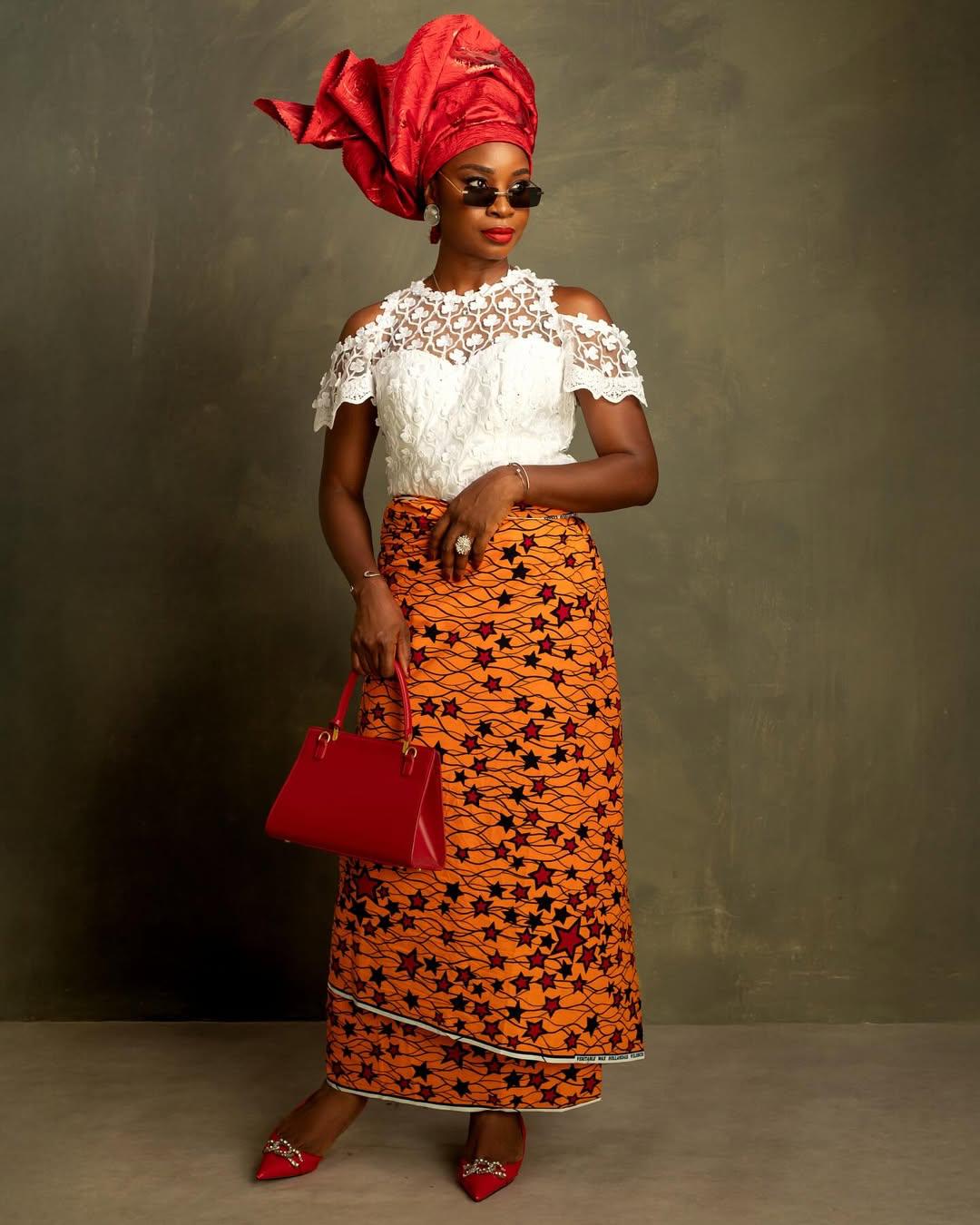
As I noted earlier, the average Nigerian was raised to revere our clothing items, thus attributing a rare or priceless tag to anything made with them. Today, it’s not uncommon to find African fashion houses pricing their items in dollars, as though signalling to a Western audience or only Africans in the diaspora.
All of a sudden, woven clothing costs an arm and a leg. I have seen people on Twitter complaining about the price of boubou. While designers are entitled to price their items as they wish, commercialising Made-in-Nigeria should not always mean unaffordable. If people are priced out of their own heritage, how can it be sustained?
Our fashion is flamboyant. The Nigerian style is loud. The richly embroidered agbada is a case example. However, much of it has been suffocated by Hip-Hop culture, the need for belonging, colonial imprints, and widespread poverty. Most people could not afford to patronise local designers, and when they did, it was reserved for festivities.
But right now, the Asoebi culture, social media influencing, and the rapid evolution of native wear into contemporary fashion are our leverage for this renaissance. Our local designers are becoming more experimental with their craft and these heritage textiles. Reclaiming our freedom to design what we wear is a fundamental human right, even for Nigerians.
The fashion ecosystem in Nigeria, and even Africa, needs regulation to be sustained. Regular power cuts, limited access to capital, expensive raw materials, and high taxes are taking local designers out of business. It is reducing the local fashion industry to a luxury market. Government partnership is undeniably necessary, and the talent development pipeline should be institutionalised.
Capital generation, material sourcing, manpower development, trade channels, and opportunities for scale should be easily accessible. Young people should be incentivised into the system of Aso-oke or Kente weaving, the use of the Akwete loom, intricate beadwork, and the skills passed down intentionally. In the same way Asia was able to colonise the global textile market, Nigeria can become a prime export scene for sustainable African clothing if we do it right, and now.
Iruoma Chukwuemeka writes from Warri, Nigeria. Her essays have appeared in The Republic, Olongo Africa, The Weganda Review, and elsewhere. She was a finalist for the Inaugural Abebi Award in Afro-Nonfiction (2023). Her essay, “Important Hair”, was named one of Afrocritik’s 50 Notable Essays from Africa in 2024.
Cover photo credit: The British Museum.