

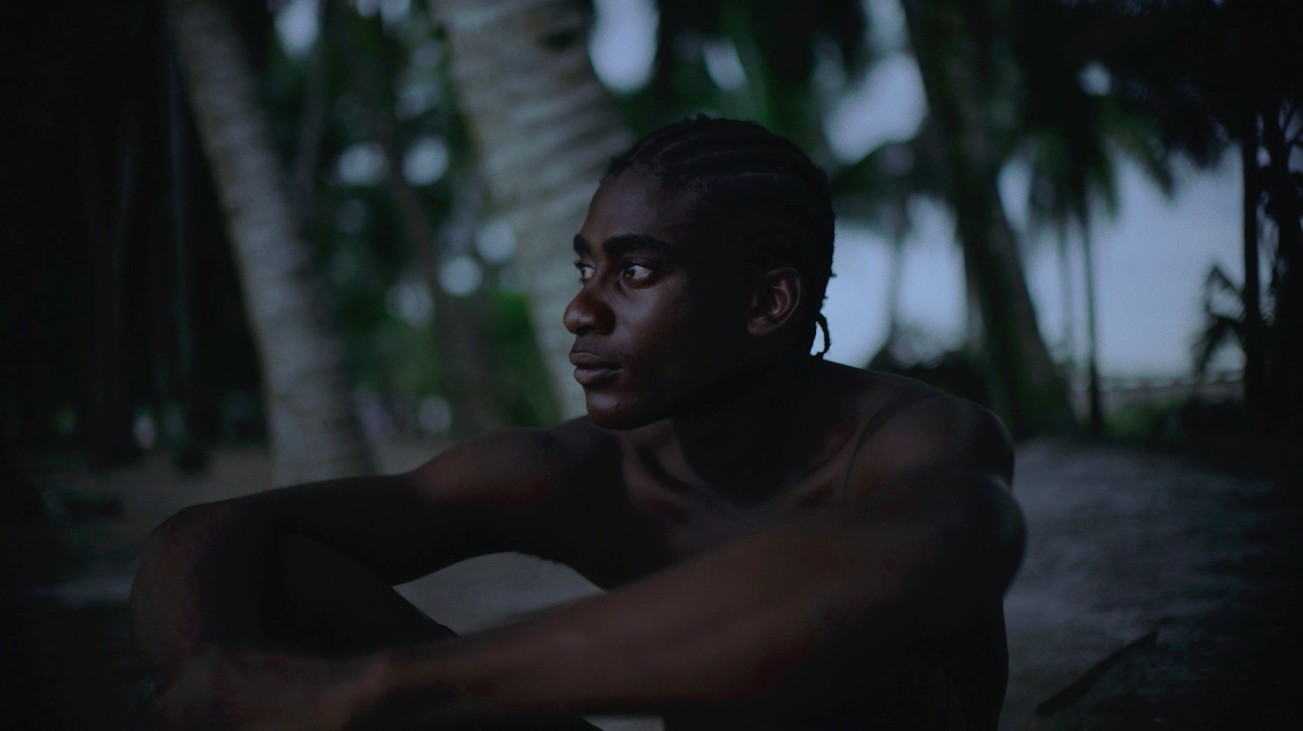

In Paradise, Jérémy Comte offers a lyrical peek into the complex interconnectedness of all of humanity, the universal search for human connection as his starting point.
By Vivian Nneka Nwajiaku
Canadian director Jérémy Comte is well-known for his 2018 Sundance Special Jury Prize-winning and Oscar-nominated short, Fauve, where two boys on an adventure find themselves drawn into danger at an isolated surface mine in Quebec.
In his debut feature, Paradise, a 2026 Berlinale selection co-produced between Canada, France and Ghana, two boys are again at the centre, but this time, they are young adults navigating vastly different lives on two opposite sides of the world when their stories intersect in dramatically consequential ways.
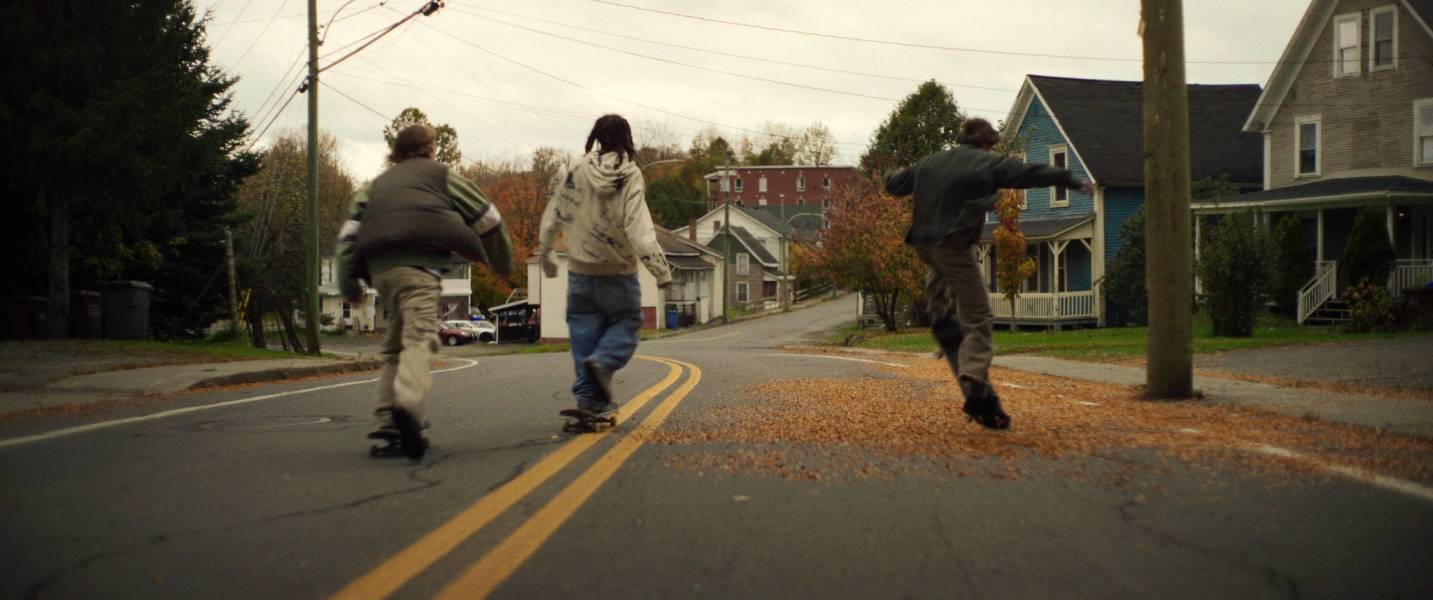
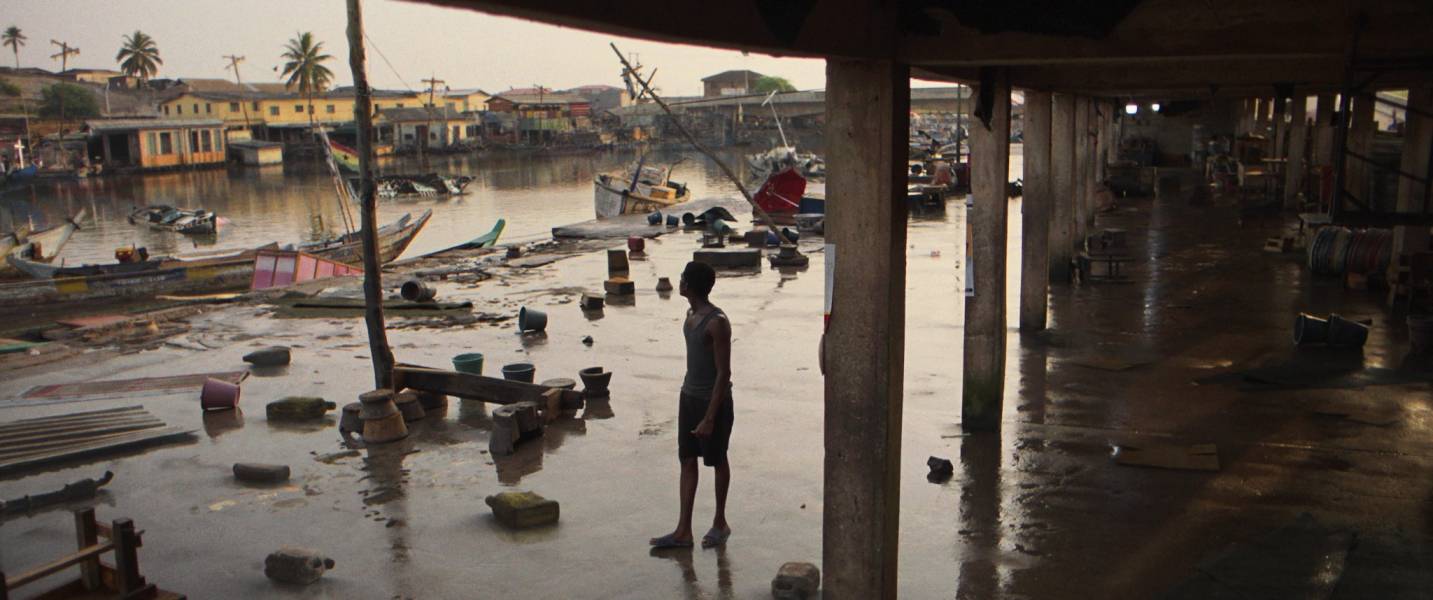
In Accra, Ghana, Kojo (a mesmerising Daniel Atsu Hukporti) has grown up under the care of his single father (Williams Baidoo), a poor, rural but content fisherman who takes him along to sea to fish with him. And in Quebec, Canada, Tony (newcomer Joey Boivin Desmeules) lives a somewhat comfortable life with his single mother (Evelyne de la Chenelière), who makes a modest living as a yoga instructor, while he supports with odd jobs.
Their worlds could not be more different, visually and auditorily—one is vibrant, the other is quiet—and that can be tonally disconcerting. But to make it less so, DOP Olivier Gossot captures the parallel worlds with camerawork that is dynamic yet focused and scenic, held up by a similarly dynamic sound design and an immersive but restrained score by composer Valentin Hadjadj. And Comte allows each world some space to breathe before moving on to the other, although we ultimately see more of Ghana and its half of the teenage pair.
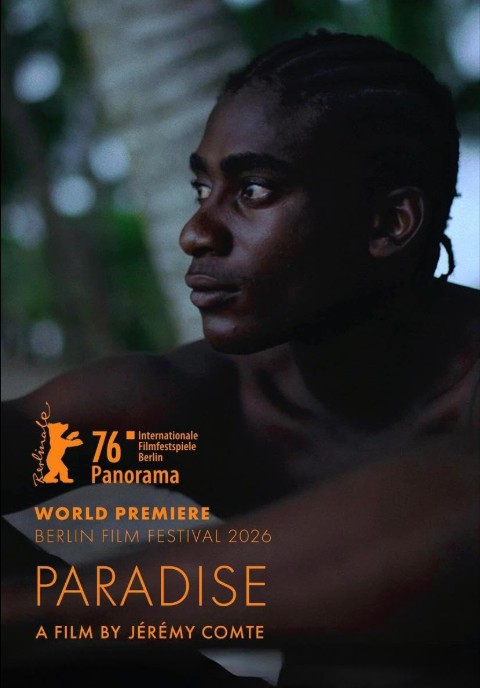
From his childhood, Kojo is impressionable, manifestly discontent, and hungry to escape his humble beginnings. We don’t see much of Tony’s childhood, but as a teen, he is independent-minded and assertive, but also sensitive. It may initially come off as a lopsided portrayal, but Paradise frames them both as products of their societies and of the world’s socio-economic inequalities and intercontinental histories.
The extent of their behavioural similarity is the teenage tendency to engage in mischief and rebellion. They hang out with friends involved in disorderly, if not illegal, conduct. They secretly smoke marijuana, despite their parent’s disapproval. And they eagerly reject parental guidance when it matters the most.
It’s the latter choice that proves destructive for both boys, worsened by a shared sense of father absence and loss. Kojo’s father disappears at sea during torrential rain, pushing him further into the unsavoury company of the local gangs and internet scammers that his father warned against. And Tony’s mother connects virtually with an American cargo ship captain, triggering Tony’s search for the American father he never knew.
These are the circumstances that force the teenagers onto the same path. And when the sailor eventually claims to be stranded in Ghana, Paradise moves the connection offline, with Tony crossing the Atlantic into Kojo’s world in search of answers and in defiance of his mother’s wishes.
The result is a sometimes brash and sometimes vague climax that provides more questions than answers about the past, the present and the future, within the story of the film but also around the complicated realities of the real world beyond it.
In Paradise, co-written with Will Niava—a Quebec-based Ivorian-Ghanaian filmmaker whose self-directed short film, Jazz infernal (2025), screened at Sundance earlier this year—Comte offers a lyrical peek into the complex interconnectedness of all of humanity, the universal search for human connection as his starting point.
Within this context, Paradise explores the yearning for familial and romantic ties, the authenticity or otherwise of digital relationships in this age of the internet, and, perhaps most interestingly, the trans-Atlantic journeys of the past and the continued repercussions of the colonial structures they established.
Paradise turns out to be one of at least two African films at the Berlinale that render an awkwardly delivered speech on the legacy of colonialism in Africa, Lady (2026) being the other film. A few more tries and, maybe, someone will eventually do it seamlessly. But the mere fact that it’s done at all counts for something in a divisive world that persistently refuses to acknowledge the connections between historical injustices and contemporary inequalities.
The coarse speech aside, Paradise is inquisitive, eagerly interested in stereotypes and generalisations and in the contradictions that lie beneath them. On one hand, there are characters who are not all they seem, for better or for worse, but on the other, it presents characters who render an alternative view of stereotyped groups, for better or for worse.
Plus, it raises vital questions about Western World-Global South relations. In many ways, the deception and betrayal that define the internet scams the film spotlights mirror the colonial and neocolonial relationships between the West and Africa, in particular.


How much responsibility do seemingly honest and kind people bear for the enduring effects of the colonial actions of their ancestors or the neocolonialism that their systems support? How much justification does that colonial legacy provide for the actions of the descendants of the colonised?
But make no mistake, Paradise is also very much about the treachery of internet fraud and its local manifestations. A highlight of the film is an unflinching mid-film scene that is as insightful as it is striking, serving as a crash course on both internet scams and the human hunger for connection. It features Kojo at his most overt, and the film at its liveliest.
That said, Paradise can occasionally be a drab experience, leaning so much into poetry that its surface story becomes less engaging and nearly incoherent. It’s an easy trap to fall into for a visually evocative film such as this, especially for a first-time feature director.
Still, Comte’s vision is undeniable. It’s a debut that could use some sharpening around the narrative edges, but Paradise is confident, stunning work.
Rating: 3.8/5
*Paradise premiered in the Panorama section of the Berlin International Film Festival in February 2026.
Vivian Nneka Nwajiaku is a writer, film critic, TV lover, and occasional storyteller writing from Lagos. She has a master’s degree in law but spends most of her time watching, reading about and discussing films and TV shows. She’s particularly concerned about what art has to say about society’s relationship with women. Connect with her on X @Nneka_Viv