



The issue is mostly not the graduates themselves, but the quality of the system producing them.
By Chimezie Chika
I
Recently, when the University of Ibadan (UI), Nigeria’s premier university, announced that 58 of its 146 law graduates had made First Class, that announcement met some of the fiercest oppositions in recent times, both championed by Chidi Odinkalu, a well-known human rights activist and professor of Law and Dr. Aloy Chife, a popular businessman and philanthropist, who enjoys a large following on social media.
As is now normal in Nigeria, their rejection of the result met with moral recriminations and accusations of tribal bigotry, amongst others. A great many commentaries that followed, especially on X, were emotional responses. Only a precious few tried to present anything resembling analytical facts overarching the debate. Those who did made perfectly logical statements.
It will now make sense, many days later, to look at what is presented to us in this debate in order to achieve better clarity. While the two men already mentioned strongly cast doubts on the veracity of such a result, implying that it questions the integrity of a premier university like Ibadan, the vast majority of people who responded to them stated that the results were deserved for a number of reasons distilled herein:
- University of Ibadan’s admission process is the most rigorous among universities in the country.
- University of Ibadan is known to admit only straight-A students, students who are usually the most high-performing in their secondary school before being admitted, which statistically increases the likelihood of graduating high-performing students.
- University of Ibadan is known to be competitively ahead of other Nigerian universities, almost by default, and often attracts the best students and faculty.
- University of Ibadan is not given to the kind of institutional and faculty corruption that is the bane of many of other Nigerian universities, many of whom have been known to deny the awarding of deserving grades. Academic grades in UI, whether high or low, are often justifiably correct.
It should be noted that many of these observations were made by former students of the University of Ibadan who, to a good extent, should know the university and its academic practices. The other camp in the debate, that of Prof. Odinkalu and Dr. Chife, can be collected into one statement: it is statistically impossible for a 40% of a university class to graduate with First Class, especially in Nigeria.
How true is this, really? And what exactly justifies it? It’s around these main talking points that I will proceed to examine the debate.
*
“The purpose of education”, wrote the Greek philosopher Plato, “is to give the body and to the soul all the beauty and all the perfection of which they are capable”. In simple terms, edification. One way or the other, most universities all over the world claim to have a strong edifying influence on people who pass through them. And these are especially found in their mottos. For the University of Ibadan, its famous motto is Recte Sapere Fons. Latin for “For knowledge and sound judgement”.
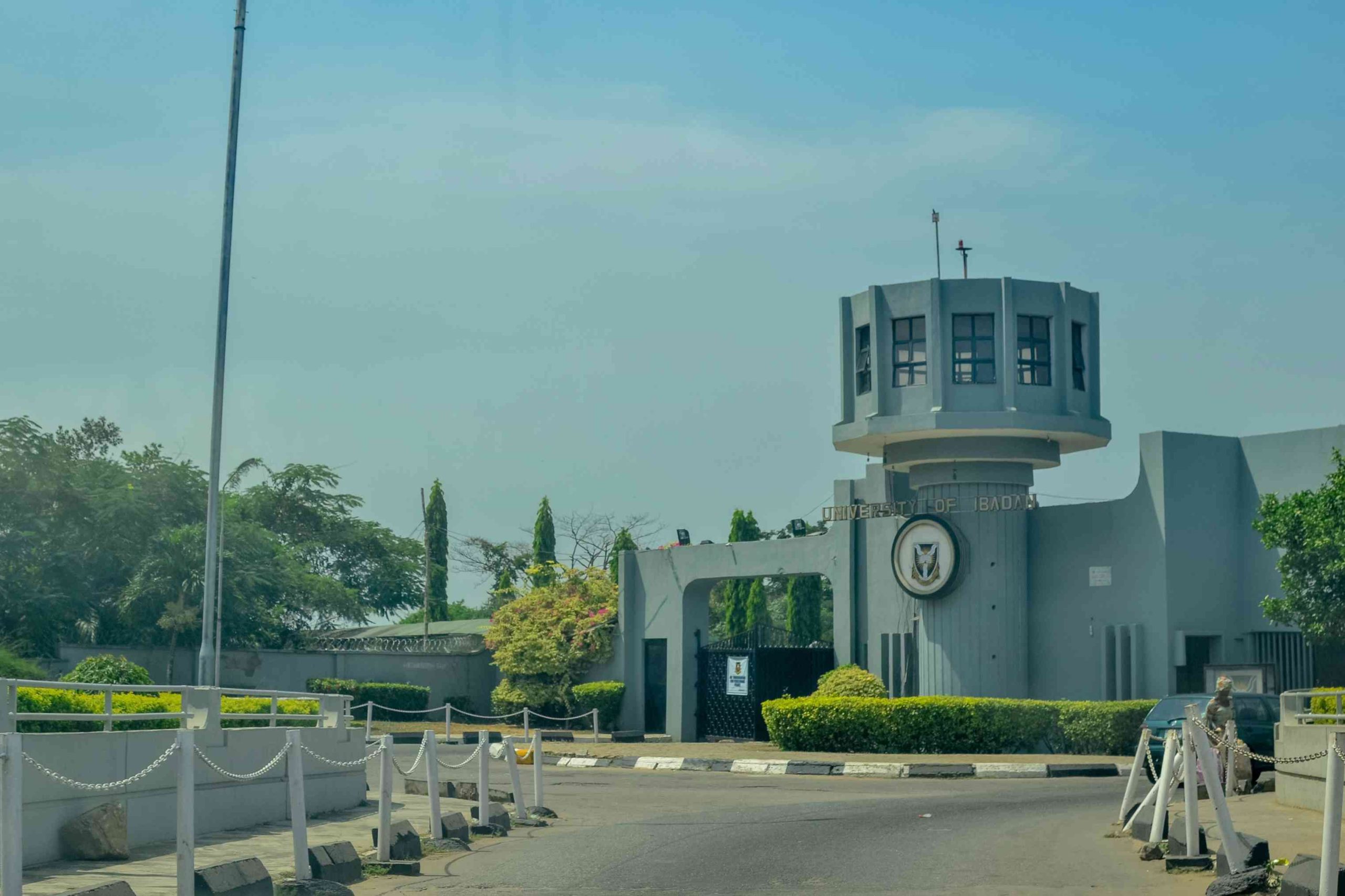
As Nigeria’s first university, it should be simple enough to conclude that UI has been engaged in creating or providing avenues for its scholars to learn how to make sound judgments. This can of course be seen by the prestige the university has built over decades of its existence through the calibre of scholars that have passed through it and the educational capital it has built through the production of many groundbreaking research.
It is also verifiable that sound judgment is brought into play in the university’s admission process, as the first defence listed above notes, because the Law faculty of the university often consistently posts a high average cut-off mark for admission according to the performance in any given year.
One of the maligned First Class graduates announced recently, who is currently a colleague of mine at Afrocritik, told me privately that UI, the admission cut-off mark for her set—the set with 40% First Class—was 70.12. Such a reasonably high average does not automatically translate to a high number of First Class graduates, for there are many other universities around the world with far higher admittance average which never have such a high amount of high-performing graduates in any graduating class.
It is not that it is impossible, since achieving high requires more than scaling a rigorous admission hurdle (my colleague reflected that the three critical things for her were conviction, conducive and competitive environment, and resilience—all of which are, again, reasonable and not exclusive to Ibadan). Yet, while there are other universities with all these qualities or even better, none has posted such spectacularly high performance.
In light of this, Prof Odinkalu’s observation that such a performance can only possible if such “a class [is] spectacularly littered with geniuses” deserves examination, alongside Dr. Aloy Chife’s supporting response to the effect that “whilst statistical association is not proof of a direct cause and effect relationship, it bears considering that in the U.S, typically only the top 1% to 5% of graduating university students earn the summa cum laude distinction (First Class equivalent).” He would go on to cite that at Harvard University, only five percent of graduating students make the highest honour.
The reality across the world’s top universities reveals some interesting facts. A recent publication in The Telegraph stated that a number of the UK’s top universities posted an extremely high percentage of First Class degrees. Imperial College London (usually in the top three universities ranking worldwide) graduated 52.5% students with a first; at Oxford University, 34.1% graduated with First Class, raising concerns that the prestige of these universities could be undermined. In short, about 30% percent of graduates in the UK in the last four years made a first.
In the English-speaking world, there seems to be an upward trend in First Class or summa cum laude degrees. Increasingly, students are able to make degree grades that are perennially considered difficult, especially in the Post-COVID era, with such outstanding degrees averaging around 40% in the UK, and in the US, some universities are adjusting their criteria in order to award more cum laude honours, though the top universities still maintain an extremely competitive 5% or less.
Even Nigeria is not left behind, with Federal universities recording 57.79 percent First Class graduates between 2021 and 2023. Some observers have noted that a combination of factors, including technology, has contributed to this trend.

It is generally not clear if this is something to celebrate or malign, for on the one hand, there is often a raft of complaints that recent generations have become averse to reading and academics in this ADHD-glut digital age, while on the other hand, overall improvement in research and edutech is often credited with groundbreaking leaps in academics. One fact is clear: for anyone who wants to study, studying in this age is incredibly easy, with books and learning tools within easy reach on the Internet.
If we then come down to the second argument of those opposing Odinkalu and Chife—that is, that UI consistently admits straight A students, which tip the likelihood of the high end results—and consider them in light of Odinkalu’s withering comment about geniuses, we may agree with them easily, since a student with a track record is likely to maintain it, all things being equal, than one that does not. But we can also define “genius” in this context for clarity.
To be a genius is to be of an exceptional creative imagination, full of extraordinary, insightful thought, and the ability to exhibit consistently high performance, productivity, and unusual intellectual capability.
I do not particularly know by which parameters geniuses are incontrovertibly measured—that is beyond my scope—but researches have averred that the quality of genius is, to a good degree, genetic in composition, while nurture, especially at early stages of life, plays an overwhelming role. The point is that the idea of genius is rare as a percentage of the human population.
The fact established is that one does not need to be a genius to achieve First Class in a University. In short, certain geniuses may be unable to function in a conventional environment. What is needed is conscious and persistent effort and the ability to meet goals and requirements.
II
The paradox here is that while the Chife and Odinkalu see Ibadan Law results as a questionable trivialisation of the First Class grade which celebratory achievement often historically requires more than extraordinary effort and which rarity is the reason for its prestige in the first place (Chife specifically calls for a reexamination of Nigeria’s education system, attesting that, even as a private employer of labour, many degrees being awarded by Nigerian universities these days, First Class or otherwise, are questionable), others see it as a change for the better and a reflection of impeccable academic transparency in UI.
The academic rigour associated with Ibadan makes the result possible, if details about said rigour are accounted for. It is completely logical that Intellectually tasking degrees are likely to produce more high-scoring graduates than less-intellectually demanding degrees, for the simple reason that where the stakes are high, people tend to make more effort than if it were otherwise.


Many responses to Odinkalu and Chife also noted that it is logical that the University of Ibadan can achieve such a feat, given its corporate and historical advantage in the sphere of Nigerian universities. This is also quite agreeable, for a list of the calibre of scholars who been in UI is a list of a big percentage of the best minds from Nigeria and beyond. This fact may increase the university’s competitive advantage.
What it may not account for, though, is the generally noted decline in education quality across Nigeria (and it should be noted these include not just curricula but also standard operable infrastructures). Much of this decline has been orchestrated by years of abysmal budgetary allocations for education in Nigeria, frequent ASUU strikes, which directly create inadequate and corrupt faculty, educational malpractices, loss of degree value, amongst others.
A number of people claim that these issues are not found in Univeristy of Ibadan, as they are in other Nigerian universities. While it will be counter-intuitive here to try to counteract this claim, I will simply state that the nature of issues listed above does not completely eliminate any given university within Nigeria’s neglected education system (eg: Ibadan still goes on strike, etc). While there may be prestigious faculty and hardworking students, they may be severely hampered by factors such as funding and poor primary/secondary education, which are completely beyond their control.
III
The doubts that Odinkalu and Chife have expressed—which, as we have seen, is not a clear binary of being right or wrong—raise the question of whether a Nigerian university is truly capable of graduating first class students in such high numbers in one class. On the basis of the university’s own internal academic criteria as well as the methodologies for its accredited courses, this is entirely possible.

Given the last discussed factor regarding Nigeria’s education system, I can say that achieving First Class is not difficult, considering how much of Nigerian pedagogy favours rote learning and fact regurgitation, and not enough critical thinking.
All a student needs to do in such a parochial system is to fulfil threshold requirements. If this is the case, then this numerical anomaly should be easy enough to understand. This should also mean that being a First Class graduate in such circumstances will not translate to being particularly well-read or having wide, refined learning. It simply means the students have the presence of mind to fulfil the needed requirements.
But if, on the contrary, we say that a Nigerian university is incapable of graduating multiple first class (given the general undesirable system upon which they all stand), then who should bear the blame? The country’s education system? The school’s quality of education? The quality of lecturers? The student’s individual intellectual capacities?
None of these questions is out of the ordinary in Nigeria, nor have they been fished out of the blue sea in a country where their unsavory antecedents speak for themselves. Over the years, various commentators have noted the impracticality or academic poverty of Nigerian degrees.
For one, the number of people graduating does not reflect the infrastructure and resources made available to universities. Secondly, there is often a mismatch between skills taught in Nigerian universities and the needs of the job market. Most learning methods have remained unprogressive, making gross allowances for academic corruption of all sorts.
But on the other hand, Nigerian students (admittedly a small percentage of the overall) often perform exceptionally well when they leave the country for other universities across the world. The difference could be a simple question of better infrastructure and learning environment, as opposed to poor investment. Many have put this down to individual ability as well as the fact that the Nigerian system elicits more effort for questionable results in both honest and dishonest scenarios.
If an education system, which in my experience runs parallel economies where certain students are working hard at school work, whilst others are getting the same scores via other non-academic means, then it forces people to question the veracity of the pipeline producing them. The issue is mostly not the graduates themselves, but the quality of the system producing them. And that system must endeavour to build a strong level of academic trust across the board, not just within one school’s edifying reputation.
Chimezie Chika is a staff writer at Afrocritik. His short stories and essays have appeared in or forthcoming from, amongst other places, The Weganda Review, The Republic, The Iowa Review, Terrain.org, Isele Magazine, Lolwe, Fahmidan Journal, Efiko Magazine, Dappled Things, and Channel Magazine. He is the fiction editor of Ngiga Review. His interests range from culture, history, to art, literature, and the environment. You can find him on X @chimeziechika1