

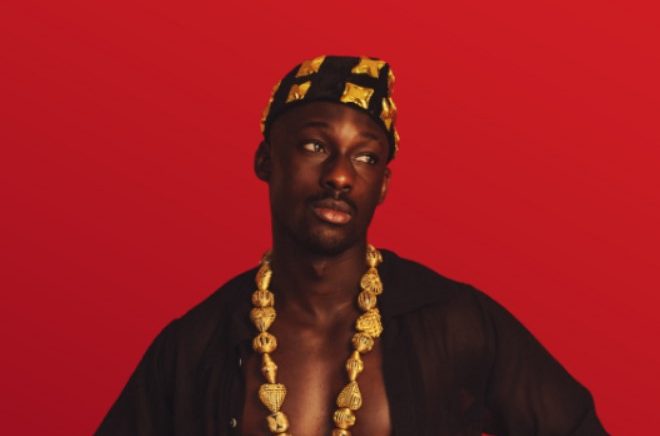

“Ghanaian music will always be my number one foundation, but Nigerian music, especially in this Afrobeats era, has really inspired me” – Jubed.
By Abioye Damilare Samson
Kumasi, Ghana, is a city alive with music and heritage. For Jubed Kyei Baffour, known professionally as Jubed, the fast-rising Ghanaian Pop star, that environment was the foundation of a musical identity in constant motion. Growing up in a household where his father played the piano during church services and his mother’s voice filled the home with gospel, Jubed was, inevitably, surrounded by music long before he realised he had any inkling of talent as a singer. A spontaneous school performance revealed his talent, but it was only the beginning of a journey defined by curiosity, experimentation, and an unrelenting drive to expand the sound and vision of Ghanaian Pop.
From the viral resonance of “Ruwa” to the catchy-melodic charm of “Kilode”, and the Northern Nigerian Arewa inflections of “Gabaya”, Jubed has proven himself an artiste with an instinctive ear for sonic layering, seamlessly blending his Ghanaian roots with broader African texture
His music is both grounded and exploratory. It reflects a young artiste learning from the masters of Afrobeats while simultaneously carving out his own distinct voice. “I don’t want to keep repeating the same formula. If there’s a way to make people hear music differently, or present it in the best possible way, I’m willing to explore that”, he says during our conversation. That ethos runs through everything Jubed touches.
His 2025 debut EP, From The Soil, was a declaration as much as it was an introduction—a carefully arranged statement of origin and intent that later expanded into a deluxe edition to further deepen its narrative and sonic scope.
His fearless approach to collaboration is evident in work with Yemi Alade, Seyi Shay, Oxlade, Kojo Blak, and L.A.X, while his dream list—which includes Burna Boy, Sarkodie, Rema, Doja Cat, and Stormzy—reflects an artiste thinking globally without forgetting the lessons of home. It’s this combination of grounding and curiosity that earned him a spot on Afrocritik’s “25 Emerging African Artistes You Should Listen to in 2026”, highlighting him as a voice poised to shape the sound of the continent in the year ahead.
In this interview with Afrocritik, Jubed opens up about the formative sounds of Kumasi, the Nigerian influences that expanded his creative palette, his vision for pushing the boundaries of Ghanaian Pop, his philosophy on experimentation, and the projects that signal the next chapter of his evolving career.
Can you paint a picture of your childhood in Kumasi — the sounds, the environment — and how those early experiences influenced your relationship with music?
Growing up in Kumasi, music was always around me. Both my mum and dad were deeply involved in the church. My dad played the piano, and my mum sang, so music wasn’t something distant or occasional; it was part of our everyday life. I would watch my dad play during services, and when we got back home, there’d always be gospel music playing on the radio or cassette throughout the house.
It was a lovely environment, very indoors, very centred around listening. I was constantly absorbing music, even without realising it. I think I was picking things up subconsciously from a young age.
The funny thing is, I didn’t even know I could sing. I never thought of myself as someone with a voice until one day in primary school. Because my parents were pastors, the teachers assumed I could sing. We had midweek worship sessions, sometimes on Wednesdays, sometimes on Fridays, and one of the teachers asked me to lead. I was in lower primary at the time, and I remember telling her, “You’ve never heard me sing before. I don’t even know if I can sing”. But she insisted.
So I did it. And when I finished, the whole class was stunned. Everyone was just looking at me like, “Oh, you have a voice”. That was the first time I realised there was something special there. From that moment, I knew music wasn’t just around me, it was inside me too.
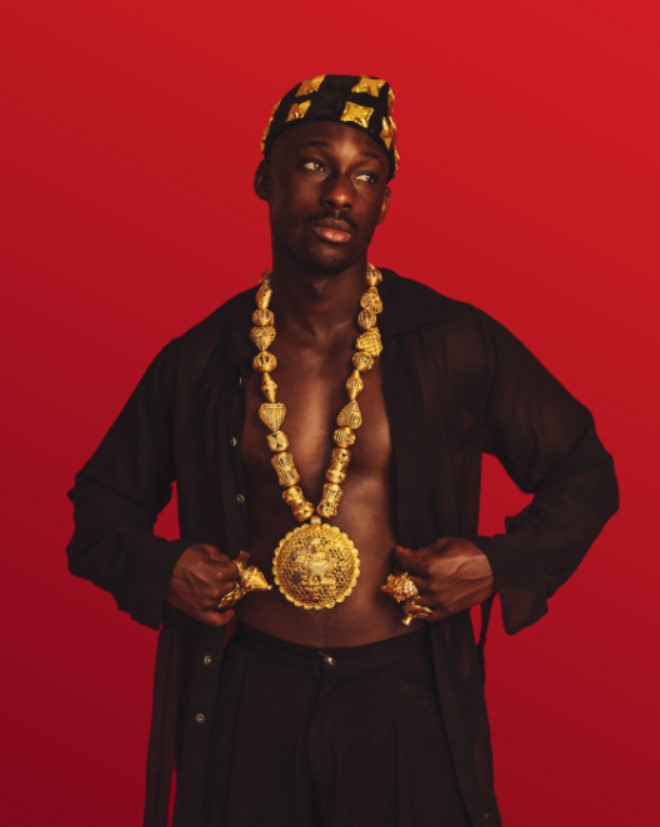
Who are some of the African and international artistes that helped define the way you approach music today?
Growing up, Michael Jackson was the first artiste I was deeply connected to. I listened to his music all the time. Beyond the songs, I was fascinated by the stories around him. People used to say he was supernatural and all that. As a kid, that really intrigued me. It made him feel larger than life.
So, definitely, Michael Jackson was a major influence early on. Right now, though, I’d say artistes like Burna Boy, Asake, Rema, and Sarkodie have shaped my musical sensibilities. The way they command their sound and identity, that’s something I pay attention to.
“Ruwa” was a breakout moment for you. Did you know, while creating it, that it would carry that kind of emotional and cultural weight?
Yes, I knew. I knew it was going to be special. The reason I felt that way was because of how effortlessly it came together. We were in the studio, the producer played the beat, and it just clicked instantly. I picked up my phone, started writing, and everything flowed naturally.
It didn’t even take up to 30 minutes to make the song. After recording it, we kept replaying it in the studio. Everyone just looked at each other like, “Yeah, this is the one”. There was no overthinking, no struggle; it felt easy, and sometimes that’s how you know a record has something powerful in it. That’s when I knew “Ruwa” was going to be great.
You were born in Kumasi, yet you’ve released a Yoruba-titled track like “Kilode” and explored Northern Nigerian influences on songs like “Ruwa” and “Gabaya”. How has your personal or cultural connection to Nigeria shaped these creative choices?
I think it comes from the influence Nigerian music has had on me. Ghanaian music will always be my number one foundation, but Nigerian music, especially in this Afrobeats era, has really inspired me. I’ve always been curious about the “spice”, the ingredients they put into their sound that makes it travel the way it does.
When you study something closely for a long time, you naturally begin to pick up certain elements from it. So I think that influence just came through organically in my music. A lot of people actually tell me I sound Nigerian sometimes, so it’s not something I see as unusual.“Kilode” was one of my early songs, and at that point I just wanted to experiment and shift direction a little.
After “Ruwa”, we wanted to continue in that space but bring something softer and more melodic, which led to “Gabaya”. I was leaning more into Northern influences at the time, picking up words, understanding their meanings properly, and then weaving them into the music carefully. It wasn’t forced, it felt natural. And yes, I’ve been to Nigeria several times. It honestly feels like a second home to me.
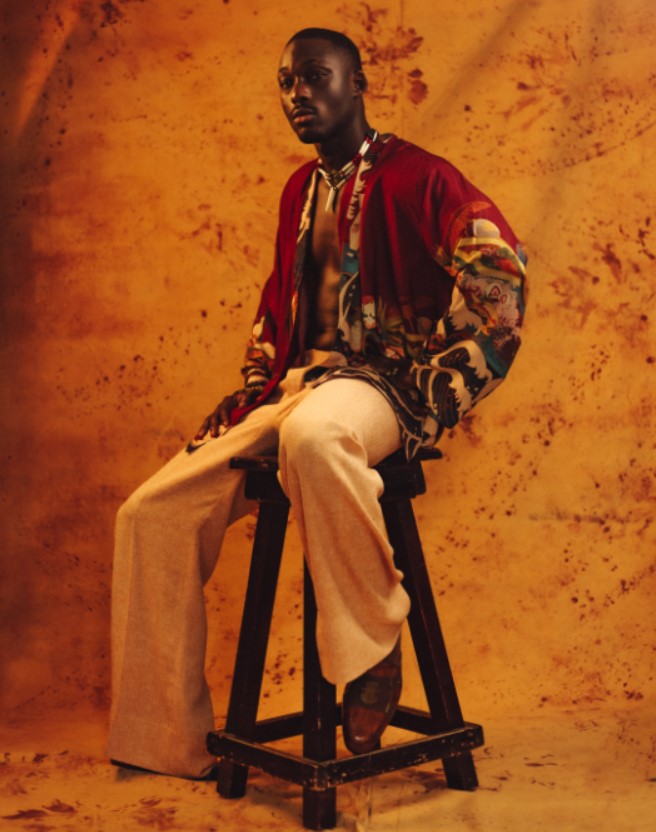
Do you see yourself expanding the possibilities of what Ghanaian Pop can sound like?
I think when people listen to my music, they can hear that I’m trying to approach Ghanaian Pop a little differently. So in that sense, yes, we’re getting there.
For me, it’s about experimentation. I don’t believe artistes should feel boxed into one genre or singing style. Music is bigger than that. There’s so much to explore: different sounds, different production styles, even the business and marketing side of it. As a musician, I think you have to understand all of it.
I see myself as someone who wants to experience every layer of music, not just one corner of it. I don’t want to keep repeating the same formula. If there’s a way to make people hear music differently, or present it in the best possible way, I’m willing to explore that. So yes, I’d like to think I’m helping expand what Ghanaian Pop can sound like, even if it’s one experiment at a time.
The title From The Soil you released last year suggests grounding and origin. What does “the soil” represent in your personal story?

From The Soil represents my beginning. My roots. It’s about being born from something real, something grounded. When we chose that title, we wanted people to understand that this was me introducing myself properly, not just as an artiste, but as someone shaped by culture, upbringing, and experience.
The soil is where everything starts. It’s your foundation. For me, it symbolises where I come from, my background, my influences, my environment. It’s about showing people the origin before anything else.
It also marked the beginning of a new era for me. I felt it was important to let listeners see where I’m coming from before moving forward into bigger spaces. It’s rooted in culture, in identity, and that grounding is something I always want to carry, no matter how far the music travels.
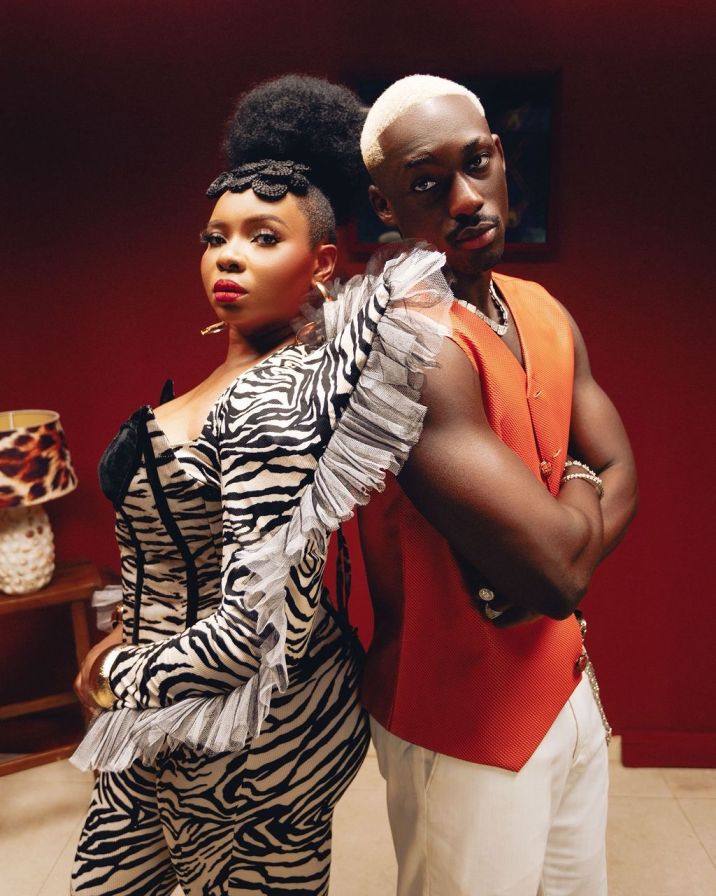
You’ve already collaborated with incredible voices like Yemi Alade, Seyi Shay, Oxlade, and Kojo Blak, LAX. Who else is on your dream collaboration list, and what guides your choice of collaborators?
At this point, I’ve learned that anything is possible. Honestly, when we were working on From The Soil, we never even imagined we’d have artistes like Yemi Alade, L.A.X, Oxlade, Seyi Shay, Kojo Blak and others on the project. So when I finally heard their verses come in, it was surreal. It shocked us just as much as it surprised everyone else.
That experience taught me not to limit what could happen. One day, you’re just working, staying focused, and the next thing, it’s “Jubed featuring Olamide” or “Jubed featuring Omah Lay”. You never really know. So I believe anybody is possible as long as we stay humble, consistent, and keep growing.
If I had to mention names, though, I’d say Burna Boy, Asake, Sarkodie, and Rema are definitely artistes I’d love to collaborate with. Internationally, Doja Cat, Olivia Dean, and Stormzy would be exciting. But truly, the list goes on. For me, it’s less about status and more about energy and alignment. I’m drawn to artistes who are intentional about their sound and fearless in how they express themselves.
How do you define success at this stage of your career?
I don’t feel like I’ve reached the stage yet where I can define success. There’s a pinnacle I’m aiming for, and until I get there, it’s hard to say I’ve truly achieved it. For me, success is something you feel personally.
It’s not about recognition or milestones alone. When I reach that point and really feel it for myself, then I’ll know I’ve defined success.
Finally, what are you working on next? Any upcoming projects or directions we should look forward to?
There’s a new single coming out soon, actually, it should drop by the end of March. It may hint at a feature with one of Nigeria’s most prominent artistes, though I’m keeping that under wraps for now.
It’s a surprise, and I can’t reveal too much yet. After that, we have a few more songs lined up, and then I’ll be releasing another EP. So there’s a lot to look forward to: new sounds, collaborations, and continuing the journey of experimentation with my music.
Abioye Damilare Samson is a music journalist and culture writer covering African entertainment, Pop culture, and the stories that shape the continent’s creative identity. His work has appeared in Afrocritik, Republic NG, Newlines Magazine, The Nollywood Reporter, NATIVE Mag, Neun Magazine, Culture Custodian, 49th Street, and more.