



“As long as there is life, there is hope. You keep aspiring to do more than you have done. That is the essence of living in the first place.” — DJ Jimmy Jatt.
By Abioye Damilare Samson
Sometime in 1979, in a house in Obalende, Lagos Island, a quiet, observant boy flipped a 12-inch record to its instrumental side and began performing “Rapper’s Delight” by The Sugarhill Gang—a record widely regarded as the first major commercial rap hit that brought Hip-Hop into global consciousness—for his older brothers. He had already memorised the lyrics on Side A. Then he began replacing the original words with his own. Nobody in that room knew it yet, but they were watching the first moves of one of the most consequential careers in the history of Nigerian music.
In the years that followed, that young boy — born Oluwaforijimi Adewale Amu and known to the world as DJ Jimmy Jatt — would go on to become a breakdancer, then a rapper under the name Master J, and, finding his truest calling, a DJ. By the late 1980s, he was already regarded as one of the most prominent DJs in Lagos’ growing music scene. In the 1990s, he built Road Block, a street carnival on the roads of Obalende that became one of the most important talent discovery platforms Nigeria has produced, launching the careers of Hip-Hop duo Junior and Pretty, veteran Nigerian Galala singer Daddy Showkey, and a generation of talented artistes who would go on to build what we now call Afrobeats.
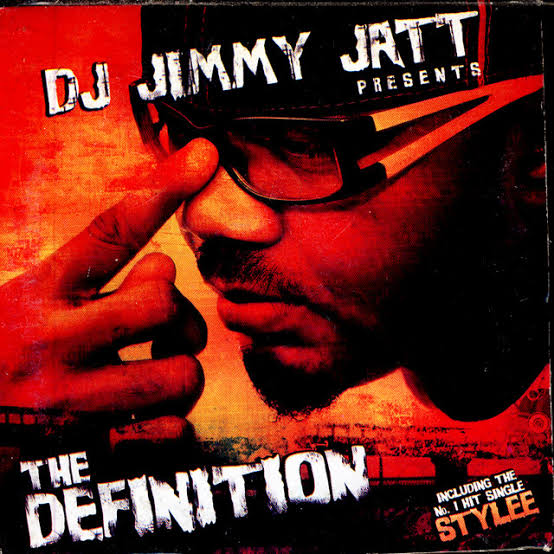
In 2007, DJ Jimmy Jatt released The Definition Vol. 1, the first full-length album ever curated by a DJ in Nigerian music history. And a year later, he launched “Jimmy’s Jump Off” on Silverbird Television, a show that became a key proving ground for a generation of artistes.
All of this comes from a man who admits that most days are spent largely alone and out of the public eye, with only brief moments outside his room before he returns to being alone. “I’m sometimes grateful that life led me into this profession”, he tells me, “because if not, I honestly don’t think many people would even know me outside my immediate circle. I can be that private”.
DJ Jimmy Jatt is, by his own admission, an extreme introvert. He is also, by every available measure, an institution. But how does a man so drawn to solitude become one of the most visible figures in Nigerian music culture? How does someone who prefers privacy navigate decades in an industry built on performance and extroversion?
In this exclusive interview with Afrocritik, DJ Jimmy Jatt speaks extensively about growing up in Obalende, the pivot from rapping to DJing, building Road Block from nothing, the making of the canonical Hip-Hop record “Stylee”, and his thoughts on the direction of Nigerian music.
From Obalende to the Booth: The Making of DJ Jimmy Jatt
Music found Jimmy Jatt before he found it, and it came from multiple directions at once. His father was a serious music collector, with records spanning King Sunny Adé, Ebenezer Obey, I.K. Dairo, Tunde Nightingale, Fela Kuti, and James Brown. His mother leaned towards Country and Pop: ABBA, Dolly Parton. Between both parents, there was always music playing at home.

Then there were his two older brothers, who carried that culture forward, collecting records and bringing new sounds into the house. Jimmy was the quiet one, so he spent a lot of time listening. He became the one who would tell them which tracks stood out. They’d bring albums home, and he’d already have opinions on what songs were the best.
But it was the environment outside his home that truly shaped him. Obalende in the 1970s and ‘80s was deeply communal. “It was the kind of place where you could walk into someone else’s house and eat”, he recalls.
Lagos Island was, according to him, always lively. There were parties everywhere. People would block entire streets for naming ceremonies or celebrations, and nobody complained, as it was just part of everyday life. It was in that energetic, noisy, music-saturated environment that Jimmy Jatt’s entry into Hip-Hop began. Around 1979, one of his brothers bought “Rapper’s Delight”, a 12-inch single with the vocals on one side and the instrumental on the other. He memorised the lyrics first, then flipped to the instrumental and started performing it for his brothers. “From there, I began experimenting, replacing some of the original words with mine and then I started writing my own lyrics”, he says.
That was his entry point into Hip-Hop. He started calling himself Master J, writing his own lyrics, and recording demo tapes. DJing came later, around 1984. His older brothers were already DJing in the early ’80s, but he wasn’t involved at first since he was still in school. It was mostly during holidays that he would come around, watch what they were doing, and gradually get exposed to it. At that point, he was already immersed in Hip-Hop culture in other ways. He was heavily into breakdancing, and in his early days, he was more popular in Obalende for dancing than for anything else.
“If you look at Hip-Hop culture as a whole, from rapping and breakdancing to graffiti and DJing, I had already been involved in two of those elements before I eventually transitioned into DJing”, he explains. “So it wasn’t a sudden decision; it was more of a natural progression within the culture”.
But there was a persistent problem: there were no platforms. The most he could get were side attractions or occasional nightclub performances. “There was no proper structure for rap music in Nigeria, and even the idea of it was still strange to many people. You’d perform, and some people would dismiss it as ‘American wannabe’ stuff. There was a lot of misunderstanding around the culture”, he says.
So when he started DJing and gradually built some recognition, and after setting up Jatt Studio in Obalende, the idea of creating a platform began to take shape. That frustration, of being a rapper who never got a deal or released music, and who watched talent go unrecognised, would become the driving force behind Road Block.
Building Platforms Where None Existed
Road Block was inspired by the way people in Obalende would block roads for parties. But beyond simply setting up equipment on the street, its real purpose was to provide a platform for people to showcase their talent.
They would hold it on Sundays, invite artistes from all over Lagos, and people would come through to perform. Sometimes there were crowds of 5,000 to 7,000 people just gathered on the street watching and listening. It became a full street carnival experience, even though they didn’t call it that at the time. Over time, it became a discovery space. Early acts like Junior and Pretty, Daddy Showkey, Daddy Fresh, the Def O Clan, Ruff Rugged & Raw all got early exposure there.
In fact, the whole story of Junior and Pretty and Storm Records is directly connected to that movement. Jimmy Jatt would take their demo tapes, bring people together, and have conversations about investing in these talents. That eventually led to the formation of Storm Records and the release of “Monika”, widely considered one of the first Afrobeats hits.
Years later, in 2007, he released The Definition, the first full-length album ever curated by a DJ in Nigerian music history. He recorded with over a hundred artistes, but the album had more than 20 tracks and featured over 40 artistes.
When I asked him how “Stylee”, the standout record off The Definition album, came to be, he took me back to how it almost didn’t happen. The Hip-Hop record, featuring 2face Idibia, Mode 9, and Elajoe, was the last song recorded on the project. At the time, 2Baba was extremely busy. Even with their close friendship, pinning him down for a session was nearly impossible. Eventually, Jimmy Jatt made it happen by any means necessary. He tracked 2Baba down at a studio in Ajao Estate, picked him up, and took him to Veritas Studio with producer Joe Kenny. They spent hours talking about Lagos and its hustle and bustle. At some point, 2Baba, as Jimmy Jatt recalls, suggested that they turn those conversations into music. That became the spark, as he began freestyling the hook, “This Lagos wey we dey so, e be our own…”, while Joe Kenny built the melody on the keyboard.
The same year, DJ Jimmy Jatt launched Jimmy’s Jump Off on Silverbird Television, the first DJ-led video mix show on Nigerian TV. After a few episodes, he introduced “Lick the Mic”, a segment where artistes would step up to deliver freestyle verses, exclusive lyrics, or unreleased material. The show quickly became a discovery platform. Artistes like 9ice, 2Baba, M.I, Wizkid, Burna Boy, and DaGrin passed through the booth.
“What I set out to do with Jimmy’s Jump Off was very similar to what I had done with Road Block”, he says. “The goal was simply to create a platform. But as the show grew, it became clear that it was shaping a new generation of artistes”.
In 2014, to commemorate his 25th anniversary in the industry and push the idea of DJs as central contributors to music-making, he released The Industry Vol. 1, which brought together 66 artistes across genres and was one of the most collaborative albums to come out of Nigeria, and arguably Africa, at the time.


On Legacy and the Future of Nigerian Sound
When I spoke with Toni Kan, the Nigerian writer and editor who co-wrote DJ Jimmy Jatt’s biography, Avant-Garde: The Cool DJ Jimmy Jatt Story, alongside Nigerian writer Peju Akande in 2014, he told me that what struck him most about Jimmy Jatt is his character.
“For someone I had been hearing about for years, I was surprised by his youthfulness”, Toni Kan says. “And having done lots of biography projects and interviews with celebrities, I was touched by his apparent lack of ego and willingness to give credit to others where it was due”.
Ayomide Tayo, a culture critic and music journalist, positions Jimmy Jatt as “a bedrock of not only Nigerian rap music but its offshoot, Afrobeats”. He points to the Block Party as a platform for key acts like Junior, Pretty, and Daddy Showkey, and notes that Jimmy Jatt “elevated the art form of deejaying and, as a cultural connector, would give us a clear snapshot of Afrobeats in the late 2000s with his album The Definition”.
Yet when presented with titles like “father of Hip-Hop DJing in Nigeria” or “Africa’s number one DJ”, Jimmy Jatt firmly pushes back. “I don’t really like titles. I’m a simple person. I’m fine with just being called Jimmy”, he says. “I don’t like anything beyond that. I feel like we place too much emphasis on titles around here, and it’s never been something I’m comfortable with”.
At some point, people started attaching different labels to his name. That was part of the reason he added “Cool DJ” before his name, just to make it harder for people to keep adding titles. “Even when people say ‘pioneer’ or ‘father of Hip-Hop DJing’, I don’t fully accept that. I think it can be disrespectful to those who came before me”, he insists. “There were DJs I looked up to, people who were already doing this long before I came into the picture. So it doesn’t feel right to position myself as the starting point”.
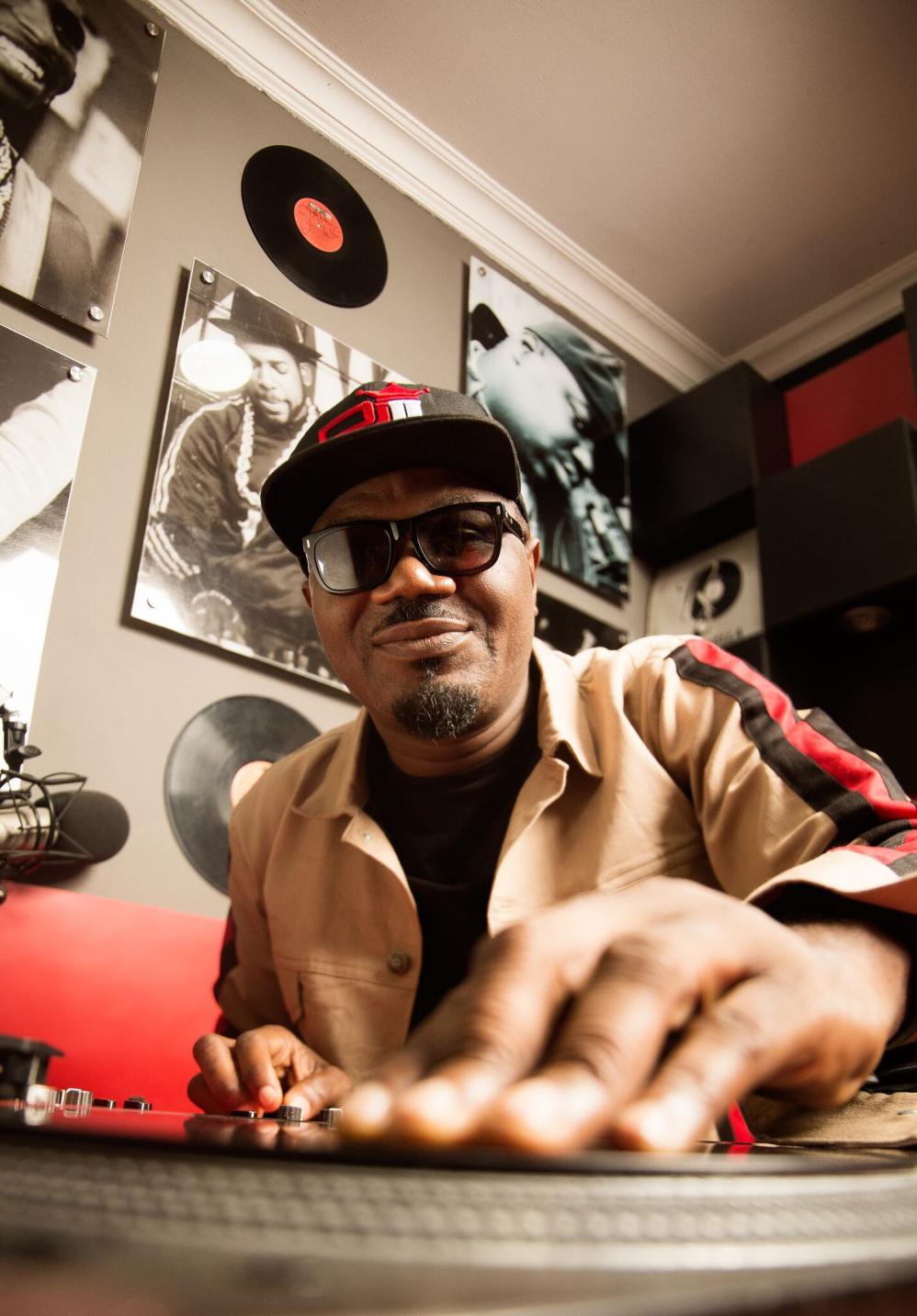
That humility has endured across four decades of close engagement with the Nigerian music industry. Forty years in, DJ Jimmy Jatt is concerned about the direction of Nigerian music. While he is excited about the presence, the recognition, and the global impact, he is deeply concerned with the dilution of quality.
He points to a gradual dilution of quality in the music landscape, where audiences often lean towards what feels easy or entertaining in the moment, what is commonly described as cruise, rather than records with depth and substance. In his view, when those kinds of songs succeed, they set off a cycle in which others begin to replicate the same approach, believing that if it can work once, it can work again, and, in the process, the standard keeps shifting.
He is careful not to come across as dismissive. He acknowledges that there is still plenty of real talent in the scene, but he notes that the growing volume of less substantial material can sometimes overshadow genuinely skilled artistes. As a result, some deserving voices do not get the space they should, while others rise quickly without the same level of craft.
The real concern, he says, is sustainability. He warns that if the industry leans too far into what is easy and immediate, it risks weakening the long-term value of the music. He also notes that Nigerian music is now performing on a global stage, meaning what is projected today will ultimately shape how it is perceived in the future.
As the virtual interview came to a close, I asked him what he still wants to do that he hasn’t done yet. His answer is characteristically humble: “As long as there is life, there is hope. You keep aspiring to do more than you have done. That is the essence of living in the first place”.
Abioye Damilare Samson is a music journalist and culture writer covering African entertainment, Pop culture, and the stories that shape the continent’s creative identity. His work has appeared in Afrocritik, Republic NG, Newlines Magazine, The Nollywood Reporter, NATIVE Mag, Neun Magazine, Culture Custodian, 49th Street, and more.