



Some of these books tackle politics head-on; in others, its marginal effects play in the background of the main narrative.
By Afrocritik’s Editorial Board
No discursive foreword is needed here, except to say that in the first list of political fiction in this series, we looked at books that confront political themes through tales of revolution, sectarian violence, history, ideology, and sexual identity. Here, we not only continue in that vein but also go beyond it to look at authors who use fiction to ask the crucial questions about where Africa has been politically and where it is going in the aftermath.
These are not easy questions to answer in the multilateral world of political influences, war, and all sorts of civil strife, such as has been common in our dear continent. That it is all connected in one way or another is a fact. That neocolonial overtones run through the lot of these issues bedeviling many African countries is another. But notwithstanding these, Africa must learn to blame less and do more to dig itself out of its many ditches.
This series began with the question, are African writers still writing about the continent’s politics, or have they abdicated that role with the rise of a soft-safe generation? But Africa cannot run away from its reality. Its writers must continue to speak out in the face of tyranny, greed, and corruption. For, as Chinua Achebe wrote in the proverb of the man who left his burning house to chase rats running away from themselves, they cannot pursue trivialities in the face of more important, high-stakes issues happening in and confronting their homeland. To that end, we are happy to announce that African writers have generally not disappointed in the last decade.
Quality must prevail, however, and these themes must also be geared towards a better society. The works are chosen to be representative, especially less-highlighted language regions of Africa—French and Arabic—where the appearance of monumental work is hardly ever fully covered in our Anglophone sphere. Some of these books tackle politics head-on; in others, its marginal effects play in the background of the main narrative. The point is that politics stares us in the face always as Africans, as human beings, and we must not ignore its machinations.
Here they are, in no particular order.
Glory (2022) – NoViolet Bulawayo
In this second novel, the acclaimed Zimbabwean writer NoViolet Bulawayo did what many important politically conscious writers have done in the past: revert to fable and use it to offer trenchant, affecting critiques of political tyranny. In this manner, Glory most resembles George Orwell’s classic Animal Farm (1945) and Ngũgĩ wa Thiong’o’s Wizard of the Crow (2006) in what it does and is bound to become a classic itself, having succeeded in pulling off one of the most difficult jobs of any novel.
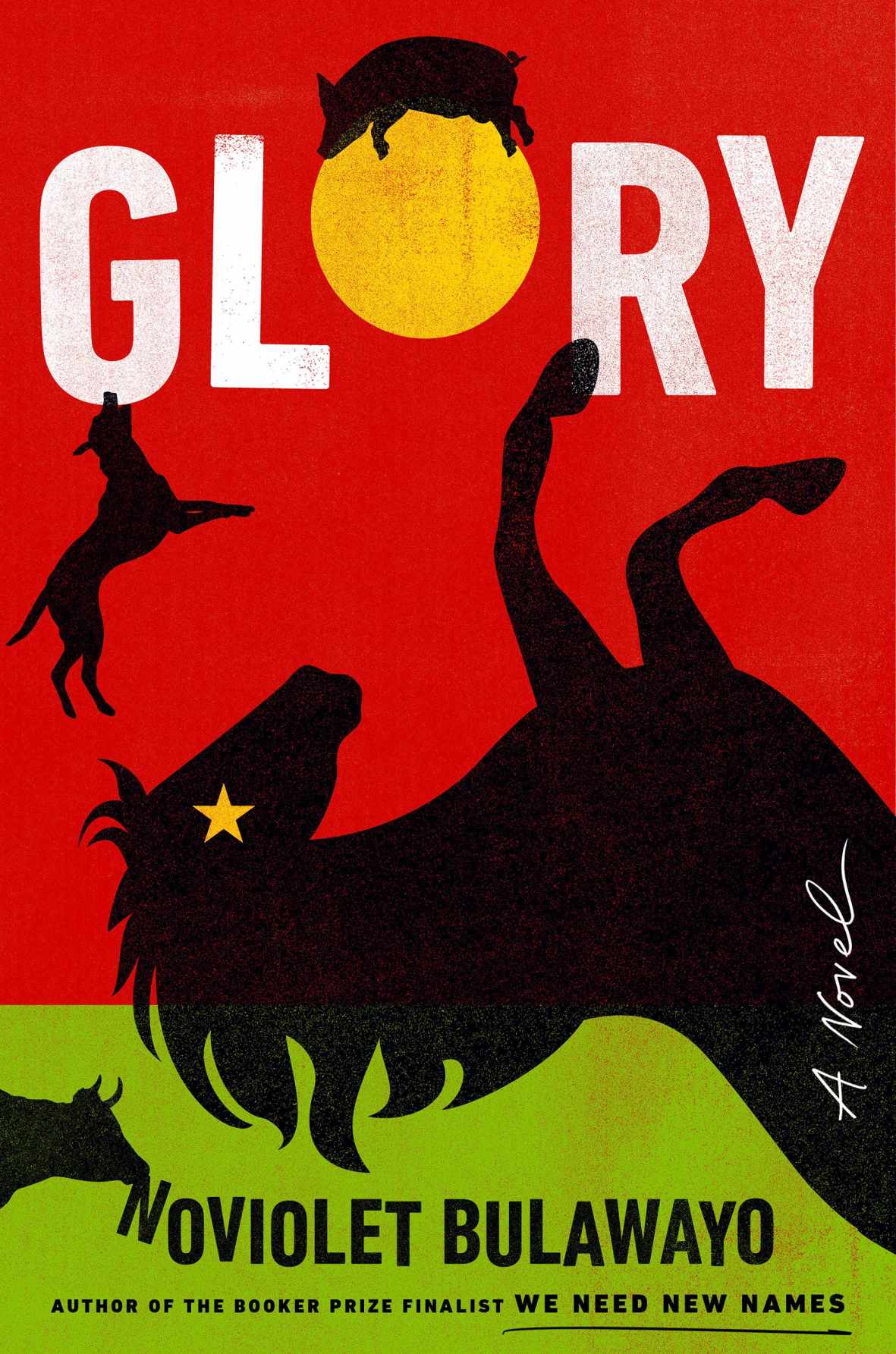
In this Booker-shortlisted novel, Bulawayo satirises Zimbabwe’s political fate through a fictional country of animals called Jidada, ruled by a long-serving authoritarian head of state, Old Horse. The novel captures this state on the verge of liberation. Glory shows a country’s imploding, narrated by a chorus of animal voices that unveil the ruthlessness required to uphold the illusion of absolute power and the imagination and bulletproof optimism to overthrow it completely.
Here, we encounter the daily lives of a population in upheaval; the author reveals with dazzling accuracy and irresistible wit, “the lie barely concealed beneath the surface of seemingly bleak circumstances,” the description reads. The brilliant Bulawayo has written a reference book for Africans in these times, a political fable for all times.
The Fetishists – Ibrahim Al-Koni
The International Booker-shortlisted author Ibrahim Al-Koni is one of the most important writers in Arabic today. This novel, the Libyan master’s magnum opus, opens when the Sultan Oragh of Timbuktu, who has already lost most of his power to Fetishist Bambara leaders of the forestlands, fears he will lose his only daughter, Tenere, as a human sacrifice to their god Amnay.
The sultan sends Tenere to seek refuge with fellow Tuareg nomads in the plain. But even in their traditional, nomadic community, a competition rages between jihadi militant Islam, moderate Anhi Islam, which is the ancient Tuareg Law, and the cults of gold dust and of traditional African folk religions.
The Fetishists presents what happens when rival cultures clash, and when communities seek to build a utopia on Earth as individuals struggle between a desire for material well-being (represented by gold dust) and a need for spiritual meaning. Amidst the intense political and religious narrative associated with Tuaregs in the Sahara regions of Africa, Al-Koni’s rendering of a clash between the Tuareg and traditional African civilisations profoundly probes the contradictions of the human soul in a journey through the spiritual and physical worlds of the Tuareg.
A Siege of Owls (2026) – Uchenna Awoke
Awoke’s second novel follows a young boy named Ekwe, who is growing up in an Igbo village haunted by owls, myths, and the boundaries of a world too small to contain his restless spirit. After touching a forbidden leaf that his father warns will trap him in astral planes, he is swept into a journey that will carry him across Nigeria, through savannas, deserts, and conflict zones, and into the heart of a nation’s unraveling.
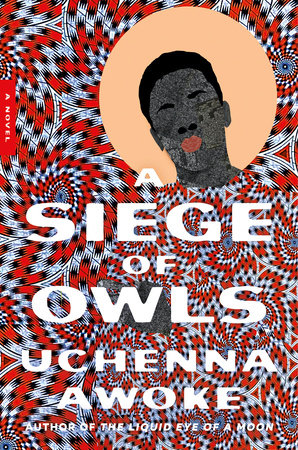
In its review of the novel, Afrocritik observes that “A Siege of Owls is highly political, but a reader of the novel would find that its politics does not occur in the gossipy and quotidian way in which it occurs in many other Nigerian fictions. Here, politics appears as another dimension of reality or even unreality, as a hot, boiling allegory of contemporary times in which violence, a character in itself, has become the propulsive machinery around which everything else revolves”.
Epic in scope, this is a novel that traces one child’s odyssey across a fractured landscape, weaving folklore with the stark realities of insurgency, displacement, and the longing for home.
How Beautiful We Were (2021) – Imbolo Mbue
Imbolo Mbue’s second novel is a tale of a community’s fight against the political and corporate powers that be. Told in the first person plural, the novel follows the irrepressible fight of villagers in an oil-rich region in an unnamed African country against the government and an American oil company.
A review in The New York Times considers that “What carries Mbue’s decades-spanning fable of power and corruption is something much less clear-cut, and what starts as a David-and-Goliath story slowly transforms into a nuanced exploration of self-interest, of what it means to want in the age of capitalism and colonialism — these machines of malicious, insatiable wanting”. Mbue’s novel is one of the most thought-provoking novels by an African in the last decade
Ghost Season (2023) – Fatin Abbas
Set in a fictional oil-rich border town named Saaraya, between Sudan and South Sudan during civil war, this debut novel by Sudanese writer Fatin Abbas explores humanitarian intervention, ethnic tension, state collapse, and memory. At the beginning of the novel, the appearance of a burnt corpse in an NGO compound foreshadows more trouble.
“Everyone has a different story. William, a South Sudanese translator, connects the corpse to the sudden disappearance of cook Layla, a nomad from the north with whom he’s fallen in love. Amidst the chaos, Dena, a Sudanese-American filmmaker, struggles to find a connection with her homeland. There is Alex, a white aid worker from the American Midwest whose plans in the country are derailed by a rapidly changing climate and an impending civil war. And then there is Mustafa, a precocious twelve-year-old boy, whose plans to escape poverty set off a series of cataclysmic events on the compound”, the book’s description reads. Abbas captures all these in great sensory detail, a style that, before her story of the partition of Sudan and the precariousness of borders.
A Spell of Good Things (2023) – Ayọ̀bámi Adébáyọ̀
In this book by the award-winning Nigerian author, the parallel narratives of two families are placed side by side. One family is wealthy, the other is poor. In the wealthy family, 28-year-old Wuraola is a committed doctor with a robust future but is in a physically abusive relationship.
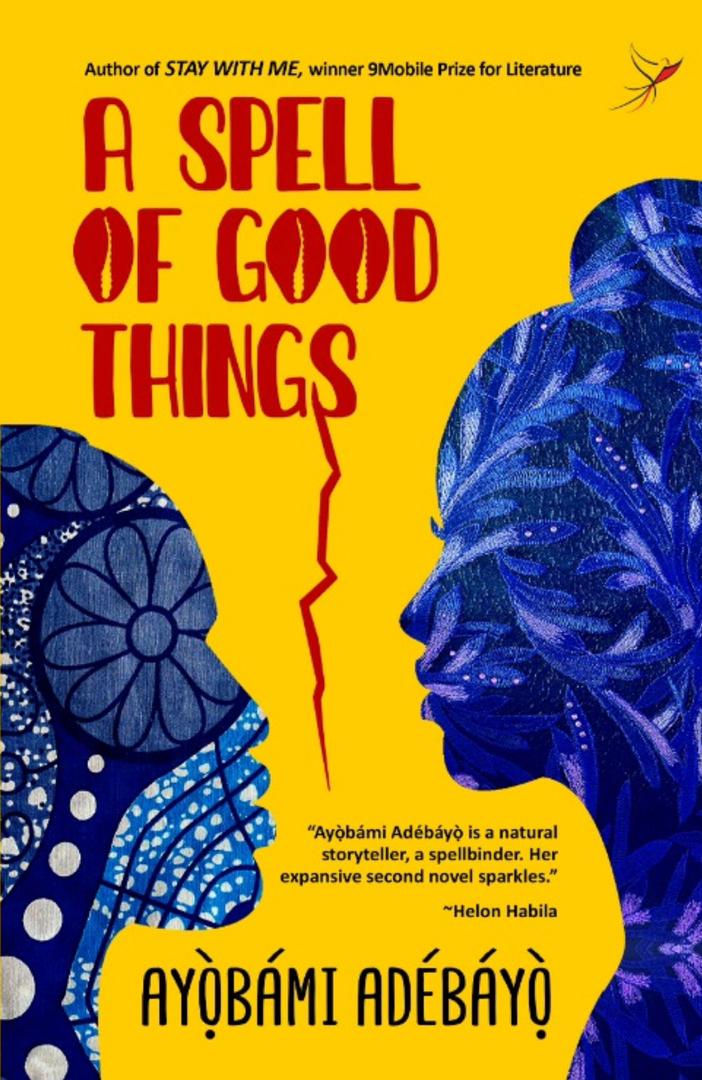
In the poor family, Eniola has to scrape with his family after his educational dreams are dashed when his father, a teacher, is sacked in an ill-advised mass retrenchment of history teachers. The novel meshes themes of domestic strife and political violence. The violence does not single out the rich or the poor. And the novel captures this fact poignantly. In general, this is a novel about what it means to live in Nigeria’s politically fraught environment today.
Angola is Wherever I Plant My Field (2023) – Joao Melo
The Angolan writer and politician Joao Melo’s book is a collection of interlinked stories about Angolans living through and after war, colonialism, and rapid social change. It follows soldiers, refugees, street kids, migrant workers, minor officials, lovers, and loners as they try to survive, make money, fall in love, and understand who they are in a fractured country. The book offers many viewpoints and a loose, episodic structure.
Melo’s writing here uses satire and allegory to tackle questions of voice, memory, and who gets to tell the story of Angola. The stories move from guerrilla camps and ruined villages to Luanda’s streets, Lisbon’s cafés, and imagined cities abroad, spanning from roughly the 1960s liberation struggle through the height of the civil war and into the post-war, oil-rich era. The tone mixes dark humor with grief, and the stories question fixed ideas about revolution, patriotism, race, and identity, showing how ordinary people improvise their lives under systems that rarely make sense.
Comrade Papa (2024) – GauZ’
The maverick Ivorian writer, GauZ’ (Patrick Armand-Gbaka Brede), is known for his satirical perspectives of art and politics—his nom de plume being the first political act. In Comrade Papa, the International Booker-shortlisted author goes into the mind of a young Frenchman in the late 19th century to tackle the legacies of French colonialism in Africa.
The novel follows this young Frenchman named Dabilly, who signs up for a colonial adventure in a bid to avoid life as a factory worker. Meanwhile, a century later, a young black boy born to Communist parents in Amsterdam visits his grandmother in the Ivory Coast and begins to learn about an ancestor he never knew existed. Placing these two coming-of-age stories side by side, capturing two very different but connected people existing in very different times, GauZ’ reveals the long arm of colonialism.
Edo’s Souls (2020) – Stella Gaitano
In this compelling epic novel by the South Sudanese writer, the issues that have long confronted the young country are laid bare: war, poverty, patriarchy, and the emotional fractures created by the Sudan/South Sudan conflicts.
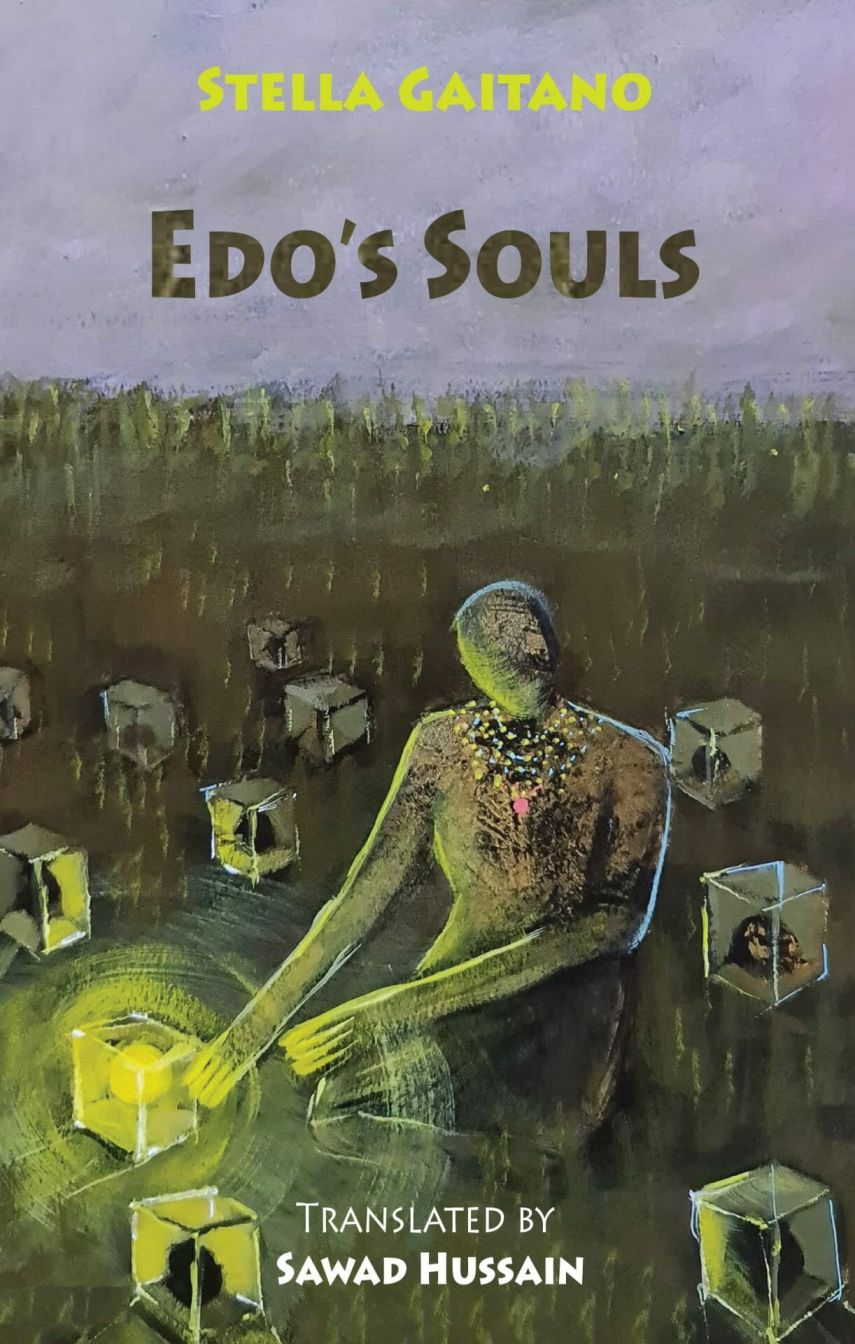
Focusing on three main characters trapped in a nation gripped by the terrors of civil war, forcing each one to confront their past selves, and to resolve what is most important to them – love, family, or country, the novel begins in a small impoverished village full of mystery, rituals, and superstition, and ends in a congested city where complex but fundamental relationship between life and death stares the characters directly in the face.
The characters are described thus: “When a young Lucy-Eghino, who is coming of age in a 1970s village in southern Sudan, is beset by rumours of approaching violence, she has no choice but to flee, first to Juba, then northwards to Khartoum. Marco, a gentle young father, wages a daily battle to keep his family together while avoiding friction with any northerners. Peter, a soldier unsure of where his loyalties lie, is forced to carry out night raids searching for bands of rebels”. This is a must-read novel from a young country that has mostly been in the news for the wrong reasons.
The Hollow Sound of Lightweight Bodies (2026) – Unathi Slasha
This novel by the South African writer Unathi Slasha is set in and around a contemporary South African township. It follows Mxabanisi Bulawayo, a young crematorium worker who burns bodies, writes obituaries and stories for the dead, and watches his inherited home and family fall apart.
Grounded in social realism—gangs, corrupt councillors, Boer farmers, informal insurance schemes, police violence—it is threaded with speculative and mythic elements: talking spirits, experimental “ikhosi” beings, and a swamp-bound town where a spiritual scientist, Baba Bouka, tries to reshape life and death.
Told in a candid and restless first person, Mxabanisi’s daily work among unclaimed and mutilated bodies at the Despatch Crematorium and graveyard; township life under economic precarity and racial tension; the breakdown of his own family under an abusive, hypocritical father, a hostile stepmother, and a half brother who displaces him; and the creation of new “spiritual technologies” in Kings Town, where ancestral spirits are domesticated into physical bodies and older beliefs are challenged.
The Longing of the Dervish (2016) – Hammour Ziada
This novel captures a time of social upheaval and religious tension in Sudan. It explores the conflict between Christian culture and Islamic Sufi traditions, capturing themes of love, betrayal, prejudice, freedom, and political struggle along the way.
The story alternates between the past and the present as it follows the story of Bakhit Mandil, a former slave who is released from prison after the fall of the Madhist state. The Madhi War was a conflict between a breakaway state in Egypt and Sudan led by a religious leader named Al-Madhi.

This lyrical and evocative novel captures Sudan in a state of flux—a state grappling with religious extremism, xenophobia, and the traumas of colonial rule.
The Story of Us (2019) – Hanna Ali
The collection by the Somalian writer, Hanna Ali, captures the state of Somalian women’s struggles through Somalia’s troubled past and present. The book’s description reads: “The Story of Us is a collection of four short stories about womanhood from a Somali perspective.
The collection begins in the homeland, and each story follows a different woman’s life experience, from being trapped in a loveless marriage to a young girl reflecting on a difficult breakup. This collection deals with unpacking hurt and loss and what becomes of the generation of Somali women refugees who grow up in the West.
The women in this collection have lived through war and depict the aftermath of being at war with yourself. Ali is able to embody each of these women to show that where there is beauty, there is pain.”
The Eternal Silence of One (2019) – Remy Ngamije
Home is at the center of Namibian writer Ngamije’s novel, The Eternal Silence of One, a coming-of-age story about the difficulty of making home and finding identity in a globalised world. Seraphin Turihamwe, the novel’s protagonist, is caught eternally in a state of modern nomadism where he cannot decide where to call home.
During the Rwandan genocide, his family fled Rwanda for Kenya but eventually settled in Namibia. Ngamije skillfully captures this irony of identities: Seraphin feels most at home in Cape Town, where he eventually settles in South Africa. But in the multicultural scapes of Cape Town, he sees that Black immigrants like him are not welcome in the increasingly xenophobic South Africa. This novel captures a vital part of modern African life: the dilemma and politics of intra-continental migration.
Beneath the Scar (2025) – Bento Baloi
Mozambican author Bento Baloi’s novel was first published in Portuguese as No Verso da Cicatriz, after the novel won the inaugural Prémio Mia Couto for best Mozambican novel published in 2021. Now published in English, the novel is the story of a character’s post-independence confrontation with the machinery of the state.
The book’s description read: “Torn from his home and unjustly labelled as ‘unproductive’, Bernardo’s story is a testament to the power of resistance and resilience. In the aftermath of Mozambique’s independence, he is caught up in the machinery of Operation Production Engagement and sent to a reeducation camp in Milange — a brutal exile for those deemed idle by the system. His beloved Maria Helena is left in Maguaza, alone and pregnant. Love, much like memory, proves to be indelible, refusing to be easily erased. In Beneath the Scar, Bento Baloi delves into the journey of a man who, armed with longing and dignity, survives the weight of ideology and the cruelty of being forgotten.”
The Book of Memory (2015) – Petina Gappah
In this novel, the award-winning Zimbabwean writer constructs a powerful homage to the politics of memory, freedom, and female agency. The book’s description refers to the novel as the story of “an albino woman languishing in Chikurubi Maximum Security Prison in Harare, Zimbabwe, after being sentenced for murder. As part of her appeal, her lawyer insists that she write down what happened as she remembers it.
The death penalty is a mandatory sentence for murder, and Memory is, both literally and metaphorically, writing for her life. As her story unfolds, Memory reveals that she has been tried and convicted for the murder of Lloyd Hendricks, her adopted father. But who was Lloyd Hendricks? Why does Memory feel no remorse for his death? And did everything happen exactly as she remembers? Moving between the townships of the poor and the suburbs of the rich, and between past and present, … Petina Gappah weaves a compelling tale of love, obsession, the relentlessness of fate, and the treachery of memory.”
The Lives and Deaths of Veronique Bangoura (2026) – Tierno Tierno Monénembo
The award-winning Guinean author’s novel delves into the harrowing traumas of post-independence Guinea under the authoritarian grip of its first president, Sekou Toure. The description partly reads: “In this gripping novel set in both French Guinea and Paris, Tierno Monénembo explores themes of international exile, sexual abuse, generational trauma, and repressed memory of a people and country under the regime of dictator Sekou Toure from 1956-1982, in which 50,000 people were reported killed or disappeared. With his title character, Véronique Bangoura, the author provides a portrait of a powerful female protagonist living under an assumed name in exile, having fled her native country to take on a new identity and occupation as caregiver for an elderly and infirm gentleman.
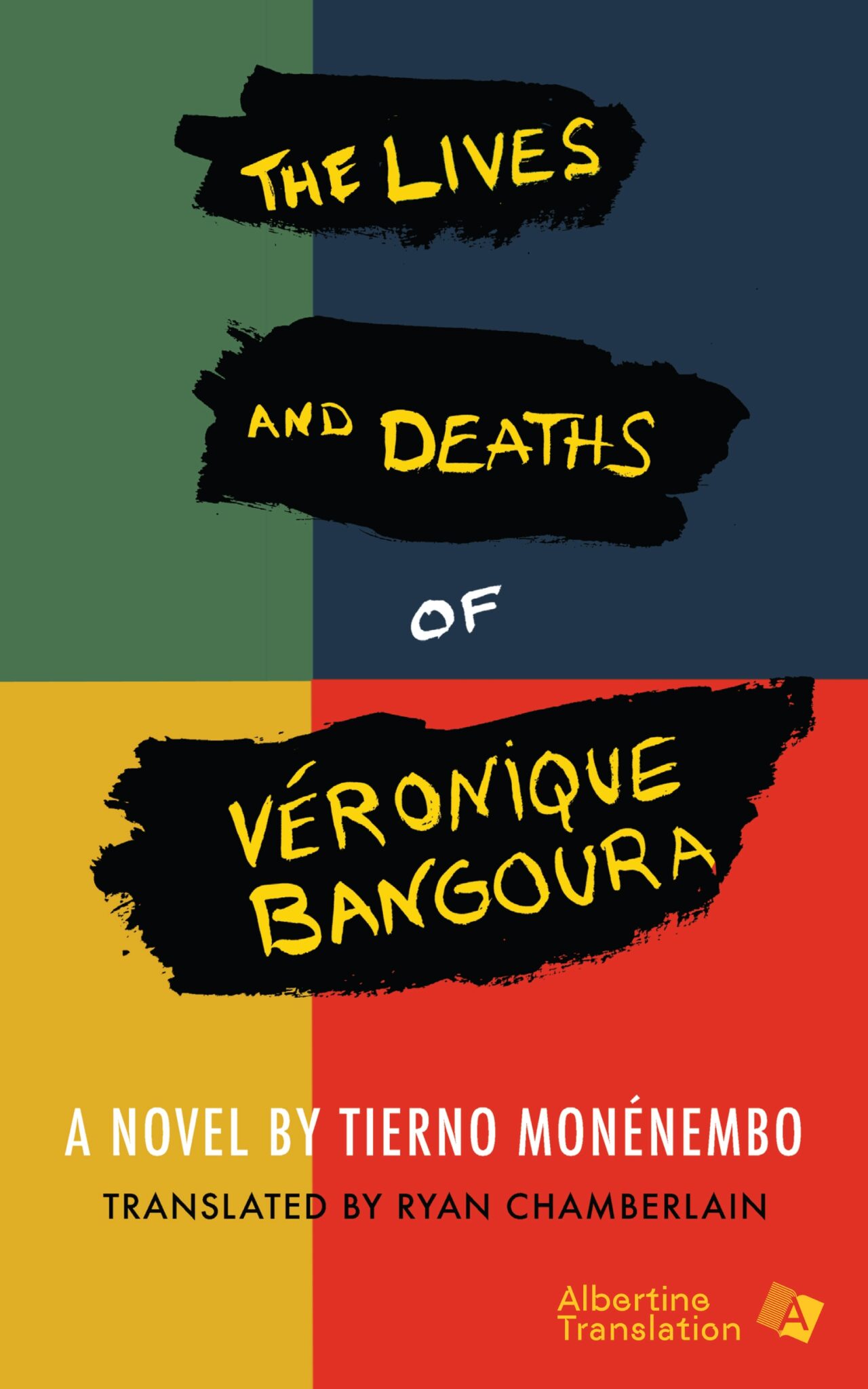
Prompted by a friendship she has struck up with an older woman who claims to recognize her, she finds a confidante to whom she relates her personal story, when as a young teenager she killed her father in self-defense upon his attempt to rape her, and fled into the slums of Conakry where she was taken in by a gang of women and their matriarch, Aye Bamby, who mentors her in a life of petty crime and prostitution. In this complexly unwinding plot told in alternating parallel narratives, the dark political history of her parentage as well as the truth behind her many lives is revealed.”
The Messiah of Darfur (2016) – Abdelaziz Baraka Sakin
News from Sudan over the last decade has been marked by strife, war, senseless power rivalries, and political opportunity. The implosion of the country is a cautionary tale of why the evil of a power-hungry individual must be arrested at its roots. And in all of this, the Darfur region has been at the worst receiving end of the symptoms of the failed state.
In this novel about Darfur and the state’s violence during the Bashir era, following a mysterious, charismatic man who claims to be a prophet and preaches peace to a devastated populace. One of the main characters is a girl named Abdarrahman, a war orphan who gave herself a male name.
Over the course of the novel, she is transformed from a victim to a rebel, marries a soldier who was forcibly recruited, and demands from him the killing of at least 10 members of the Janjaweed who had raped her. Later, she takes matters into her own hands and gets her revenge herself. The novel blends satire, surrealism, and political allegory while capturing themes of genocide, displacement, and authoritarian brutality.
Chimezie Chika is a staff writer at Afrocritik. His short stories and essays have appeared in or forthcoming from, amongst other places, The Weganda Review, The Republic, The Iowa Review, Terrain.org, Isele Magazine, Lolwe, Fahmidan Journal, Efiko Magazine, Dappled Things, and Channel Magazine. He is the fiction editor of Ngiga Review. His interests range from culture, history, to art, literature, and the environment. You can find him on X @chimeziechika1