

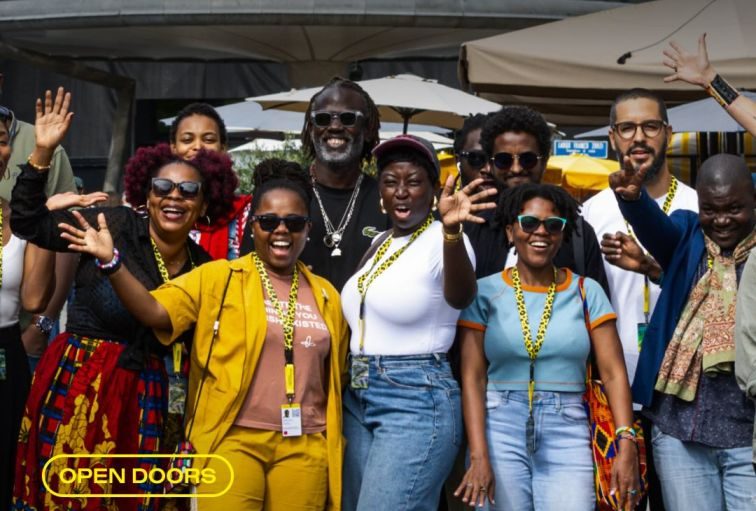


Running from 5th to 10th August during the Locarno Film Festival and its industry platform, Locarno Pro, the programme will provide mentorship, training, networking opportunities, screenings, and industry-focused events.
By Adedamola Jones Adedayo
For the second consecutive year, the Locarno Film Festival’s Open Doors, a co-production and talent development initiative supporting filmmakers from underserved regions and communities where artistic expression is under threat, will place Africa at the centre of its Projects, Producers, and Directors showcase.
The 2026 edition forms part of Open Doors’ four-year cycle dedicated to the African continent, spotlighting a new generation of filmmakers working across fiction, documentary, and experimental cinema from more than ten countries. Running from 5th to 10th August during the Locarno Film Festival and its industry platform, Locarno Pro, the programme will provide mentorship, training, networking opportunities, screenings, and industry-focused events.
Six African projects have been selected for the Open Doors Projects programme, which supports first and second feature films in development, exploring themes ranging from music and memory to urban transformation, womanhood, and colonial legacy.
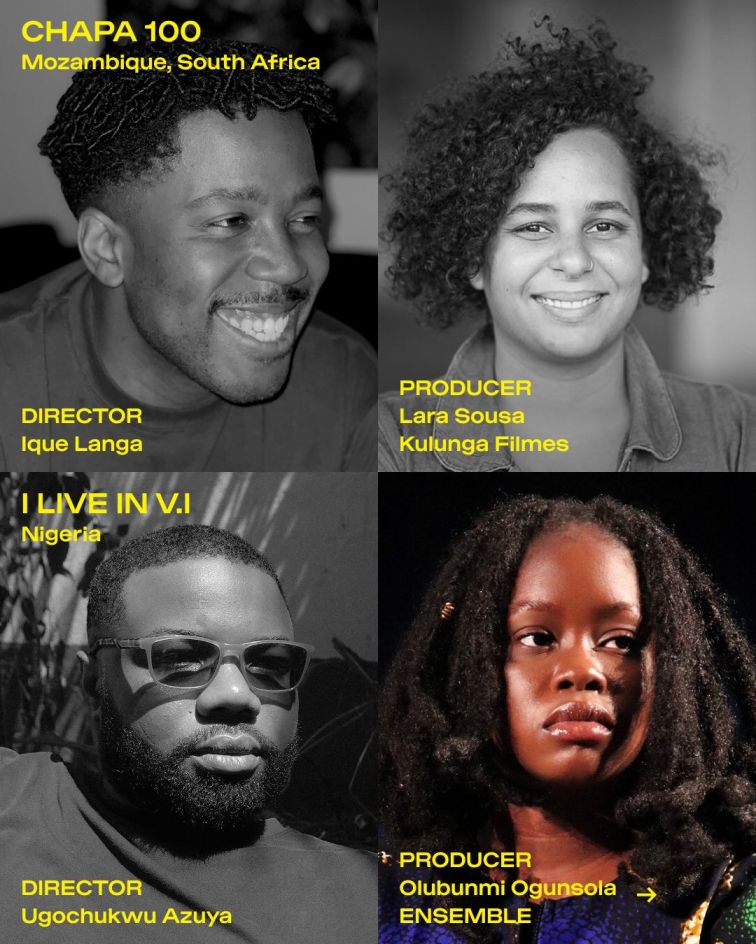
Representing Nigeria, producer Olubunmi Ogunsola and director Ugochukwu Azuya present I Live in V.I., a social satire about urban space and gentrification. Ghanaian producer and director Aseye Fiagbe joins the programme with Too Much Music, a documentary about Ghanaian keyboard prodigy Kiki Gyan.
Mozambique and South Africa collaborate on Chapa 100, a modern surrealist romantic drama produced by Lara Sousa and directed by Ique Lang, whose previous feature, O Profeta (The Prophet, 2026), recently premiered in the Tiger Competition at the 2026 International Film Festival Rotterdam (IFFR) and was also featured at New Directors/New Films.
Somalia and Djibouti are represented by director Mohammed Sheikh and producer Kadir Harbi Hassan (Aleel Films) with Accept My Plea for Burial, a project navigating the conflict between tradition and justice in a rural society. Also selected is The Ones with the Tempered Flowers, a Tanzanian–Kenyan experimental documentary about womanhood and motherhood, produced by Ivy Kiru and directed by Neema Ngelime. Kiru previously participated in the La Fabrique Cinéma programme at the 2026 Cannes Film Festival with Strong Wind.
Completing the Project’s slate is Uganda’s A Vineyard for a Lobster, produced by Gashumba Emmanuel (Gripmagic Uganda Limited) and directed by Talemwa Pius. The narrative employs a snow-covered landscape as an allegory for the enduring trails of colonialism.
The Open Doors Producers programme, designed to support emerging creative producers in building a sustainable career and negotiating cross-border networks, has six participants from six different countries.
Burkina Faso is represented by Mamounata Nikiema (Pilumpiku Production), a seasoned industry practitioner, knighted at FESPACO 2021 for her legacy in cinema. From Cape Verde is Natasha Craveiro (Korikaxoru Films), producer of Omi Nobu, which screened at Locarno’s Open Doors 2025.
Selected from Côte d’Ivoire is Adja Mariam Mahre Soro, the founder and CEO of the Abidjan-based animation studio, Studio Kä. Nigerian producer David Ikeata (Vox Cinematic Films) makes the cut, having worked on Kazakh-Nigerian co-production Adam Bol (2024).
Sudanese producer Rua Osman brings even broader festival experience, with credits on You Will Die at Twenty (Venice, 2019) and Goodbye Julia (Cannes, 2023). The selection is then completed by Tapiwa Chipfupa (Ambidextrous Pictures), an alumna of European Audiovisual Entrepreneurs (EAVE), who recently founded the Audiovisual Entrepreneurs Laboratory (AVEL), an initiative targeting emerging African film producers.

In addition, the Open Doors Directors programme welcomes five African directors who will gain exposure through conversations, workshops and industry networking. Selected participants are Pocas Pascoal (Angola), Rediet Haddis Yalew (Ethiopia), Judith Nini Kibinge (Kenya), Ariel Añez (Mozambique) and Fagamou Fama Ndiaye (Senegal). Their short films will be featured as part of the Open Doors Screenings, the festival’s official section comprising both short and feature films, with the full selection to be disclosed on 1st July, 2026.
“With this new iteration of Open Doors’ African focus, we’re looking to affirm the richness of storytelling across the continent, with artistic voices and creative entrepreneurs strongly dedicated to meeting their audiences at home, within their diasporas and internationally,” Yanis Gaye, Head of Studies at Open Doors, announced. “Our programme is set to allow those synergies—within our cohort; between them and Open Doors alumni from other regions; and through the encounters they will have in Locarno—to take hold through concrete and actionable interactions.”
Musing over the evolution of African cinema, Gaye noted: “African film ecosystems and their practitioners are a chance for the industry to globally redesign some of the ways we think of our co-production practices, our audience-building strategies, and the economics of cinema as a whole.”
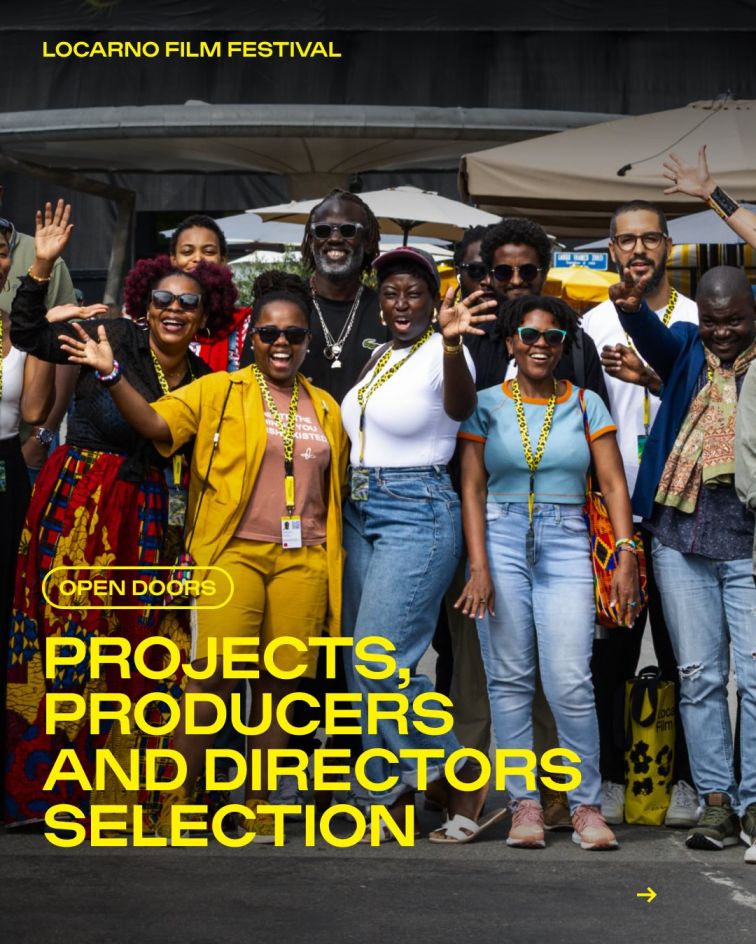
Zsuzsi Bánkuti, Head of Open Doors, also expressed optimism about the strength and direction of the 2026 selection, emphasising the programme’s commitment to inclusion, equity, and collective creativity. “With this selection, we are reaffirming something we deeply believe in: that the future of cinema depends on who gets to make it, and how,” Bánkuti said.
Bánkuti highlighted the importance of sustaining female representation across all levels of filmmaking, both creatively and institutionally: “One of my hopes for this edition, and for Open Doors more broadly, is to keep amplifying female voices, both behind the camera and in the producer’s chair. Gender parity in our industry isn’t just a goal for the screen; it has to be lived in the way we work and who we support.”
Beyond representation, she also emphasised what she considered the filmmakers’ understanding of cinema as an inherently collaborative artistic experiment: “What excites me most about this year’s selection is how many of these filmmakers understand that cinema is never a solo act. A film is always made by many hands, many minds, and many stories. The more we build our industry on that truth—on horizontal collaboration, on genuine equality within our creative communities, on more diversity—the richer and more honest our cinema will be.”
Launched in 2003 and subsequently collaborating with the Swiss Agency for Development and Cooperation (SDC) of the Federal Department of Foreign Affairs (FDFA), the Open Doors initiative of the Locarno Film Festival has undertaken the mission to support artists from underrepresented communities globally, including regions where cinema and art forms are threatened. Its current Africa-focused cycle, which began in 2025, will continue through 2028 as part of Locarno’s broader commitment to fostering new cinematic voices from the continent.