



If history demonstrates anything, it is that arthouse has never been a label with rigid boundaries. It is neither a genre nor a synonym for “good cinema,” nor is it a catch-all term for films that perform well on the festival circuit or struggle commercially.
By Joseph Jonathan
I. What “Arthouse” Formally Means, and Why It’s Contested
Few terms in film criticism are used as freely or as loosely as arthouse. In everyday conversation, it often functions as shorthand for a certain kind of film: one that is slow-paced, symbolic, dialogue-light, visually austere, or destined for the international festival circuit rather than the cinema multiplex. In Nigeria especially, the label has become an umbrella term for films that depart from the conventions of mainstream Nollywood, whether because of their storytelling style, financing model, or target audience. Yet for all its popularity, arthouse remains one of cinema’s most contested classifications.
Part of the confusion lies in the assumption that arthouse is a genre, comparable to horror, romance or science fiction. It is not. Genres are typically defined by recurring narrative conventions, iconography and audience expectations: a horror film seeks to frighten, a romantic comedy revolves around the development of a romantic relationship, and a western is recognisable through its frontier setting and associated myths. Arthouse cinema operates differently. It is better understood as a broad cinematic tradition or, depending on the scholar, an aesthetic orientation, an industrial category, an exhibition culture, or a mode of production and reception. These definitions differ in emphasis, but they point to the same underlying idea: arthouse is less about what a film is about than how it is made, exhibited, and experienced.
This lack of a single, universally accepted definition is not a weakness of the concept but a reflection of its history. Over the decades, the term has accumulated meanings from different institutions and cultural contexts. For some critics, arthouse refers primarily to a distinctive aesthetic: films that privilege ambiguity over narrative closure, psychological depth over plot, and personal expression over commercial convention. Others locate it within the economics of filmmaking, describing works made outside or at the margins of the commercial studio system, often with smaller budgets, greater creative autonomy, and alternative funding structures. Still others emphasise exhibition, tracing the term to the network of post-war “art houses”: independent cinemas that specialised in screening foreign-language, experimental and artistically ambitious films that mainstream theatres largely ignored.
None of these perspectives is entirely sufficient on its own. A visually adventurous film can emerge from a major Hollywood studio, just as a low-budget independent production may follow entirely conventional storytelling patterns. A film’s festival premiere does not automatically make it arthouse, nor does commercial success necessarily disqualify it. The category has always been porous, shaped as much by historical context and critical discourse as by any fixed checklist of stylistic traits.
What, then, unites the films most commonly described as arthouse?
Rather than adhering to a rigid formula, they tend to share a cluster of characteristics. They often foreground the director’s personal vision, favour observation over spectacle, invite interpretation instead of offering easy answers, and resist the narrative efficiency associated with mainstream commercial cinema. Their formal choices, whether in pacing, cinematography, sound design or narrative structure, are rarely ornamental. Instead, style itself becomes a way of thinking; form carries meaning as much as dialogue or plot.
Importantly, none of these characteristics is exclusive to arthouse cinema. A commercial film may employ long takes or narrative ambiguity, just as an arthouse film may embrace genre conventions. Classification therefore depends not on the presence of any single feature but on the broader artistic philosophy guiding the work. Like all critical categories, arthouse is best understood as a constellation of tendencies rather than a box with immutable boundaries.
Recognising this distinction is the first step towards a more precise vocabulary for discussing cinema. To understand why the term came to encompass such a wide range of meanings and why it continues to generate debate, we must return to the historical conditions that gave rise to art cinema itself.
II. The Making of Modern Art Cinema
Although the term arthouse is often associated with post-war Europe, the artistic ambitions that would eventually shape art cinema long predate the Second World War. Soviet filmmakers such as Sergei Eisenstein treated cinema as a medium for formal experimentation rather than mere entertainment, while German Expressionism demonstrated how visual style could communicate psychological and emotional states as powerfully as dialogue or plot. These and other early movements established the idea that film could be a serious artistic medium. Yet it was only after the devastation of the Second World War that modern art cinema, as we recognise it today, truly began to take shape.
In the late 1940s, Italy emerged as the birthplace of a radically different cinematic language. Rejecting the polished artificiality of the Fascist-era studio system, filmmakers such as Roberto Rossellini, Vittorio De Sica and Luchino Visconti turned their cameras towards ordinary people living amid the economic hardship and social dislocation of post-war Italy. The movement that became known as Italian Neorealism favoured location shooting over constructed studio sets, non-professional actors alongside trained performers, natural lighting, and stories rooted in everyday life rather than melodramatic spectacle. Films such as Rome, Open City (1945) and Bicycle Thieves (1948) demonstrated that realism itself could become a powerful artistic strategy.
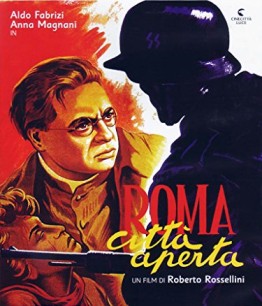
These stylistic decisions were not merely aesthetic preferences; they were born of circumstance. Wartime destruction had left Italy’s film industry with limited resources, forcing directors to improvise. Yet those practical limitations evolved into a new artistic philosophy. Rather than concealing economic constraints, Neorealist filmmakers embraced them, transforming scarcity into a visual language that privileged authenticity, moral complexity and close observation of lived experience. In doing so, they challenged the dominant assumption that cinema’s primary purpose was escapist entertainment.
If Italian Neorealism redefined what cinema could depict, the French New Wave fundamentally altered ideas about who controlled the film itself. During the 1950s, critics writing for the influential French journal Cahiers du Cinéma, most notably André Bazin, François Truffaut, Jean-Luc Godard, Claude Chabrol and Éric Rohmer, began questioning the conventions of mainstream filmmaking. They argued that great directors left recognisable personal signatures across their work, regardless of genre or budget. This idea, later known as “auteur theory”, positioned the director as the principal creative force behind a film, whose recurring themes, visual style and philosophical concerns could be read much like the work of a novelist or painter.
When many of these critics became filmmakers themselves, they put their ideas into practice. French New Wave films rejected the polished continuity editing and tightly structured narratives that had dominated classical Hollywood cinema. Instead, they embraced handheld cameras, location shooting, jump cuts, open endings, fractured storytelling and characters whose motivations often resisted easy explanation. Rather than guiding audiences smoothly through a story, these films frequently invited viewers to participate in constructing meaning for themselves.
Together, Italian Neorealism and the French New Wave established many of the qualities that would later become associated with art cinema: an emphasis on authorial vision, a willingness to depart from classical narrative structure, psychological and moral ambiguity, and a belief that cinematic form could itself generate meaning. Importantly, however, these qualities did not constitute a rulebook. Not every art film would employ long takes or open endings, just as not every film using those techniques belonged to the art-cinema tradition. What emerged was not a checklist, but a shared commitment to expanding cinema’s expressive possibilities beyond the conventions of commercial storytelling.
The rise of these movements coincided with another equally important development: the emergence of dedicated arthouse cinemas across Europe and North America. These theatres specialised in screening foreign-language films, independent productions and formally adventurous works that mainstream exhibitors often overlooked. In this context, arthouse came to signify not only a particular style of filmmaking but also an alternative system of exhibition and spectatorship. Audiences increasingly encountered these films in spaces that encouraged cinema to be appreciated as an art form rather than simply consumed as popular entertainment.
By the 1960s, art cinema had become an international phenomenon. Yet as its influence spread beyond Europe, filmmakers elsewhere did not simply imitate its aesthetics. Many adopted its formal innovations while reshaping them to address their own political realities, cultural traditions and historical experiences. Nowhere was this transformation more significant than in Africa, where a new generation of filmmakers would simultaneously draw from and challenge the European art-cinema tradition.
III. Beyond Europe: Third Cinema and the African Reimagining of Art Cinema
By the 1960s, many newly independent nations across Africa, Asia and Latin America had inherited political sovereignty without cultural autonomy. Colonial rule had ended, but the images through which these societies were represented, and often understood themselves, remained overwhelmingly shaped by European and American cinema. For a new generation of filmmakers, the challenge was no longer simply to make films differently from Hollywood. It was to imagine an entirely different relationship between cinema, history and political liberation.
One of the most influential responses came from Latin America. In 1969, Argentine filmmakers Fernando Solanas and Octavio Getino published Toward a Third Cinema, a manifesto that argued for a cinema capable of resisting both Hollywood’s commercial entertainment (what they called First Cinema) and the individualistic, auteur-driven traditions of European art cinema, or Second Cinema. They proposed a “Third Cinema”: politically committed filmmaking that rejected colonial ideologies, foregrounded collective struggle, and treated cinema as an instrument of social transformation rather than merely artistic expression.
Although the manifesto emerged in Argentina, many of its ideas resonated deeply with African filmmakers confronting the cultural legacies of colonialism. Yet African cinema did not simply import Third Cinema wholesale. Directors across the continent drew selectively from its political commitments while developing cinematic languages rooted in their own histories, philosophies and aesthetic traditions. The result was not a single African film movement but a rich and diverse body of work that shared a common concern: reclaiming the power to represent African lives on African terms.
No filmmaker embodied this project more profoundly than Ousmane Sembène. Often called the “father of African cinema”, Sembène viewed filmmaking as an extension of political education, particularly in societies where literacy rates limited the reach of literature. His films confronted colonialism, corruption, class inequality, religion and gender with remarkable directness, insisting that cinema should provoke critical reflection rather than passive consumption.
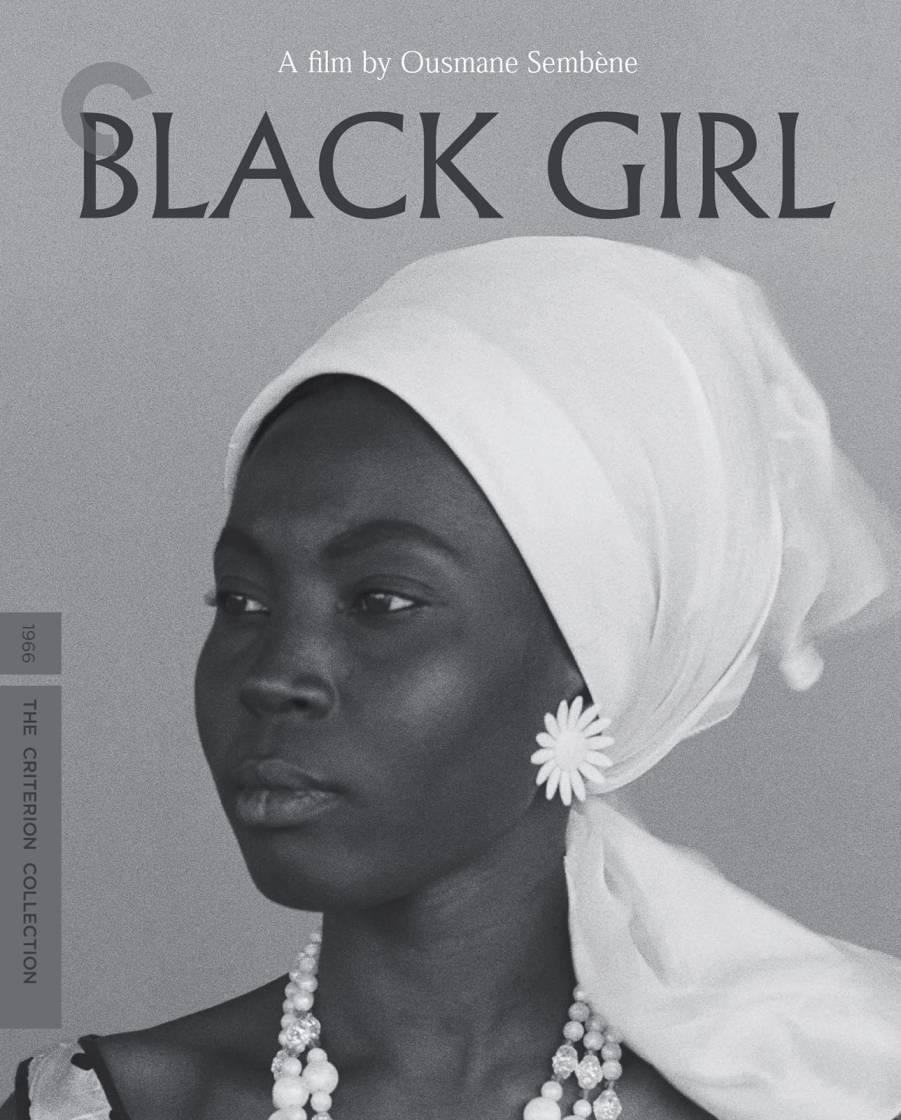
In Black Girl (1966), widely regarded as the first feature film directed by a sub-Saharan African filmmaker to receive international acclaim, Sembène tells the story of a young Senegalese woman who travels to France to work for a white family, only to encounter exploitation and profound alienation. The film’s restrained visual style and psychological focus clearly echo aspects of European modernism, yet its political perspective decisively reverses the colonial gaze. Rather than treating Africa as an object to be observed, Black Girl compels European audiences to confront the moral contradictions of postcolonial society through an African protagonist’s experience.
Sembène’s later works expanded this project. Xala (1975), for instance, employs satire to expose the failures of Senegal’s post-independence elite, demonstrating that African cinema could critique internal political structures as rigorously as it challenged colonial ones. Here, artistic experimentation is inseparable from political inquiry.
If Sembène represents one strand of African cinematic modernism, Djibril Diop Mambéty represents another. His films embrace fragmentation, dream logic, irony and surreal imagery in ways that distinguish them even from European art cinema. Touki Bouki (1973), now widely recognised as one of the greatest African films ever made, follows two young lovers dreaming of escape to Paris. Yet its power lies less in its narrative than in its restless form: abrupt edits, recurring visual motifs, shifting tones and a refusal to settle into conventional storytelling. Mambéty borrows certain formal innovations associated with the French New Wave, but he transforms them into something unmistakably Senegalese, using cinematic experimentation not to celebrate modernity but to interrogate its promises and contradictions.

Across these films, several characteristics begin to emerge. African art cinema often privileges lived social realities over spectacle, embraces ambiguity without sacrificing political urgency, and places questions of history, memory and identity at the centre of its narratives. Yet these are not merely stylistic preferences. They reflect the historical conditions under which many African filmmakers worked: newly independent nations seeking cultural self-definition, limited domestic film industries, scarce production resources, and a determination to create images that neither Hollywood nor Europe could provide.
It is therefore misleading to describe these works simply as “African arthouse”. They certainly belong within the broader history of global art cinema, but they also challenge some of its assumptions. Where European art cinema often foregrounded individual psychology and existential uncertainty, many African filmmakers anchored formal experimentation within explicitly social and political concerns. Their films expanded the possibilities of art cinema by insisting that aesthetic innovation and political commitment need not exist in opposition.
By the late twentieth century, however, another transformation was underway. As international film festivals, transnational co-productions and global funding bodies became increasingly influential, African art cinema entered a new phase, one shaped not only by local histories but also by a rapidly globalising film culture. It is within this evolving ecosystem that many of the contemporary films now described as “arthouse” would emerge.
IV. From Third Cinema to the Global Festival Circuit
By the closing decades of the twentieth century, the landscape of world cinema had changed dramatically. The decline of state-funded film industries in many parts of Africa, coupled with the growing influence of international film festivals, transnational co-productions and global arts funding, reshaped both how films were made and how they reached audiences. Art cinema did not abandon its aesthetic ambitions during this period, but the institutions sustaining those ambitions increasingly extended beyond national borders.
Film festivals such as Cannes, Venice, Berlin and Toronto gradually became more than exhibition platforms. They evolved into crucial sites of financing, distribution, critical recognition and international circulation. For many filmmakers working outside the world’s dominant film industries, festivals offered something domestic markets often could not: access to producers, sales agents, critics and audiences willing to engage with formally adventurous cinema.
This institutional shift also changed the economics of art filmmaking. Rather than relying primarily on local box-office returns, many projects were financed through a combination of public grants, cultural foundations, international co-productions and festival development programmes. Success was measured not only by commercial performance but also by festival selections, critical acclaim, awards and long-term cultural influence. The “art-house circuit” had become a genuinely global network.
None of this meant that festival cinema and arthouse cinema became synonymous. Major festivals have always screened a remarkably broad range of films; from intimate character studies and experimental works to documentaries, animated features and large-scale studio productions. Winning the Palme d’Or or premiering in Competition at Cannes does not automatically make a film arthouse, just as an arthouse film need not premiere at a major festival to belong to the tradition. Festivals are institutions of circulation and recognition, not genres in themselves.
Yet the growing importance of these institutions undeniably shaped contemporary art cinema’s evolution. Directors increasingly made films with an awareness that their first audiences might be programmers, critics and international cinephiles rather than domestic multiplex crowds. This did not diminish the artistic value of the work, but it did create new relationships between local storytelling and global spectatorship. Films often remained deeply rooted in their national histories while speaking through cinematic languages legible to international audiences accustomed to the rhythms and conventions of art cinema.
Few contemporary filmmakers embody this evolution more clearly than Mati Diop. Her debut feature, Atlantics (2019), unfolds within the social realities of modern Dakar—economic precarity, migration, labour exploitation and young people’s uncertain futures—yet it refuses the conventions of straightforward social realism. Instead, Diop blends realist observation with supernatural elements, romance and poetic imagery, creating a film that moves fluidly between genres while remaining unmistakably personal in its vision.
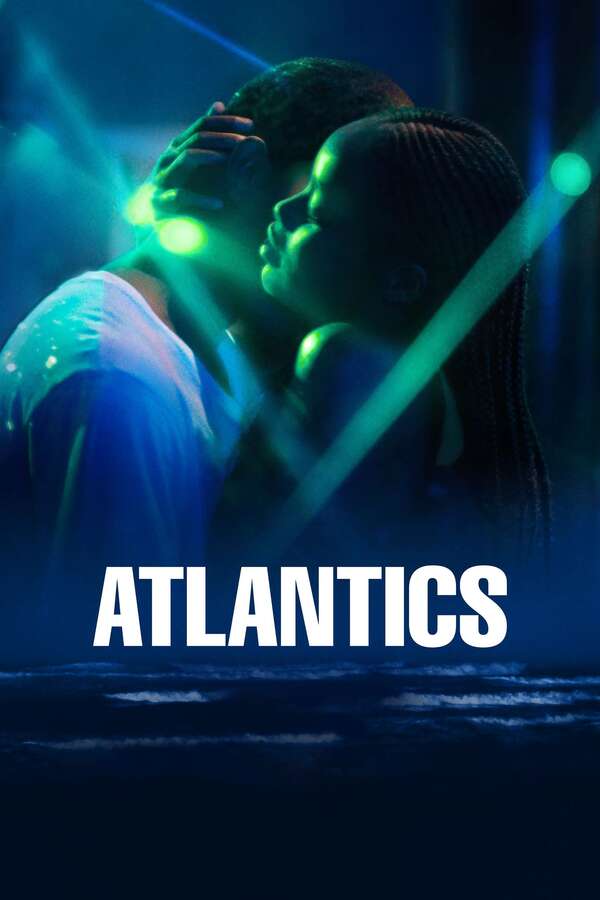
Atlantics also illustrates how contemporary African art cinema exists in conversation with earlier traditions. Its meditation on migration recalls the aspirations and disillusionment that animate Djibril Diop Mambéty’s Touki Bouki, while its attention to memory, absence and the lingering consequences of colonial histories echoes concerns that have shaped African cinema for decades. At the same time, its international financing, festival premiere at Cannes (where it won the Grand Prix) and subsequent global distribution through Netflix reflect the transnational structures that increasingly define the circulation of art cinema in the twenty-first century.
This contemporary ecosystem has produced remarkable opportunities. African filmmakers now enjoy greater international visibility than at almost any previous moment in cinema history, and films from the continent regularly compete for the industry’s most prestigious awards. At the same time, the reliance on international funding and festival recognition has generated new debates. Some critics argue that these structures can subtly influence which African stories are financed and celebrated, while others contend that they provide essential resources for filmmakers working in industries where domestic support remains limited. These questions remain open, but they underscore an important point: arthouse cinema is shaped not only by aesthetics but also by the institutions through which it is produced, circulated and valued.
Understanding this contemporary ecosystem helps explain why the term “arthouse” has acquired new meanings in different parts of the world. It also provides the context necessary for examining contemporary Nigerian films such as Eyimofe (2020), Mami Wata (2023) and My Father’s Shadow (2025). These works do not simply inherit the formal innovations of European art cinema or the political commitments of African cinematic modernism; they emerge from a global network of festivals, co-productions and critical discourse while remaining deeply engaged with Nigerian histories, cultures and artistic traditions.
V. Nigerian Art Cinema: Applying the Framework
Having traced the historical evolution of art cinema—from post-war Europe through African cinematic modernism and into the contemporary festival ecosystem—we can now return to the question that often animates debates within Nigerian film culture: what makes a Nigerian film arthouse?
The answer is not that it premiered at a festival. Nor is it that it performed modestly at the box office, employed symbolism, or moved at a slower pace than mainstream Nollywood productions. As this essay has argued, arthouse cinema is best understood as a constellation of tendencies rather than a fixed checklist. The task, therefore, is not to ask whether a film possesses one or two isolated traits, but whether its broader artistic philosophy aligns with the traditions that have historically defined art cinema.
Three contemporary Nigerian films—Eyimofe, Mami Wata, and My Father’s Shadow—illustrate this distinction particularly well.
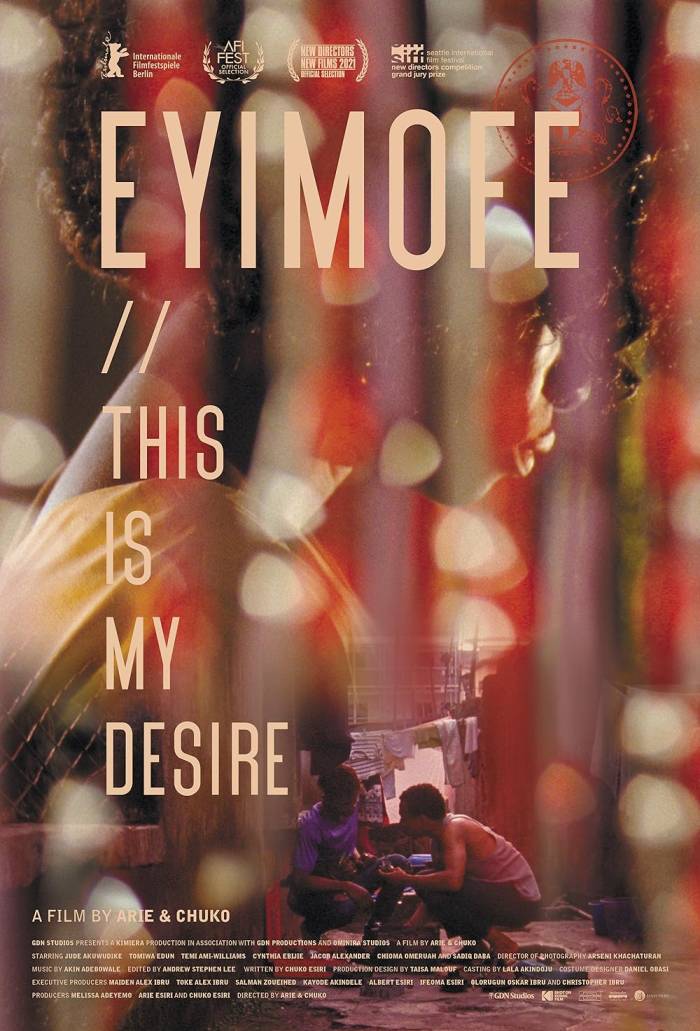
Arie and Chuko Esiri’s diptych follows two Lagos residents whose plans to emigrate are repeatedly disrupted by circumstances beyond their control. On the surface, the film’s premise is deceptively simple. Yet its significance lies in how it approaches that premise.
Unlike mainstream commercial narratives, which often organise events around escalating conflict and decisive resolution, Eyimofe privileges observation. The film spends considerable time with its characters’ routines, frustrations and quiet aspirations, allowing meaning to emerge gradually through accumulated detail rather than dramatic revelation. Its pacing invites contemplation rather than urgency.
This approach places the film within a lineage that stretches back to Italian Neorealism. Like Bicycle Thieves and other post-war realist works, Eyimofe treats ordinary life not as a backdrop for spectacle but as a subject worthy of sustained attention. The film’s emotional power derives precisely from its refusal to exaggerate. Its characters’ struggles are neither simplified nor transformed into conventional triumph narratives.


Eyimofe is shot on 16mm film, partly an aesthetic choice, mostly a practical one, since Nigeria has no film-processing labs, meaning the Esiri brothers shot for days without ever seeing what they’d actually captured. Its two-chapter structure, only loosely connecting its two lead characters, echoes Wong Kar-wai’s Chungking Express, and Chuko Esiri, who wrote it, has cited Dickens’ Bleak House as an influence, not for plot, but for the way Dickens lets a single location organise an entire social portrait.
At the same time, Eyimofe is unmistakably Nigerian. Its realism emerges from the specific textures of contemporary Lagos: bureaucratic obstacles, economic uncertainty, communal relationships and the enduring allure of migration. The film demonstrates how a work can participate in the broader tradition of art cinema while remaining deeply rooted in local realities.
Where Eyimofe draws much of its power from realism, C.J. “Fiery” Obasi’s Mami Wata exemplifies a different dimension of art cinema: the primacy of formal and authorial vision.
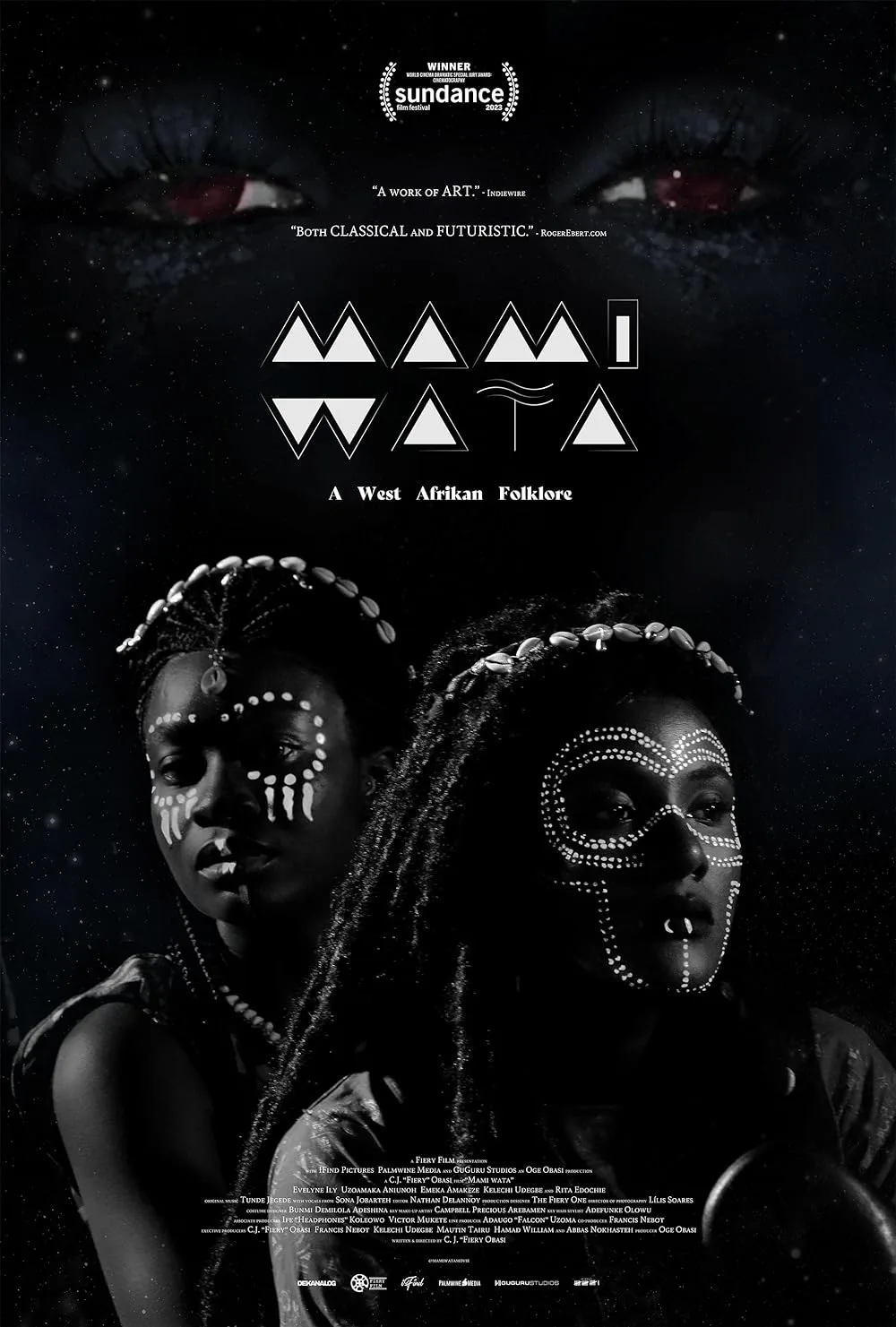
From its striking black-and-white cinematography (helmed by Brazilian cinematographer Lílis Soares) to its stylised performances, carefully composed imagery and mythic atmosphere, Mami Wata announces itself as a film in which aesthetic choices are inseparable from meaning. The film does not simply tell a story about tradition, power and belief; it constructs a visual and sonic world through which those themes are experienced.
Obasi and Soares built the black-and-white world specifically against a persistent, ugly convention in commercial filmmaking that dark skin is somehow harder to light well at night, and shot their entire film to prove otherwise. That is a refusal made through craft, not through message.
This emphasis on form aligns Mami Wata with a long tradition of art cinema in which style itself becomes a mode of inquiry. Much as filmmakers such as Federico Fellini, Andrei Tarkovsky or Djibril Diop Mambéty used cinematic form to shape how audiences think and feel, Obasi employs visual abstraction and symbolic imagery not as decoration but as a way of exploring the tensions between continuity and change.
Importantly, none of this means Mami Wata exists outside the narrative altogether. Rather, the film asks viewers to engage with narrative differently. Questions of atmosphere, symbolism and interpretation become as significant as plot progression. This invitation to active interpretation is one of the defining tendencies of art cinema across multiple historical periods.
If Eyimofe foregrounds realism and Mami Wata foregrounds formal stylisation, Akinola Davies Jr’s My Father’s Shadow demonstrates another recurring characteristic of art cinema: its interest in ambiguity, memory and subjective experience.
The film resists the impulse to explain everything. Rather than guiding audiences towards a single, definitive interpretation, it creates space for uncertainty and reflection. Meaning emerges through implication as much as exposition. Emotional truths often matter more than factual clarity.
This tendency has deep roots within art cinema. From Michelangelo Antonioni’s explorations of alienation to the dreamlike structures of many contemporary festival films, art cinema has frequently prioritised psychological and emotional complexity over narrative certainty. My Father’s Shadow operates within this tradition while engaging specifically Nigerian histories, relationships and cultural memories.
The film’s achievement lies not in obscurity for its own sake but in its confidence that audiences can participate in the act of meaning-making. Rather than delivering conclusions, it poses questions. Rather than closing interpretation, it opens it.
Although Eyimofe, Mami Wata and My Father’s Shadow differ significantly in style, subject matter and aesthetic approach, they share several underlying commitments that connect them to the broader history of art cinema. Each privileges artistic vision over adherence to commercial formula. Each demonstrates a willingness to depart from the narrative efficiencies typically associated with mainstream filmmaking. Each invites interpretation rather than prescribing a singular response. And each uses cinematic form, not merely plot, as a primary vehicle for meaning.

Crucially, these commonalities do not make the films identical. Nor do they place them within a rigid category distinct from all other Nigerian cinema. Art cinema has never functioned through strict boundaries. Instead, these works participate in an ongoing tradition that values formal experimentation, personal expression and intellectual engagement. This distinction matters because it shifts the conversation away from superficial markers. A film does not become arthouse because it premiered at Cannes. It does not become arthouse because it is slow, symbolic or commercially unsuccessful. Rather, it becomes legible within the art-cinema tradition through the relationship it establishes between form, meaning, authorship and audience engagement. Understanding that relationship allows us to classify films more precisely and, perhaps more importantly, to discuss them with greater clarity.
VI. What Arthouse Is and What It Isn’t
If this history demonstrates anything, it is that arthouse has never been a label with rigid boundaries. It is neither a genre nor a synonym for “good cinema,” nor is it a catch-all term for films that perform well on the festival circuit or struggle commercially. Rather, it describes a broad cinematic tradition shaped by history, institutions and artistic philosophy; a tradition that has continually evolved as filmmakers across different cultures have adapted it to their own realities.
Understanding this distinction requires separating characteristics from definitions. Long takes, symbolism, open endings, sparse dialogue and deliberate pacing are all techniques frequently associated with art cinema, but none of them is definitive on its own. A horror film can employ ambiguity. A blockbuster can foreground an intensely personal directorial vision. A festival film may follow entirely conventional storytelling patterns. Classification, therefore, depends not on isolated stylistic traits but on the broader relationship between form, authorship, and meaning.
This is why arthouse cannot be reduced to a checklist. It is better understood as a constellation of recurring tendencies: a commitment to cinematic form as a vehicle for thought; an emphasis on directorial authorship; a willingness to privilege observation, ambiguity or emotional complexity over narrative efficiency; and a readiness to challenge the conventions through which commercial cinema typically communicates with audiences. Not every art film exhibits all of these qualities, nor are they exclusive to art cinema. What matters is the overall artistic philosophy guiding the work.
The same principle applies to African and Nigerian cinema. Films such as Black Girl, Touki Bouki, Atlantics, Eyimofe, Mami Wata and My Father’s Shadow should not be grouped merely because they premiered at festivals, attracted international funding or differ from mainstream commercial filmmaking. They belong in conversation because they participate, each in its own way, in a continuing tradition of cinematic experimentation, authorial expression and formal inquiry. Their similarities emerge from that shared lineage, not from any single aesthetic formula.
Perhaps the most enduring lesson of art cinema’s history is that it has never stood still. Italian Neorealism challenged the polished artifice of studio filmmaking. The French New Wave questioned established ideas about authorship and cinematic language. Third Cinema demanded that film become a tool of political liberation rather than cultural domination. Contemporary African filmmakers continue to reshape the tradition by drawing on local histories while working within an increasingly global ecosystem of festivals, co-productions and critical exchange. At every stage, art cinema has expanded not by preserving fixed rules but by questioning inherited ones.
For critics, this history carries an important responsibility. Classification is not an exercise in gatekeeping, nor is it a way of separating “serious” films from “popular” ones. It is a language for describing how films work. The more precise that language becomes, the more meaningful our criticism becomes. Calling every festival film “arthouse” obscures important differences in style, intention and historical lineage. Conversely, dismissing the term altogether ignores a century of cinematic thought that has profoundly shaped world cinema.
The value of the term, then, lies not in its ability to settle arguments but in its ability to sharpen them. Used carelessly, arthouse becomes little more than shorthand for “the kind of film I can’t easily categorise”. Used carefully, it becomes a critical framework, one that helps us recognise connections across continents and generations, understand why filmmakers make the choices they do, and evaluate films on terms appropriate to the traditions from which they emerge.
Ultimately, the question is not whether a film is arthouse enough. The more useful question is this: What cinematic tradition is this film participating in, and how successfully does it realise the artistic possibilities of that tradition? It is only by asking that question that criticism moves beyond labels and towards understanding.
Joseph Jonathan is a historian who seeks to understand how film shapes our cultural identity as a people. He believes that history is more about the future than the past. When he’s not writing about film, you can catch him listening to music or discussing politics. He tweets @Chukwu2big