

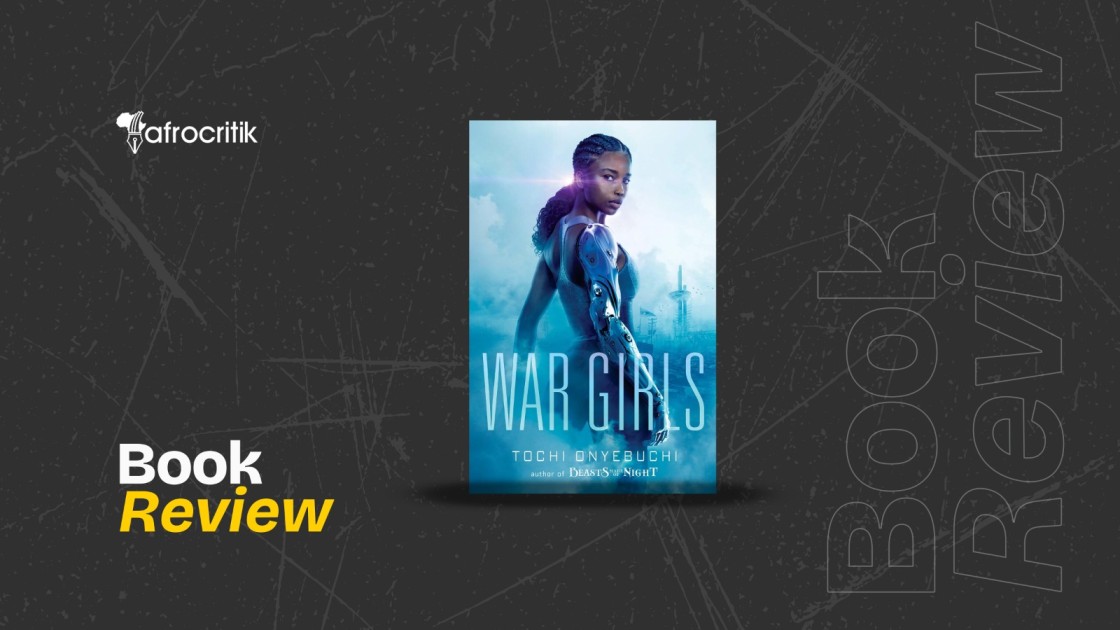


With War Girls, Onyebuchi has crafted not merely a conventional dystopian war epic, but an intimate portrait of a traumatised youth negotiating the emotional and moral devastation of war while clinging desperately to the bonds that make survival worthwhile.
By Folakoyejo Olowofoyeku
The Nigerian-Biafran War, commonly known as the Nigerian Civil War, was a dark blot on the history of Nigeria. It was also a foundational period in the country’s history, inspiring a considerably small but diverse body of literary works that have sought to immortalise the war for both present and future generations to understand the events that shaped Nigeria. Most notable of the Civil War retellings are Chinua Achebe’s There Was a Country: A Personal History of Biafra, a non-fiction memoir that offers a critical analysis of the events surrounding the war, and Half of a Yellow Sun, a romantic tragedy by Chimamanda Ngozi Adichie that explores the manner in which the war disrupted countless lives.
In War Girls, Tochi Onyebuchi sets out not necessarily to immortalise the war, but to reimagine it in an alternate world, one coloured by the technologies and challenges that are typical of science fiction stories. Onyebuchi takes the real-life nuances of the war—child soldiers, indoctrination, political tensions—and introduces science fiction elements to weave a gritty but beautiful tale of war, sisterhood and forgiveness.
Onyebuchi is not new to weaving real-world realities into alternate worlds. His debut novel, Beasts Made of Night (2017), the first book in a duology, explored a combination of African cultures–from Nigeria, Ghana, amongst others–with magic in a fantasy setting. This style of re-examining real-life social issues through the lens of speculative fiction is common across the shelf of Onyebuchi’s works.
Gentrification, racism, housing inequality, economic displacement, and environmental injustice are interrogated through a futuristic lens in Goliath (2022), as Onyebuchi shifts into a speculative setting. Beasts Made of Night and Crown of Thunder (2018) turn his focus toward class inequality, exploitation, corruption, and the crushing burdens placed on society’s most marginalised.
Police brutality, mass incarceration, systemic racism, and the weight of generational trauma are confronted in Riot Baby (2020), where he brings these concerns into an American context. In War Girls and its sequel, Rebel Sisters (2020), Onyebuchi reimagines the Nigerian Civil War to probe colonialism, ethnic conflict, the use of child soldiers, and the lingering trauma of war.
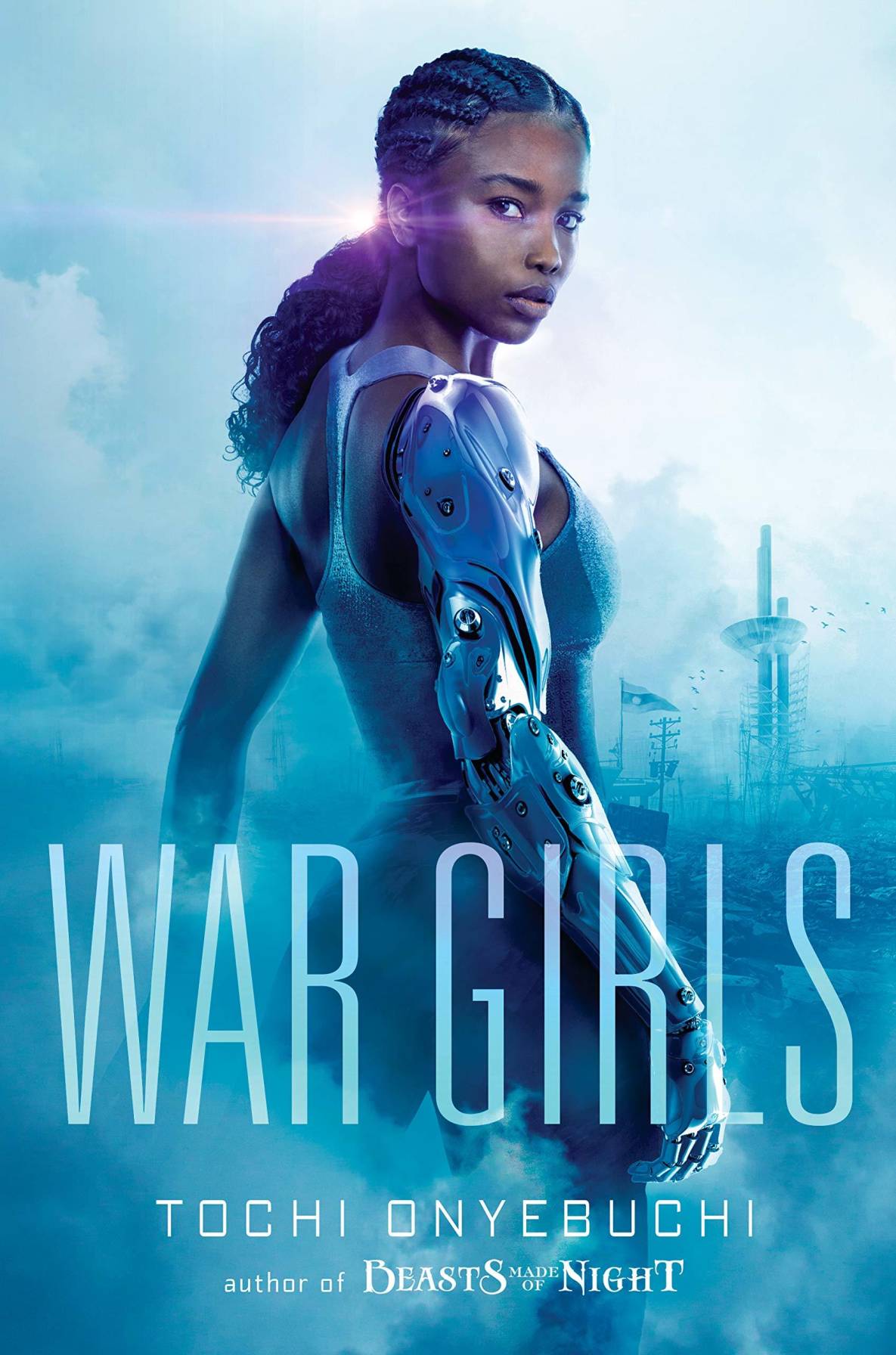
His Civil War reimagination transports readers to the year 2172, a time already rife with turmoil from climate devastation and an irradiated atmosphere. More than just a dystopian war epic, War Girls is a feminist tale centring on women and girls navigating the complexity of war while maintaining sisterly bonds. Hidden in a forest is an outpost of the titular war girls, a mix of Biafran female child-soldiers and other girl refugees rescued from the hardships of the war.
The camp is led by Onyii, a former child soldier riddled with cybernetic enhancements. Jaded by her past, Onyii is well-equipped to protect the war girls but loathes the source of her ability. Her greatest concern is the well-being of her sister, Ify, a technological engineering prodigy for whom she will do anything. Ify, on her part, is optimistic and curious to a fault, often seeking escape from camp life to explore the engineering marvels around her.
Onyebuchi creates a sharp contrast between the sisters, vividly presenting the dark realities of the war, such as depression, PTSD, disability, and violence, through Onyii: “But Onyii’s phantom limb haunts her in her sleep. In her dreams, she has all her arms and legs and can run. She can run far and fast and away from whatever is chasing her.” Onyii wishes to shield her sister from the same trauma. Ify, on the other hand, becomes a ray of light with her bright optimism, curiosity, and cheerful outlook. Ify’s curiosity is in constant conflict with Onyii’s overprotectiveness, stifling her inventive talent, and often inspiring her to disobedience. As Onyebuchi writes: “Ify never meant to disobey Onyii, but she would look around at her life to see nothing but questions. And whenever Ify inserted her Accent into her ear, the world exploded with answers.”
After a Nigerian attack devastates the camp, the sisters are separated, each believing the other to be dead. While Onyii is left wounded in the camp, Ify is taken to the Nigerian side where she is brainwashed and raised in high society. The divergence in their lives from this point forward appears almost unfair, with Onyii joining the Biafran military, forced to return to a life she loathes to avenge her supposedly dead sister, who in reality is given everything she ever wanted: the freedom to make inventions for the betterment of society.
The disparity between the life-paths of the sisters–Onyii’s return to the trauma of the battlefield and Ify’s creative freedom–inspires the reader to be empathetic towards Onyii. As her new moniker, “The Demon of Biafra,” suggests, Onyii is thrown into combat, healing from her loss by using Agwu, her military support drone, almost as a proxy for Ify. Through Agwu, the novel foregrounds Onyii’s humanity, presenting her as a woman who is still searching for something to love, and cementing her role as a protector rather than just a killer. The individual successes of both sisters build an illusion of a somewhat happy story, but a revelation sets the sisters on a collision course.

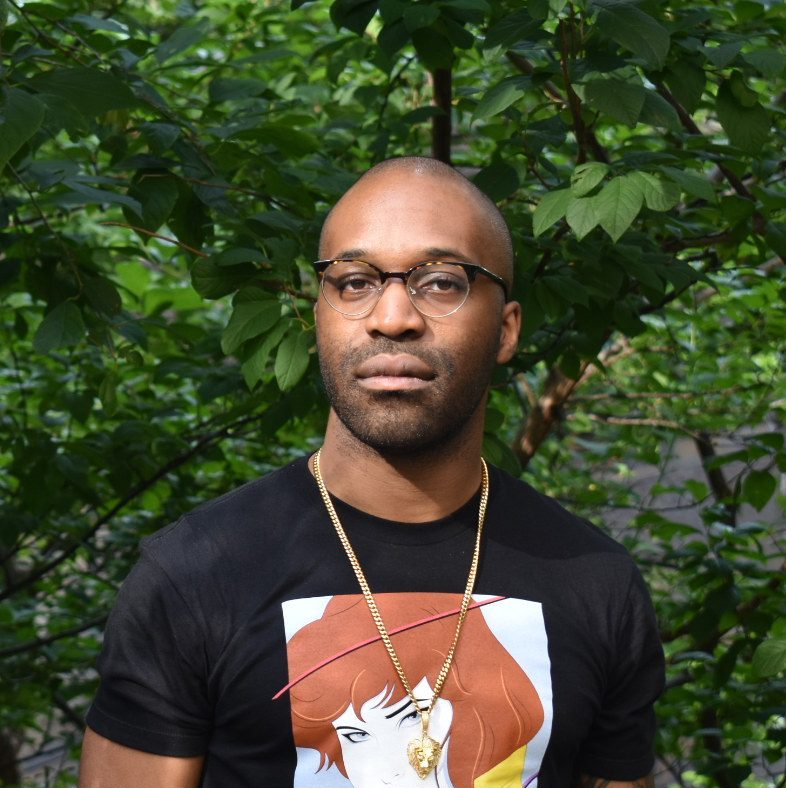
There is a dark beauty to Onyebuchi’s writing. It is in victorious moments that he breaks the mould and disappoints his reader, but in a thrilling way that departs from established sci-fi tropes. With War Girls, as with his previous books, he offers a reminder that life has highs and lows, and emphasises with devastating twists that fate is fickle. And where writers often aim for satisfying happy endings, Onyebuchi is gifted at writing endings that perfectly set up sequels. As in Beasts Made of Night, where a betrayal by an ally sets up a major antagonist in the sequel, Crown of Thunder, War Girls features a tragic end that transitions into Rebel Sisters, a sequel that turns its attention to life in the aftermath of the Biafran War.
On its surface, War Girls is a dark, gritty dystopian war epic, but beneath the battles, cybernetic soldiers and political conflict lies the true core of the story: its exploration of trauma, sisterhood and the gradual decay of the moral code. Ify’s remarkable ingenuity is slowly consumed by vengeance. More glaringly, it is the twisting of Onyii into the feared Demon of Biafra as a result of her fierce instinct to protect the people she loves.
What makes this transformation particularly compelling is that Onyebuchi never presents it as a sudden descent into moral ambiguity. Instead, he quietly plants its seeds through the impossible choices Onyii is forced to make as a child protecting other children in a world where survival demands moral compromise. This moral erosion is captured most strikingly during an early discussion about refugees. Women are sent deeper into Biafran territory because they may still “find some use in the Republic”, but when Onyii asks what becomes of the men, her companion replies with chilling simplicity: “We shoot them”.
The conversation ends not with horror but with laughter, as the girls giggle before continuing their supply run. It is a deeply unsettling moment, not because the War Girls are presented as monsters, but because Onyebuchi reveals how completely war has distorted their moral instincts, transforming an unthinkable act into an ordinary part of childhood.
With War Girls, Onyebuchi has crafted not merely a conventional dystopian war epic, but an intimate portrait of a traumatised youth negotiating the emotional and moral devastation of war while clinging desperately to the bonds that make survival worthwhile.
Folakoyejo Olowofoyeku is a novelist and environmental protection advocate. He is a graduate of Environment Science and has written two wildlife fiction novels: Timber and P2-Peregrine. He can be found on TikTok @the_writing_foyeh, on Instagram @fola_ko and on LinkedIn: Folakoyejo Solomon Olowofoyeku