


One of the greatest achievements of Rootless is the creative portrayal of silence as a secondary language in the prose. The emotional distress in pauses, withdrawal, routine, and detachment reverberates in all the characters’ lives.
By Nusiroh Shuaib
Motherhood in African society is often portrayed as glorified exhaustion, endurance, and a revered maternal ability in literature. Mirroring this reality, African literature, including Buchi Emecheta’s Second Class Citizen (1974) and The Joys of Motherhood (1979), captures the endless requirements of being an African mother.
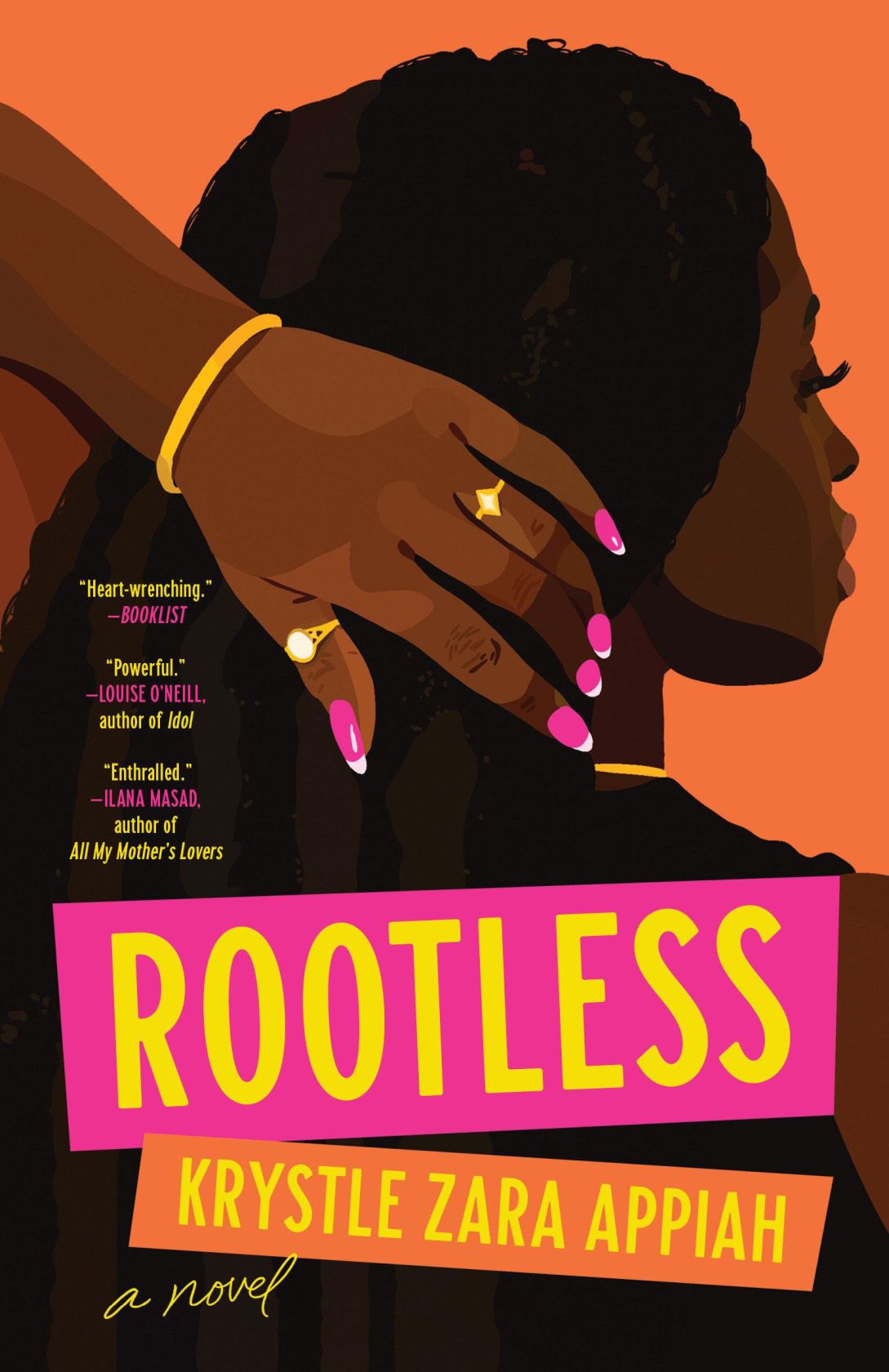
However, in Krystle Zara Appiah’s Rootless, this moral duty is disrupted with a startling simplicity: a mother leaves. Efe’s disappearance from her London home, leaving behind her four-year-old daughter, Olivia; her husband, Sam; and the carefully constructed picture of family stability, ruptures the expectations of motherhood in Krystle Zara Appiah’s debut novel. What follows is an unsettling examination of maternal abandonment and the psychological cost of performative womanhood.
With the protagonist’s disappearance, the author tells the story of a British-Ghanaian woman who grapples with the weight of motherhood and societal expectations. Set between Ghana and London, the novel deeply explores themes of motherhood, inherited trauma, identity, and migration. What begins as a story of absence slowly expands into a deeper exploration of how women navigate conflicting roles of mothers, daughters, and persons within societies that demand endurance over expression.
On the surface, Efe’s disappearance compels readers to turn to the same moral instinct that often governs society’s response to women: judgment before understanding. Like Sam and Olivia, readers grapple with the wreckage of her absence before being granted access to the circumstances that preceded it.
This narrative structure exposes a broader social reality: women are frequently blamed for the breakdown of families long before their stories are heard. Failed marriages, single motherhood, or maternal absence are interpreted as evidence of female failure, while the structural pressures that shape these outcomes remain invisible. Appiah vividly recreates this dilemma through Efe, making the novel less about the approval of women’s choices, but the ease with which they are condemned.
Efe’s disappearance opposes the belief that women are naturally good mothers who will never abandon their maternal duty, unlike their male counterparts. But what makes Rootless distinct is the reason behind Efe’s disappearance.
Contrary to common tropes, she did not leave because of domestic abuse, betrayal, or a loveless marriage. She left to protect herself from erasure, which accumulated from the identity that did not recognise her as Efe, a woman with ambitions, individuality, and desires; primarily as a mother, wife, caregiver, and a daughter fulfilling expectations. Rootless presents maternal abandonment as an escape from years of accumulated silence, emotional repression, and unresolved trauma. This abandonment allows Appiah to manipulate readers’ judgement, forcing them to sit within its contradictions.
This complexity of maternal abandonment is more profound with Sam’s mother’s absence. Long before Efe left, Sam had already experienced abandonment; his mother also left the family when he was a child. Her absence silently structures much of his adulthood, influencing his obsession with domestic stability and the idea of the perfect family. His desire did not stem from a patriarchal expectation or masculinity. It’s a psychological response to childhood loss and trauma. In a way, Efe’s abandonment is a repetition; an unresolved generational echo.
Through these women’s actions, Rootless subtly suggests that emotional repression reproduces itself across generations. Truly, Sam’s mother and Efe exist in different time frames; their decisions were shaped by systematic structures that demanded enduring suffering quietly and endlessly. While their departures expose the limits of this expectation, Appiah uses both cases to reject the cultural myth that motherhood naturally overrides emotional distress.
In a weaker reading, Sam could easily be perceived as an insensitive husband whose childhood trauma makes him blind to his wife’s suffering. But Appiah shattered that, deftly painting him as another victim of inherited silence and unresolved trauma. Although Sam never fully articulates his emotions, including the trauma of his mother’s absence, his emotional repression surfaced indirectly through his fears and desperate attachment to domestic stability.
Significantly, his inarticulate emotion mirrors a masculinity problem that conditioned men to suppress emotional complexity rather than openly confront it. This emotional repression mirrors the silence surrounding Efe’s postpartum suffering, suggesting that emotional repression in the prose is not gender-exclusive but structurally inherited across the family.

The prose’s fragmented, nonlinear structure is one of the most effective literary devices in the book. It gives way to readers’ discomfort, hastens judgement, and shifts sympathy between the major characters: Efe and Sam. This makes the novel an emotional control device used to direct the readers. Linguistically, Appiah avoids excessive sentiment despite dealing with emotionally charged subjects such as abandonment, motherhood, and trauma. The language is clear and accessible, allowing emotional tension to emerge gradually rather than through dramatic declarations.
Artistically, Rootless’ setting of Ghana and London is skillfully transformed from a geographical space into an emotional architecture. While London functions as a cosmopolitan freedom, it’s also an alienation that intensifies Efe’s fragmentation and isolation.
Interestingly, Ghana represents inheritance and confrontation, a home that welcomes her daughter at the expense of performative womanhood and cultural expectations. Efe’s rootlessness is, therefore, not merely geography. She is emotionally caught between the two countries, with conflicting identities of herself.
A mirror look at the way masculinity is portrayed is quite remarkable. It’s nuanced with a universal viewpoint. Obviously, the novel critiques patriarchy by highlighting how the same gendered structures that oppress women can also harm men in terms of internalised pain, emotional repression, and emotional blindness to others’ pain.
This perspective gives Rootless much of its emotional power, allowing readers to understand Efe’s suffocation and Sam’s wounded longing for stability. Appiah avoids simplistic moral resolution, ultimately making the novel less about choosing sides and more about examining how inherited trauma and emotional repression quietly destroy intimacy from within.


For most parts of Rootless, the novelist constructs her characters with a deliberate refusal to categorise them into archetypes of a good mother or neglectful husband. Instead, the novel creates psychologically layered individuals whose actions are shaped by trauma, cultural expectation, and inherited emotional silence.
Efe is presented as the deeply flawed and most psychologically affected character whose identity is shaped by migration, postpartum distress, and the pressure of performing idealised motherhood. Sam is the portrait of a wounded masculinity idealist of family stability. While Efe’s mother, Maame, is the symbolic embodiment of the cultural expectations imposed on women.

Through her relationship with Efe, Appiah illustrates how ideas about marriage, motherhood, sacrifice, and female respectability are transmitted across generations by women themselves. Maame did not simply enforce societal norms; she internalised them, reproduced them, and expected her daughters to do the same.
One of the greatest achievements of Rootless is the creative portrayal of silence as a secondary language in the prose. The emotional distress in pauses, withdrawal, routine, and detachment reverberates in all the characters’ lives. The result is Efe’s disappearance, Sam’s obsessive desire for domestic stability, grief within the family, emotional repression, and Efe’s death.
Importantly, Appiah uses silence to greatly critique the culture that expects women to endure suffering without articulation. This silence also reflects broader African attitudes toward women’s mental health, particularly postpartum depression, which is often misunderstood, minimised, or moralised rather than treated as legitimate emotional distress.
Unlike Joys of Motherhood and Second Class Citizen, which advocate for sacrificial motherhood, Rootless departs from this framework, presenting maternal withdrawal as a way of preserving maternal inheritance. Similarly, while Stay With Me (2017) by Ayobami Adèbayo examines reproductive pressure within marriage, Rootless turns toward the emotional aftermath of motherhood itself. Appiah’s contribution lies in her willingness to imagine maternal dissatisfaction not merely as sadness but as rupture.
In the end, Appiah reminds us that while condemnation comes easily, understanding demands patience, empathy, and a willingness to confront uncomfortable truths. The final page depicts that the question is not whether Efe should be forgiven but why it was so easy to condemn her in the first place.
Nusiroh Shuaib is a Nigerian writer and health journalist. She combines journalism, literary criticism, and cultural commentary to examine how women navigate patriarchal structures, societal expectations, and identity.