

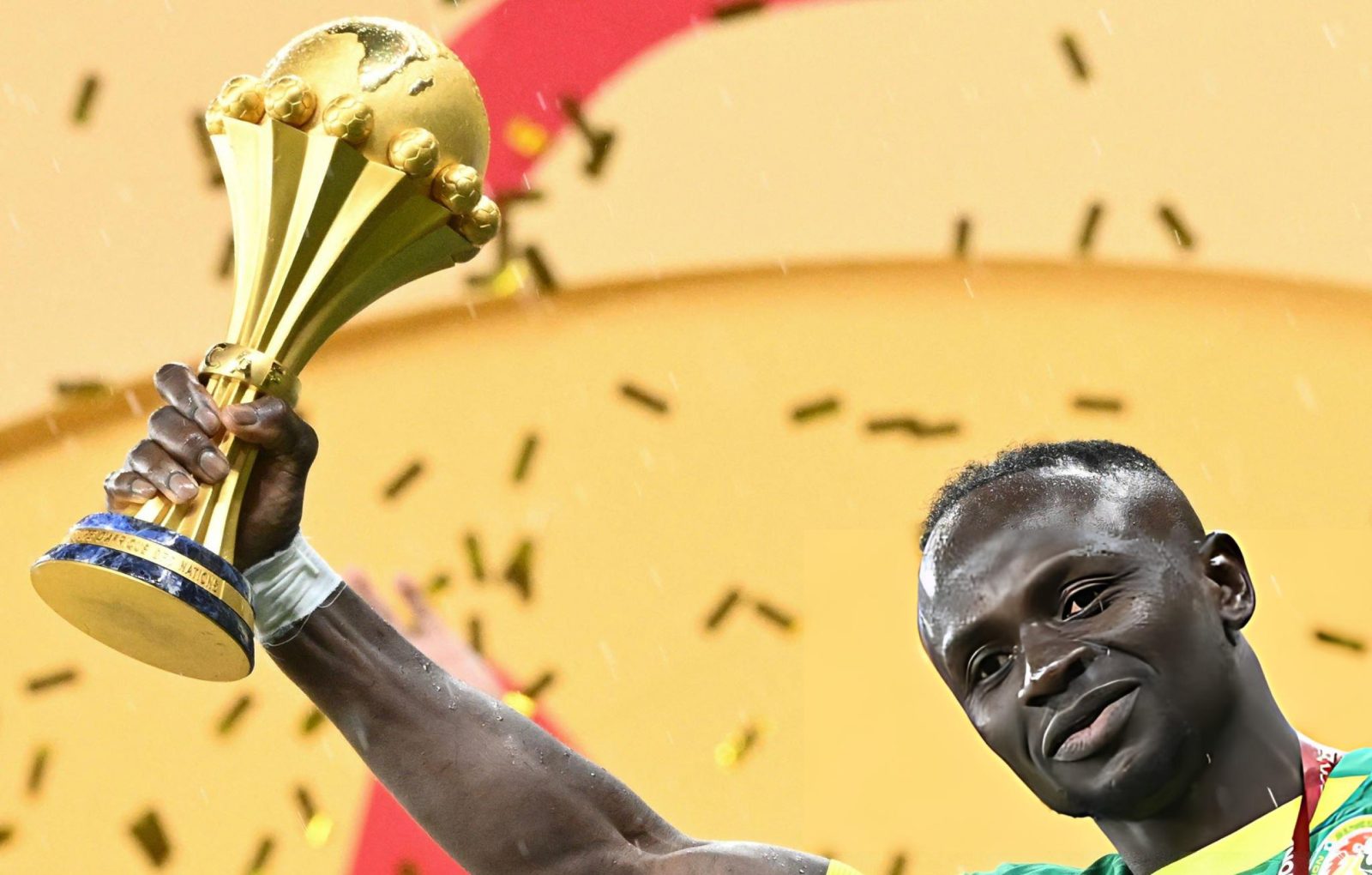

Whatever one’s view of this edition of the Africa Cup of Nations, it cannot and should not be used to define African football.
By Tuka Letura
The Africa Cup of Nations has always been more than a football tournament, and AFCON 2025 in Morocco was no exception. For four intense weeks, the continent watched as packed stadiums, elite talent, and national giants collided on North African soil. Senegal emerged as champions after a tense and controversial final against hosts Morocco, but the build-up to this tournament will not be defined by one game alone. Instead, it was a showcase of varying levels of football across a wide range of teams.

There is always criticism of the Africa Cup of Nations, regardless of how close to perfect any edition of the competition may be, and Morocco was no different. The group stages were largely straightforward, with all teams ranked in the continent’s FIFA top ten progressing to the knockout rounds. Nigeria were the only side to win all three of their group-stage matches, and everything truly became chaotic once the group stages were completed.
The Group Stages
The expanded edition of the competition featured six groups of four teams each, with the top two in every group progressing directly to the knockout stage, alongside four of the best third-placed teams. The group winners were Morocco, Egypt, Nigeria, Senegal, Algeria, and Ivory Coast, while the runners-up were Mali, South Africa, Tunisia, DR Congo, Burkina Faso, and Cameroon. The four third-placed teams that progressed were Tanzania, Benin, Sudan, and Mozambique.
Round of 16
The calm was slowly shattered at this stage. Senegal struck first, rallying to beat Sudan 3–1, before Mali survived Tunisia on penalties after a last-gasp equaliser. Morocco edged past Tanzania in Rabat, Cameroon turned the tables on South Africa, and Egypt dragged Benin into extra time before pulling clear. Nigeria swept aside Mozambique with authority, Algeria survived DR Congo at the death, and Ivory Coast closed the round with a commanding win over Burkina Faso.
From that moment, there was no hiding place. The pretenders were gone, the heavyweights remained, and the tournament narrowed into a collision of favourites. Everything now pointed towards a final charged with pressure, history, and the promise of something unforgettable.
The Quarter Finals
Mali were drawn against Senegal, while Egypt faced Ivory Coast. Nigeria and Algeria met in Marrakech, and Cameroon took on Morocco in Rabat. The winners of the Nigeria–Algeria and Morocco–Cameroon matches were set to meet in the semi-finals.
Nigeria secured a 2–0 win over Algeria, with Victor Osimhen and Ademola Lookman scoring to book their place in the next round. In Rabat, Morocco produced a flawless performance to beat Cameroon 2–0, setting the stage for a blockbuster semi-final against Nigeria.

Earlier, Senegal faced Mali and advanced with a narrow 1–0 victory, as Kotsi’s lone goal proved decisive. The biggest shock of the quarter-finals came from Egypt, who defeated a strong Ivory Coast side 3–2, ending their impressive run and setting up a semi-final clash that would ignite the tournament.
The stage was now set for a night of intense drama: Mané versus Salah on 14 January, followed by Nigeria versus Morocco later the same day. It was Victor Osimhen, Ademola Lookman, and Alex Iwobi against Brahim Díaz, Noussair Mazraoui, and Yassine Bounou — as big a clash as the Africa Cup of Nations can produce.
The Semi-finals
Then things became truly interesting. Senegal needed just one goal to win, and they got it. That single strike was enough to send them past Egypt and into the final.
Later that night, Nigeria held Morocco to a goalless draw despite the hosts’ passionate support. Extra time followed, but neither side could find a breakthrough. The match went to penalties, where Samuel Chukwueze missed for Nigeria after Bounou denied Morocco a chance. Nigeria missed again when Bruno Onyemaechi failed to convert, and Morocco found their way into the final, setting up a massive showdown against Senegal, the champions from two editions ago.

The Nigeria–Morocco match, however, raised far more questions, particularly around officiating, and it set the tone for what followed in the final. The match had a Ghanaian centre referee and a South African assistant referee, which immediately raised concerns because it was a West African team, Nigeria, facing a North African side, Morocco. Many felt that appointing a West African referee for a West Africa versus North Africa clash was questionable. After Nigeria’s elimination, fans blamed the referee, Daniel Laryea, for disrupting the game’s tempo and momentum with his officiating.
The Final
Now to the final: Senegal versus Morocco. In Morocco, the stage was set, but not without controversy in the build-up.
Before the match, as Senegal made their way to Rabat, the Senegalese delegation accused Moroccan authorities of failing to provide adequate security on their arrival, claiming the team was forced to pass through unsafe routes to reach their hotel. The issue did not receive widespread attention, and Senegal proceeded to the final regardless.
Once the match began, both sides battled relentlessly, but neither could carve out a clear-cut chance for much of the game. It was not until added time in the second half that the first major moment arrived. Two minutes into the eight minutes of stoppage time, Senegal appeared to score, only for the referee to blow the whistle just before the final touch. An apparent foul in the box could not be reviewed because play had already been stopped, leaving Senegal furious. But that frustration was only the beginning.
Five minutes later, Morocco were awarded a penalty for a foul in the box. In response, the Senegalese team, led by head coach Pape Thiaw, attempted to walk off the pitch in protest. What followed was nearly 20 minutes of chaos, with players leaving the field, being called back, and Senegalese supporters attempting to breach the pitch before order was eventually restored.
Brahim Díaz stepped up to take the penalty, with Edouard Mendy in goal for Senegal. Díaz attempted a Panenka, but Mendy read it perfectly and made the save, sending the match into extra time. More drama followed.
The moment peaked in the fifth minute of extra time when Pape Gueye unleashed a stunning strike to give Senegal the lead, a goal worthy of the occasion. Senegal held on through the remaining minutes, sealing a 1–0 victory after 120 minutes and securing their second Africa Cup of Nations title.


This edition of the Africa Cup of Nations was as eventful as it was memorable, and for some players, it will linger longer than for others. Nigeria, for context, finished the tournament with the bronze medal after defeating Egypt on penalties when both sides failed to find the back of the net after 90 minutes.
At the very top of the performances stood Sadio Mané, who confirmed that this would be his final Africa Cup of Nations. There could hardly have been a more fitting farewell. Victory with Senegal, coupled with the Player of the Tournament award, allowed him to exit the continental stage at its peak, closing an era with authority and grace. A World Cup appearance would likely serve as the AFCON 2025 Player of the Tournament’s final salvo in international football.
Several individual performances also stood out across the tournament. Victor Osimhen and Mohamed Salah were among the competition’s most consistent attacking threats, each scoring four goals. Brahim Díaz went on to claim the Golden Boot as the tournament’s top scorer with five goals, though his personal achievement was tempered by visible emotion after the final.

Goalkeepers, too, left a strong imprint on the competition. Senegal’s Edouard Mendy delivered a commanding tournament, most notably in the final, while Morocco’s Yassine Bounou was equally influential in guiding the hosts deep into the tournament and all the way to the final.
There have been questions about how the events of the final, and to a lesser extent the semi-finals, might affect the image of African football on the global stage. These concerns are understandable. However, it is important to separate concern from conclusion. Moments of controversy, particularly around officiating, are not unique to African competitions, nor do they automatically imply wrongdoing, bias, or institutional failure.
Such debates have long been part of football worldwide. From major European tournaments to global competitions, decisions are scrutinised, emotions run high, and narratives of advantage or disadvantage often emerge after the fact. African football exists within the same framework.
The Euro 2020 final nearly descended into disaster when ticketless fans forced their way into Wembley, while the 2022 Champions League final was delayed by over 40 minutes following chaotic scenes outside the Stade de France, widely attributed to failures in crowd management by French authorities. Yet, neither incident was framed as an indictment of European football as a whole.

The same standard should apply here. Whatever one’s view of this edition of the Africa Cup of Nations, it cannot and should not be used to define African football. Isolated controversies, even in high-profile moments, are part of the global game. They demand accountability and improvement, not broad judgments about an entire continent’s footballing identity.
It is also worth noting that host nations reaching the advanced stages of tournaments is neither unusual nor inherently problematic. In the previous edition, hosted by Côte d’Ivoire, the hosts reached the final after a turbulent group stage that even required a mid-tournament change of coach, without credible claims of favouritism. Context matters, and outcomes alone should not be treated as evidence of bias.
For what it’s worth, the 2025 Africa Cup of Nations was a success. It was not flawless, but it was unforgettable, and it reinforced Africa’s place at the heart of world football.
The next Africa Cup of Nations will be held in June and July 2027, co-hosted by Kenya, Uganda, and Tanzania. It will be the first time the tournament takes place across three countries, and it will mark the competition’s 70th anniversary, as the final edition played in an odd-numbered year before the switch to a four-year cycle from 2028.
Tuka Letura is an experienced sports writer with over five years of experience in the craft. He uses data and statistics to provide analysis and commentary. From regional to worldwide competitions, he has covered a wide range of sports-related events and topics. He is devoted to sharing his enthusiasm for sports with his audience and engaging them with interesting anecdotes and viewpoints.