

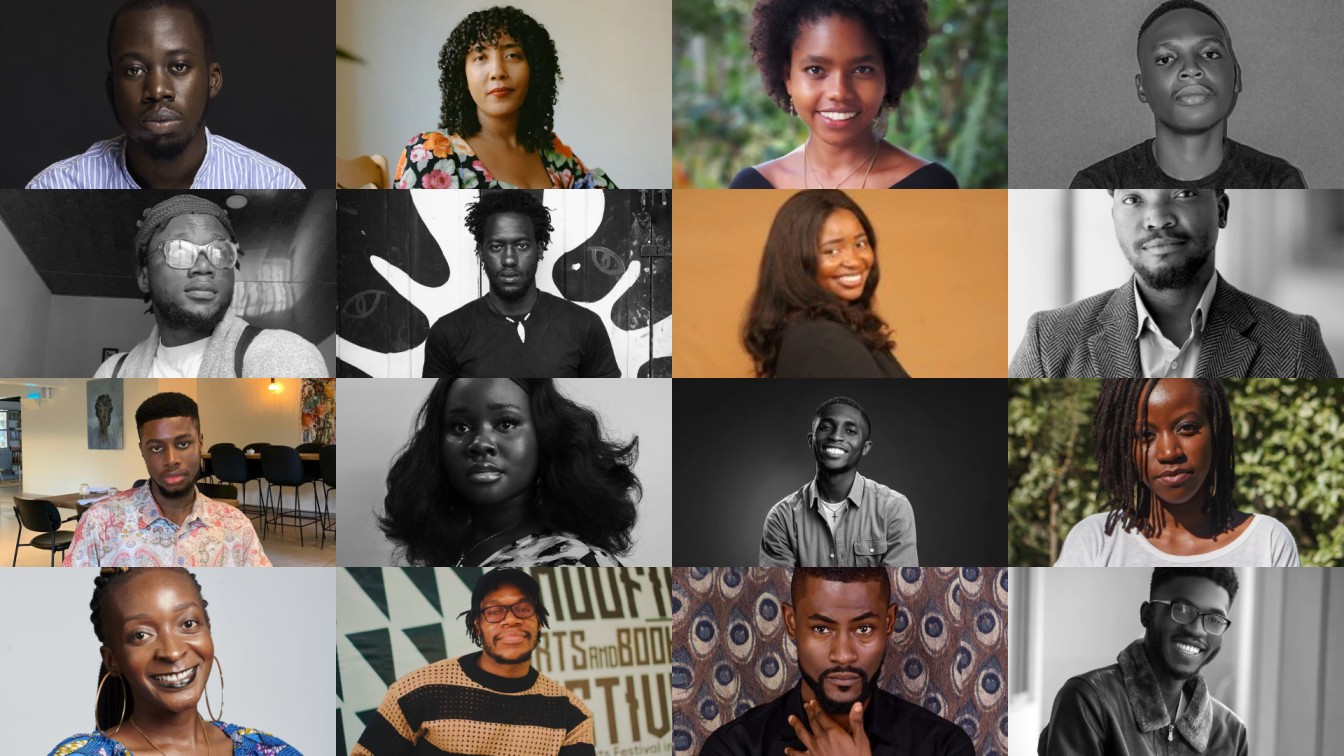

Within the contemporary cultural ferment in Africa, where art—in all its variegated forms—has taken centre stage, we hope that African writers and essayists can become bolder in capturing the details of their own epistemology in essays.
By Afrocritik’s Editorial Board
For three years now, Afrocritik has been collating some of the best short literature published by Africans within a given year. As far as essays go, 2025 offered a broad spectrum of writing on culture, art, politics, and literature. The year strongly featured essays emerging from conceptual or themed projects, spearheaded in particular by African magazines. While 2025 may not match the previous year in the sheer volume of output, the quality of the work is both encouraging and, in certain cases, profoundly impactful for the present and the future.
While some of the magazines—Afrocritik, The Republic, Open Country Magazine—where many of these essays appeared, have had a recognisable footprint in the essay form, others took whatever they were previously doing to new heights.
On that note, magazines such as Olongo Africa were remarkably visible this year. Another venue that seems to have become the Mecca of African essayship is Substack, where many a writer has chosen to express their thoughts on their personal digital backyard. The structure of that technology, which merges the best attributes of the web magazine with some of the best features of social media, has proven to be a new (and tested) frontier for the African essay.
Among writers, many of the continent’s most prolific essayists have remained so. Tolu Daniel is especially notable for his consistent interrogations of the cultural zeitgeist in Nigeria and elsewhere. His essays—some of which were not included here, not for want of quality, but for lack of space—were some of the most remarkable this year. At the same time, essays on music and film have featured strongly, led prominently by Afrocritik and Open Country Magazines, amongst others.
For some reason, we find Diaspora featuring strongly in many essays by Africans this year. Another remarkable touchstone is culture, which has Africans looking inwards to examine or to foreground the things, heritages, and ways of life that have made them, and vice versa.
Within the contemporary cultural ferment in Africa, where art—in all its variegated forms—has taken centre stage, we hope that African writers and essayists can become bolder in capturing the details of their own epistemology in essays.
We need secular and mainstream essays about everything: about a bus conductor, about the history of fishing in Lake Albert, about indigenous African language literature and writing systems, or about Rock music and the rock formations in Zimbabwe and, for a change, personal stories about living in matriarchies (for, contrary to much public opinion, Africa does have have matriarchies.).
On that note, and in no particular order or form (and making no claims at any definitive “best”), below is Afrocritik’s Notable Essays of 2025:
“Mbari: Interrogating the Place of Space in African Art” (Olongo Africa) — Kosoluchi Agboanike
The definition of essaying as a venturing, an exploration, a finding-out, sees its best illustration in this ranging, lyrical, cerebral essay by Nigerian writer, Kosoluchi Agboanike, who takes us wittingly through a journey to connect the relationship between Mbari as an idea and the importance of space in African art.
Agboanike’s central argument is that the Mbari Club—an art and culture society that formed in Ibadan in the 1960s, which draws its fundamental precepts from Igbo culture presents a conduit for approaching art as a cyclical formation and deformation of space (“First there is space, then art follows,” she writes).
There is no single way to describe the prose witchery and thought experiment this essay wields. What is clear is that reading it is an experience unlike anything published this year. It is an essay that will surely become a reference point in the future.
“The False Crisis of African Literary Estrangement” (Olongo Africa) — Tolu Daniel
Tolu Daniel, one of the most prolific African essayists of 2025, spent the year examining African literature’s zeitgeist on various levels. The matter of his opinion here is that the insistence that African literature produced in the Diaspora is “unAfrican” is false.
To make this point, he reads Teju Cole’s Tremor (2023) extensively, noting that contrary to the opinions of the detractors of Diasporic African Literature, the novel extends its reach without losing its immediate purview: “novel that reimagines the cosmopolitan Black subject not as a figure of detachment, but as one whose movements chart unofficial cartographies of violence, memory, and inheritance. It is a book that writes outward and inward at once, that listens to the world and the continent in the same breath.”
“Our Culture Of Complicity” (Letters from the Inbetween Substack) — Tolu Daniel
Here again comes Tolu Daniel with a short but no less important essay that outlays the moral hypocrisy deeply embedded in Nigerian society, where certain sins are euphemised (and even glorified) at the altar of money-worship, while love is selectively accepted or demonised according to the country’s warped “moral imagination”, as Daniel calls it.
It is primal, especially at this time when Nigeria’s corporate existence is tottering, to investigate the ethical inconsistencies that keep this country from confronting its real problems.
“The Weight Of Duty” (The Republic) — Azubuike Obi
Azubuike Obi’s personal essay about what it means to be the “man of the house” sheds further light on contemporary conversations around masculinity in this age. However, his experience is not new; it is a universal one wherein a young man is expected to shoulder the responsibilities of fatherhood in the absence of his father. What is often mistaken as a boy’s coming of age into a man is simply the weight of duty that comes from being a male.
“What Being Disabled Taught Me About Nigerians” (Afrocritik) — Sakeenah Kareem
In Kareem’s revelatory essay about how Nigerians approach disability, we learn that we do not exactly disdain that condition, but that our attitudes towards disability are more melodramatic concern than actionable understanding. The perennial interest for Nigerians, we learn here, is visibility and self-righteousness rather than genuine concern.
Nigerians are only interested in acknowledging and aiding disability and the cause of the disabled, so long as it makes them look like social crusaders. The problem with such an attitude becomes more complex and obvious when the disability is not immediately physically visible.
“The Grace of the Unclaimed” (Lolwe) — Jude Dibia
In this rare essay by Nigeria’s first queer novelist, he confronts what it means to exist in Diaspora as one’s own singular self, true to one’s own innate desires and existence, rather than as part of a community—especially one of Blackness and one which has to do with perceived notions of male being. Particularly, we notice the persistent anxieties he feels about his solitary life and how he feels about how he projects his identity.
“Atheist In A Catholic Church” (Efiko) — Michael Aromolaran
In one of the best essays of the year, Nigerian writer and journalist, Michael Aromolaran, considers the reasons for his tentative return to the Catholic faith. We are taken through a close examination of the influences of the church’s choral music as well as his own recent journalistic incursions in Diaspora. By the end, we realise that, for him, it is not so much about faith as the lyrical aesthetics of the church hymn and the heritage of memory and experience.
“Inheritances” (Listen Journal) — Mofiyinfoluwa O.
Mofiyinoluwa O takes us through the deep connections between the women in her maternal lineage, from her mother to herself and down to her grandmother. Above all, “Inheritances”, is an emotional paean to her mother, a document of a love that corrals all that womanhood means.
“The Illusion of Freedom” (Agbowo) — Idowu Odeyemi
Philosopher Idowu Odeyemi confronts the insidious dynamic of the relationship between Africa as a colonised entity and the West as a colonising entity. He contends that while the West offers comforts that are simply not available in Africa, it also exposes the darker sides of Diaspora where Africans are treated as never-do-wells.
The African is then torn between his poorly performing homeland and the illusory freedom of a land that seems to, on the surface, have everything he needs, while simultaneously degrading his humanity and right to exist.
“The New Literalism Plaguing Today’s Biggest Movies” (The New Yorker) — Namwali Serpell
Zambian novelist and Professor, Namwali Serpell, argues that recent films in Hollywood have become ridiculous for making literalist efforts at being pointedly artificial, contrived, and artlessly stating the obvious. She makes us see that not only does the literalisation of metaphors make these films unpalatable, but it also makes them, in many cases, unimaginative regurgitation of tired tropes and a barrage of unnecessary showiness.
“Coming in From the Cold II: The Tech of Text” (Afapinen) — Carl Terver
In Carl Terver’s potentially trend-setting essay, he argues that the prose aesthetics of what is African literary tradition, which is based on orality for a certain stretch, is no less important than what is often eulogised in Western literature.
Contrasting that tradition with the eulogisation of “the tech of text”—technically attentive writing—as the standard of prose, he concludes that good writing is neither entirely one nor the other. Instead, it is something that results from what he calls the “artistic unconscious”.
“Posh Wanker, Kaduna Boy” (Elnathan’s Corner Substack) — Elnathan John
An incredibly engaging essay in which the Nigerian novelist, Elnathan John, interrogates the notion of accents and the localised assumptions often made about them, using his own accent as an entry point. Much of what he contends is that a person’s linguistic repertoire is often symptomatic of aspirational moves or otherwise within a society.
“How Wole Soyinka Inherited the Drama of the Gods — and Shadowed the Nigerian Tragedy” (Open Country Mag) — Otosirieze Obi-Young
This magisterial profile essay takes us headlong into what makes one of Africa’s greatest writers the living colossus he is. It throws a proactive eye on both Soyinka’s peerless conflation of drama and Yoruba cosmology in his drama and on his often trenchant but controversial politics. What comes out in the end is a complex man replete with questions and enigmas.
“Taiwo Egunjobi’s Cinema of the Trapped” (Open Country Mag) — Victor Ebubechukwu Orji
This profile of the director of A Green Fever (2023) places Taiwo Egunjobi’s work in a strong intellectual tradition of Nigerian cinema that often features period films. More than that, it follows the director’s small beginnings, his trial and errors, and the formation of his techniques as a self-taught auteur. There is something to learn here for anyone interested in film or Nigerian film.
“The Last Waltz” (The Weganda Review) — Alexander Nderitu
“The Last Waltz” by Alexander Nderitu, published in The Weganda Review, is an elegy as it is an act of remembrance that strains against time’s indifference. Written in the aftermath of the death of the author’s young lover, Mona Nduillu, in 2016, the essay is a sustained encounter with loss, memory becoming a refuge.
The inclusion of Nduillu’s photograph deepens the text’s ache, the grief tied to the undeniable fact of her once-being. The essay poignantly wrestles with absence, a private canon of love and mourning in which the beloved is preserved against erasure, if only in language.
“Letter to Uncle Frank” (Off Assignment) – Michelle Angwenyi
“Letter to Uncle Frank, from the End of Winter” by Michelle Angwenyi, published by Off Assignment, is an intimate address that is not private. Cast as a letter to a stranger section of the publishing platform, the essay uses distance— geographical, emotional, seasonal—as a governing condition. The essay is organised around a man who is scarcely known and yet enduringly present as a figure produced less by biography than by recollection.
“The Doctor Who Left” (Off Assignment) – Noella Moshi
“The Doctor Who Left” by Noella Moshi, published by Off Assignment, is a meditation on how language and ritual are marshalled when love is cornered by mortality. Framed as a letter, the essay exposes the choreography of a patient’s family. Moshi is acutely attentive to the asymmetries of power in medicine. So her essay moves the elemental dread of loss, rendered with a restraint that intensifies its force, and what endures in it is not accusation but a lucid reckoning with how hope humiliates and ennobles us at once, and how strangers can come to govern the most intimate stakes of our lives.
“Silhouette of a Daddy’s Girl” (The Coachella Review) – Mubanga Kalimamukwento
“Silhouette of a Daddy’s Girl” by Mubanga Kalimamukwento, published in The Coachella Review’s Summer 2025: Good Trouble issue, is a reckoning with what fatherhood owes. Framed by the Bemba wisdom Ubutata Kutatishyanya — that the duties between parent and child must move in both directions— the essay traces a bond formed by a steadfast presence.
Kalimamukwento writes about a man who became a father through care, through showing up in the aftermath of death. When that bond is threatened by the demand that it be undone, the essay sharpens and inquires about loyalty and the weight of chosen kin.
“NYC Block B” (Lolwe) – Micheline Ntiru
“NYC Block B” by Micheline Ntiru, published in Lolwe (November 2025), stages New York, specifically Harlem, as a field of intensities that overwhelm the immigrant imagination schooled on cinematic expectation. Ntiru’s seventeen-year-old self enters the city prepared for symbols, only to be met by texture: sound, heat, movement, the visual clutter of 125th Street.
What matters in the essay becomes not the romance of the metropolis but its legibility, how identity is read and recognised in passing, accents, and gestures of the African diaspora. The essay insists on attention, on the body’s encounter with place. Harlem is registered, and in that registration, a self begins to take form.
“Odanga Is Still Fighting” (The Republic, Vol. 9 No. 1) – Lutivini Majanja
“Odanga Is Still Fighting” by Lutivini Majanja, published in The Republic (Vol. 9, No. 1), inquires about the absence of historical fact. The essay refuses the consolations of closure, insisting instead on the violence of records that do not record, of wars that consume bodies without granting them names or endings.
By tracing the conscription and disappearance of her great-grandfather, Odanga, in the British Carrier Corps, Majanja exposes how imperial warfare depended not only on African labour but on African erasure, an administrative logic in which some lives were never meant to return, or even to be properly counted. The title names a condition, rather, a family suspended in permanent anticipation, still waiting because history never authorised mourning.
“J. M. Coetzee: Speaking in Tongues” (The Dial) – Carey Baraka
Carey Baraka’s essay, published in The Dial, approaches Speaking in Tongues as a problem of dialogue itself. Reviewing the exchange between J. M. Coetzee and his translator, Mariana Dimópulos, Baraka treats conversation as a site of power and careful evasion. A reading that is attentive to who speaks, who clarifies, and who is permitted opacity.
Translation here is treated less as a technical exercise than an ethical one, raising questions about authorship and the limits of mutual understanding. Baraka’s essay resists reverence for the Nobel figure, choosing instead to examine the conditions under which literary speech is framed, mediated, and ultimately constrained.
“I’m Telling You about Omukwano Ogw’ebikukuju” (Transition Magazine) – Kennedy Nsereko
“I’m Telling You about Omukwano Ogw’ebikukuju” by Mark Kennedy Nsereko, published in Transition (Issue 136), sees a writer writing from within the legal violence of Uganda’s 2023 Anti-Homosexuality Act, as the essay documents the condition of permanent surveillance. Nsereko is concerned with how law reshapes intimacy and how affection survives by becoming indirect. The essay’s force is its insistence that writing itself is a form of accountability, to naming state power.
“Nollywood Needs NollyTube, But Does NollyTube Need Our Brains to Be Turned Off?” (Afrocritik) – Vivian Nwajiaku
Vivian Nwajiaku’s essay, published on Afrocritik in April 2025, explores YouTube as a condition reshaping Nigerian cinema. Examining what has come to be called “NollyTube”, Nwajiaku analyses how modes of distribution alter aesthetics, and expectation— how films are calibrated for algorithmic reward.
The essay resists nostalgia for an older industry while remaining sceptical of technological optimism, insisting that accessibility is not synonymous with artistic freedom. The way an industry adapts under pressure, negotiating visibility, sustainability, and authorship within a system that rewards speed over contemplation, is analysed.
“Notes on Craft (4–6)” (Substack) – Ernest O. Ògúnyẹmí
Ernest Ogunyemi’s continuation of Notes on Craft extends the series by accretion. The essays assemble themselves as what interests Ogunyemi, which is not influence as lineage but influence as interruption, the nudges that compel attention and redirect practice.
Craft is stripped of mystique and treated as a discipline of awareness, a set of decisions enacted sentence by sentence. Writing becomes a process of shaping thought. The result is a series that understands craft as sustained vigilance on an ethics of making, alert to how form is slowly persuaded into being.
“How Wizkid Redefined Nigeria’s Sonic Landscape With “Made in Lagos” (Afrocritik) — Abioye Damilare Samson
This essay is a cultural meditation on Wizkid’s 2020 classic album, Made in Lagos, as both an artistic milestone and a historical artefact shaped by various factors. Tracing Wizkid’s evolution from youthful prodigy to global peer, Abioye frames Made in Lagos as the culmination of a long negotiation between local identity and international ambition.
Central to the essay is its productive tension: an album named for Lagos yet sonically global, emotionally hedonistic yet culturally rooted. Rather than a literal portrait of the city, the album is interpreted as an atmospheric memory of Lagos.
“The Importance of Being Victony” (The Republic) — Emmanuel Esomnofu
This essay is a sweeping critical portrait of Victony as both artiste and his narrative project. It positions him as an Afrobeats outlier whose evolution is defined by worldbuilding, visual coherence, and a stubborn refusal to remain sonically or aesthetically static.
Moving from SoundCloud-era rap to a fully realised Afrobeats language, “The Importance of Being Victony” tracks how Victony reconciles foreign influence with local identity, trauma with play, and faith with desire. Its core argument is that Victony’s strength lies in his synthesis: sound, image, biography, and belief.

“How Should We Read? Akpata Magazine and the Reading Debate” (Afrocritik) — Chimezie Chika
This critical essay likely arose from a need to correct a tweet by a digital magazine that was rapidly spreading misleading ideas about how literature should be consumed. Chimezie Chika responds to the claim that reading audiobooks does not measure up to ‘proper’ reading by first highlighting a flaw in this argument: storytelling, and, by extension, literature, originated through verbal and aural modes.
Chika challenges the notion of a single, ideal way to consume literature, emphasising that reading experiences and motivations differ from person to person. The essay concludes with a compelling summation of its thesis: “If reading is about absorption, who said that there is only one way to absorb literature?”
“Fading Days” (Ubwali Literary Magazine) — Chisom Nsiegbunam
Perhaps society has long been fixated on the responsibilities of the firstborn, overlooking the roles the youngest child must also assume. In “Fading Days”, Chisom Nsiegbunam reflects on the emotional burdens she carries as the last of eight children, left to navigate the uncertainty of her parents’ ageing and the inevitability of their passing.
Through this lens, the essay offers a lucid, deeply felt meditation on filial duty, anticipatory grief, and the complex intersections of ageing and family within the Nigerian cultural context. Nsiegbunam’s writing captures the broader weight of responsibility placed on those positioned at the end of the sibling line.
“Afunwaelotanna” (Evergreen) — Chinonso Nzeh
A deeply moving personal essay about patrilineal connections, shortlisted for the Eugenia Abu/ SEVHAGE Prize for CNF 2024, in “Afunwaelotanna”, Chinonso Nzeh writes about memories of his father and the nuances of this father-son relationship. The essay moves between memories of his father’s past and present condition, exposing Nzeh’s struggle to reconcile the image of a once vigorous, vocal man with the reality of frailty and confinement.
In “Afunwaelotanna”, this tension is rendered with notable tenderness, drawing readers into the vulnerability inherent in narrating such an intimate experience. The form itself reinforces this effect: the essay’s fragmented structure, divided into brief sections, offers glimpses into different moments of the writer’s life, each concise but resonant.
Reading the essay becomes an act of shared witnessing. At the same time, it prompts a deeper reflection on the transience of life and the resilience of the human spirit.
“Sanctified Sleeplessness: Nigeria’s Addiction to Holy Hustle” (Afrocritik) — Felicitas Offorjamah
This opinion article examines the role Nigerian Pentecostal leaders play in fostering widespread insomnia, situating it within the proliferation of early morning prayers and prosperity sermons. It argues that these leaders have subverted the biblical emphasis on rest, instead persuading miracle-seeking congregants that sleep is a sign of laziness or a harbinger of poverty.
Offorjamah contextualises the consequences of this teaching, showing its far-reaching and often ironic effects: chronic insomnia, deteriorating health, and in many cases, the very poverty it claims to help avert. This essay will offend the sensibilities of many.
“Finding Baldwin” (The Rumpus) — Ifeanyichukwu Eze
Writers are perpetually engaged in questioning—and often doubting—the authenticity of their craft, and it is this near-universal unease that sits at the heart of Ifeanyichukwu Eze’s “Finding Baldwin”. A chance encounter with James Baldwin’s Go Tell It on the Mountain, purchased from a roadside bookseller, becomes the catalyst for a moment of retrospection and self-examination. From this encounter, Eze reflects on his upbringing as a Catholic boy and traces his affinity with Baldwin’s protagonist, John, whose spiritual and emotional conflicts echo his own.
What elevates the essay is the ease with which Eze weaves childhood memory, adult self-reflection, and Baldwin’s meditations on the writer’s vocation into a coherent philosophy of writing as a sacred calling. He draws a compelling parallel between religious devotion and literary practice, crystallised in his assertion: “While I have not become a priest in the Order of Melchizedek, Baldwin offers an alternative: a priest of language. In writing, the writer offers words on behalf of humanity. And I am a partaker of that offering.”
“Dear Nollywood, Stop Using Sexual Violence as a Plot Device” (Afrocritik) — Vivian Nneka Nwajiaku
In this indictment of Nollywood’s persistent patriarchal perspectives, film critic Nwajiaku argues strongly against the reckless and thoughtless use of sexual violence in Nollywood. While Nwajiaku notes that this is a pervasive problem of the international film industry, especially Hollywood, she gives valid reasons for why what is obtained in Nigeria perpetuates an already volatile terrain for women.
“A Country of Particular Concern: The Fulani, Faith, and the Failure of the Nigerian State” (Elnathan’s Corner Substack) — Elnathan John
Perhaps the most important political essay of the year, Nigerian writer, Elnathan John, confronts the problem of violence ravaging much of Nigeria from the perspective of a Northerner (which is what he is). Developed in the aftermath of the designation of Nigeria by Donald Trump as “a country of particular concern”, John posits here that he was motivated by the need to understand how Nigeria became a country of particular concern after becoming “a country of particular forgetfulness”.
One of John’s major insistences is that while religion, politics, and violence are almost irretrievably entwined into the Nigerian body polity from inception, it is the neglect of that very history’s major pointers that does the most violence on the country. A must-read for every Nigerian (and African).
“Youth, Poetry, and the Nigerian Traumatic” (The Republic) — Ancci
Ancci’s remarkable critical mind is brought to bear here on the subject of foregrounding contemporary poetry. He pitches that the genre must reflect the trauma of the Nigerian experience at present, for the trauma—which had been maligned in certain quarters—represents even more truly what it means to be Nigerian or to experience Nigeria.
He argues that the role of the poet in any given dispensation is to bear witness to the currents of their time. The reason is that if the ongoing traumas of the Nigerian state are not examined by young poets, they risk not being confronted and resisted.
“Driving Through Life as a Fully Veiled Muslim Woman” (The Republic) — by Muti’ah Badruddeen
In this autobiographical essay, Muti’ah Badruddeen offers an intimate look into her life, exploring how her identity as a niqabi shapes her experiences of gender, autonomy, and selfhood. The essay carries a sense of movement, mirrored in the places she inhabits.
From her privileged early life in Nigeria to her challenges with autonomy and audacity, and later her experiences in Saudi Arabia and the United Kingdom, Badruddeen interrogates why society resists women who choose unconventional paths and remain steadfast. Central to the essay is the ongoing negotiation of her identity as a fully veiled Muslim woman.
“Jelili Atiku’s Dance of Justice and Sacrifice” (The Republic) — Chimezie Chika
Jelili Atiku’s performance practice is situated within the convergence of bodily ritual, political protest, and Yoruba spirituality in this essay. It argues that Atiku deploys his own body as a primary instrument of resistance, collapsing the distance between art, activism, and lived experience. The essay shows how movement, costume, symbolic objects, and audience participation are mobilised to confront colonial violence, state brutality, environmental degradation, and historical erasure.
“To Kill A Conversation: Nollywood, Criticism, And The Culture Of Silence” (Afrocritik) — Joseph Jonathan
In this unapologetically blunt essay, Joseph Jonathan carefully examines the unhealthy relationship between criticism and Nollywood alongside the consequences of this. He debunks the often misconstrued definition of criticism as a deliberate attempt at undermining art and establishes it as “an intellectual and artistic engagement with a work that already exists”.
What makes this essay particularly impressive is its argument: a way to analyse the impact of a film is not through audience reaction but by critiquing said film, however harsh or mild. Ultimately, Jonathan restates the importance of critics and critiquing, summarised in this excerpt: “Critique is not the enemy of progress; it is a catalyst for it”.
“I Knew My Father in Glimpses” (Isele Magazine) — Tolu Daniel
Tolu Daniel turns to the personal here in this short lyrical portrait of living and existing through the melancholy and acceptance of grief.
“In A Time of Fire, Chuma Nwokolo Protects His Purpose.” (Open Country Mag) — Michael Chiedoziem Chukwudera
In this profile of the reclusive writer, Chuma Nwokolo, his trajectory as a conscientious writer whose comic ability belies a pointed understanding of the political and social conditions of Africa. Here, Nwokolo comes across to us as an unflinching beacon of moral fortitude (and at the cost of genuine fame) in a world in which writers of his generation have largely sold out their stance.
“Niggas in Paris” (Nnamdi Ehirim Substack) — Nnamdi Ehirim
An electric essay from the Nigerian novelist, Nnamdi Ehirim, which conflates, in its examination, the ingenuity of Kanye West and Jay Z’s “Niggas in Paris”, and the condition of the African (Black) artiste whose dependence on Western prestige institutions reveals how those institutions give and take much power away from the Black artiste’s creativity. He argues, therefore, that Africa—and the Black world—must create its own channels of constructing legitimacy outside of Parisian (read ‘Western’) corridors.