




Visa denials for African film professionals is not a bureaucratic inconvenience sitting at the edge of the industry. They are an infrastructure failure at its centre.
By Joseph Jonathan
In January 2026, Nigerian actress Amanda Oruh published an X (Twitter) thread that did what the best cultural documents do: it made a structural problem personal enough to feel, and personal enough to share. A U.S. visa denial had prevented her and the rest of the Nigerian-based cast from travelling to Park City, Utah, where Lady, the Nigerian film in which they appear, was making its world premiere at the Sundance Film Festival.
The post circulated widely, and the reason it circulated is instructive. It was not because the situation was shocking. It was because it was recognisable. From Lagos to Khartoum, from Conakry to Tunis, African film professionals have met this specific geometry of exclusion so many times that Oruhʼs thread did not read as news. It read as confirmation. The festival wants your story. The state does not want you. And the industry, watching from the sidelines, has decided that this is not its problem to solve.
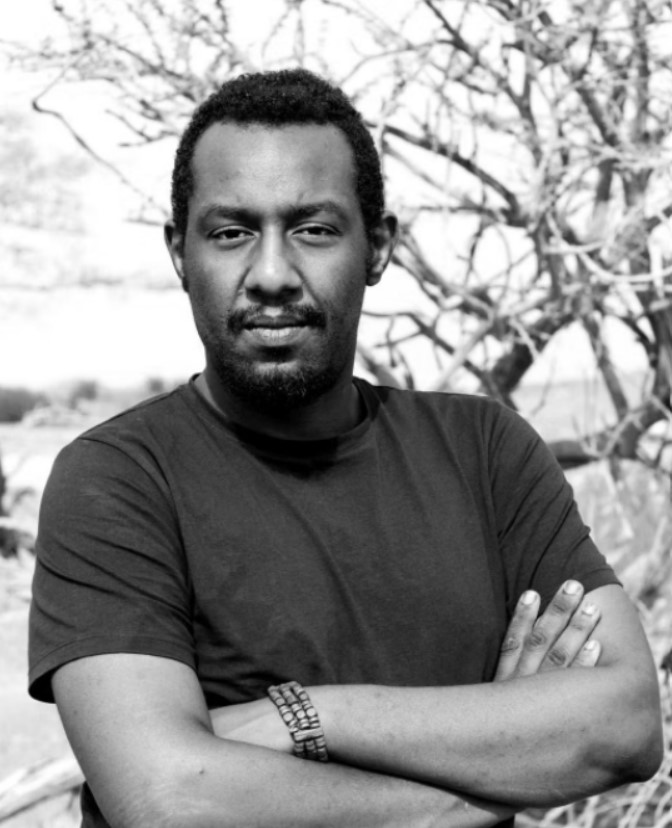
A few weeks later, the team behind the Sudanese film, Blue Card — director Mohammed Alomda, producer Amjad Abu Alala, and writer Paula Thabet — were informed that their German visa applications had been rejected. They had been invited to participate in the Berlinale Co-Production Market at the 76th Berlin International Film Festival, one of the most consequential deal-making forums in world cinema.
Faced with the prospect of attending remotely, they withdrew entirely. Abu Alalaʼs explanation was not a complaint. It was a diagnosis: “Why should we take part remotely when we have been made to feel unwanted by this country… We had to take action to save our dignity as Arab and African filmmakers.” Two days later, Cairo-based sales company MAD World announced it had boarded Blue Card for international sales. Production remained on schedule for April-May 2026. The film moved forward. The people who made it had been turned away at the door.
These two cases, arriving within weeks of each other at the start of 2026, are the immediate reasons why Iʼm writing this essay. But they are not its subject in isolation. They are the most recent and most visible instances of a structural condition that has been quietly reshaping the industrial life of African cinema for years, determining not just who attends which festivals, but which films get financed, which directors get cast in the international conversation, which careers accumulate global momentum and which ones plateau at the border. Visa denial for African film professionals is not a bureaucratic inconvenience sitting at the edge of the industry. It is an infrastructure failure at its centre. And to understand why, you have to understand what a film festival is actually for.
The public face of a major international film festival — Sundance, Berlinale, Cannes, Toronto, Venice — is cultural. It is a gathering of cinema, a consecration of artistic achievement, a place where films find their audiences and their critical vocabularies. This face is real. But it is the front of the building. The interior, where the industryʼs actual work gets done, is a marketplace.
Behind the screenings and the prizes lies a dense commercial infrastructure: co-production markets, sales agent meetings, acquisition conversations, financing forums, and the informal networks that form in corridors and at dinners, where a significant portion of the real decisions are made. This commercial infrastructure is not incidental to the festival experience. For a filmmaker at the beginning of an international career, it is the experience. The screening is the credential. The market is the career.
What this means in practice is that physical presence at a major festival is not ceremonial. It is industrial. The emerging filmmaker who attends Sundance does not only watch their film premiere. They meet the casting director who will remember their face. They have breakfast with the sales agent who will represent their next project. They are profiled by the journalist whose piece will establish their international identity. They attend the party where the producer who has been circling their work for two years finally shakes their hand. None of this is in the official programme. All of it requires a body in the room. When that body is absent, the screening still happens. The film still exists. But the industrial machinery that converts a premiere into a career — the machinery the festival was designed to run — does not activate. The credential accrues to the work. The opportunity accrues to no one.
This is the selection-access gap, and it is the central mechanism by which visa regimes shape the industrial life of African films. Selection is what a festival controls. Access is what a visa regime controls. The festival circuit was built on the assumption that these two things travel together; that artistic merit and physical presence are naturally inseparable, that the people whose work has been chosen will be able to attend.
For filmmakers from Western Europe, North America, and increasingly parts of East Asia, this assumption holds. For filmmakers from most of Africa, it frequently does not. And when it breaks down, the consequences are not evenly distributed between the film and the filmmaker. The film travels. The filmmaker stays home. The filmʼs industrial life continues. The filmmakerʼs stalls, to some extent at least.
Consider what Amanda Oruhʼs absence from Sundance actually cost, understood not just as a personal disappointment but as an industrial event. A world premiere at Sundance generates a specific kind of attention that is difficult to replicate outside of the festivalʼs concentrated environment. Press from major international outlets.

Industry figures who have specifically travelled to see new work. The informal validation that comes from being physically present as an artist whose work is being celebrated. For an emerging actress, this environment is not background noise. It is the primary mechanism by which a festival selection converts into casting conversations, representation inquiries, and the international name recognition that could determine the ceiling of a career. Oruh was denied entry to that mechanism. Her film circulated. She did not circulate with it. And the professional relationships that might have formed in those days in Park City — relationships that begin with a face across a room and end, years later, with an offer — did not form, because she was not there to be a face.
The economic dimension of this loss is specific and underexamined. The international film market does not operate primarily on the quality of work. It operates on relationships, visibility, and the accumulated credibility that comes from being consistently present in the spaces where the industry gathers.
A filmmaker who attends five major festivals over three years builds a professional network, a recognisable identity within industry circles, and a track record of international engagement that functions as its own form of capital. This capital is not listed on a balance sheet, but it is real, and it is bankable — it influences which projects get financed, which co-production partners express interest, and which sales agents return calls.
The African filmmaker who is systematically denied access to the spaces where this capital is accumulated does not simply miss individual opportunities. They are structurally excluded from the compounding process by which international careers are built. Every denial is not just a lost trip. It is a lost increment of professional capital that would have generated further capital, in a cycle that, for their Western counterparts, runs largely uninterrupted.
The Blue Card case illuminates a different dimension of this problem, one that I named as dignity, and dignity, in this context, is not a soft word. It describes something with hard industrial consequences. When Abu Alalaʼs team were denied visas, the festivalʼs implicit offer was: attend remotely. Participate via screen. Take your place at the Co-Production Market from a different continent. This offer is routinely framed as accommodation, a generous technological workaround for an unfortunate situation. Abu Alalaʼs refusal to accept this framing is the most analytically precise move, because it names what remote participation in a physical marketplace actually is. It is not inclusion. It is the performance of inclusion, arranged in such a way that the excluded party provides their own labour to maintain the appearance of their participation while being denied its substance.
A co-production market is, by design, a relationship-building environment. Its value is almost entirely dependent on the informal dynamics of physical proximity; the ability to read a room, to have a conversation that extends past the scheduled meeting, to be introduced to someone by someone else over coffee, to be present when an unexpected connection presents itself.
Conducting this from a screen, while the people you are attempting to build relationships with navigate the room in person, does not replicate the experience at a reduced quality. It fundamentally changes what is on offer. The remote participant has access to the scheduled meetings. They do not have access to the market. And a filmmaker who understands this — who has the analytical clarity to see what is being offered and what is being withheld — faces a choice with no good options: accept the diminished version, or refuse it and absorb the professional cost of absence. The Blue Card team refused. The cost was real. The Co-Production Market at Berlinale is not an opportunity that recurs easily. Walking away from it required a calculation that most filmmakers, facing equivalent pressure, would not make. The fact that they made it, and said publicly why they made it, is a form of testimony that the industry has not adequately reckoned with.
What happened two days after the withdrawal is equally important to examine, and equally double-edged. MAD Worldʼs boarding of Blue Card for international sales demonstrated that the filmʼs industrial life could continue without the festivalʼs infrastructure as an intermediary. Production remained scheduled. The project moved forward. At first reading, this looks like a vindication, proof that the withdrawal costs less than feared, that the market could find the film through other channels. But look at the conditions that made this possible.
Abu Alala has an established international profile. Blue Card had already generated significant attention. MAD World had the infrastructure and the international relationships to absorb the film into its sales catalogue without a Berlinale co-production context to anchor the deal. The resilience of this particular project is real, but it is the resilience of a project that already had enough accumulated capital to survive the loss of one market opportunity.
Strip those advantages away — put a less-established director, a debut feature, a first-time producer in the same situation — and the visa denial is not a setback to navigate around. It is a wall with no door. The filmmakers who can afford to refuse the festivalʼs terms are, by definition, those who have already accumulated enough to survive the refusal. The burden of the system falls hardest on those with the least capacity to bear it.
The 2026 cases did not arrive without precedent. They arrived at the end of a long and largely undocumented record, and that record is essential to understanding the selection-access gap as a structural condition rather than a run of bad luck.
In 2017, the Arab Arts Focus collective assembled what should have been a landmark moment for the Edinburgh Fringe: the festivalʼs first dedicated Arab arts showcase, bringing theatre, dance, and performance work from Egypt, Sudan, Syria, Iraq, Lebanon, and Palestine. They had worked for over eighteen months preparing the programme. They had the institutional support of the British Council and the Fringe Society. They spent over £6,000 applying and reapplying for UK visas for their artists. Nearly a quarter of the performers — actors, dancers, technical crew — were refused entry, some multiple times, most without explanation. Shows were cancelled, reduced, or performed in compromised form. Director Ahmed El Attar said afterwards that he questioned whether attempting the Fringe again was worth the cost, financial and otherwise. That question — whether the humiliation of the process justifies the possibility of the outcome — is one that no Western European artist invited to Edinburgh is ever asked to answer. It is asked, routinely and without apology, of African and Arab artists. And the asking of it is itself a structural condition, because it consumes professional energy, financial resources, and psychological bandwidth that their counterparts are free to spend on the work.
In 2023, British playwright Hannah Khalil was hours from the premiere of her production at the Shubbak Festival — the UKʼs largest biennial showcase of contemporary Arab culture — when two Tunisian actors, collaborators since 2021, were denied UK visas. The production nearly collapsed. Khalil described the experience as encountering an invisible wall, and warned that England would lose its reputation for arts excellence if international creative collaborations were made this routinely difficult.
The case sits at the precise cultural intersection that Abu Alala named in his Blue Card statement — Arab and African identity, treated by Western visa systems as a unified category of suspicion — and it demonstrates that the selection-access gap does not require a film festival to operate. It operates wherever Western institutions invite African and Arab artists and then rely on visa systems that were never designed to facilitate that invitation.
In 2024, Guinean performance troupe Circus Baobab arrived at Edinburgh Fringe with thirteen members and a confirmed booking at the Udderbelly venue. Two performers were denied UK visas. The show was cancelled. The reason cited by UK authorities was financial: the rejected performers did not hold bank accounts. This detail deserves to be examined rather than passed over. The financial documentation requirements embedded in Western visa systems are calibrated to the economic infrastructure of Western life. They treat the absence of a formal bank account as a marker of financial risk, without accounting for the reality that significant portions of the African creative workforce operate within economies where formal banking is neither universal nor the primary mode of financial life. The standard does not accommodate reality. This is not a design flaw. It is the design, a set of requirements that function, regardless of intent, as a systematic filter against the economic profiles most common among African creative workers.
The statistical architecture underlying these individual cases removes any remaining ambiguity about whether this is a pattern or a coincidence. A 2023 survey by On The Move found that since 2019, over 61 percent of African artists and 77 percent of African arts organisations have faced at least one visa rejection. In the majority of cases, no reason was provided — itself a violation of the EU Visa Code, occurring routinely and without consequence.
The LAGO Collectiveʼs analysis found that African countries lost an estimated €60million in rejected Schengen visa application fees in 2024 alone, with rejection rates for Ghana, Senegal, and Nigeria reaching between 40 and 50 percent. In the UK, following a visa fee increase in 2023, African applicants from Nigeria, Ghana, and Algeria faced rejection rates as high as 70 percent. These are not the numbers of a system malfunctioning. They are the numbers of a system producing consistent, geographically concentrated outcomes that fall with predictable weight on the same African countries simultaneously generating the creative work that Western festivals are competing to programme.
This is the contradiction at the heart of African cinemaʼs current global moment, and it requires naming precisely. African cinema is experiencing genuine and significant international visibility. Nigerian films are reaching audiences globally. Senegalese, Tunisian, Moroccan, South African, and Egyptian filmmakers are being recognised at the worldʼs most prestigious festivals.
The cultural appetite is real, and the artistic output justifying it is serious and sustained. But the international film industryʼs embrace of African stories and its structural treatment of African storytellers, are not the same thing, and treating them as equivalent — allowing the cultural achievement to absorb and neutralise the structural critique — is one of the ways the system perpetuates itself without appearing to.


An industry can enthusiastically programme African narratives, celebrate African aesthetics, and acquire African films for global distribution, while the infrastructure of that industry — the spaces, relationships, and capital accumulation processes through which careers are built — remains systematically inaccessible to the African professionals who produced the work being celebrated. This is not a paradox. It is an extraction with a diversity statement attached.
It is important to note that the major festivals do provide real value to African cinema. Selection at Cannes, Sundance, or Berlinale generates genuine critical attention. The credentialing function of a major premiere is not nothing; it opens doors, creates visibility, and establishes a filmʼs international legitimacy in ways that are difficult to manufacture through other means. African filmmakers who have been able to attend these festivals have, in documented cases, secured financing, distribution, and co-production relationships that altered the trajectories of their projects. The festival system is not a fiction. Its offerings are real.
But — and this is the structural point — those offerings are real only for those who can physically access them. For the African filmmaker who is selected and cannot attend, the festival provides the credentials without the infrastructure. It provides symbolic recognition without the industrial machinery that converts recognition into capital. The film is included. The filmmaker is not. And over time, the compounding effect of this asymmetry is not just that individual careers are stunted.
It is that the international film industryʼs upper tiers — the directors with major co-production partners, the producers with established international sales relationships, the talent with genuine global market value — remain structurally difficult for African professionals to enter, not because their work is insufficient, but because the pathways through which that work would normally translate into sustained international careers are gated by a mobility system that does not treat them equally. Symbolic inclusion, practised at scale and over time, produces structural exclusion. The festivals celebrate African cinema. The visa system administers African filmmakers. The industry watches both happen and calls the overall picture diversity.
What could the festivals do? The honest answer is more than they are doing, and the gap between what is possible and what is practised is large enough to be its own indictment. Festivals could adopt formal public commitments to advocacy when selected participants are denied visas, not as a guarantee of outcome, but as a statement that the institution regards the selection-access gap as its concern.
They could build visa support infrastructure into their selection processes rather than treating the visa as a prior condition for which they bear no responsibility. They could maintain and publish transparent data on how frequently invited participants are unable to attend due to visa denial; data that does not currently exist in any systematic form, and whose absence is itself convenient. They could examine whether elements of co-production market infrastructure can be genuinely restructured, rather than merely offered remotely, to create meaningful access for those who cannot travel.
They have done very little of this. The status quo persists because the people most harmed by it have the least institutional power to change it, and the institutions with the power to change it experience the status quo as someone else’s problem.
Letʼs get back to where we started this essay: Amanda Oruh watching her Sundance premiere from Nigeria. The film entered the world. It will be seen. It may open doors for the project, for its director, and for the cause of Nigerian cinema in the international conversation.
Oruh will carry the credential of that premiere on her résumé: world premiere, Sundance Film Festival, 2026. What she will not carry is the network she would have built in Park City; the casting directors she would have met, the producers whose faces would have become familiar to her face, the journalists whose encounters with her in person would have seeded the international profile that accumulates over years of presence.
Those things were not transferable remotely. They required her body in a specific room at a specific moment, and her body was refused entry.

The industry will say: this is unfortunate, but it is a matter of government policy, beyond our control. The festivals will say: we cannot compel sovereign states to grant visas. Both of these things are true, and both of them are deflections, because the question is not whether the festivals can control visa policy. It is whether they have chosen to treat the consequences of that policy as their responsibility. They have not. They have chosen, instead, to celebrate African cinema while declining to advocate for African filmmakers — to take the cultural product of a communityʼs creative labour and programme it in their spaces, while accepting without meaningful resistance the political conditions that prevent that community from entering those spaces on equal terms.
The Blue Card team named this. Their withdrawal from Berlinale was not a tantrum. It was a precise refusal to cooperate with a system that was offering the appearance of inclusion while administering exclusion. It cost them something real. It clarified something important. And it put on the public record what most African film professionals who have lived this experience have had to absorb in private: that the global film industryʼs welcome is conditional, its inclusion is symbolic, and the toll at the gate is still being paid; quietly, consistently, and almost entirely by the people who can least afford it.
The films travel freely. The filmmakers do not. Until the industry decides that this distinction is intolerable rather than inconvenient, African cinema will continue to be one of the most celebrated and most structurally disadvantaged presences in world film; invited to the table, and turned away at the door.
Joseph Jonathan is a historian who seeks to understand how film shapes our cultural identity as a people. He believes that history is more about the future than the past. When he’s not writing about film, you can catch him listening to music or discussing politics. He tweets @Chukwu2big
Cover photo credit: Pixabay