

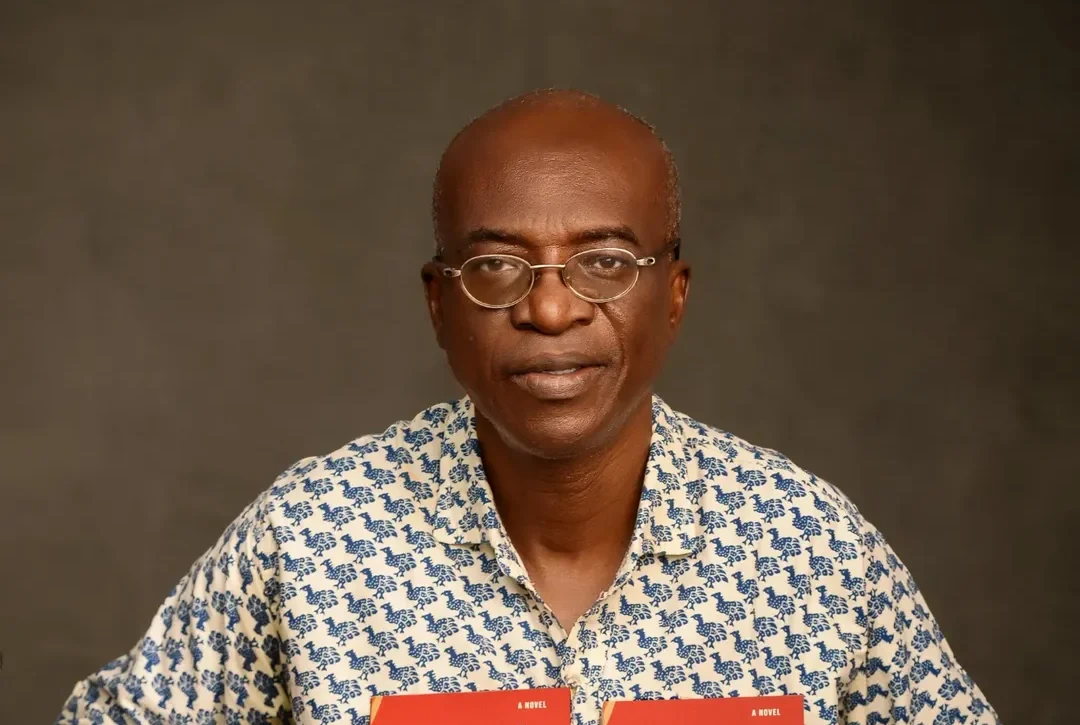

“There is a place for irony and satire in fiction. But the situation in Africa today is so urgent that I chose to dispense with these tools, wonderful though they might be.” – Ike Okonta
By Azubuike Obi
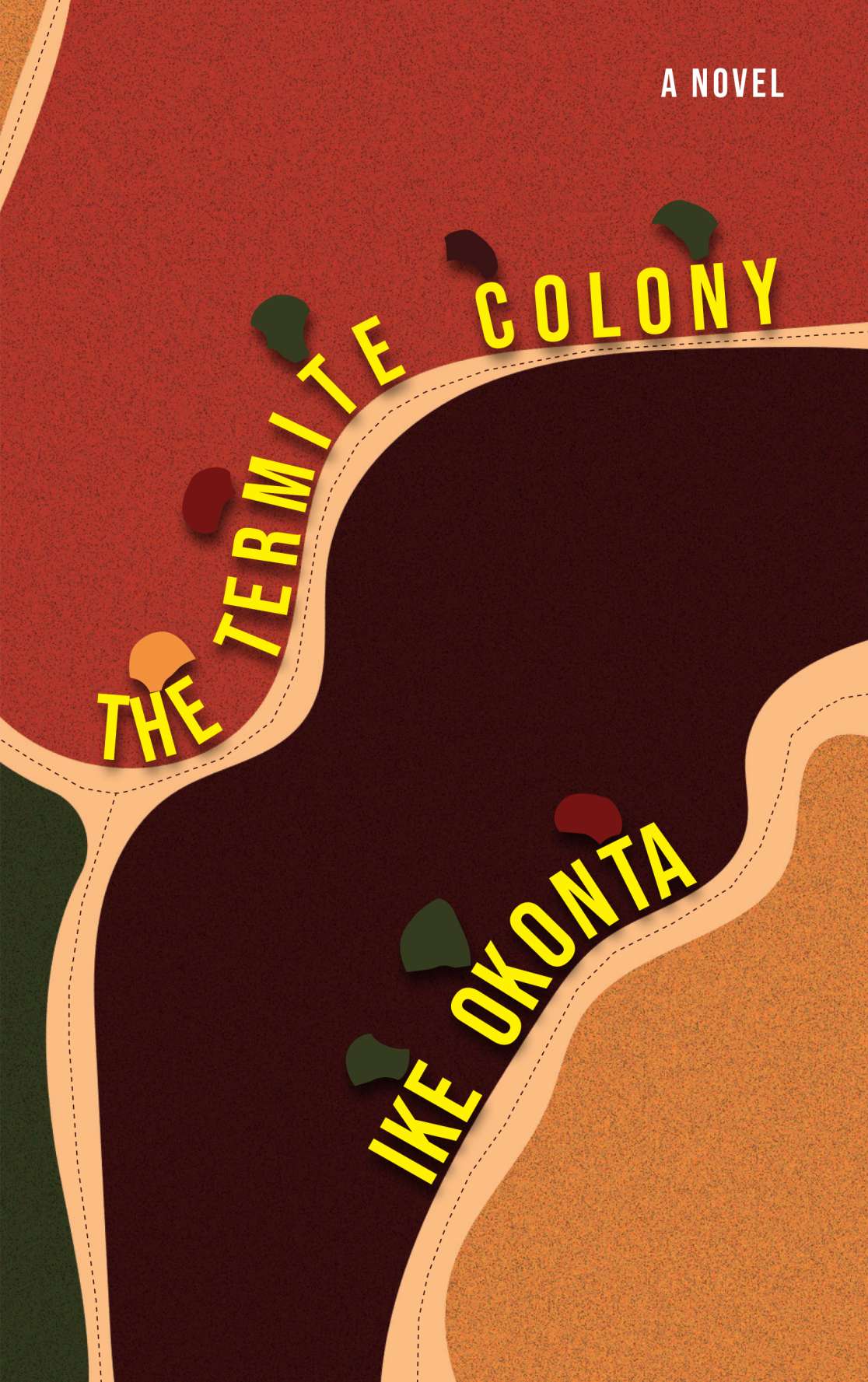
Ike Okonta is no stranger to the examination of Nigeria and the many problems that beset her. In When Citizens Revolt, he x-rayed the killing of the Ogoni 9, and the place of self-determination and ethnicity in an ethnically diverse nation such as Nigeria. He has worked as a journalist for several decades, playing critical roles in ousting Babangida’s military regime, and in interrogating former President Goodluck Jonathan’s policies for The Guardian and the New York-based Project Syndicate. And this wealth of experience, he brings to his first novel, The Termite Colony.
Okonta won the ANA Prize for Fiction for his debut collection of stories in 1998, received a doctorate in politics from Oxford University, and is a fellow of the Open Society Institute, New York. His first novel, The Termite Colony, was published by Narrative Landscape in 2025.
In my review of Ike Okonta’s The Termite Colony, I reflected on his diagnosis and criticism of the Nigerian condition, and in extension, the African condition. I stated that, “The Termite Colony does not restrict itself to the Nigerian problem; Okonta casts his net wide, ranging from The Congo to Rwanda to Ghana to Lebanon, and then to South Sudan, offering remarkable insights and analysis on how the forces of (neo)colonialism continue to hamper the efforts of the ordinary man, further plunging African nations into a perpetual state of chaos and despair”.
For Afrocritik, I spoke with Okonta about his process, and how he was able to chronicle the Nigerian problem in the assured hand in which the story is told. He also shared how his journalism informs his fiction, amongst other things.
Your novel, The Termite Colony, is diagnostic and critical of the Nigerian situation. From Sen Mac Phillips and the disillusionment of some members of the leadership class that came after the return to democracy, to Ishaya and the hands of capitalism in ordinary lives, to Emmanuel and the Japa phenomenon, and Kofo with Nigeria’s banking system and the rot that continues to plague that institution. Was this mapping of Nigeria’s many problems intentional? Were they just questions that had been simmering on the surface and happened to find expression in your fiction? Walk me through the process of your creation.
The issues I grapple with in The Termite Colony were simmering in my mind for decades. I wrote my first novel in 1986, when I was 23. Then I had a rosy view of the Nigerian situation, even though the novel dealt with the contentious Osu practice in Igbo land.
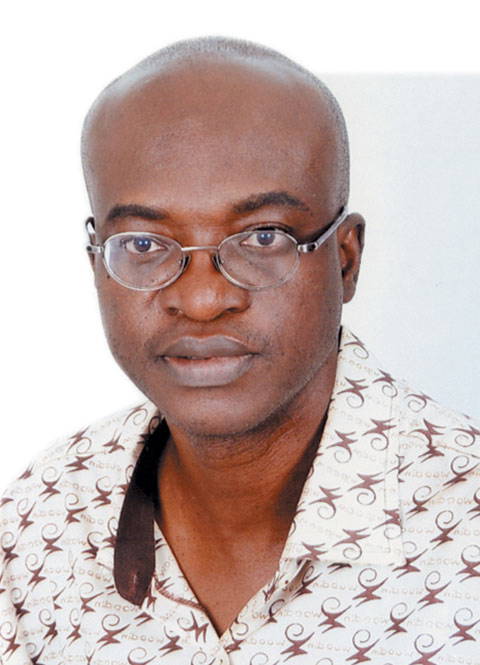
I subsequently began to closely examine social, political and economic conditions in the country and what I found did not please me at all. My follow-up work of fiction, a collection of short stories I titled The Fate Of Yala Street, written in 1992, was the beginning of what you may call my “dark” period in fiction writing – grappling with the horrific and ugly in our country, trying to draw attention to them, trying to urge fellow citizens to see the unseemly situation around them so that they might take action. The Termite Colony is thus a novelist’s attempt to paint a true portrait of present-day Nigeria.
As one who is versed in both fields, in what ways would you say fiction and journalism overlap? How does one medium of truth-telling inform the other in your writing?
I was a full-time journalist for several years. Even then, I was also writing novels and short stories at the same time. The way I see it, both forms overlap, inform each other, and enrich each other. I should like to remind you that two Nobel laureates, Ernest Hemingway and Gabriel Garcia Marquez, were full-time journalists even as they were plying their trade as fiction writers. What the journalist brings to fiction is economy of words, writing discipline, and the ability to see the world as it really is, without embellishment.
What about fiction surprises you the most?
What surprises me the most about fiction is its ability to take you to a world you didn’t know existed hitherto. You sit down to write a novel. You think you have the plot and characters all mapped out in your head. But as you begin to write, new characters turn up, insisting on being heard. New plot lines emerge, and issues you hadn’t thought about before emerge.
Okigbo can be obscure, yet a startlingly clear excerpt of his forms the epigraph for The Termite Colony. I find the epigraph instructive in the ways it not only coheres with the story, but in how prophetic it is. What informed this selection, and did it come before or after a draft of the novel was ready?
I read Christopher Okigbo regularly for the sheer music of his poetry, but also for instruction on the Nigerian condition. The main part of Labyrinths and Path of Thunder (1968) is difficult to wade through, but even then, there are flashes of beauty, flashes of clarity. It is in Path of Thunder, the sequence of poems Okigbo wrote just before the outbreak of the civil war, that the urgency, the power, and the prophecy manifest. I quote Okigbo regularly in my work, and he was on my mind even before I sat down to write the first draft of The Termite Colony.
I find that you share many characteristics with your fictional creations. Like Uche, you are a policy analyst living in Abuja and a journalist like Ebuka. Was this subconscious? How were you able to portion out pockets of yourself to each of them, yet manage d to make them distinct on their own?
Yes, I am a journalist and policy analyst who also writes fiction. Like some of the characters in The Termite Colony, I also happen to live in Abuja. Even so, the characters in my novel have a life of their own, distinct from Ike Okonta. Fiction for me is a tool with which I diagnose the Nigerian ailment, and the characters in my novels live out this ailment in their various ways. I leave it to the reader to decide if my characters are full-bodied personages as distinct from the writer.
What was the hardest part of putting The Termite Colony together?
The hardest part of writing The Termite Colony was writing about Rosa and the African-American condition. I lived in America for several years, so I am pretty familiar with the condition of black people in that country – their incredible rise from slavery, their resilience, and their doggedness in the face of racism, which is still going on. What I find troubling is that Nigerians living in Nigeria don’t care enough about their brothers and sisters in the Caribbean and the Americas. It is as if they do not exist. It is as if the Atlantic slave trade that raged on this continent for 400 years did not happen. I write in order to correct this.
You leave us with a couple of recommendations in the novel. What are three books you think every Nigerian should read?


Three books every Nigerian should read are Chinua Achebe’s Arrow Of God (1964), Frantz Fanon’s The Wretched Of The Earth (1961), and Claude Ake’s Democracy And Development In Africa (1995) – Achebe to instruct them about the devastating impact of colonial rule and African heroic resistance to it, Fanon and Ake to understand why Africa is in such a terrible mess today.
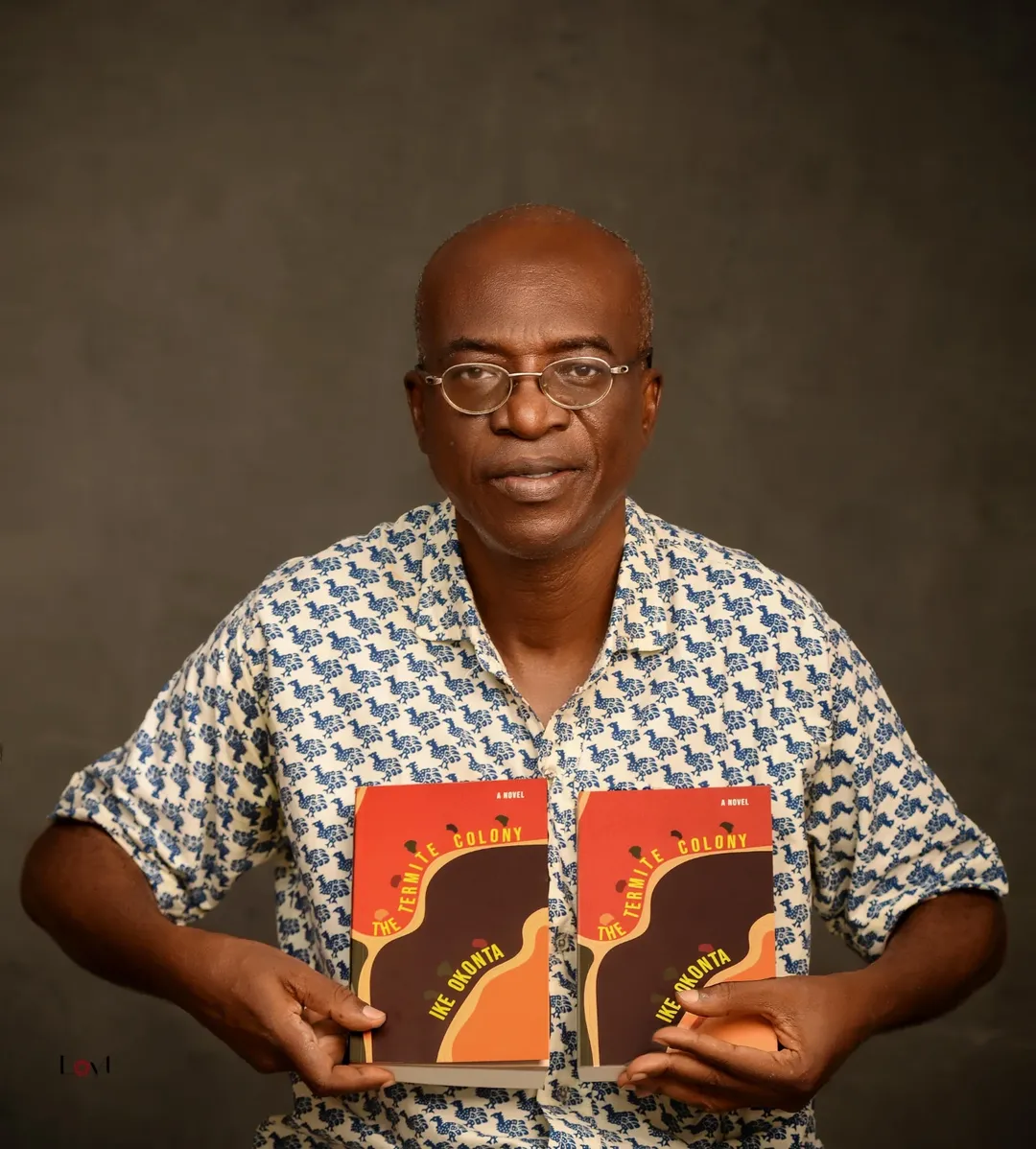
Very early in the novel, you sort of explain your title. And the writing has this matter-of-fact quality to it; there’s this refusal to beat around the bush. Are there reasons you made this choice, to not hide behind irony or satire?
There is a place for irony and satire in fiction. But the situation in Africa today is so urgent that I chose to dispense with these tools, wonderful though they might be. If you notice, the only novel where Chinua Achebe employs irony is in A Man of the People (1966).
The rest of the time, he just attacks the issue head-on. This is because of the urgency of the situation. John Steinbeck, in his powerful novel The Grapes of Wrath (1939), lays out the issue with power and urgency. I admire Steinbeck and Achebe and see myself as writing in the same tradition.
What three books do you believe are essential for an outsider trying to make sense of the Nigerian condition, and why?
Three books that grapple with Nigeria’s parlous condition that I recommend are Chinua Achebe’s The Trouble With Nigeria (1983), Mallam Aminu Kano’s collection of essays and Chinweizu’s Decolonising the African Mind (1987). These books diagnose the ailment and proffer solutions. They are prophetic even as they deal with the here and now.
What do you want your work to be remembered for?
I am not in the business of telling the reader what to remember about my work. My business is to tell stories and, having told them, move on. It is left for the reader to make of my work what he or she will.
Azubuike Obi is an Igbo storyteller who believes in the transformative power of language. His fiction and nonfiction have appeared online and in print in The Republic, Efiko Magazine, Afapinen, Afrocritik, Naira Stories, and elsewhere. He was nominated for Chika Unigwe’s Awele Creative Trust Award and H.G Wells Short Story Competition in 2024, and is currently pursuing a Bachelor’s degree in English Language and Literature.