


Kenyan letters have travelled from the raptures of a Kwani? generation into a documentation age shaped by literary journals, self-publishing reimagining how literature meets the public, and eventually a new cohort of writers emerges around Qwani, looking to secure a continuity.
By Frank Njugi
As a writer who comes into whatever minimal recognition I have received on this craft as a solo entity, rather than as part of the long-following collectives that are often orbiting more successful Kenyan writers, I am never blind to the fact that in my generation, I might be called a “Qwani-era” kid, aligned with the literary platform associated with my age group, though always with a cautious awareness of what such a label erases of my literary origins.
In the history of Kenyan letters, never has there been much literary activity when meritocracy felt so lacking. There is a paradox that sharpens as you watch it as more writing circulates, in avenues such as Substack or self-published books, yet less quality appears to be produced, expected, or held in place long enough to matter. The scene has been moving quickly, compulsively, and a new figure has emerged in Kenyan literary life; the writer who publishes early, publicly, and continuously, often before editorial readiness.
It is into such conditions that Qwani (2022–present) arrived, as a project born after the end established by Keith Ang’ana. By the time it appeared, the collapse cycles of African literary projects had already been diagnosed. Qwani inherited their memories without promising scale or generational capture, those old ambitions of literary modernity. It, however, promised presence, knowing what came before, and more crucially, knowing the risks of repeating it wholesale, having seen the outcome.
This historical awareness is what marks Qwani as the most self-conscious curatorial initiative in 2020’s Kenyan letters. It gestures toward the spirit of the twenty‑first century, a time when literary magazines for a period believed they could shape taste and define moments. Yet it is also fundamentally shaped, and limited, by the conditions of its emergence, with its uneven quality control, structural precarity, and a far narrower claim to comprehensiveness than earlier movements ever dared to admit.
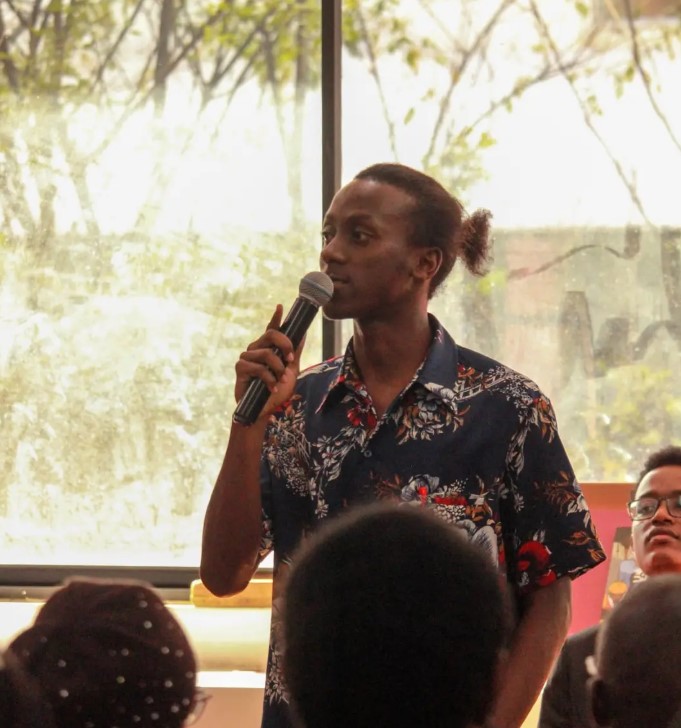
The platform is not, and cannot be, comprehensive of a generation’s talent because of the logic of a post‑optimistic literary economy, one in which survival and circulation override the labour of quality control. Where earlier projects imagined themselves as archives in advance, Qwani seems to operate as a record of what can be held together in real time, for a new generation. With its print’s symbolic return— aligned with Kenya’s renewed social capital— there is an increased pull toward what can sell, and what can be legible beyond the initiated circle. The danger here is that simplicity begins to stand in for seriousness, and what has moved quickly through the public sphere is mistaken for what might endure within a literary one.
The unevenness of Qwani’s quality control reflects the unreadiness of a generation that inherited ambition but not guidance. Previous generations fought, rightly, to secure their own literary spaces, but they seemed less able — or less inclined maybe to imagine what would come after them, or who would shoulder the unglamorous labour of sustaining standards.
Kenyan literary life in the twenty-first century has not proceeded by decades or handovers of the baton. It arrived in fits, improvisations, not as a linear chronology, but a country’s literary time overlapping rather than sequentially with a set of coexisting logics that refused to stay in their assigned decades.
From a rupture era that saw Kwani? with a will to break inherited forms, announcing itself loudly against cultural stagnation, to an archival age that had the likes of Jalada, Enkare and Down River Road show the impulse to record, archive, and bear witness, to acceleration of self publishing writers with the restless push to keep writing and publishing amid structural absence, and finally the new curation age of Qwani. The proceedings do not succeed one another so much as they coexist, pressing against each other, shaping the conditions under which our writing as a country has been made, circulated, and remembered this century.
So Qwani is not the beginning of something new, but a fourth logic of Kenyan literature in the 21st century asserting itself. It is curation after rupture, restraint after acceleration. A project at a time, we are aware that a literary archive is a fragile entity, attention is finite, and history, if not handled carefully, has a way of repeating its losses.
The platform’s naming harks back to the Kwani? era that marked the original disruption in Kenyan twenty-first-century literature, when Kenyan writing refused its inherited posture and spoke in a new language. It broke decisively from the solemn, nationalist, and overly academic literary models that had dominated much of the preceding times.
Launched in 2003, in the immediate wake of Binyavanga Wainaina’s Caine Prize win, Kwani? did more than capitalise on a moment of international attention. It declared a new topology for Kenyan —and by extension African — writing. Literature no longer had to perform cultural authenticity for the academy or political seriousness for the nation-state, as there was now a space where new voices were introduced, many of whom would headline the new century.

Its experimentation was inseparable from its decentralising impulse. Kwani? expanded literary form by also embracing urban slang and vernacular hybridity. This openness was precisely its strength as it allowed for a density of voices that no single aesthetic could contain. It changed what could be imagined as literature in Kenya.
But even in its centrality, Kwani? carried the limits of the ecosystem it disrupted. Carey Baraka’s reflections on this in his 2019 essay in Brittle Paper revealed how Kwani? did not generate a robust and comprehensive publishing infrastructure. Its writers published only a few full-length novels, and it did not resolve the structural absence of capital, distribution, or longevity. Its achievement was catalytic rather than consolidating, as it opened doors without building the entire house.
Still, that catalytic force matters. Kwani? stands as the critical precursor to later avenues because it made visible a hunger that had been ignored. After Kwani? had shown the way, Kenyan literary culture entered what now reads as a documentary middle, stretching roughly from 2013 to 2021, when writing turned toward the urgent work of capture. Platforms like Jalada Africa, Enkare Review, and Down River Road stabilised literary memory by archiving, circulating, and holding together a dispersed generation of writers operating across cities, languages, and borders.
Jalada Africa emerged here as an ambitious act of networked documentation. Founded in 2013 as a collective, Jalada’s significance lay in its scale of capture with its anthologies and also how it took multilingualism seriously as a method. Translation became a literary practice, pan-African reach as an operational principle with its initiatives such as their Jalada Translation Project, a most ambitious effort of publishing literature in a native African language to challenge the dominance of colonial languages.
They featured Ngũgĩ wa Thiong’o’s story, “The Upright Revolution: Or Why Humans Walk Upright”, which became the most translated short story in history, appearing in over 100 languages. Jalada functioned as a living archive, holding voices that would otherwise have scattered. Its primary achievement is preservation through circulation—the insistence that work survives by moving, by being read in many places at once.
If Jalada documented through expansion, Enkare Review consolidated. Founded in 2016, Enkare insisted on aesthetic seriousness, as looking back now it seems to have emerged from a simple but ambitious premise: to create a literary space where emerging African voices could meet established writers on equal editorial footing. The magazine quickly became a short-lived pivotal force in Kenyan and African literature, gaining early prominence by featuring writers such as Junot Díaz, Taiye Selasi, Maaza Mengiste, and Nnedi Okorafor, and by publishing an interview with The New Yorker editor David Remnick— bridging local Kenyan writing with the global literary establishment.
In doing so, Enkare Review injected an audacious energy into the digital literary moment of the 2010s, raising editorial standards and offering younger Kenyan writers a rare, career-shaping platform during a period of infrastructural scarcity that was creeping in. It also functioned as a bridge — linking Kwani?’s experimental inheritance to the restraint that would later define Qwani — showing that ambition did not have to mean excess.
Down River Road worked at a different register. Where Jalada seemed to spread outward, and Enkare looked upward, DRR stayed close to the ground. Its contribution lay in short fiction, flash, poetry, literary visuality, and unapologetically popular forms. It documented Kenyan life at a granular level—the textures of speech, boredom, aspiration, and hustle that movements often flatten into themes. Its strength was attention to form, to brevity, to the everyday. And so DRR captured not a generation’s manifesto, but its mood.


Taken together, these platforms did something more important than they seemed to be doing at the time. They stabilised and created continuity in a literary culture where magazines collapsed faster than they could be archived. They filled gaps left by earlier experiments that had burned brightly and vanished, and their archival period became the connective tissue between the Kwani? rupture of the past and our current present. Without it, Qwani would have no historical ground to stand on and no archive to argue with, no lineage to revise.
But even at their most generous, literary platforms eventually reached limits that no amount of good editorial will could solve. They couldn’t publish everyone. By the late 2010s, writers were multiplying faster than platforms could hold them. Editorial queues are longer, attention spans are shorter, and many magazines are stalled, paused, or disappeared altogether. Out of that gap emerged a new logic in Kenya —an acceleration in how literature entered public life.
The self-publishing surge—still unfolding perhaps—marks the moment when writers began releasing work early and openly, navigating the absence of institutional support while developing skill in real time, often before full editorial readiness. For many writers, the choice was no longer between publication and rejection, but between waiting indefinitely and speaking now. These writers rejected waiting.
What defines this period has been the near-total absence of editorial bearing. Much of this work emerges without substantial developmental editing, without sustained critique, or without enforced revision cycles. The result is unevenness as promising voices are buried in haste, strong instincts revealed too early, ambition outrunning craft. Yet it is crucial to name the condition precisely.
This is not bad writing so much as unfinished writing released into public time. The work is alive, provisional, still learning how to be itself—only now, that learning happens in front of an audience. What we have been witnessing is a new kind of literary apprenticeship, as, unlike earlier eras, where failure happened in private, failure now happens publicly, archived, and searchable. Still, this strand of our literary culture has yielded work of consequence—Eric Rugara, among them, with his highly praised surrealist collection, A Surreal Journey of Discovery.
All these are the pressures that represented the emergence of (us), “Qwani-era” writers and our inevitable logic. After the rupture, the documentation, and the acceleration, it was now time for something new to give as well. Kenyan letters have travelled from the raptures of a Kwani? generation into a documentary age shaped by literary journals like Jalada, Enkare, and DRR, self-publishing and the reimagining of how literature meets the public, and eventually a new cohort of writers emerges around Qwani, looking to curate with ingenuity and to secure its continuity.
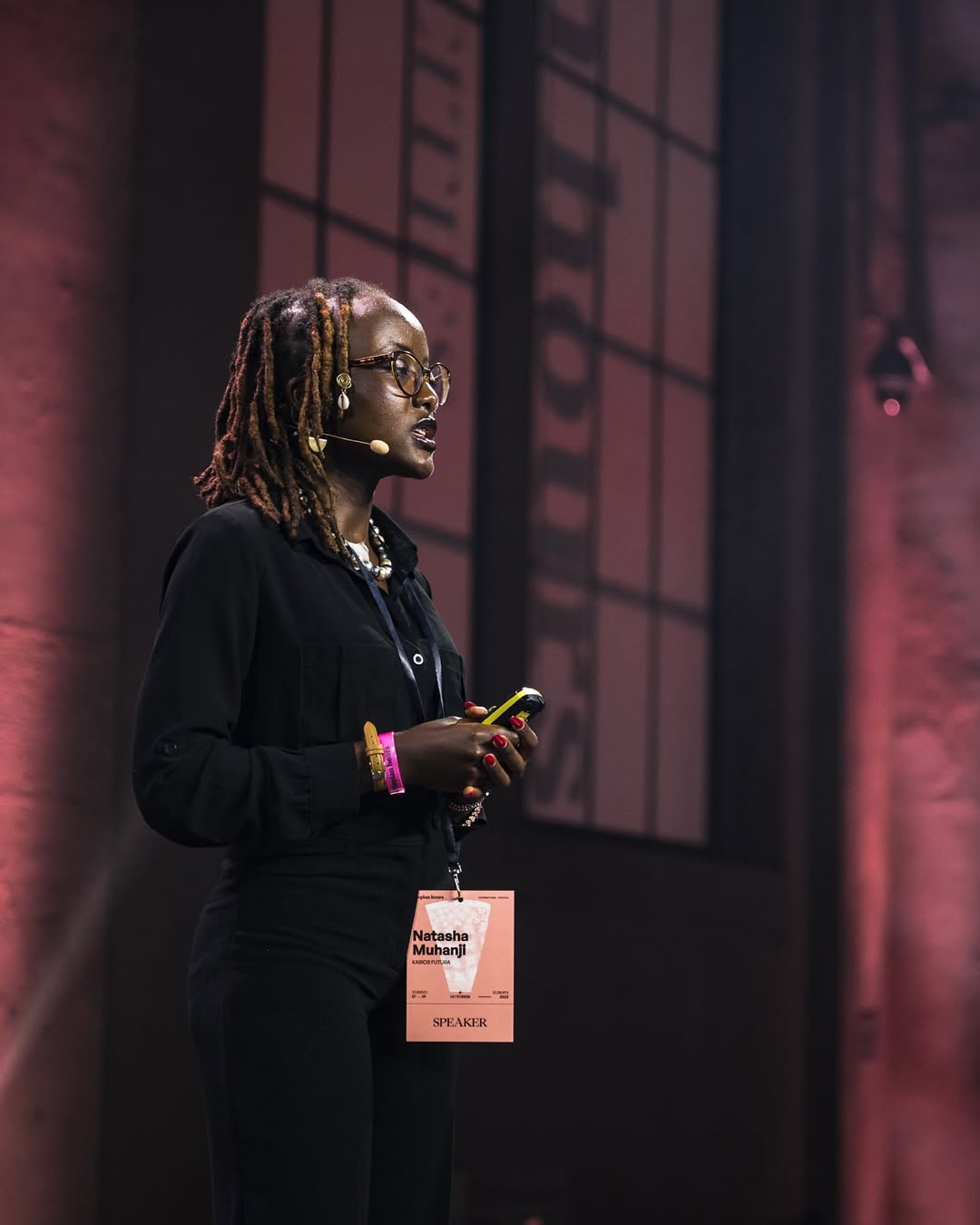
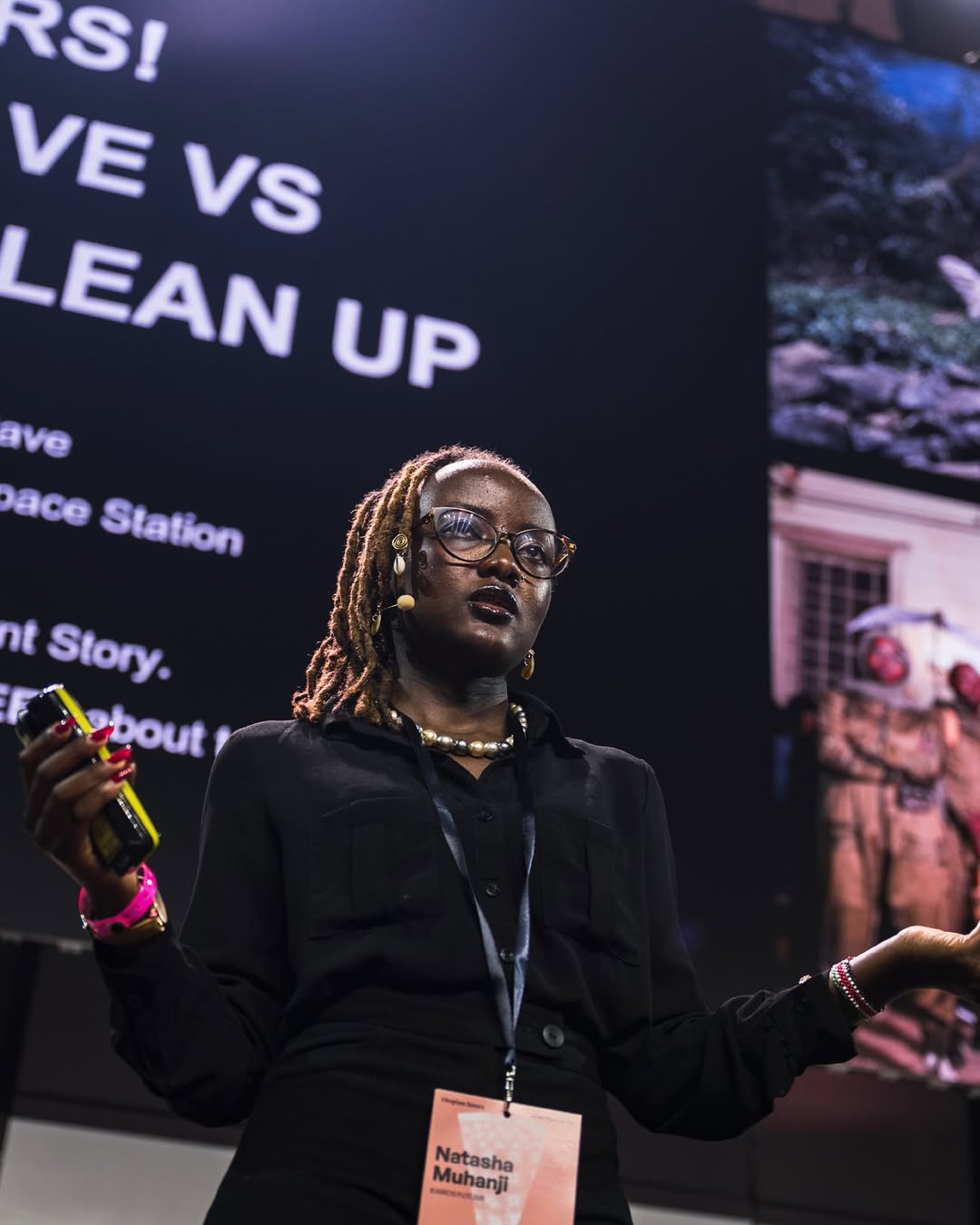
From this new generation of writers, and from the evolving logics of curation that shape them, Kenyan literature is once again producing voices ready to step fully into the world. Perhaps, Qwani’s most visible gift, and the clearest face of its vision, is Natasha Muhanji: already an award-winning Kenyan author, whose multiple appearances on our Notable African Short Stories of 2025 list signal a writer ascending with speed and assurance.
We know that Kenyan literature, when measured not by tidy output or neat timelines but by survival, adaptive experimentation, and archival consciousness, reveals an achievement that no single platform can claim credit for. Each moment — the ruptures of 2003, the documentations from 2014, the acceleration of self-pubbed writers from the late 2010s, and the Qwani curation from 2022 — operates alongside or because the other happened, overlapping, colliding, or sustaining one another, creating a country’s literary vitality that is cumulative.
Comprehensiveness is a mirage. The true accomplishment lies in the networked persistence of writers, editors, and readers navigating any structural absence with ingenuity. Looking forward, the next phase of growth may demand integrated infrastructures, spaces that balance curation with mentorship and documentation, yet even then, the resilience of Kenyan literature may continue to depend on its layered temporality, its capacity to hold simultaneous or parallel logics in tension. In the end, what thrives here is a dynamic that is adaptive and a historically aware culture that has learned to endure this century by thinking across time itself.
Frank Njũgĩ, an award-winning Kenyan writer, culture journalist, and critic, has written on the East African and African culture scene for platforms such as Debunk Media, Republic Journal, Sinema Focus, Culture Africa, Drummr Africa, The Elephant, Wakilisha Africa, The Moveee, Africa in Dialogue, Afrocritik, and others.