

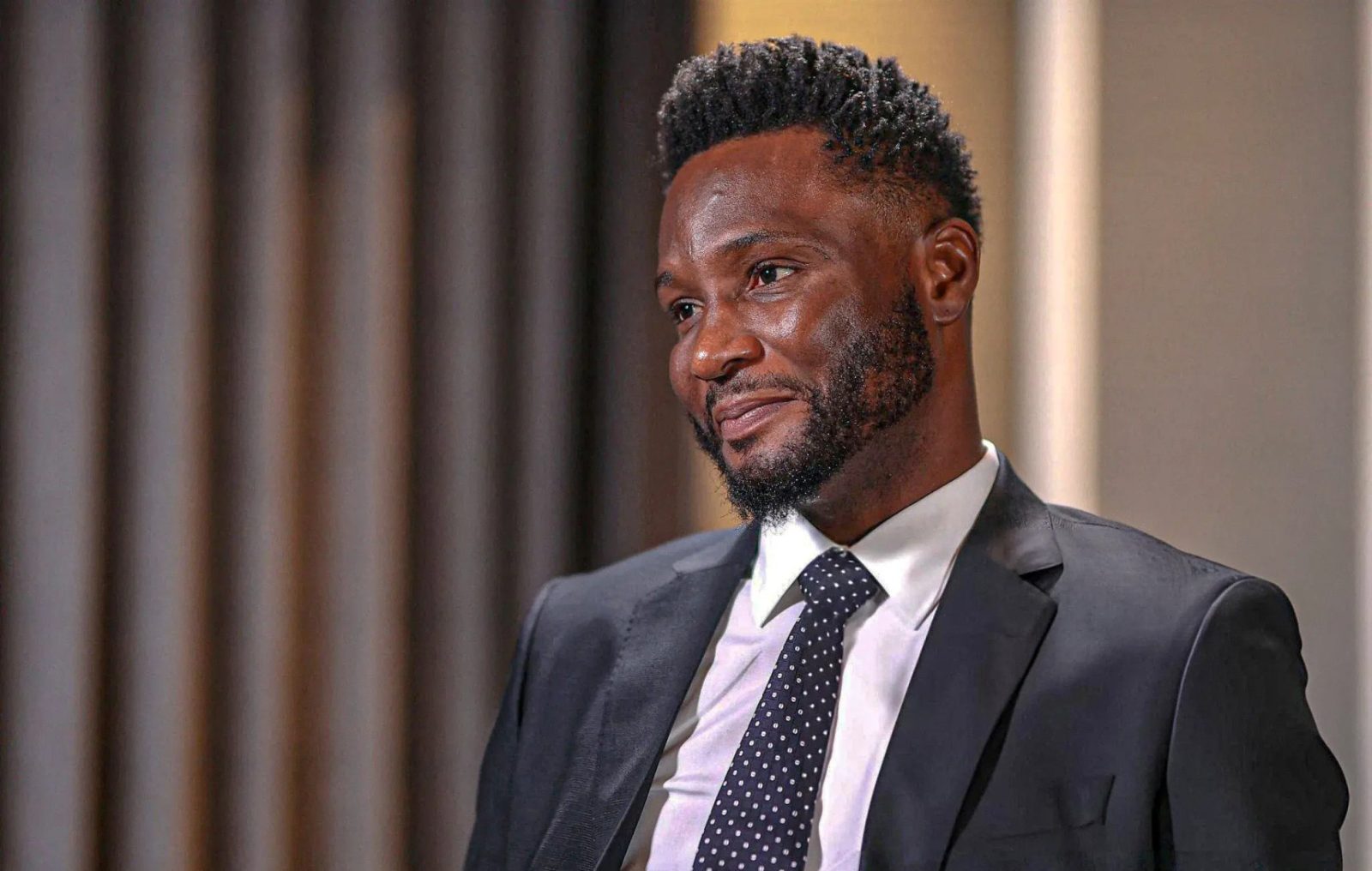

It is clear that John Obi Mikel’s vision is to make Nigerian football attractive again, both at home and abroad, while raising the standards and success of teams across all levels.
By Tuka Letura
Over the past week, news broke that John Obi Mikel suggested he would not mind taking up a role within the leadership of the Nigeria Football Federation (NFF). Stories about football governance in Nigeria rarely travel cleanly, and even fewer gain the level of public acceptance that the prospect of Mikel leading the country’s football body has attracted. Few Nigerian athletes combine global recognition, credibility, and a long career at the highest level the way he does.
Another reason the news resonated so strongly is timing. Nigerian football is at a crossroads, and the possibility that one of its most respected captains might step into leadership has stirred a mix of curiosity, optimism, and the familiar caution that always surrounds football politics. The Super Eagles have recently failed to qualify for the World Cup and have struggled across multiple fronts. Allegations of fund mismanagement and financial irregularities within the NFF have only intensified public frustration.
In a statement reported by Brila, Mikel stressed that he would only consider taking up such a role if Nigeria “gets the right people — people who have the same direction and thought.” His message was clear: leadership is impossible without integrity, competence, and a shared vision for rebuilding Nigerian football.

It would not be the first time a former Super Eagles player has shown interest in leading the NFF. In the 2022 elections that produced Ibrahim Gusau as president of the Nigeria Football Federation, former Eagles goalkeeper Idah Peterside contested for the position but lost. Still, in recent memory, no name as big or as globally recognised as John Obi Mikel has ever been this closely associated with the top seat.
But the real question is whether he is at the stage — professionally, administratively, and technically — where contesting for such a demanding role makes sense. Across Africa, this would not be unusual. Former footballers have increasingly moved into federation leadership roles, though the results have varied.
In Cameroon, for instance, Samuel Eto’o’s tenure as Fecafoot president has struggled under the weight of public criticism, financial controversies, and the national team’s failure to qualify for the World Cup. The challenges mirror some of Nigeria’s: allegations of corruption, mismanagement of funds, and a general sense that the football ecosystem is drifting rather than progressing.
Football administration has become an attractive path for retired players, but it is also a profession that requires preparation, political skill, and technical competence. African football legends are already testing this path. Former Super Eagles and Arsenal striker, Nwankwo Kanu, is currently the president of Enyimba Football Club in Abia State, a role he has used to deepen his administrative profile. And most recently, Didier Drogba signalled a strong interest in leading the Ivorian Football Federation, contested the elections in 2022, and lost.
Perhaps the most significant example on the continent is Kalusha Bwalya. The former African Footballer of the Year transitioned steadily into administration, first serving as vice president of the Football Association of Zambia before eventually being elected president in 2008 — a move driven by strong pressure from FAZ members and the Zambian media. Bwalya had already coached the national team and, by the time he assumed leadership, he was also rising within continental structures, securing a seat on the CAF Executive Committee that same year. He led FAZ until 2016, when he lost his bid for a third term to Andrew Kamanga.

Kalusha Bwalya’s case might be the strongest precursor for someone like Mikel. He showed that passion and star power can open the door, but entering football administration purely on willpower, without careful preparation or political tact, leaves wide margins for error. And as much as Nigerian football is already in a difficult place and in need of change, one thing it cannot afford is more missteps.
No matter how passionate or well-intentioned Mikel may be, ambition alone is not enough. The implementation of his ideas would require a deep understanding of the administrative environment, the technical demands of the job, and the political landscape — without being swallowed by the very politics and corruption he wants to challenge. From everything he has said, it is clear that Mikel’s vision is to make Nigerian football attractive again, both at home and abroad, while raising the standards and success of teams across all levels — men’s, women’s, and age-grade. But turning that vision into reality would demand discipline, expertise, and a level of strategic finesse that goes far beyond his playing career.
If Mikel truly wants to move from public suggestion to serious candidature, the journey starts long before election day. The Nigerian football space is heavily political, layered with alliances, state-level networks, and long-standing interest blocs. To be taken seriously as a contender, he would first need to step into those spaces deliberately and strategically.
The first step would be clarity: formally expressing his ambition. Not a vague hint in an interview, but a structured declaration that signals he is ready to enter the arena. That alone would shift perception, forcing stakeholders — from state FAs to club owners — to begin viewing him not only as a former captain and player but as a potential leader. He has already received a significant amount of public support.

From there, the real work begins. Mikel is known for his disciplined and strict approach to football, especially as a player. His standards on the pitch have always been high, and he expects excellence from players and teams. Translating that into a Nigerian administrative setup could be transformative, but it comes with challenges. Implementing strict measures in an environment steeped in bureaucracy and politics requires tact and balance. Being too brash or rigid risks alienating key allies or creating unnecessary resistance.
To navigate this, Mikel would need to immerse himself in the administrative side of Nigerian football, building relationships within the ecosystem — with state FA chairmen, club owners, coaches’ unions, referees’ associations, and youth-development stakeholders. Understanding the politics, learning how to negotiate, and observing how decisions are made will allow him to enforce his standards effectively without creating unnecessary conflict.

Beyond politics, competence is essential. Modern football governance is technical, and examples across Africa show that ex-players who succeed are those who prepare themselves for the administrative transition. For Mikel, this means pursuing recognised qualifications in sports management, football administration, or governance — programmes such as the FIFA Diploma in Football Management, UEFA’s Executive Master for International Players, or sports-directorship courses within the continent. These credentials will not only equip him with the technical knowledge to run the federation, but will signal to voters and stakeholders that he is serious about leadership beyond his playing legacy.
Practical exposure is equally important. Serving on committees, advising football-development projects, or holding advisory roles at clubs or state FAs would provide on-ground experience and credibility. Coupled with tactful political navigation, these experiences would help him apply his strict standards in a way that is effective, respected, and sustainable.
Ultimately, Mikel’s ambitions must be more than just ambitions. He needs to find credible, effective ways to enter Nigerian football administration. His name already carries weight, but he will require experience and understanding to navigate the complex layers that have long slowed progress in the NFF, positioning him to implement meaningful reform.
The leaders Nigeria chooses today will shape the trajectory of football for years to come. If Mikel’s approach — and his statements so far — are anything to go by, he seems prepared to act methodically, build alliances, and prioritise the best interests of Nigerian players and the country’s football as a whole.
Tuka Letura is an experienced sports writer with over five years of experience in the craft. He uses data and statistics to provide analysis and commentary. From regional to worldwide competitions, he has covered a wide range of sports-related events and topics. He is devoted to sharing his enthusiasm for sports with his audience and engaging them with interesting anecdotes and viewpoints.