



Hollist’s characters are messy, preoccupied with notions of home and belonging, all of them hurtling down America’s salvation streets, defiant against the forces that threaten to pin them down.
By Azubuike Obi
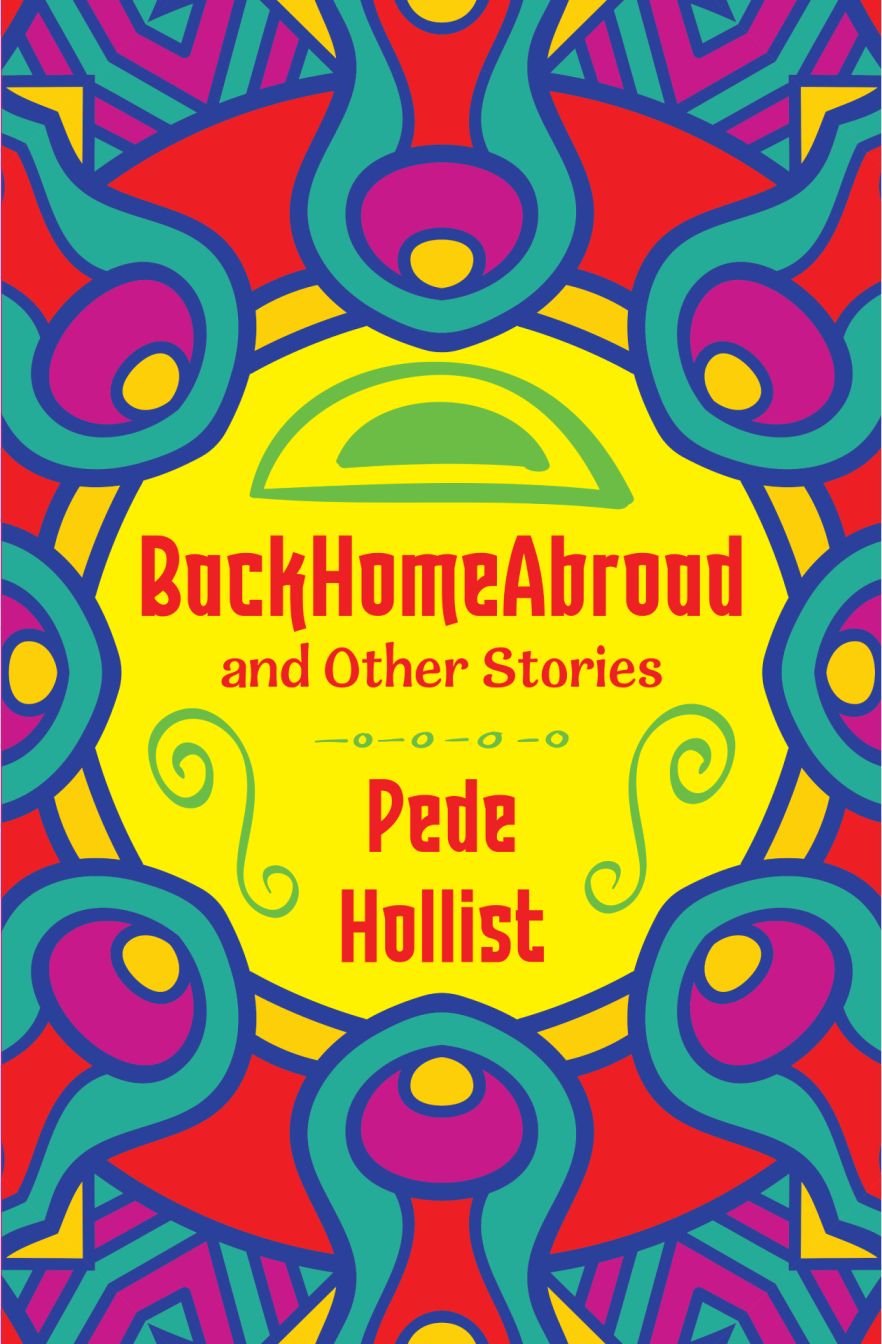
Across his fifteen stories, the Sierra Leonean writer, Pede Hollist, answers what it is belonging means, whether at home or abroad. Traipsing between America, Sierra Leone, and fictional Teneria, Hollist offers an array of perspectives, painting a kaleidoscope of home as both place and feeling.
In some of the stories we encounter in BackHomeAbroad and Other Stories, the characters are at their ancestral homes, yet remain plagued by an unmooring, brought about sometimes by a long absence, and other times by a disillusionment with what their home has degenerated into. The reprinted Caine-shortlisted story, “Foreign Aid”, represents a combination of both phenomena. In “Foreign Aid”, a young man returns home to seek redemption after years of toiling in America. He is stunned at the situation in his home country.
“The Tale of the Three Water Carriers” is set in fictional Teneria and is imbued with a breathless hopelessness. We are confronted by what it means to live through a broken system, where boys become men too quickly, working and toiling hard against a system that is set up against them, yet not even in death are they offered any dignity. Rather, they are replaced, memories fogged by time’s unsparing hands.
Hollist explores the interiority of a now disabled former child soldier in “A Life of Solitude”. Khanu is saddled with a difficult decision following a terrible accident. Like in most of the stories, the author is concerned with the refugee status and how human beings come to it; what has led them to become illegal immigrants hunting for a future brighter than that which their home country offers.
Hollist is chiefly committed to presenting diverse perspectives on the immigrant condition. He understands its subtleties: An elderly black man investigates the mechanics of racial discrimination in “Profiling”; “Underlying Condition” follows a meeting laden with the unspoken between a black professor and his white student; and the title story examines the tension of black tax in an intermarriage household.
Hollist’s BackHomeAbroad and Other Stories is inventive in many ways: from the “restructuring” of three words into one in the title, to the metaphors and the immense achievement in “Okonkwo’s Revenge”, a metafictional narrative, and “Where Something Stands, Something Else Stands Beside It”, inspired by an age-long feud between the Namogogligo and Tindongo peoples of Ghana. It has the scale of an epic and is ambitious in its merging of the real and the imagined. In “Okonkwo’s Revenge”, Hollist subverts the genres of prose and drama. Descendants of Chinua Achebe’s Things Fall Apart come head-to-head oceans away from the setting of that hallowed classic.
Dysfunction runs deep, and while they can be stemmed in optimal circumstances, less-ideal situations, like displacement, bring them to the fore. In Chimamanda Ngozi Adichie’s Half of a Yellow Sun (2006), the Ugwu who licks up Olanna’s chicken bone, deep in raunchy imaginations, is not so different from he, who, in the face of war, wreaks horror on a vulnerable woman’s body. Similarly, in Hollist’s “Resettlement”, the conditions of displacement bring up what may be a family’s truest nature. And after all goes awry in “Resettlement”, Hollist seems to ask, “Who is responsible for what we become in the face of war?”

War’s effects are far-reaching. Apart from the immediate loss of lives and livelihood, the suspension of law and general disorderliness, the psychological effects are immense in that they linger long after the fact. In “Resettlement”, following an involuntary migration to The Gambia, cracks begin to appear in the relationships between members of the Coker family.
Just as Nambi in “Outbreak at the Renaissance”, haunted by memories of Sierra Leone and survival in America, breaks out of her now sheltered life in America, and Nyashe decries her sacrifices on the altar of the American Dream in “Mami Wata’s Daughters”, Hollist is also interested in the adult male and how he perceives the conditions of his migration and subsequent displacement.
In “Profiling”, Kingsley Williams wishes to return to a time when “men were men, not patsies who needed protection from rich Big Daddies and the politically correct.” In a similar vein, Munda in “Mami Wata’s Daughters” reflects: “Heck! To be a Black man in this country. I am always under suspicion, in the streets with the police, and now in the workplace with co-workers. No, I do not want to live the rest of my life scared of what I say or do. Guarding my words…”


Characters who populate BackHomeAbroad and Other Stories are messy, preoccupied with notions of home and belonging, all of them hurtling down America’s salvation streets, defiant against the forces that threaten to pin them down. They, however, do not allow their displacement to hold them down; they are complex beings, ferocious in the pursuit of their desires, alive in the dangerous lines they tread. This is best demonstrated in “Resettlement”, where one woman pursues amorous feelings for her boss in The Gambia, where her family had fled to following a civil war in their native Sierra Leone.
The allegiance to the concept of home continues in “Going to America”, where Hollist ferries his readers into the reverie of a young man whose dreams are hampered by geography. In “Song of a Goat”, Hollist gives colour to the life of a rather ordinary woman. This story is remarkable in its ability to move beyond the tethers of ideology and the masterful execution of the story-within-a-story.
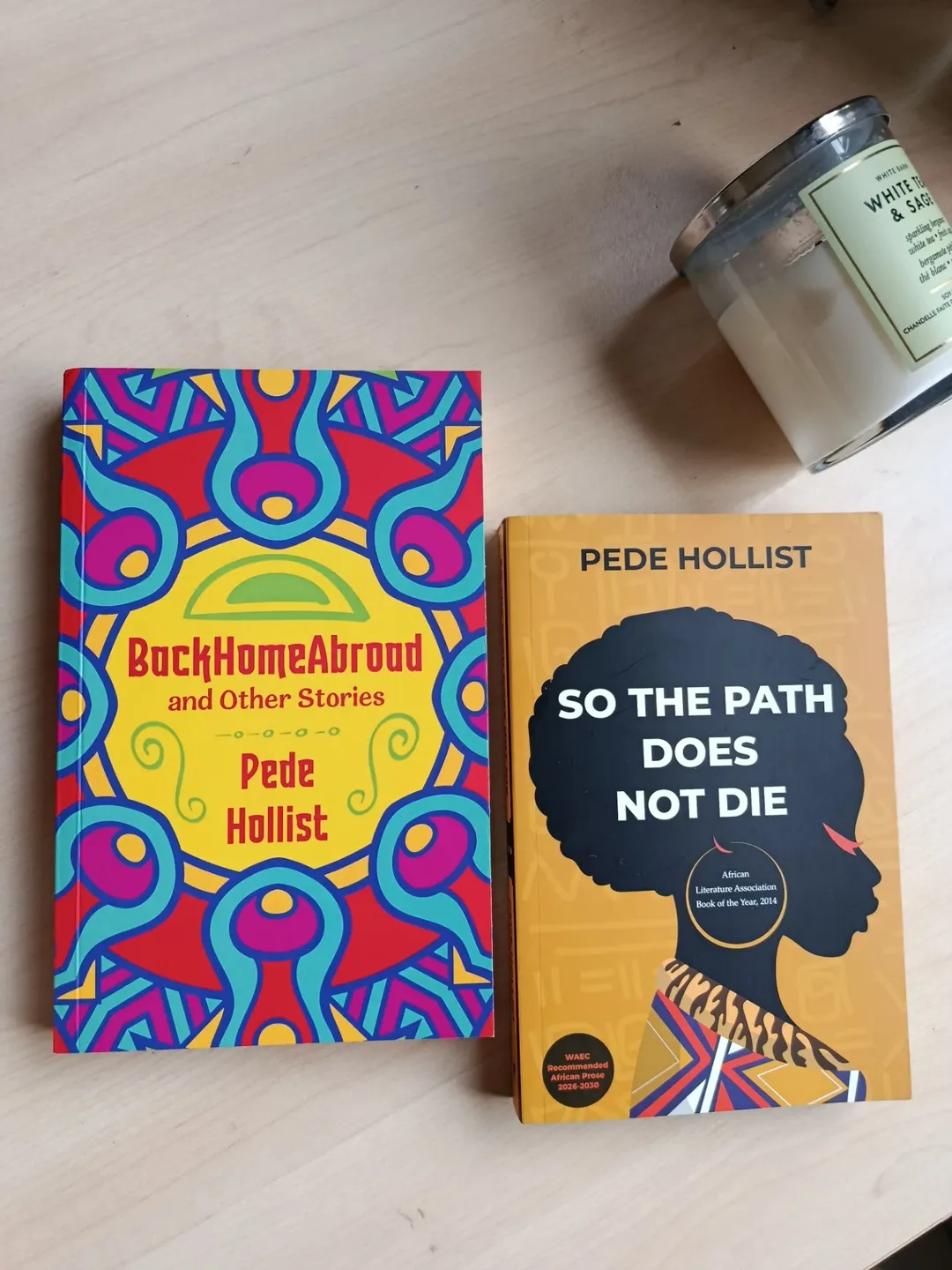
The fixation on America as saviour, as in Hollist’s debut, So The Path Does Not Die (2008), teeters on propaganda. In a good percentage of the stories, it is as though a conclusion has been reached even before the story began, that only in America does one truly begin to become. It would have been disturbing if it weren’t so beautifully rendered.
Hollist has delivered an urgent collection on the varied contours of the diaspora experience in BackHomeAbroad and Other Stories. Here is a writer untrammelled by memory or movement, place or time, exacting in his commitment to tell a good story. This is the work of a writer in full control of his material.
Azubuike Obi is an Igbo storyteller who believes in the transformative power of language. His fiction and nonfiction have appeared online and in print in The Republic, Efiko Magazine, Afapinen, Afrocritik, Naira Stories, and elsewhere. He was nominated for Chika Unigwe’s Awele Creative Trust Award and H.G Wells Short Story Competition in 2024, and is currently pursuing a Bachelor’s degree in English Language and Literature.