


Is piracy justified or unjustified? Is piracy good or bad in a continent like Africa? Or, to put it another way, what advantages and disadvantages can society hope to gain or suffer regarding piracy?
By Chimezie Chika
The Search for Knowledge
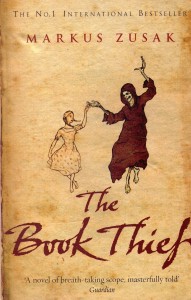
In 2005, an Australian author, Markus Zusak, published a now-famous historical novel, The Book Thief, about a young illiterate girl who, alongside her younger brother, is on her way to meet their new foster family in Germany in 1938. Her brother soon dies during the journey, and in an impulsive act of self-comfort, the young girl steals a book from the train station. Nazi Germany had just begun World War II, and its concurrent persecution of Jews, hatred and danger were the order of the day.
Amidst all these shocks, the young girl’s hunger for books and knowledge continues to grow, for all she wants is to read enough to be both able to understand the world around her and to escape it. Subsequently, she continues to steal more books, which come to represent solace and comfort to her. Even when her theft is discovered, as happened in the mayor’s house, it is seen as not something malicious, but the result of a commendable thirst for knowledge. Thus, she is allowed free access to the mayor’s library.
Let us stop here and consider a number of talking points. A young girl who loves books in wartime Nazi Germany, in which people were being sent to concentration camps on a daily basis. Society is disintegrating, people are dying, bombs are falling. There’s little to do but to have faith, to believe, to hope. Books here represent all this.
It is the same for people all over the world: there is a kinship one develops knowing one is not alone in the world. James Baldwin, who had the most stunning emotional self-awareness of any intellectual, put it in the best way possible: “You think your pain and your heartbreak are unprecedented in the history of the world, but then you read. It was books that taught me that the things that tormented me most were the very things that connected me with all the people who were alive, or who have ever been alive”.
Then there’s knowledge. Knowledge is the competitive advantage anyone may have in any human society, and we can agree that books offer it to us on a platter. It is even more integral when we realise that an armoury of knowledge can become courage and, in certain senses, emotional fulfilment, which is one of the lessons those who had read The Book Thief would come away with.
It seems to me that one of humanity’s oldest impulses is its search for knowledge. It is what has led our civilisation to its present level of development. The human propensity towards untrammelled, unencumbered curiosity is the origin of the science, technology, and innovation that have placed our species above our primal kin. We can thus conclude that knowledge, or the hunger for it, is at the heart of what it means to be human.
It therefore follows that any attempt to squash knowledge in a piecemeal manner is inhuman, reactionary, and a direct attack on the advancement of human civilisation. To place our search for knowledge amongst other existential needs is to acknowledge how it affects culture and value. The value systems that prop up different human institutions may not be there if the ways in which we acquire knowledge are policed.
In short, at this point, it is natural to state without ceremony that the acquisition of knowledge is also the acquisition of freedom. The search for it is, therefore, in like manner, of similar import. The question then is: is knowledge itself free? The truth is that it is relative. Knowledge is free in one sense and certainly not in others. Of the latter, we can point to knowledge acquired through institutions; of the former, we can point to nurture, environment, and a non-institutional way of acquiring institutional knowledge (to which I would pin the events of The Book Thief).
To put one more observation into the ring before proceeding to the main issue this essay highlights, it is pertinent to bring in that typically elitist English Bertrand Russell in his essay “Freedom in Society”. Russell claims that “We cannot (…) deal with freedom without taking account of the possibility of variable desires owing to changing environment”. Meaning that freedom (whether of knowledge or otherwise) might come with economic or political changes. He would go further in the essay to note that true freedom for a person occurs when all the basic needs of life are met. Meaning that the poor are still searching for freedom (whether of knowledge or otherwise).
Let us note these things carefully, for they would be important to my final conclusions.
The Moral Questions of Book Piracy
Last week, an argument erupted on X over piracy. It started when an X account called foxygen (run by Fortune Amor, as it would later become clear) shared a Google
Drive link of over 200 AWS (African Writers Series) titles, most of which are no longer in print. The African Writers Series was an iconic imprint of Heinemann Publishing, which ran for four decades before packing up eventually in the early 2000s for reasons that are not too far-fetched.
During its existence, AWS was the home of much iconic African literature. It helped to place 20th-century modern African written literature on the literary map of the world. And it is no less important that its pioneering editor was Chinụa Achebe, who helped to publish the likes of Ngugi wa Thiong’o, Flora Nwapa, and some of Peter Abrahams’ titles, amongst others.
Fortune became the subject of attack from authors and writers almost immediately, who saw his action as an unforgivable act of intellectual theft. The initial barrage was so intense that Fortune (who would soon become framed as a sort of book-sharing saint) would be forced to delete the link. A second wave of counterattacks then came—directly on the back of the first—asking why such an action is framed as piracy, when it is a welcome, enthusiastic attempt to make available to readers great African titles that are not anymore in print and cannot be found anywhere.
From this point, the conversation spiralled (not unsurprisingly) into a larger one about the legitimacy or illegitimacy of book piracy in Africa. For days it raged on, and would later branch out into sub-conversations about piracy in film and music. Here, we would stay with literature, knowing much of what is observed is applicable to the latter two, for the definition of piracy in legal terms (IP and copyright laws) works for all original creations, though, of course, there may be some variations in those laws from country to country.
We will also not go into the thousands of individual arguments made during the debate. What we will do is to distil them into what they were all pointing to: Is piracy justified or unjustified? Is piracy good or bad in a continent like Africa? Or, to put it another way, what advantages and disadvantages can society hope to gain or suffer regarding piracy?
It would seem almost foolhardy to certain sections of the African population that a discussion about something defined as theft is being treated with such consideration. But, if they were truthful to their intellect, they would acknowledge that it is unhelpful (when you put Africa in the equation) to simplify the arguments into borderline binaries. I would go so far as to say that such a conversation, in Africa at least, does not call for a mere strait-jacket dismissal.
So let us consider the questions being asked of piracy once again. Is piracy bad? Let us first offer a simple definition of piracy before proceeding. The Oxford English Dictionary (OED) defines piracy as “the practice of robbery or illegal violence at sea”. This is the earliest definition of the word, originating in the 1500s when sea explorations and voyages of discovery were peaking. The initial usage of the word (and to an extent till now) is in connection with the sea. Most of the modern use of it refers to intellectual property laws. OED frames its definition as the authorised reproduction, distribution, and use of copyrighted materials, books, inventions, and trademarks. Having sufficiently defined piracy as it concerns us here, we can say piracy is bad, for its perpetrators deign to profit from what belongs to another. It is theft, and not much justifies it in that sense.
But then, is piracy a moral wrong? This is where it becomes tricky when considered in pure social terms, which, as far as I am concerned, is important in any talk of a place like Africa whose vast income divides have done great harm to its development. Is piracy a moral wrong? Let us consider a scenario.
A man’s family is about to die of hunger. He rushes out frantically in despair, looking for where to get food for them. He goes to his neighbours, who deny that they have any food. He goes to the rulers of the land, who claim that they have already shared much food with the people. Left with no option, the despairing man goes to a bakery and steals a loaf of bread. Thereafter, his family survives. Now, the obvious question: did this man commit a crime? Yes, but we know that if he hadn’t stolen that bread from the bakery which produces thousands of breads, his family would have died. Does the possibility of losing human life justify such a crime? I will leave my readers to it.
It will not be enough to show this man as a victim of circumstance, so let us extend that scenario. The man steals the bread and saves his family from dying of hunger, but a fallout occurs at the bakery as a result. Upon discovering the theft, the manager sacks the bakery salesgirl who had to keep the job in the first place to afford medicine for her ailing mother. Having lost her job and being unable to afford her mother’s medication, the girl watches her mother’s life slowly ebb away. Now back to the man: did he commit a heinous crime? Again, I will leave my readers to it.
The African Conundrum
The above is why conversations around piracy are rather difficult, if we are being honest with ourselves, and why blanket statements are unhelpful. I will, however, acknowledge that the presence of law makes certain things, such as simple definitions, easier, even if the said law can also obfuscate the ways in which something can be called a crime. But good laws are also critically aware of social imperfections in society. They thus also provide for equity, for, as it is said, equity ameliorates the severity of the law.

We can see, at this point, that at the centre of the moral question of piracy is an economic quandary (as the scenarios above show us): whose problem matters more to society, that of the writer who needs to earn from their books or the unmonied folks who need to read even if they don’t have the means to purchase books.
The African piracy question cannot be had outside of the continent’s historical and contemporary economic problems. This is the continent with the poorest populations, the most out-of-school children, the fewest number of schools and universities, and the least advanced educational infrastructures. To wit, it’s a continent whose economic and political pressures have kept it from catching up to other parts of the world. How would it be if we narrowed down the discourse to publishing and literacy? The evidence and portents are unaccountably grim.
Government structures such as libraries are there to provide such intellectual succour, some may argue. What they may not tell you is the absolute disgrace that is library infrastructure in Africa. Nigeria, a nation of over 230 million people, has only 316 public libraries, Kenya has fewer than 100, Tanzania has 118, Ghana has 140, and so on. South Africa is the only outlier in Africa with over a thousand libraries, and authorities say it is not enough (which tells you all you need to know about countries that take their future seriously and those who do not)
Budgetary allocations to libraries, education, publishing, and literacy infrastructures in African countries are nothing short of abysmal, which explains why many Africans, writers amongst them, in the X debate expressed ambiguity about whether to stand for or against piracy. It cannot be gainsaid that the reason why piracy may seem widespread the way it is resides somewhere between the high costs of publishing—because most quality books are printed outside the continent—and the poverty of Africans, which results in books being generally unaffordable to the average African.
In Africa, it is not enough to want to acquire knowledge. Most are not able to afford it. This is where government infrastructures may help, but we are talking Africa here, where governments do nothing for their people.


At a time when complaints around the decline of reading appear every other day off and on the internet, the question we should ask is not why people are reading stolen books, but what can be done to make them able to afford those books—afford their passions—and not have to steal them.
It is also true that some piracy operates outside of economic deprivation, that in the regions and provinces of greed and sheer human avarice. It is true that some people would rather scrounge for free books even when they could comfortably afford them, but it is also true that very many people would not steal books if they can afford them.
In short, the percentage of the first kind of people is in the minority. True book-love comes with a tsundoku mentality—the desire to actually own the books you love, the exhilaration of buying beloved books with your own money, which feels the same as finally paying for, or being able to afford, a long-coveted piece of jewellery or clothing—the eudaimonia.
***
Let us be clear. Outside the socio-economic issues of deprivation, there is nothing to justify privacy. In an ideal society, piracy will be minimal. But where it operates the way it operates in Africa, the fallout goes both ways in interesting ways. Writers and creators, the owners of copyright of these books and creations, are deprived of their earnings when piracy happens. If it happens with the poor, we have crime that is also a social problem; if it happens with the well-to-do, wouldn’t we say that that’s the real example of immorality? Therefore, what must perhaps be tackled besides the economics of income disparity is the immoral entitlement in high and low places, which affects not just the piracy conversation but also what passes for politics in Africa.
The book industry is built on the need for literacy. The age of industry, which occasioned the mass production of books, precipitated the democratisation of literacy from an elite preserve to a proletarian pursuit. Literacy became widespread because books and formal learning left the monasterian libraries and the mouths of sages and went into the world in a way that made the common man able to afford it (mass-market paperbacks, which are now moribund, were one such invention).

Access was the reason why humanity scaled into the high-literacy age. We have long since understood that knowledge should not be an elitist pursuit but something that should be made accessible to all. The question then is, who are those positioned to grant such access? The right answer is the people who control the laws and economic futures of any country: the government. But their role can be both direct and indirect, in that they could either directly influence how knowledge and knowledge infrastructures are disseminated, or make laws that aid access or, in malicious instances, inaccessibility.
In which case, we can then see why the issue puts writers in almost the same place as the poor, granted, of course, writers of the middle rank have some intellectual privilege to work with. However, between writers and publishers, there is already a disadvantage. The publishing world operates by exploiting writers, its real backbone.
If writers are unable to earn back their advance due to piracy and a general decline in reading, then it marks them out as equal victims of a multivalent economic system that thrives on drastically inequitable wealth distribution. Environmental factors, therefore, exacerbate the difficulty of discussing piracy in Africa, since the vast majority of Africans are not truly free, in the philosophical sense.
No matter what the ADHD world today might be telling us, books are a life-and-death need to the despondent populations of the world who need them to affirm to themselves (and their experience) the desire or the need to continue to live. If an indigent person needs a book to survive, must such a person be made to buy the book if it is so urgent, so primal to their survival? On the other hand, if a writer needs to write a book to survive, what would be his fate if no emoluments accrue from something into which he had invested his time, sweat, and aspirations?
If survival is part of what books represent in the world, both for the writer and his readers, then we must acknowledge that it must be treated with the same urgency with which medical emergencies are treated, both on the part of the hospital and the doctors in charge.
Intellectuals, and especially leaders of the continent, must acknowledge that there is a risk of eliticising knowledge, an act that would further shrink Africa’s competitive advantage in the future. For we must acknowledge that an enlightened population is a population capable of making the most of its future across all the vital human engagements. The responsibility lies with those who have positioned themselves to grant access, those who have entrenched a system that makes it difficult for books—as outrageous as it may appear—to represent true value and purchase at both ends of the production line.
Chimezie Chika is a staff writer at Afrocritik. His short stories and essays have appeared in or forthcoming from, amongst other places, The Weganda Review, The Republic, The Iowa Review, Terrain.org, Isele Magazine, Lolwe, Fahmidan Journal, Efiko Magazine, Dappled Things, and Channel Magazine. He is the fiction editor of Ngiga Review. His interests range from culture, history, to art, literature, and the environment. You can find him on X @chimeziechika1
Cover photo credit: The Atlantic