

Art is where power becomes visible and legible as songs, images, or performances are the surfaces onto which collective anxiety is projected when formal politics fails to persuade.
By Frank Njugi
During last year’s convulsions of Tanzania’s electoral season, a period marked by intense civic anguish, I found myself revisiting a question habitually posed as a moral deliberation: Does the artiste bear a political duty, or does refusal itself constitute a political stance? The question, seductive in its apparent gravity, is nevertheless always misleading. It flatters the artiste with the illusion of volition, as though politics were a door one might choose to open or politely pass by.
The artiste, as a social subject, is already embedded within the life of any state from which they create and in which they operate. This is because they do not inhabit some neutral antechamber of history. The artiste is already within the arena. To accept state patronage, perform under the banners of power, negotiate the permissions of censorship, or trade, even unconsciously, in the currencies of nationalism, revolution, or countercultural bravado, is to step decisively into the political space. Politics is not something later added to their work; rather, it is the environment in which their work is produced, circulated, and consumed.
This is why the persistent claim—often rehearsed in interviews, social media apologies, and crisis-management PR—that artistes are “just here to make art” is a myth. It is a particularly seductive myth in recent times of volatility, when the perception of neutrality promises a measure of safety. James Baldwin, who understood the peril of such evasions, insisted that artistes exist to disturb the peace—not to anaesthetise society, nor to retreat into aesthetic sanctuaries, but to disturb it.
The provocation, then, is never whether artistes should be political, but why neutrality is still treated as an available position at all. Somewhere ahead, there is always a national moment waiting—a rupture that tests every claim of innocence, every insistence on being “above politics,” and exposes how fragile that myth truly is.
****
The first and most durable defence against political responsibility is usually an autonomy argument: art for art’s sake, cleanly stated, generously meant. Its premise is familiar, and its position is that art owes no allegiance to politics, that the calling to create is freedom from ideology, utility, and moral instruction. Kant gave us the philosophical alibi by positioning art as “disinterested pleasure,” valuable only because it floats above purpose. Oscar Wilde sharpened this into provocation, declaring that “All art is quite useless”, a statement perhaps intended to shield beauty from the vulgar demands of power.
Modernists, bruised by the spectacle of propaganda in the twentieth century, revived this line of thinking as a firewall against state capture. Even today, the logic persists, translated into the language of pop and influencer capitalism: I’m just here to make music; this is my branding, not my belief; this is a professional engagement.
In East Africa, particularly Tanzania, this argument surfaced repeatedly during last year’s election season, when artistes framed their political endorsements as career manoeuvres rather than ideological commitments. Harmonize described his participation as “professional engagement,” a transactional alignment scrubbed of ideology, while defending his public support for the now-unpopular President Samia Suluhu Hassan. Diamond Platnumz, after facing public backlash, issued careful retractions that leaned heavily on the claim of neutrality—art separated from politics, brand disentangled from the ballot.

But what Tanzania revealed is that autonomy does not shield artistes from interpretation. In a politically saturated environment, every appearance acquires meaning, just as every gesture is conscripted and carries consequence.
The claim of “just art” collapsed because modern conditions no longer allow art to circulate innocently. Markets, media ecosystems, and state power ensure that art is always already implicated. As American historian, Howard Zinn, warned, “You cannot be neutral on a moving train”. And Tanzania, like so many contemporary societies, is moving fast.
****
If autonomy constitutes the foundational justification for artistic detachment, responsibility appears as its dialectical counterposition. There is an argument that does not ask whether artistes should engage with politics but assumes they already do, because art shapes consciousness whether it intends to or not. Jean-Paul Sartre, in What Is Literature?, insisted that writing is an act of freedom that generates obligation the moment it enters the world. To speak is to choose, and to choose is to bind oneself to consequences.
Antonio Gramsci sharpened this argument further with the idea of the “organic intellectual,” proclaiming that cultural producers do not hover above society but emerge from specific social formations, carrying their contradictions with them. Artistes, in this view, do not merely comment on power but help organise consent or resistance around it, like others. American singer, Nina Simone, captured the position with clarity: “An artiste’s duty, as far as I’m concerned, is to reflect the times.” Meanwhile, Toni Morrison was even more categorical: “All good art is political. There is none that isn’t.” This framework has long animated protest music, revolutionary cinema, postcolonial literature, and Black, feminist, and queer traditions, where art maintained its efficacy even as artistic speech was curtailed.
Yet, stripped of all romanticism, responsibility still carries real gravity. Tanzania illustrated this from the opposite side of endorsement and branding. During moments of heightened repression, protest songs from earlier eras resurfaced in circulation, shared online, and recalled as repositories of memory. The art endured even when some of the artistes could not speak freely.
At the same time, the prosecution of figures like the now-late Sifa Bujune has made it clear that cultural expression is read by the state as intervention. Meaning is assigned externally, enforced by law, and backed by consequence. When artistes are cast solely as moral agents, they risk being viewed as judges and arbitrators rather than commentators or witnesses, their work reduced to messaging rather than the inquiry it provides. The task, then, becomes not to sanctify the artiste, but to recognise that responsibility, like interpretation, arrives whether invited or not.
****
There is also the recognition that what artistes do not say—or do not correct—can stabilise power as effectively as overt endorsement. Contemporary politics reads culture through sequences: appearance, then reaction, and finally justification. Tanzania offered a near-textbook case. Endorsements were made by artistes, framed as professionalism or patriotism. Backlash followed, public and rapid. Then came the erasure, as posts were deleted, images scrubbed, statements softened or withdrawn. Finally, justification arrived, couched in the language of misunderstanding, neutrality, or artistic distance.
What is striking was not the drama of the cycle, but its predictability. Meaning crystallised quickly, and once it did, withdrawal could not annul it. Retraction did not erase history, but merely inscribed another layer upon it.
Judith Butler argues that both speech and silence are forms of action, particularly under conditions of inequality and repression. Silence reinforces existing hierarchies by refusing to interrupt them. Hannah Arendt, writing about responsibility under authoritarianism, made a parallel observation: withdrawal from judgment—whether through silence or retraction—does not absolve the individual, because the machinery of power depends precisely on ordinary acts of compliance and non-intervention. In this light, the Tanzanian retractions were not resets, but political gestures in their own right—gestures that clarified where the pressure was coming from and who was being accommodated.
Once one follows this logic, the terrain shifts. Politics is no longer located only in lyrics or speeches, but in association or avoidance: who artistes perform for, who they platform, which causes they refuse to name, which elections they treat as cultural festivals rather than civic ruptures. Across the last decade, artistes have declined to comment on Gaza, Ukraine, Sudan, or authoritarian elections, often citing complexity or fatigue. At the same time, many have continued to perform for dictators, extractive corporations, and nationalist regimes, insisting on a separation between art and context. And this separation survives only through silence. The question, then, is no longer “Are you political?” It is now: Who benefits from your quiet? In politically saturated environments, silence fills—often in favour of the most powerful voice already present, which is usually the oppressor’s.
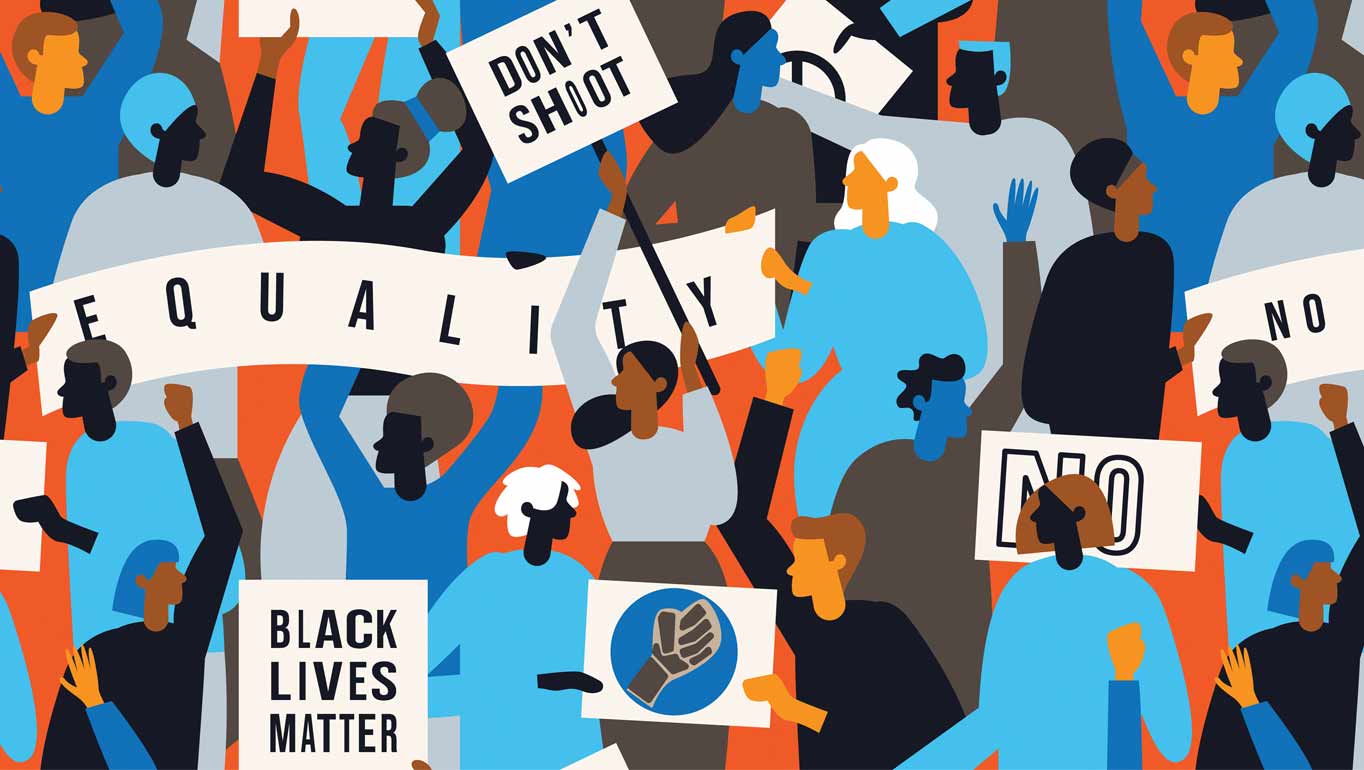
In our modern African societies—contexts where state authority is fragile and violence immediate—and as artistic expression continues to circulate as mass communication rather than private ornament, we cannot interpret silence as neutrality. It is more accurately a privilege: the ability to avoid consequence because one can afford to.
****
The question that should now confront East African cultural and artistic life is not whether artistes should be political, but what configurations of power render neutrality possible for some and untenable for others. The distinction dismantles the myth, dismantles the comforting insistence that artistes can opt out, retreat into craft, and remain untouched by the forces that shape their work.
That myth survives best in stable environments, where institutions absorb pressure and culture can afford to masquerade as refuge. But when institutions fracture or lose legitimacy—as they did in Tanzania—artistes become the shock absorbers. Symbolic pressure migrates toward culture because art is where power becomes visible and legible: as songs, images, or performances, the surfaces onto which collective anxiety is projected when formal politics fails to persuade.
In these moments, the artiste ceases to be merely a maker of meaning and becomes a site upon which meaning is imposed. The public looks to artistes for signals, clues about who stands where when official narratives no longer hold. This is the condition of exposure: to function as a site of symbolic pressure and to be shaped by forces exceeding subjective intention. Yes, these demands imposed upon artistes are often disproportionate and internally contradictory, yet they arise from necessity, as culture is the arena where unresolved conflicts are staged, because it remains one of the few spaces people still believe in.
James Baldwin understood this danger. “It goes without saying that artists are dangerous”, he wrote, “because they are, in effect, the people who know the truth about us.”
Frank Njugi, an award-winning Kenyan writer, culture journalist, and critic, has written on the East African and African culture scene for platforms such as Debunk Media, Republic Journal, Sinema Focus, Culture Africa, Drummr Africa, The Elephant, Wakilisha Africa, The Moveee, Africa in Dialogue, Afrocritik, and others.