
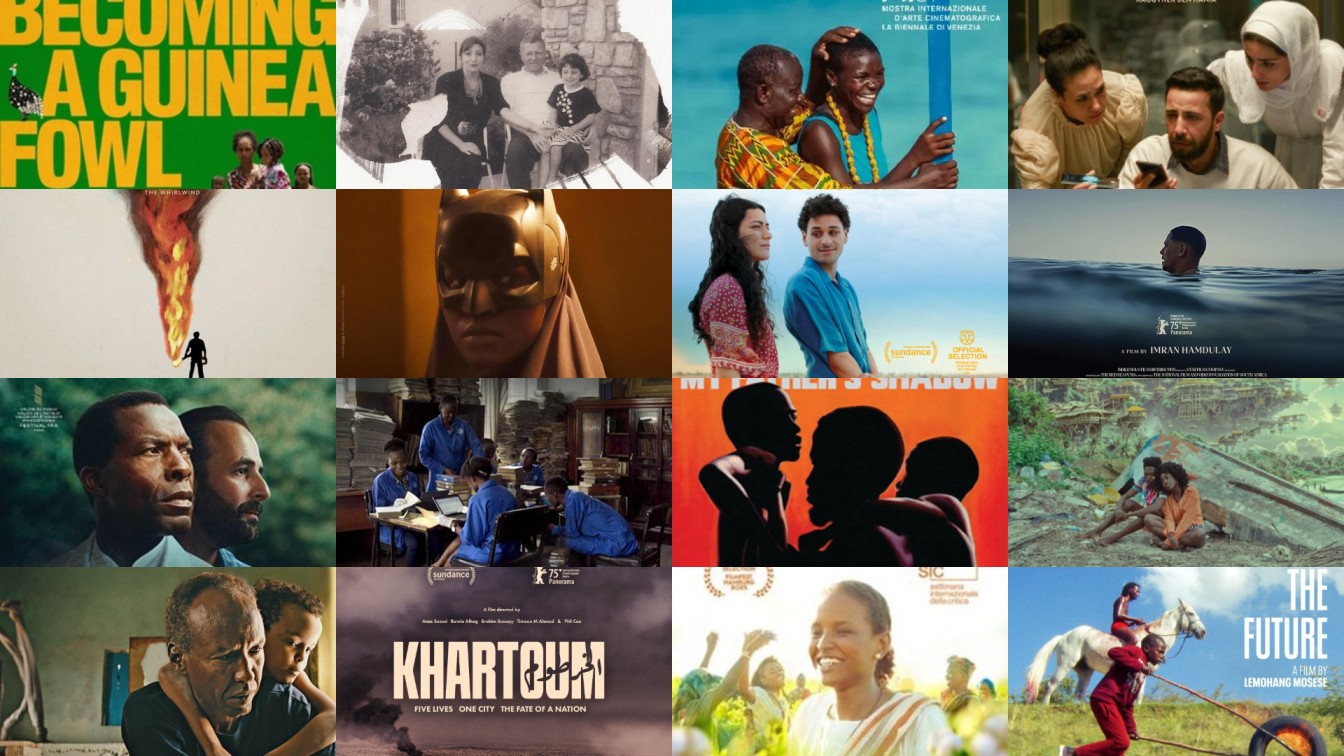


This year, African filmmakers tested the boundaries of filmmaking, deepened the aesthetic and thematic language of African cinema, and restated their claim to a well-deserved space in global cinema.
By Afrocritik’s Film Board
“One thing is certain,” said Tunisian filmmaker, Amel Guellaty, to Afrocritik in an exclusive interview earlier this year, “Making a film anywhere in Africa is a struggle”. Most filmmakers would agree.
African film industries are still searching for solutions to the funding and distribution problems that were exacerbated by global streaming platforms withdrawing from parts of the continent almost as hastily as they arrived. And with the increasing volatility of many African nations, from worsening economic challenges across the continent to political instability and violent conflicts, both the logistical and psychological costs of filmmaking in Africa might as well be prohibitive.
And yet, this past year, African cinema has continued to grow against the odds, with commendable results. This year, African filmmakers tested the boundaries of filmmaking, deepened the aesthetic and thematic language of African cinema, and restated their claim to a well-deserved space in global cinema.
Since the founding of Afrocritik, we have tracked and honoured the success stories in African cinema with a variety of year-end lists. Last year, in 2024, we launched what we now consider the most essential: the annual Afrocritik’s Remarkable African Films. This compilation recognises African productions that have made a remarkable difference in African cinema, films that explore pertinent social and cultural issues with refreshingly unique perspectives.
Our 2024 list cut off the eligibility period at November 2024 and spotlighted 25 remarkable films. This year, we continue from where we stopped, considering African-produced films that premiered between 1st December 2024 and 30th November 2025. However, we have made two major changes. First, we have slightly expanded our list to 30 remarkable films, with an additional special mention of 10 films. Secondly, we have extended the eligibility period to accommodate 2024 films that gained traction on the continent and around the diaspora in 2025.
In essence, African films that premiered in 2024 but continued touring the African and African-diasporan festival circuit or had an African theatrical or streaming release during the regular eligibility window (1st December 2024 and 30th November 2025) were eligible for consideration. However, films that would ordinarily qualify but were already listed among our 2024 remarkable films (such as Burkina Faso’s Katanga: The Dance of the Scorpions, Kenya’s Nawi, and Nigeria’s Freedom Way) were not eligible.
As we deliberated and compiled this list, we observed some patterns that inspired conversations. One nagging concern, though not newly formed, was the obvious challenge in accessing local funding for African films of the best quality. The majority of the films on our list are international co-productions, with predominantly European, Arab, and American funding.
Additionally, certain remarkable films that ought to be African for their African narratives and themes turned out to be strictly foreign productions, with barely any significant local funding or production involvement, if any. Such films have been listed as special mentions, along with African films that did not make the top thirty but are very much deserving of recognition.
Thematically, filmmakers across the continent and in the diaspora seem to have, in the past year, been preoccupied with particularly personal and intimate subjects, from reflections on fatherhood and womanhood to meditations on migrant experiences, whether within or outside the continent. They have also been interested in interrogating change and critiquing colonial and dysfunctional systems. And they have told poignant stories in the most interesting ways.
In no particular order, these are Afrocritik’s 30 Remarkable African Feature Films of 2025.
My Father’s Shadow (Nigeria)
The debut feature from Nigerian-British filmmaker, Akinola Davies Jr., which he co-wrote with his brother, Wale Davies, My Father’s Shadow is set against the backdrop of the 1993 Nigerian presidential elections and follows two young brothers as they spend a day around a troubled Lagos with their estranged father. This simple but richly layered and resonant film is an intimate semi-autobiographical tale of fatherhood, brotherhood, and a nation teetering on the brink. A blissful but devastating journey through memory, bonds, and loss.
My Father’s Shadow premiered in the Un Certain Regard section at Cannes Film Festival 2025, where it received the Caméra d’Or Special Mention for Best First Feature. Following screenings from the Toronto International Film Festival (TIFF) and BFI London Film Festival to NBO Film Festival, Marrakech International Film Festival, and S16 Film Festival, the UK/Nigeria co-production was ultimately selected as the UK’s submission for Best International Feature Film at the 2026 Academy Awards (“The Oscars”).
Read our review of My Father’s Shadow here and our interview with the writer Wale Davies here.
Memory of Princess Mumbi (Kenya)
Shot on a micro-budget, largely improvised, and stitched together with AI-generated visual extensions that conjure futuristic ruins, Memory of Princess Mumbi is a film set in 2093, after a vaguely cataclysmic “Great War” has burned out modern technology and nudged the world back toward ancient kingdoms. Kuve, an aspiring filmmaker, travels to the fictional village of Umata to document what remains.
What he finds instead is resistance as Mumbi, a local actress and filmmaker, insists that he abandon artificial intelligence altogether and make something with his hands, his eyes, his fallible memory. Their creative sparring—complicated by a local prince who represents power without imagination—becomes the film’s real subject.
The work of Swiss-Kenyan filmmaker Damien Hauser, Memory of Princess Mumbi, was the first Kenyan feature to premiere in the Giornate degli Autori sidebar of the Venice International Film Festival. It went on to screen at TIFF, before heading to BFI London and Marrakech. For its Kenyan premiere, Memory of Princess Mumbi screened at the 2025 NBO Film Festival.
Read our review of Memory of Princess Mumbi here.
The Heart Is a Muscle (South Africa)
In his debut feature, South African director Imran Hamdulay delivers an intimate, bruising study of intergenerational trauma and the quiet violence it leaves behind. The Heart Is a Muscle follows a young father whose carefully constructed domestic life begins to fracture when his son goes missing, forcing buried instincts and inherited rage back to the surface. Hamdulay resists easy moral judgments, framing his protagonist’s volatility not as cruelty but as learned survival, shaped by a past that refuses to stay buried.
The Heart Is a Muscle premiered in the Panorama section of the Berlin International Film Festival 2025 (“Berlinale”), where it won the Ecumenical Jury Prize, and was selected as South Africa’s submission for Best International Feature Film at the 2026 Academy Awards. It was the top winner at the 2025 Africa Movie Academy Awards (AMAA), winning four awards, including Best Film and Best Debut Feature by a Director.
Read our review of The Heart Is a Muscle here.
The Voice of Hind Rajab (Tunisia)
Tunisian director Kaouther Ben Hania’s harrowing docudrama confronts atrocity not through spectacle, but through proximity and restraint. Reconstructing the final hours of six-year-old Hind Rajab—trapped in a car under fire in Gaza in January 2024—the film confines itself almost entirely to a Red Crescent call centre, where rescuers listen, wait, negotiate, and ultimately fail.
Formally rigorous and ethically uncompromising, The Voice of Hind Rajab blurs the boundary between documentary and reenactment to devastating effect, placing the audience alongside those forced to bear witness in real time, powerless against the machinery of war.
Premiering in Competition at the 2025 Venice Film Festival, the film won the Grand Jury Prize alongside six parallel awards. It closed the Cairo International Film Festival and went on to represent Tunisia at the Best International Feature Film category of the 2026 Oscars, making the shortlist.
Cotton Queen (Sudan)
In the simple but thematically rich Cotton Queen, a teenage girl in a cotton-farming village in Sudan finds her life upended when her parents plan to marry her off to a businessman whose genetically modified cotton seeds threaten the independence of the local cotton farmers. Directed by Sudanese-Russian filmmaker, Suzannah Mirghani, as the first fiction feature by a female Sudanese director, Cotton Queen blends colonial history with a social issues drama and a statement on female agency.
Filmed in Egypt as a result of the Sudanese Civil War that broke out in 2023, the film has achieved critical acclaim and success on the festival circuit, premiering at the 2025 Venice Critics’ Week and winning Best Feature Film at the Thessaloniki Film Festival 2025. It also screened as the opening night film at the S16 Film Festival 2025.
Read our review of Cotton Queen here.
How to Build a Library (Kenya)
How to Build a Library barrels onto the screen as a civic project, a 101-minute chronicle of Shiro Koinange and Angela Wachuka—Book Bunk’s indefatigable co-founders—taking on the McMillan Memorial Library, the 1931 whites-only mausoleum of the British colonial empire planted smack in Nairobi’s heart.
Filmed over eight patient years by the filmmaking couple, Kenyan director Maia Lekow and Kenya-based Australian director Christopher King, the documentary makes a daily wrestling match with funding gaps, and the psychological residue of exclusion, all while asking what it costs to reclaim a colonial space without sanding down its sins. How to Build a Library premiered at Sundance Film Festival 2025, before opening both the Encounters South African International Documentary Film Festival and the NBO Film Festival.
Read our review and interview with Maia Lekow and Christopher King on How to Build a Library here.
The Banjo Boys (Malawi)
Directed by British filmmaker, Johan Nayar, The Banjo Boys traces the improbable rise of Malawi’s Madalitso Band with warmth, spiritual sensitivity, and a refusal to flatten struggle into spectacle. Beginning on the streets of Lilongwe and unfolding across continents, the documentary follows two musicians whose handmade instruments and unpolished sound carry a quiet, radical authenticity. When they form an unlikely creative bond with a British musician, the film becomes less about rescue or discovery and more about recognition.
Premiering at the London Breeze Film Festival 2025, where it won the Audience Award, and later screening at the African Diaspora International Film Festival (ADIFF) 2025, The Banjo Boys stands as a resonant meditation on how African art travels the world without losing its soul.
Read our review of The Banjo Boys here.
Calle Málaga (Morocco)
A delightful and emotional crowdpleasing drama, Calle Málaga, from Moroccan director Maryam Touzani, is a Spanish-language film set in Tangier, Morocco, about an aging woman who is forced out of her home when her daughter decides to sell it without consulting her. In the course of fighting to keep her home and reclaim her belongings, Maria Angeles rediscovers love and desire, but also the beauty of aging while still living.
Calle Málaga won the Audience Award of the Venice Spotlight section at the Venice Film Festival, before screening at TIFF, BFI London, Marrakech, and Cairo. Calle Málaga was Morocco’s submission for Best International Feature Film at the 2026 Oscars.
On Becoming a Guinea Fowl (Zambia)
On Becoming a Guinea Fowl, the second feature from Zambian-Welsh director, Rungano Nyoni, is a black comedy-drama that opens with a sight gag so morbid as Shula, played by Susan Chardy, finds her uncle’s corpse sprawled on a Zambian backroad after a party, as if death itself has missed the memo about timing and decorum.
What follows is a funeral stretched into a reckoning, where buried truths about sexual abuse and communal silence finally begin to sweat through the walls. Nyoni folds surrealism and magical realism into the everyday until the line between the absurd and the unbearable dissolves.
After a 2024 world premiere at Cannes, where Nyoni won the Un Certain Regard’s Best Director, On Becoming a Guinea Fowl screened at TIFF and BFI London, and opened the S16 Festival in December 2024. It continued its run in 2025 with screenings at the Cascade Festival of African Films and the Pan-African Film and Television Festival of Ouagadougou (FESPACO), where it won Étalon de Bronze de Yennenga (the Bronze Stallion of Yennenga).
Read our review of On Becoming a Guinea Fowl here.
The Fisherman (Ghana)
In Ghanaian-American director Zoey Martinson’s debut feature, The Fisherman, a grumpy, traditional fisherman teams up with a sardonic talking fish and three young associates on an eventful adventure to Accra, the Ghanaian capital, where they hope to raise enough funds to buy their own boat.
The result is a delightful comedy that probes identity and the fear of change while delivering interesting insights on the conflict between tradition and modernism, intergenerational tensions, class divides, and even environmental degradation.
The Fisherman became the first Ghanaian film officially selected to screen at Venice in 2024, and continued to screen across several international film festivals, before opening in Ghanaian cinemas in September 2025. It won Martinson the Best Director award at the 2025 Africa International Film Festival (AFRIFF).
Read our review of The Fisherman here.
Afrikki (Senegal)
French director Gaëlle Le Roy’s Afrikki is an urgent and expansive chronicle of African youth resistance, tracing the evolution of Senegal’s Y’En A Marre movement into a continent-wide network of civic activism. Filmed over a decade across Dakar, Ouagadougou, Kinshasa, Goma, Douala, and Nairobi, the documentary positions protest not as a moment of eruption but as a sustained political practice. The film captures not only the energy of street protests but the quiet labour that sustains them.
Opening the International Documentary Film Festival Saint-Louis (Stlouis’DOCS) 2025, where it received a Critics Prize Special Mention, before screening at the Eastern Nigeria International Film Festival (ENIFF) 2025, Afrikki is a vital meditation on resistance as inheritance, responsibility, and endurance.
Read our review of Afrikki here.
When Nigeria Happens (Nigeria)
When Nigeria Happens, a contemporary dance drama and the third feature from Nigerian filmmaker, Ema Edosio, follows a troupe of young contemporary dancers moving through Lagos where they confront the country’s dysfunction. Through them, Edosio holds up a mirror to Nigerian society, reflecting the kinds of conditions that force Nigerians to give up their dreams and give in to the system, and shining a spotlight on the sacrifices that young Nigerians have to make to survive.
When Nigeria Happens made history as the first African film to open the Open Doors Section of the Locarno Film Festival. Prior to its Locarno premiere, it had a private screening at the S16 Film Festival in 2024. It also screened at the 2025 Ake Arts and Book Festival and the 2025 Ibadan Indie Film Awards.
Read our review of When Nigeria Happens here.
Khartoum (Sudan)
This 2025 experimental film tracks five displaced individuals—“wandering souls”, as the film frames them—moving through the psychic and physical wreckage of the Sudanese Civil War.
A collaborative work by four Sudanese filmmakers, Anas Saeed, Rawia Alhag, Ibrahim Snoopy Ahmad, and Timeea Mohamed Ahmed, Khartoum blends oral storytelling, staged reenactments, and observational footage, refusing the false authority of pure reportage. This hybrid form became its ethic. As Jerry Chiemeke writes for Afrocritik, it is “experimental cinema at its most rigorous.”
Khartoum premiered at this year’s Sundance, screened at BFI London and Encounters, and went on to win the Michael Anyiam Osigwe Award for Best Film by an African Living Abroad at the 2025 AMAA.
Read our review of Khartoum here.
Ancestral Visions of the Future (Lesotho)
Berlin-based Lesotho-born filmmaker Lemohang Jeremiah Mosese crafts a fiercely personal, formally unbound meditation on exile, memory, and the enduring ache of home. Neither documentary nor fiction in any conventional sense, Ancestral Visions of the Future unfolds as a cinematic essay: a dense, lyrical monologue layered over striking, often symbolic images from across Lesotho.
Drawing from his life as an African artist living in Europe, Mosese reflects on distance from his mother and motherland, crafting a work less concerned with narrative coherence than with emotional and spiritual resonance.
Premiering in the Berlinale Special section at the 2025 Berlinale, Ancestral Visions of the Future is a bold assertion of artistic freedom: a filmmaker pushing form to its limits and insisting on the right to remember, mourn, and imagine without compromise.
The Ants (Les Fourmis) (Morocco)
In The Ants, another film set in Tangier, Morocco, though this time in French and Arabic, Moroccan director Yassine Fennane interweaves the stories of three vulnerable people across social classes—an undocumented sub-Saharan immigrant, an unscrupulous recruiter, and a wealthy pregnant mother of two—who are trying to rise above their circumstances with their dignity intact.
Through their individual narratives and the convergence of their lives, Fennane delicately explores migration, class dynamics, gendered expectations, and human interconnectedness, with a nuanced focus on dignity and exploitation.
The Ants screened at ADIFF and Marrakech, among others.
Read our review of The Ants here.
Aisha Can’t Fly Away (Tunisia/Egypt/Sudan)
The debut feature of Egyptian filmmaker, Morad Mostafa, Aisha Can’t Fly Away follows a young Sudanese immigrant navigating precarity, exploitation, and quiet endurance in Cairo’s Ain Shams district. Anchored by a strikingly restrained performance from Buliana Simon, the film traces Aisha’s life as a caregiver trapped between predatory employers and a violent protection racket, her days unfolding in a haze of routine, fear, and compromised survival.
The film renders the city as both lived-in and suffocating, capturing immigrant existence as a condition of constant negotiation rather than escape. Blending social realism with uneasy touches of surrealism and body horror, Aisha Can’t Fly Away flirts with metaphor as a way of externalising Aisha’s psychological fracture.
Aisha Can’t Fly Away premiered in Un Certain Regard at the 2025 Cannes, screened at NBO and Durban International Film Festival, and won the FIPRESCI Prize at the Golden Apricot Yerevan International Film Festival 2025.
My Father and Qaddafi (Libya)
The debut documentary feature of American-Libyan director, Jihan K., My Father and Qaddafi is both a memorial and a history lesson. The documentary follows the director as she pieces together the memory of her father, Mansur Rashid Kikhia, a Libyan human rights lawyer, Foreign Minister, and ambassador to the United Nations, who became an opposition leader after serving in Qaddafi’s regime, and whose body was found in a freezer near Qaddafi’s palace nineteen years after his disappearance.
In My Father and Qaddafi, the first Libyan film to screen at the Venice Film Festival in over a decade, Jihan K. undertakes a personal journey towards the discovery of a father she hardly remembers, while also making a political piece around Libya’s difficult past and present instability. The documentary also screened at the Marrakech International Film Festival.
Mothers of Chibok (Nigeria)
A feature-length reckoning directed by Nigerian documentary filmmaker Joel ‘Kachi Benson, Mothers Of Chibok follows Nigerian mothers across one stubborn farming season, years after Boko Haram tore schoolgirls from a schoolyard and from history’s easy attention span. The documentary is commendable for its refusal of the easy “resilience” narrative in favour of something unsettling, which portrays endurance as work, grief as a long season, and motherhood as an unbroken line that cannot be erased.
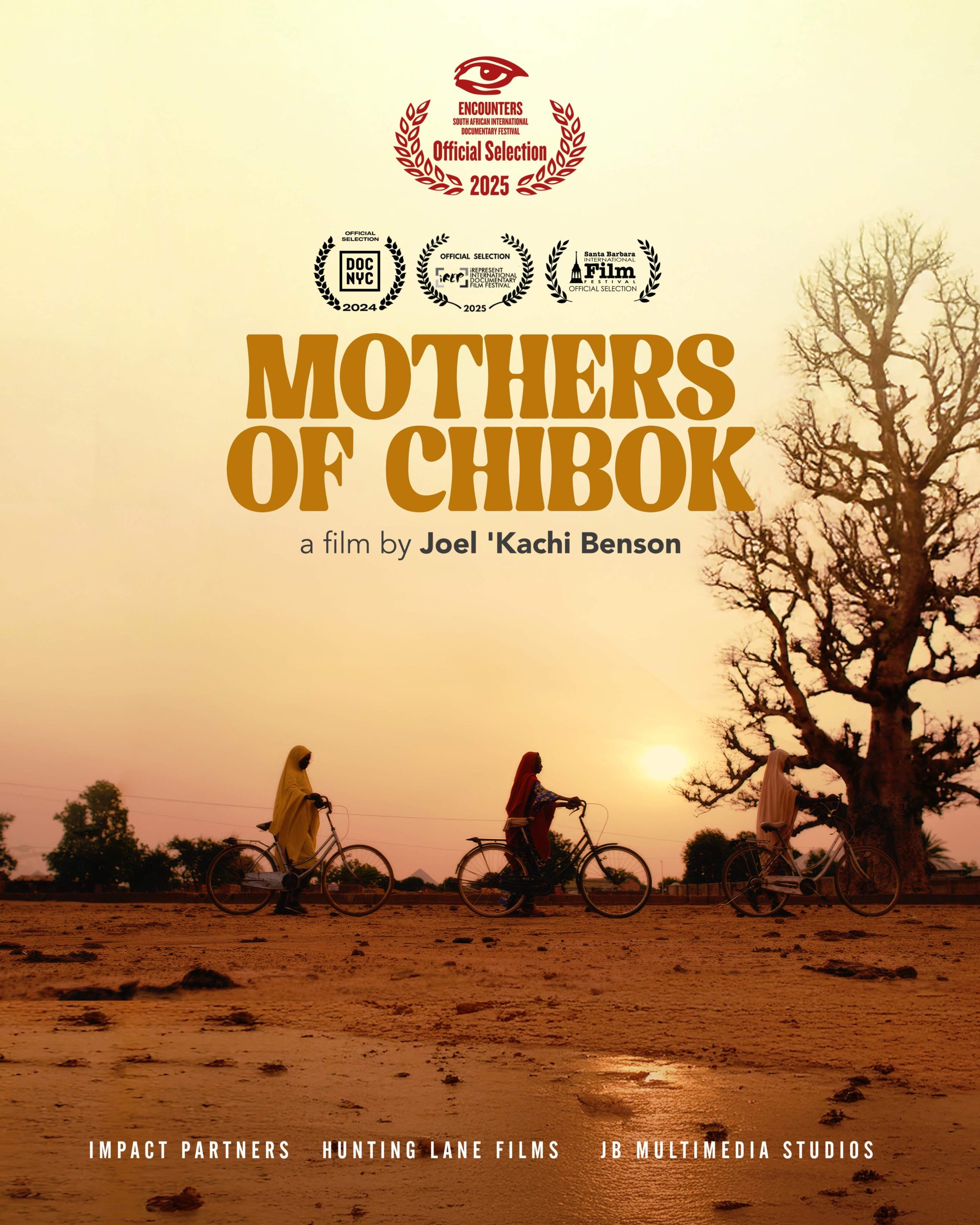
Filmed over four years, as a sequel-in-spirit to Benson’s Daughters of Chibok, the documentary premiered at DOC NYC Film Festival in late 2024 and then cut a purposeful path through 2025—opening the iREP International Documentary Film Festival, winning the Al Jazeera Award at Encounters, screening at NBO, and anchoring Africa Rising International Film Festival’s Women in Film & Television launch.
Read our profile of director Joel ‘Kachi Benson here and our review of Mothers of Chibok here.
The Village Next to Paradise (Somalia)
The Village Next to Paradise is the modest but compelling feature debut of Somali-Austrian filmmaker Mo Harawe, a reflection on the validity of little dreams and desires, the repercussions of choices, and the ways that politics and conflicts affect ordinary lives.
Set in a remote village in the Somali desert where a war on terrorism perpetually hovers, with devastating consequences for daily life, Harawe’s debut follows a small mismatched family as they pursue their different dreams and confront the challenges of life, but at its heart is a tender story of fatherhood and sacrifice.
The film’s 2024 premiere in the Un Certain Regard section at Cannes was a historic one, being the first Somali film to ever screen at Cannes. And it continued to make an impression globally, playing at festivals from TIFF to Durban. The Village Next to Paradise won a Jury Prize at Marrakech in December 2024 and was awarded the Étalon d’Argent de Yennenga (the Silver Stallion of Yennenga) at the 2025 FESPACO.
Radia (Morocco)
In her rigorously controlled second feature, Moroccan filmmaker Khaoula Assebab Benomar approaches widowhood not as rupture but as slow erosion. Shot in stark black-and-white, Radia follows a woman whose grief manifests in silences, routines, and the fragile discipline of everyday life. Benomar’s elliptical storytelling resists melodrama, instead asking the viewer to read meaning in gesture, absence, and withheld emotion.
Concerned with how women internalise loss within social structures that rarely acknowledge their autonomy, Radia is a quietly radical meditation on agency after erasure. It refuses tidy resolutions, insisting that emancipation is not a moment but a process; uneven, unresolved, and deeply human.
Radia premiered at the Critics’ Week of the Cairo International Film Festival 2024, won Best Director at the Khouribga International African Film Festival 2025, and screened at the Abuja International Film Festival (AIFF) 2025.
Read our review of Radia here.
Don’t Let’s Go to the Dogs Tonight (South Africa)

South African-American actor and filmmaker Embeth Davidtz stars in and directs a Zimbabwean story for her feature debut in Don’t Let’s Go to the Dogs Tonight. Set in Rhodesia (present day Zimbabwe), the film is based on Alexandra Fuller’s 2001 memoir recounting the experiences of her White Zimbabwean family after the Rhodesian Bush War. The film unfolds through the non-judgmental eyes of an eight-year-old living life on her family’s Rhodesian farm towards the tumultuous end of the war.
Ambitious, detailed, and backed by excellent performances, especially an outstanding debut turn from its child star Lexi Venter, Don’t Let’s Go to the Dogs Tonight renders a sensitive story from an unusual perspective.
Don’t Let’s Go to the Dogs Tonight had its world premiere at the 2024 Telluride Film Festival and a gala screening at TIFF before its South African premiere at Durban this 2025 where it won Best South African Feature. It also had a theatrical run in South Africa in July 2025.
Aïcha (Tunisia)
In Tunisian director Mehdi Barsaoui’s sophomore feature, Aïcha, a flawed young woman seizes the opportunity to escape her unhappy life and reinvent herself when she ends up as the sole survivor of a bus crash. Except, everything goes south when she witnesses a dangerous situation. An intimate character study and a thrilling drama, the film is set against the backdrop of post-revolution Tunisia and probes questions of female agency, freedom, and the inescapable societal structures built to restrict them.
Aïcha premiered in the Orizzonti section at Venice in 2024, followed by screenings at BFI London and Red Sea International Film Festival. It won Best International Feature at the 2025 Durban International Film Festival and Best Cinematography at the 2025 All African Independent Film Festival (AAIFF Africa).
Muganga: The One Who Heals (Gabon)
Set against the long shadow of the Congolese Civil War, Muganga – Celui Qui Soigne resists the easy shape of inspiration and instead insists on revealing how repetition is the real grammar of atrocity.
The film follows the life and labour of Dr. Denis Mukwege—Congolese humanitarian and eventual Nobel Peace Prize laureate—as he treats thousands of women brutalised by sexual violence, working under constant threat, sustained by a stubborn, almost defiant humanism, and later by his encounter with Belgian surgeon Guy Cadière.
Directed by Gabon-born French filmmaker Marie-Hélène Roux, Muganga refuses stylistic grandstanding and favours emotional legibility, allowing empathy to accrue quietly rather than be demanded. In compressing a life devoted to repair, Muganga becomes one of the year’s most powerful African cinematic offerings.
Muganga screened at the Angoulême Francophone Film Festival 2025, winning the Audience Prize and the Student Jury Prize.
Diya (The Price of Blood) (Chad)
In Diya, the debut feature from Chadian director Achille Ronaimou Adoumbaye, a man accused of killing a child in a traffic accident becomes desperate when the child’s father demands that he pay a blood debt, under the diya (blood money) custom. What follows is a dark, thrilling and morally complex descent into oppression, corruption and questionable but recognisable choices as Adoumbaye undertakes a study of morality, justice and systemic failure.
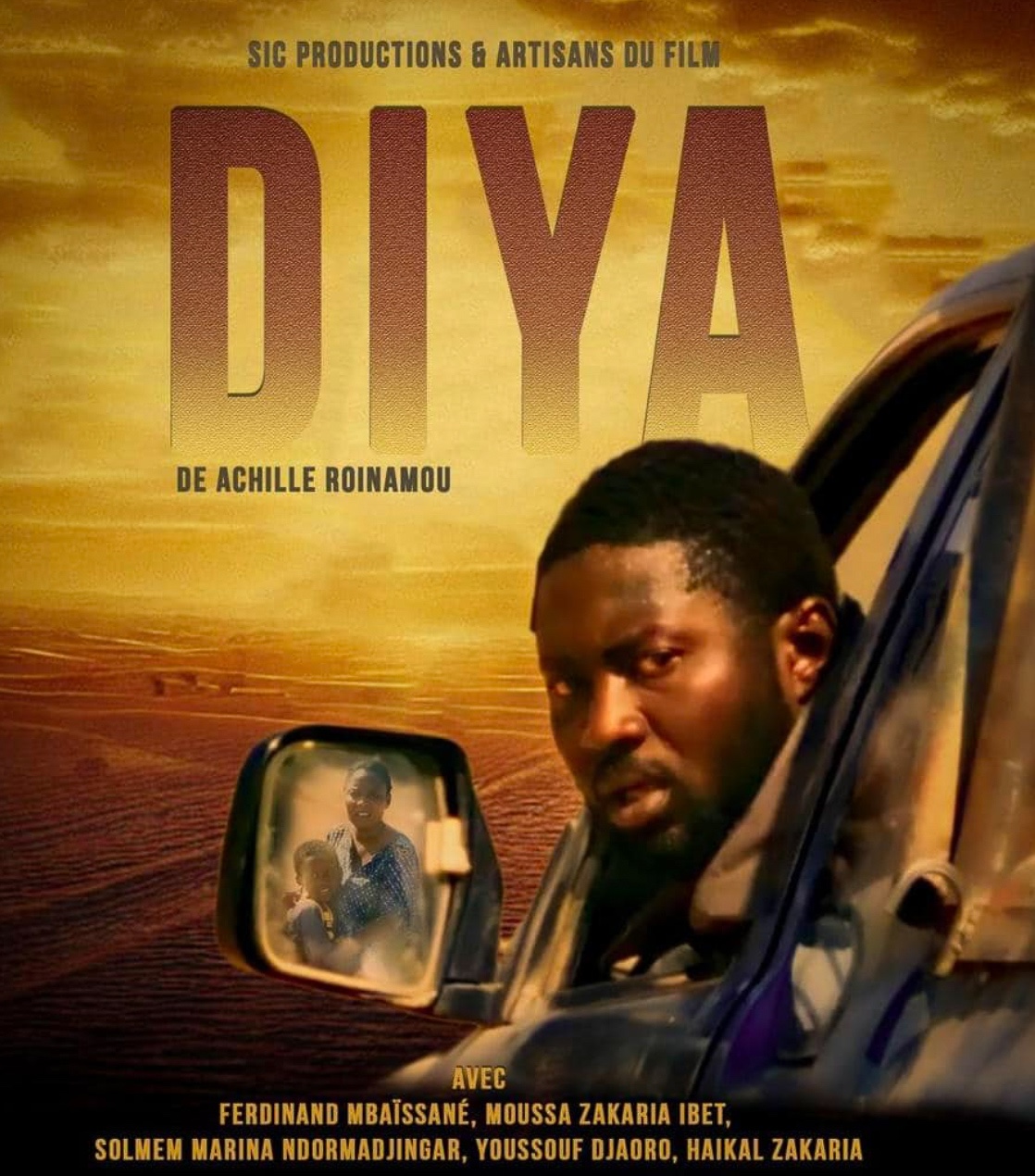
Diya premiered early in the year at FESPACO before screening at TIFF and other international festivals, including ADIFF.
Read our review of Diya here and our interview with the director Achille Ronaimou Adoumbaye here.
One Woman One Bra (Kenya/Nigeria)
One Woman One Bra struts into cinema as a Nigerian-produced Kenyan drama, directed by Kenyan director Vincho Nchogu, that takes a rural village, Sayit, perched on the edge of legal modernity, and turns it into a pressure cooker of land, lineage, and female defiance.
A woman unclaimed by husband or known parentage finds herself locked out of the promised future when centuries-old land finally becomes paper-certified property. The film watches her scramble, through childhood photographs, a dodgy NGO bargain, and rising hostility from her neighbours, to prove she deserves a home on the soil she has always stood on.
Shot in Nkosesia, Loita, in Maa, Swahili, and English with a local cast and crew, Nchogu’s film has the confidence to indict the white-saviour machinery of aid culture while keeping its eyes trained on something as intimate as the woman’s right to self-definition beyond marriage, bloodline, and benevolent permission.
One Woman One Bra was crowned with a 2025 Venice debut in the Biennale College Cinema before taking the Sutherland Award at BFI London.
Read our interview with director Vincho Nchogu and producer Josh Olaoluwa on One Woman One Bra here.
Promised Sky (Promis le Ciel) (Tunisia)
Loosely based on real events, Promised Sky is lauded for its honest and human approach to capturing female relationships in general, and more specifically, the lives of immigrant women.
Directed by French-Tunisian director Erige Sehiri, the intergenerational drama centres on three Ivorian women, across different social statuses, living together in Tunisia and sheltering a younger Ivorian shipwreck survivor. With strong performances grounding Sehiri’s vision, Promised Sky delivers a thoughtful and universally resonant drama. Promised Sky opened the Un Certain Regard section of this year’s Cannes, closed Durban, and screened at BFI London, NBO Festival, and Marrakesh, where it won the Etoile D’Or (Golden Star) Grand Prize.
Laundry (Uhlanjululo) (South Africa)
In Laundry, inspired by personal experiences, South African filmmaker Zamo Mkhwanazi crafts a devastating family drama set in apartheid South Africa, about a Black family operating a laundry business in a White-only district with a rare licence. As the apartheid government cracks down on Black-owned businesses, the family’s sixteen-year-old son is torn between pursuing his suddenly attainable dream of becoming a musician and inheriting the laundry—an inheritance that requires him to fight against the system.
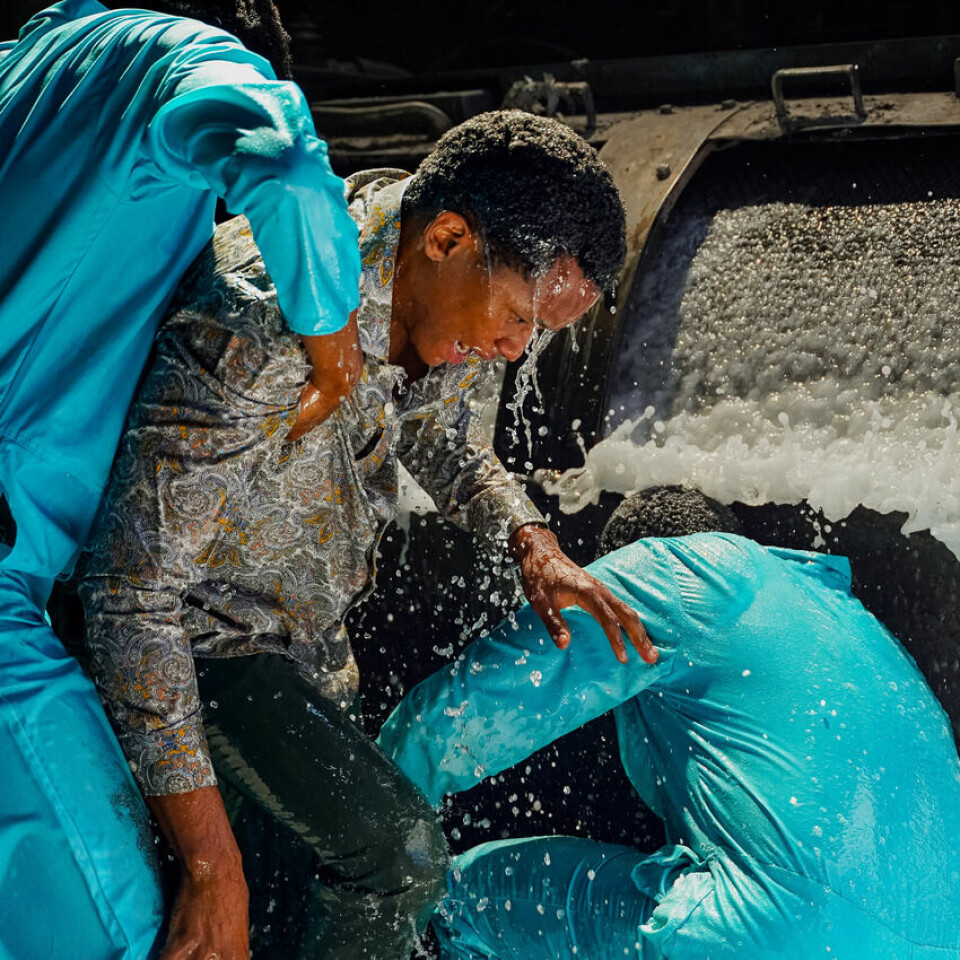
In a time when history is being forgotten or rewritten, Laundry is a stark portrait of the generational impact of institutionalised oppression, and an essential reminder that oppressive systems do not just disappear with a declaration.
Laundry screened at Marrakesh following its world premiere in the Discovery section of TIFF.
Read our interview with director Zamo Mkhwanazi on Laundry here.
Where the Wind Comes From (Tunisia)
Friendship, dreams, and migration hopes fuel the journey of two young Tunisians in this coming-of-age, road-trip, sometimes-fantasy comedy-drama from Tunisian director, Amel Guellaty, in her debut feature.
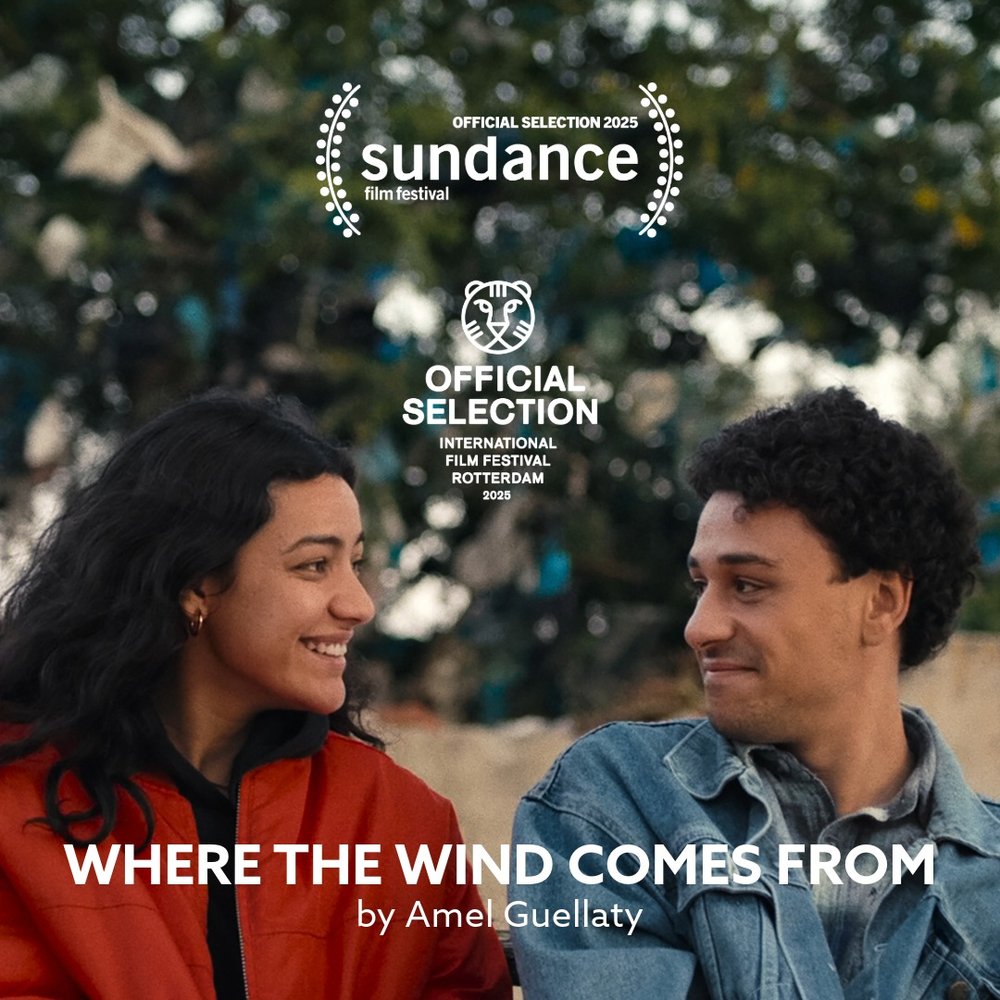
Pairing the joys and tensions of friendship with the hopes and struggles of modern Tunisia, Where the Wind Comes From takes its leads—and the audience—on a trip that reveals the fraught sociopolitical and economic realities that the country’s youth, and especially its young women, contend with. What emerges is an entertaining but tender and contemplative homage to both friendship and Tunisia’s post-Arab spring youth.
Where the Wind Comes From premiered at Sundance 2025, and screened at TIFF and the International Film Festival Rotterdam. It won Best Feature at the Mediterrane Film Festival and a Nakheel Jury Award for Best Feature Film at the Toronto Arab Film Festival.
Read our review of Where the Wind Comes From and interview with director, Amel Guellaty, here.
Matabeleland (Kenya/Botswana/Zimbabwe)
The Gukurahundi—a series of mass killings and acts of genocide carried out in Matabeleland, Zimbabwe, in the 1980s—is the focus of Matabeleland, the compelling debut documentary feature from Zimbabwean filmmaker Nyasha Kadandara. The film follows Chris Nyathi, a Zimbabwean immigrant living in Botswana, as he contends with family obligations and longing. On one hand, he is stretched thin by the demands of his large extended family. On the other hand, his father’s unburied body haunts him, entwined with a long-suppressed national trauma.

Through Nyathi’s story, Kadandara reveals the enduring scars of the Gukurahundi, atrocities carried out under Robert Mugabe’s rule. The documentary unfolds as Zimbabwe enters a moment of political reckoning, coinciding with the coup that ultimately brought Mugabe’s decades-long grip on power to an end.
Matabeleland premiered at the 2025 Copenhagen International Documentary Festival (CPH:DOX) and screened at Encounters, DOC NYC, NBO, and AFRIFF.
Read our review of Matabeleland here.
The Fire and The Moth (Nigeria)
With his fourth feature, Nigerian director Taiwo Egunjobi delivers a morally dense thriller that examines how greed, survival, and silence conspire to produce violence. The Fire and the Moth is set in a small western Nigerian town thrown into chaos after the theft of a rare Ife bronze head, an act that ripples outward with devastating consequences.
Written by longtime collaborator, Isaac Ayodeji, the film resists clean heroes or villains, instead tracing how desperation and self-interest blur moral boundaries in a system where justice is fragile and compromise often feels inevitable. The Fire and the Moth screened at 2025 Nollywood Week Film Festival, Paris and is available to stream on Prime Video.
Read our review of The Fire and The Moth here.
Special Mentions
- Pasa Faho (Australia) – Dir. Kalu Oji. Read our review here and our interview with the cast and crew here.
- The Eyes of Ghana (United States) – Dir. Ben Proudfoot. Read our interview with producer, Nana Adwoa Frimpong, here.
- Nomad Shadow (United States/Spain/France) – Dir. Eimi Imanishi. Read our review here and our interview with the cast and crew of Nomad Shadow here.
- Water Girl (United States) – Dir. Nnamdi Kanaga. Read our review here and our interview with the director here.
- Dreamers (United Kingdom) – Dir. Joy Gharoro-Akpojotor
- I Only Rest in the Storm (France/Portugal/Brazil/Romania) – Dir. Pedro Pinho
- Carissa (South Africa) – Dir. Devon Delmar and Jason Jacobs. Read our interview with the directors here.
- The Herd (Nigeria) – Dir. Daniel Etim Effiong. Read our review here.
- Finding Optel (South Africa) – Dir. Jesse and Mikayla Joy Brown. Read our review here.
- Shaping Us (Nigeria) – Dir. Kambili Ofili
Vivian Nneka Nwajiaku is a writer, film critic, TV lover, and occasional storyteller writing from Lagos. She has a master’s degree in law but spends most of her time watching, reading about and discussing films and TV shows. She’s particularly concerned about what art has to say about society’s relationship with women. Connect with her on X @Nneka_Viv
Joseph Jonathan is a historian who seeks to understand how film shapes our cultural identity as a people. He believes that history is more about the future than the past. When he’s not writing about film, you can catch him listening to music or discussing politics. He tweets @Chukwu2big
Frank Njugi, an award-winning Kenyan Writer, Culture journalist, and Critic, has written on the East African and African culture scene for platforms such as Debunk Media, Republic Journal, Sinema Focus, Culture Africa, Drummr Africa, The Elephant, Wakilisha Africa, The Moveee, Africa in Dialogue, Afrocritik, and others.