


“A system was put out over 100 years ago that is still in play. And showing that intergenerational flow of events, you understand how it works against us.” – Bea Wangondu
By Vivian Nneka Nwajiaku
When the British colonised what is now present-day Kenya in the 1890s, one of the first things they appropriated was land. Indigenous people were dispossessed as the British converted vast lands for their own agricultural and economic purposes. This business empire relied on oppressive labour drawn predominantly from the Kikuyu people, Kenya’s largest ethnic group.
Today, agricultural land remains one of Kenya’s most valuable resources. But even with the end of colonial rule, colonial structures remain in place, and Western interests continue to benefit immensely from the oppression and destabilisation that hinder the growth and self-determination of the Kenyan people.
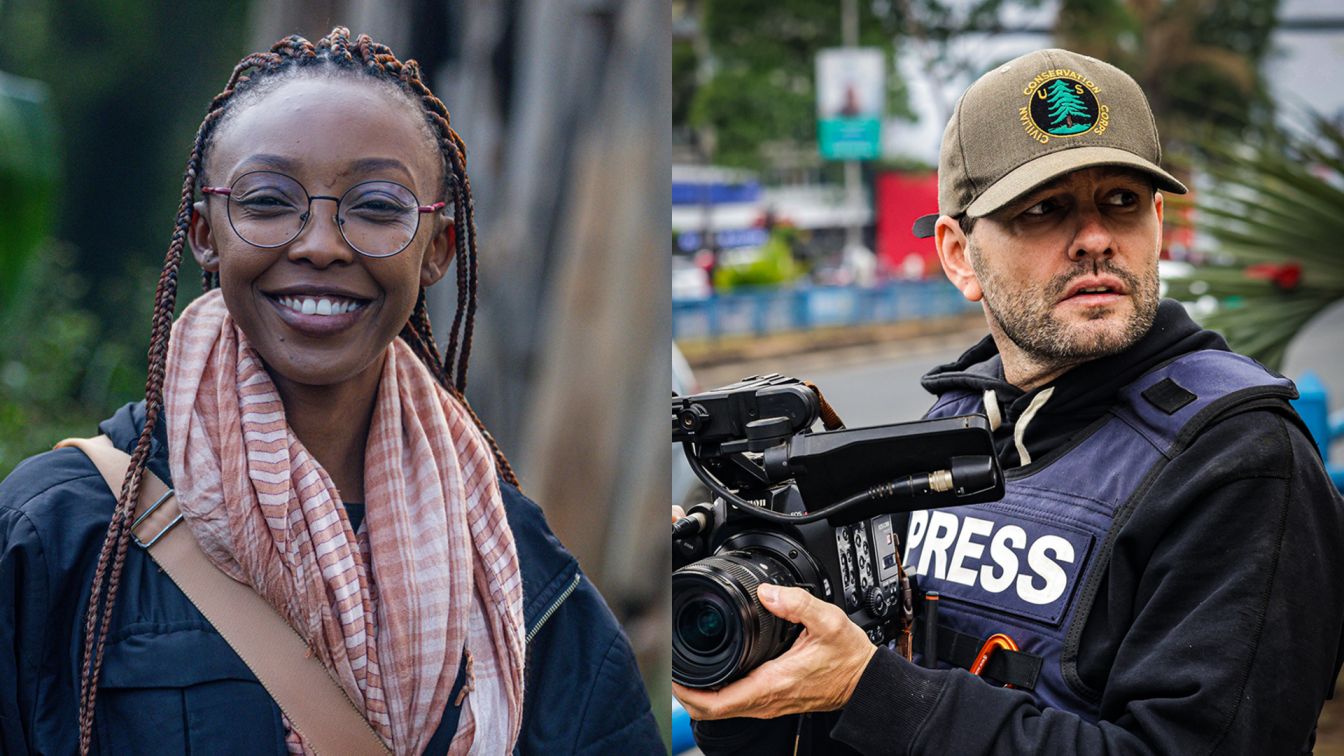
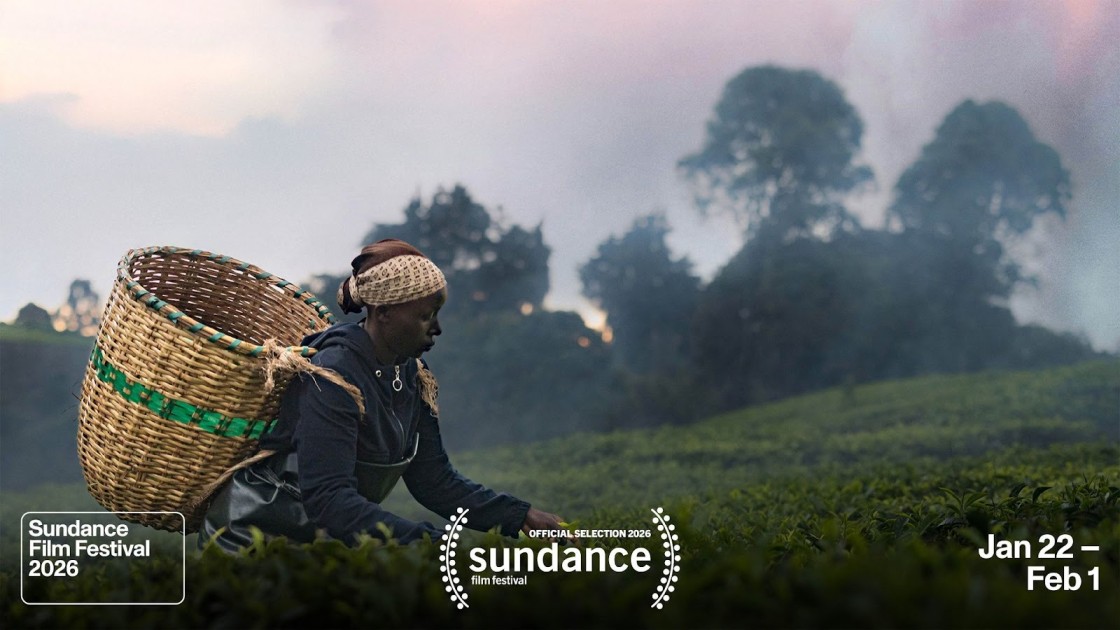
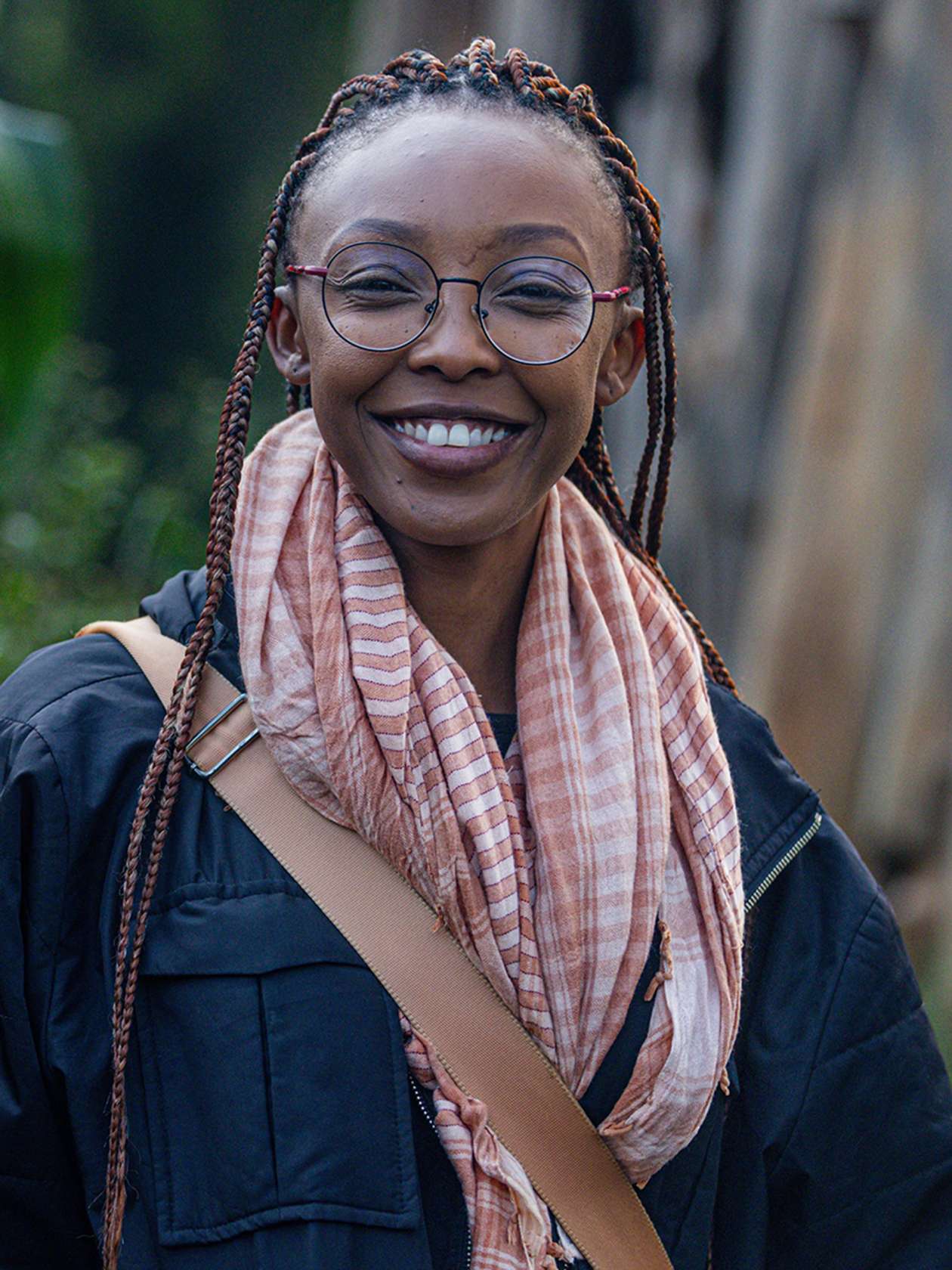
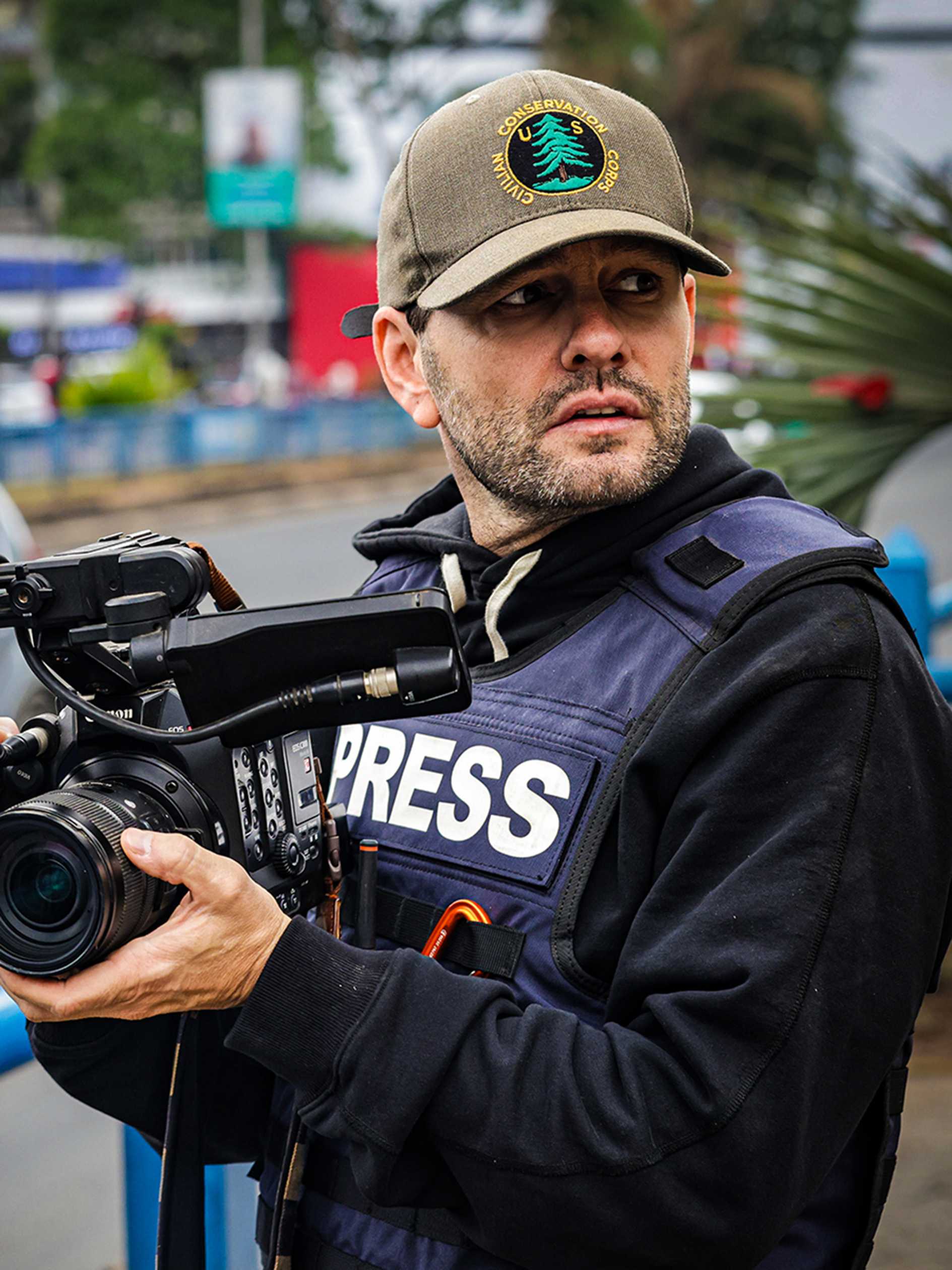
These realities form the focus of Kikuyu Land, the Kenyan documentary which marked its world premiere in the World Cinema Documentary Competition at the 2026 Sundance Film Festival. The directorial debut of Kenyan producer Bea Wangondu, co-directed with Emmy Award-winning American filmmaker Andrew H. Brown, Kikuyu Land interrogates Kenya’s ongoing struggle with colonial legacy, neocolonialism and unchecked corporate power.
An investigative documentary, Kikuyu Land exposes the devastating conditions of the global agro-business industry, specifically the tea industry, where powerful multinationals such as Unilever—inheritors of lands once seized by colonial authorities—continue to profit from the exploitation of indigenes, while generation after generation of Kenyans deal with the trauma of the loss of their ancestral lands, which goes to the root of their identity.
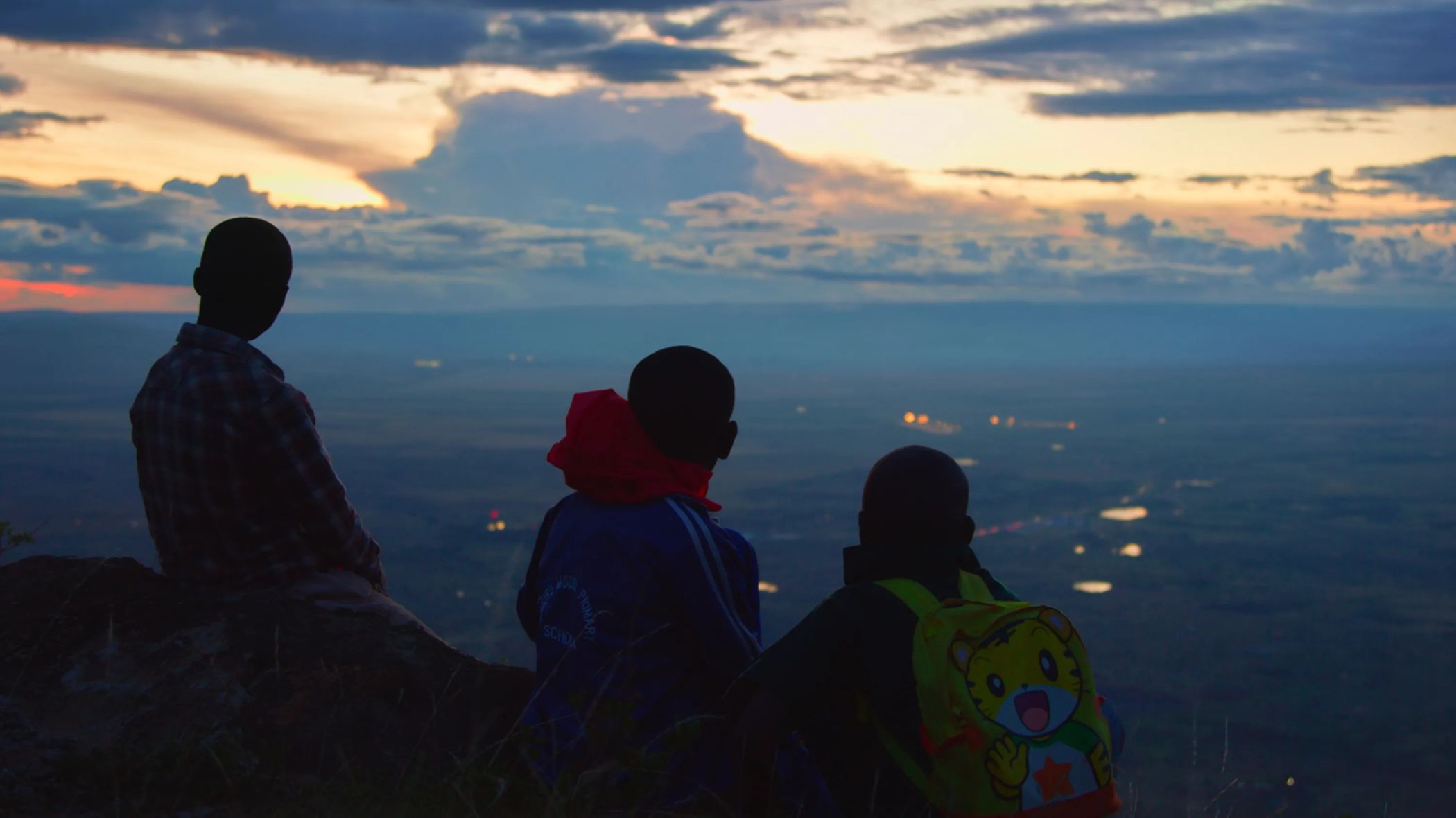
While Brown generally stays behind the camera, doubling as the cinematographer, Wangondu steps into the frame as a journalist excavating the truth and confronting her own family’s complicity in Kenya’s troubled land history. They follow Mungai, an engineer pursuing the reclamation of his family’s ancestral lands through a historical land injustice claim filed with Kenya’s National Land Commission. They observe Stephen, a schoolboy who joins his mother on her work on a tea farm. And they listen to the elderly Jecinta Gathoni as she recounts the horrific story of her time labouring on a tea plantation.
In this exclusive interview with Afrocritik during Sundance, Bea Wangondu and Andrew H. Brown discuss Kikuyu Land, the necessity of confronting generational impacts of colonialism, and their hopes for how both Kenyan and international audiences will engage with the film.
Bea, this is your debut documentary feature, but for you, Andrew, you have extensive experience. How did you both meet and decide to work on this documentary together?
Bea Wangondu: We were working on a National Geographic project in Nairobi, Kenya. Andrew happened to be the VP. I was producing, and we got to know each other. We were friends. Talked about different things across the world. His family, the projects he’s worked on, the work he’d done. I was very impressed at the work he’d done previously, obviously, some award-winning work. You see how good he is with his cinematography.
Eventually, we decided to work on this idea that I thought could become something in terms of a documentary. And with his experience, he was able to just immediately say, “Oh, gosh, that’s a good story. You’re on to something.” It was just that. And from then on, we kept in touch.
Andrew H. Brown: I was encouraging Bea. She was doing a lot of producing for other directors, and I could see that she just had such a love for her own community and that she had ideas of great stories and [wanted] to tell them. We didn’t know exactly what this story was, but I saw the bravery in that she was willing to ask very difficult questions for herself and for her community.
It took some convincing for her to get in front of the camera. She did not want to do that for a while, but it was very clear that the more [we] saw some of the questions she was asking, her own identity, and her family. So, I was convinced and so intrigued to follow her and do this with her because she was willing to just really sit with very difficult conversations, which is very unique and very brave to do.
What inspired you to chase this story?
Wangondu: One of the things that my dad encouraged me to do was ask questions. He was a teacher, and he had all these books that had pictures about historical events that happened in different countries across the world. But the one he was living in, Kenya, there wasn’t a history of who our grandmothers were or what they were about. I’m learning about the Greeks and Zeus. The British system allowed us to learn everything else. So, naturally, because I was encouraged to ask questions, I was asking him these other questions.
For the holidays, we were visiting my grandparents, and because there was no history, I thought that if I talked to my grandmother, she might know a bit of that history. But talking to her and coming back home and realising [that] if my grandmother knows this much about who they were and where they came from, how come in class I’m being told that Dr. Krapf discovered Mount Kenya? That conflict became the thing. My dad immediately figured there’s a problem because now I’ll push and push. That means I’m failing in class because I’m thinking my own things instead of answering the curriculum as it was set up.
This question about my grandfather is something that I constantly would not get an answer to. And the dismissal of an African parent is not like any dismissal anywhere else. Yeah, so it stayed with me. And if there was a way to solve it for myself, then I knew I would do it. But I don’t know that I knew how to go about it except, you know, put it in a film. So, talking to Andrew about ideas, I’m just talking to him about something that I have no idea how I’d go about. Because you understand what it is like to talk to your parents about things they already don’t want to talk about. So that, for me, was my genesis.
Kikuyu Land asks its subjects to revisit painful histories. How did you take care of your subjects and yourselves, during filming, to ensure that the space is always safe enough?
Wangondu: The production team, it was me, Andrew, and our other producer (Joseph Njenga) on the ground in Kenya. We kept it super, super slim. That way, you’re not attracting attention. We are all the way where our subjects are located. We’re just normal people walking around. Because, over time, we had developed a relationship with the community, there was acceptance there. Access was good amongst the mothers, the children, and the community we were working with.
But in terms of access to tea plantations, our other producer grew up in tea plantations. So he knew how to sneak around the different routes of those plantations. So, we snuck around and found a way to still get to our contributors without being noticed.
Brown: I think our approach was really just about moving at the speed of trust and allowing the participants to share what they wanted to share when they were ready to share it. Our focus was trying to create space for them to find their own voices, to kind of change their mind when they needed to, to let us in where they wanted to let us in. And then just over time, consistently showing up.
We saw that they had more ownership in the process. And then as we got deeper into it, they started driving the process and the storytelling. And I think that is really what gave it the authenticity, that they were fully in and that they felt empowered. And they knew that we were looking out for them and that we were trying to honour them. Not focus on the hardships that they were facing, and not trying to focus on the poverty so much and the trauma, but the resilience that they had. About the intelligence, the potential, but how this bigger system was limiting all that.
The documentary takes an intergenerational approach to exploring its message. Why was that urgent?
Bea Wangondu: The purpose of making this film, besides my personal need of finding my own identity, reclaiming my story, [is that] I know that the rest of the world was not taught our history, and what was told [to] them is completely wild. I felt this was a moment for us to allow them an opportunity to engage with this information, with our experience, which is: a system was put out over 100 years ago that is still in play. And showing that intergenerational flow of events, you understand how it works against us.
Andrew H. Brown: Yeah, I completely agree. And I think that, sadly, with Stephen’s story, when you hear Mungai, what happened to his family nearly 100 years ago, you see that the same playbook is being used against Stephen in his life, and that Stephen’s destiny, his fate, is a fulfilment of the design of the system that was created through colonialisation. That they created a system that they knew would tear apart communities and households, that it would tear apart generations.
And in those cracks, corruption happens, exploitation happens, and also for the corporation, that’s where profit happens. You have to acknowledge what happened in the past, but you have to see the design and how truly generational it is through the present. It just felt like the only way to approach this story.
Bea, discovering your family’s role in such a painful history and having to confront that as part of making the documentary, how did you navigate proceeding with the investigation despite having your own family implicated?
Wangondu: You know how that’s abnormal. You never do that. There was the little advantage, if you will, [with] the fact that my family knew that I always asked questions. The uncle that I was talking to, he knew that. So it felt like there was an excuse that had gone ahead of me.
Brown: You were always the wild one. You were always the wild card.
Wangondu: Yeah, so they’re not entirely shocked. That helped a lot in beginning the conversation. The challenge became when they were like, I’m actually serious. And the open door of communication shut. And [I’m] looking like the enemy, actually becoming the enemy, because I’m still asking the question, relentlessly so. And just being in that awkward African space where “This person is trying to make us look like we stole people’s land.”
There were conversations around, what if the rest of the families that are near us rise up against us? Why can’t we just let it go? Why are we talking about it now? But as you know, my understanding is if I don’t know my past, then I don’t know who I am. And the journey was to be a discovery of identity. It was bad for a while there. No one would talk to me. No one would answer my questions. Even this uncle, who knew about my asking questions, would prefer not to take my calls than risk his position in the family. But then, one day, he picked up the call, and I said, “I’m coming to you.” And that’s what you see in the film.
Many African families played a role in colonialism and colonial oppression. Do you think Africa, especially governments and these legacy families who participated, are making any efforts towards making amends?
Bea Wangondu: That’s a big question. Because, being African, already nobody will talk about that because you know we want to sanctify ourselves. That’s one. The next one is, our countries and the way we are set up, the regimes that are currently run in many African countries, I don’t think that’s where the focus is at all. For example, you see what’s happening in West Africa, it’s let’s kick the French out and let’s develop, but it’s not let’s have reparations or let’s revisit.
Are there many families? I’d say it’s hard to know, but just based upon the conversations we’ve been having since the launch, it’s surprised us how people have come and said, “My family, too, was like this.”


Andrew H. Brown: Yeah, even here (in the US).
Wangondu: Even here. We hope that people are introspective about it, and people are curious. Let’s engage. Let’s have a conversation if we can allow ourselves. Let’s give ourselves permission to [open] that can of worms.
It’s no secret that Western interests are being advanced by continued poverty and abuse in African countries. Do you see a situation where proper acknowledgement comes from Western powers and efforts are actually made to turn things around, Andrew?
Brown: That was part of our design and our hope for this film, the way that we crafted it. It was important that this reintroduced East African history and what the Western world thinks they know, and kind of challenging that. We wanted to make sure that we crafted the film in such a way that if Western audiences watched it, they would see themselves in it, because Western audiences, especially here in the United States, have a lot of arrogance, thinking that it can happen on the other side of the world but surely that doesn’t happen here and we’re not involved.
So, there’s a lack of acknowledgement in our role in supporting those systems or sometimes being at the heart of those systems and making sure that those systems survive and thrive. And so, this is very much, for a Western audience, a mirror, that hopefully we can see ourselves and see what systems we support and how they affect others, but then also see that we are no better off.
What is happening in America right now is no different from what’s happening in Kenya. The government is intentionally dividing communities and trying to turn us on each other. It’s the same playbook, whether you’re in the United States [or] in Kenya. And that, overall, at Sundance, has been the biggest conversation from Americans watching it.
As Americans, just like you’re not taught Kenyan history, we are not taught proper American history. We only select the good parts, and that’s what we are taught in school. This is showing the other side. What is our role? Whether it’s in Sierra Leone, the Congo, South Africa or Kenya. The meddling that the US has been involved with, the UK, the French, and throughout Europe.
People are not taught that, and we’re seeing that there’s now a curiosity with people who are seeing the film saying, “I need to completely relearn African history from what I thought I knew.”
How about back home in Kenya? Considering the stifling of critics and journalists, do you have concerns about reactions to the film in Kenya, both from audiences and the authorities?
Wangondu: This is also a very Kenyan film, and I think it should be seen at home. It’s going to be a risk which we are going to take. But at the same time, we have a legal system in place just to make sure that should anything happen to us, you can be bailed out, you can have some sense of representation. Definitely want Kenyans to see this film.
After Sundance, what’s next for Kikuyu Land?
Brown: It looks like we’re going to have a very robust festival run. Our hope is to screen anywhere and everywhere that we’re able to. For the safety in Kenya, it is safer for everyone involved if we build up awareness around this project before we take it to Kenya. And we need to build up some curiosity in Kenya by taking it elsewhere, so Kenyans will start demanding, “We want our film.” That’s going to make it more difficult for it to be blacked out or prohibited if there’s a demand.
Then, secondly, we feel this responsibility to the women, and one of our commitments is: there [are] many things outside our control, but we promise we are going to take your voices, your stories, as far as we can and try to make sure that the world sees you as much as one small film can do.
Personally, the film changed something for me as a tea lover. I can never look at it the same way, you know?
Brown: People have asked, “Should we not drink tea anymore?” And what I hope, at least for the West, is drink your tea but think about these women and think about the systems. And when you’re done with the tea, go out and be their light in the world and have conversations, instead of not drinking tea. Because these women need work. There [are] so many families that even though they don’t get much, it’s the only lifeline they have.
What we need is to meet up with friends, have tea, but then talk about how the systems need to change and demand that from where you buy tea. And do more research on, “Am I buying tea that is supporting families?” And not just on their website, but prove it. Open up the curtain and show us that you are taking care of the people that you are profiting from. So yeah, have the conversation, and have it over a cup of tea.
Vivian Nneka Nwajiaku is a writer, film critic, TV lover, and occasional storyteller writing from Lagos. She has a master’s degree in law but spends most of her time watching, reading about and discussing films and TV shows. She’s particularly concerned about what art has to say about society’s relationship with women. Connect with her on X @Nneka_Viv