

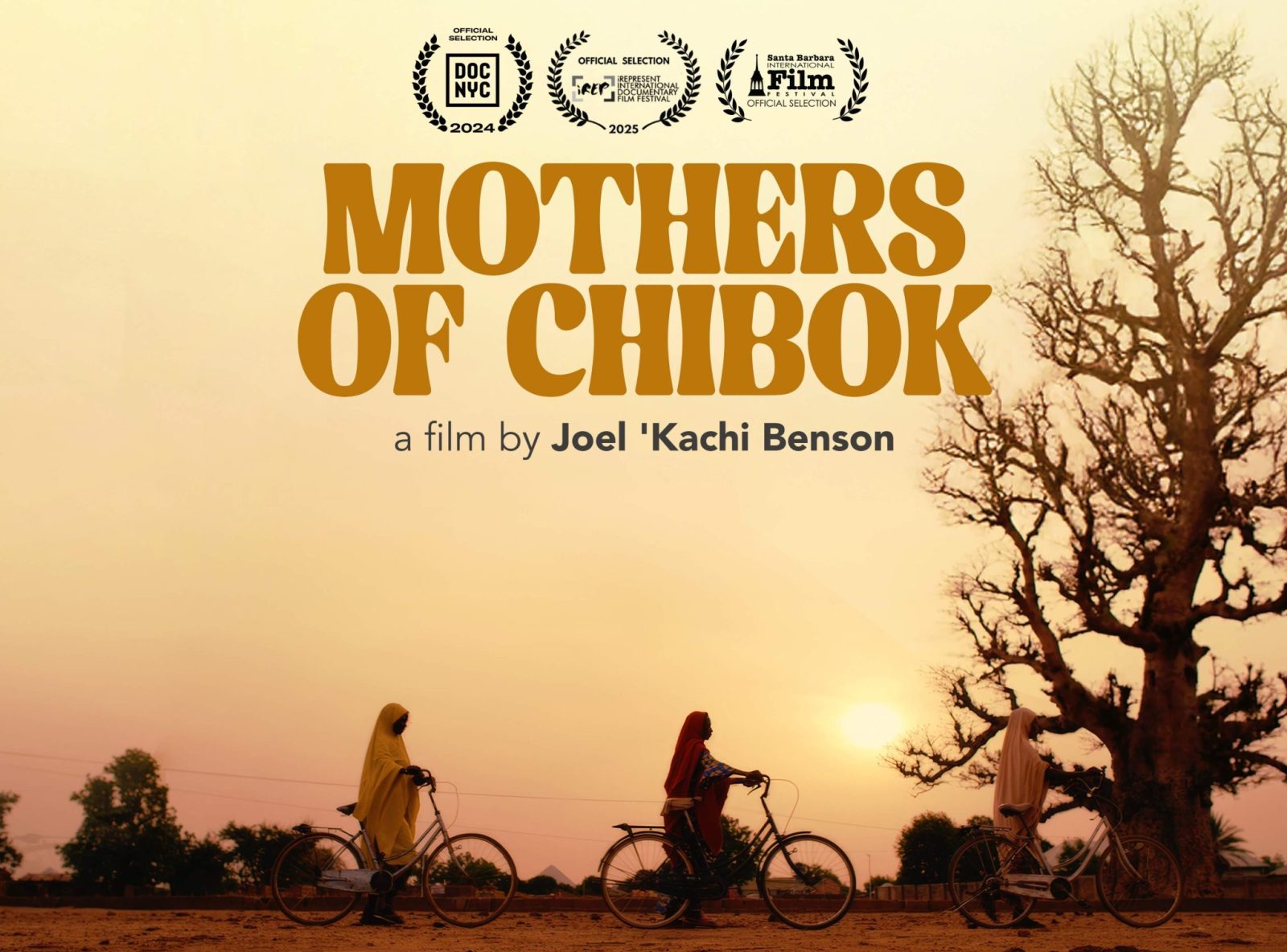

Mothers of Chibok tells an incredible story of dignity, resilience, and defiance, putting on display the remarkable strength and doggedness of the Chibok women in the face of terror.
By Vivian Nneka Nwajiaku
I was in secondary school when the Chibok girls were abducted. Like theirs, mine was a girls-only government school, except that mine was federal and situated in the much safer city of Lagos. Yet, I remember the feeling of dread that enveloped our school. Rumours spread that Boko Haram was coming into Lagos, and we had no reason to doubt it when students speculated that we would be a natural starting point.
Back then, in 2014, we knew nothing about the 276 girls or their families, except that they were like us—students of a government girls’ secondary school. They were headlines, the subject of a hashtag that the entire world seemed eager to cash in on, for a variety of reasons. Their story, to us, was strictly one of terror, fear, and destruction.
When I watched Mothers of Chibok (2024), I was reminded of that feeling of dread. On the screen, you see a security man wielding a gun at the school gate. You see metal detectors waved around worshippers at a church entrance. You see soldiers casually about. You hear mothers tell their children as they head to the farm that they must run at the first sign of suspicion. You watch women stare, full of grief and yearning, into the pictures of the daughters and sisters kidnapped all those years ago. You listen to returned girls recount their harrowing experiences; you watch them grapple with the difficulties faced by the children they bore in captivity.
Over a decade after the abductions, the world may have forgotten, but the Chibok girls and their families, especially their mothers and sisters, have not. And Mothers of Chibok makes sure you do not.
But even more importantly, Mothers of Chibok shares their stories, ones that are not merely of terror, fear, and destruction. Directed by Joel ‘Kachi Benson, whose last documentary, the Disney Original Madu (2024), won the “Outstanding Arts and Culture Documentary” Emmy at the 2025 News and Documentary Emmy Awards, and executive produced by Nollywood veteran Joke Silva, Mothers of Chibok follows four Chibok mothers—Yana, Lydia, Ladi, and Miryam—through an unpredictable farming season as they work to give their children an education, against all odds.
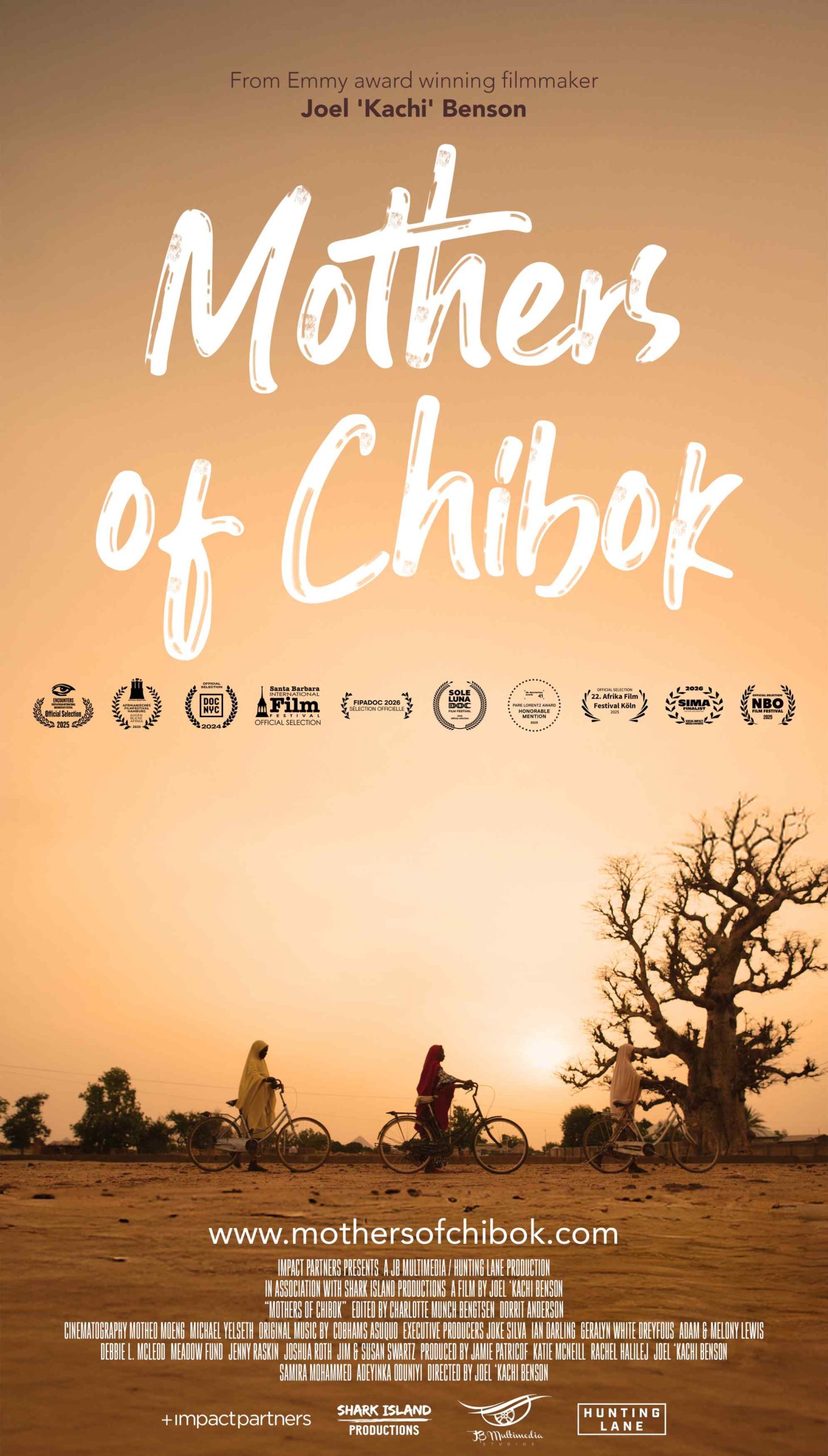
The documentary tells an incredible story of dignity, resilience, and defiance, putting on display the remarkable strength and doggedness of the women in the face of terror. There is so much to learn about these women, from the mothers of the missing girls to the sisters, some of whom are now mothers, to the returned girls who have also become mothers. There is also a lot to learn from them—about dignity of labour, about faith, hope and gratitude, and about moving forward even when you cannot move on.
Listed as one of “Afrocritik’s 30 Remarkable African Feature Films of 2025”, Mothers of Chibok is enormously insightful and deeply moving. It is also considerably joyful. And it is visually beautiful. Sunrises and sunsets have never looked so stunning on Nigerian screens. Rainfall has never been so miraculous. Farmlands are rarely so compelling. And it’s all very deliberate, a recognition of the power of film to dignify and shape perception.
In 2019, Benson used his virtual reality documentary short, Daughters of Chibok, to immerse viewers in the grief that one Chibok mother (Yana) was experiencing at the time. The VR short would become the first African film to win “Best VR Immersive Story for Linear Content” at the Venice International Film Festival.
Now, Benson describes it as “a knee-jerk reaction to grief”. Mothers of Chibok, a feature documentary, is the result of spending more time in Chibok with the mothers and, as Benson noted at the film’s theatrical premiere in Lagos, an intention to portray the beauty of Chibok and its people.

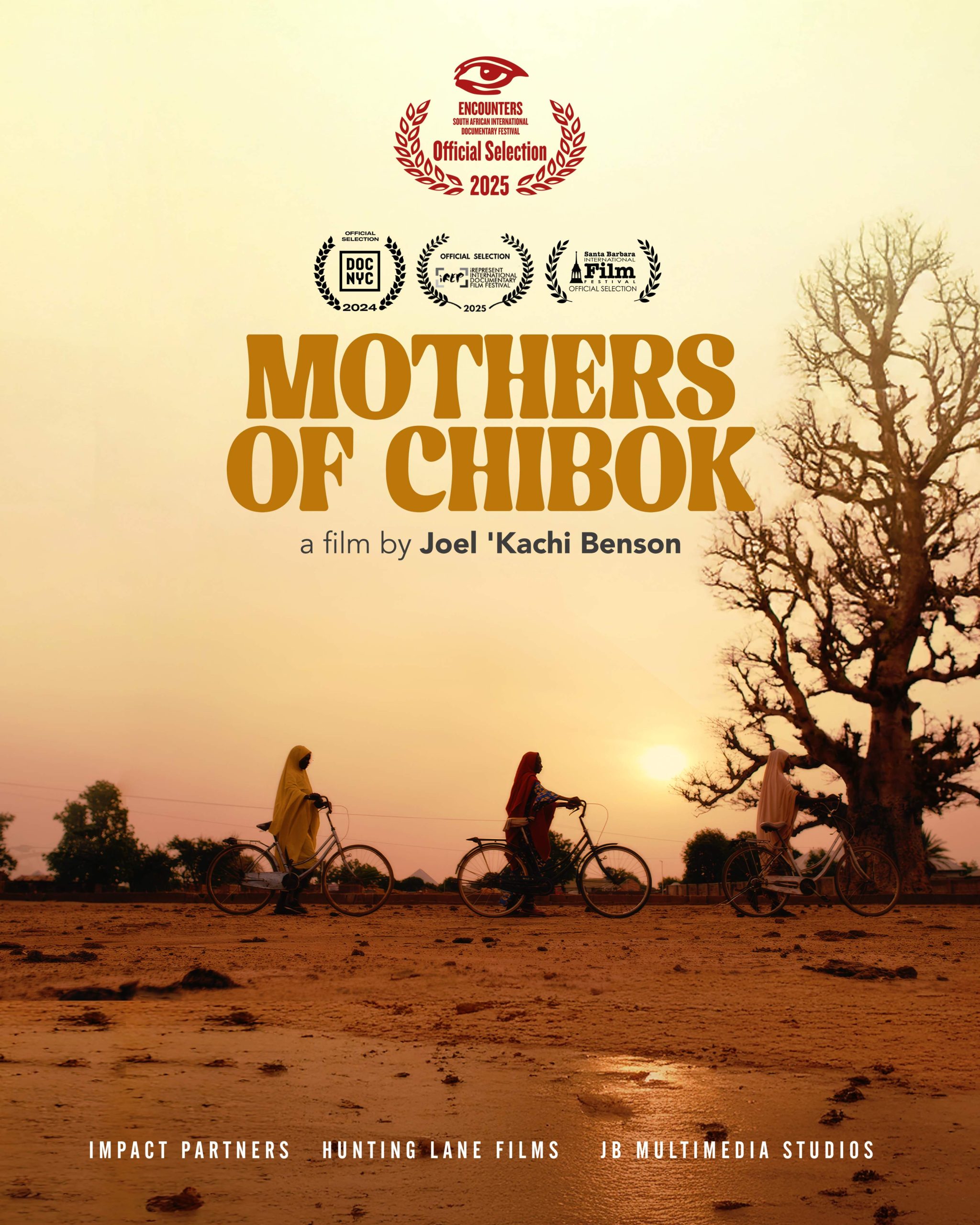
Mothers of Chibok is touted as having the widest and most prominent theatrical release for a Nigerian documentary, premiering ahead of International Women’s Day 2026. But even more important is the social impact element of the film’s rollout. In collaboration with non-profits and sponsors, Benson is mobilising support to assist the Chibok mothers in improving their farming yield. Earlier efforts have resulted in an increase in harvest, and groundnuts from the mothers’ farms have been converted into peanut butter, groundnut paste, and groundnut chocolates. It is an interesting approach, one that shows how much value filmmaking, particularly documentary filmmaking, can add to society.
As Afrocritik culture journalist Frank Njugi put it in his 2025 review, “Mothers of Chibok is a revelation that filmmakers, at their best, might not fix history but may prevent it from being buried. In the absence of miracles, they offer attention. And sometimes, as this film proves, attention is the most radical act available.”
Runtime: 1 hour, 28 minutes
*Mothers of Chibok opened in cinemas across Nigeria and Ghana on the 27th of February, 2026, following its world premiere at DocNYC in 2024 and multiple screenings at festivals around the world, including Encounters South African International Documentary Film Festival, where it won the Encounters Al Jazeera Award for Best African Feature-Length Documentary.
Vivian Nneka Nwajiaku is a writer, film critic, TV lover, and occasional storyteller writing from Lagos. She has a master’s degree in law but spends most of her time watching, consuming, and discussing films and TV shows. She’s particularly concerned about what art has to say about society’s relationship with women. Connect with her on X @Nneka_Viv