



FIFA chose optics over advocacy, and African supporters are now paying the price.
By Tuka Letura
The 2026 edition of the world’s greatest sporting event is now less than a month away.
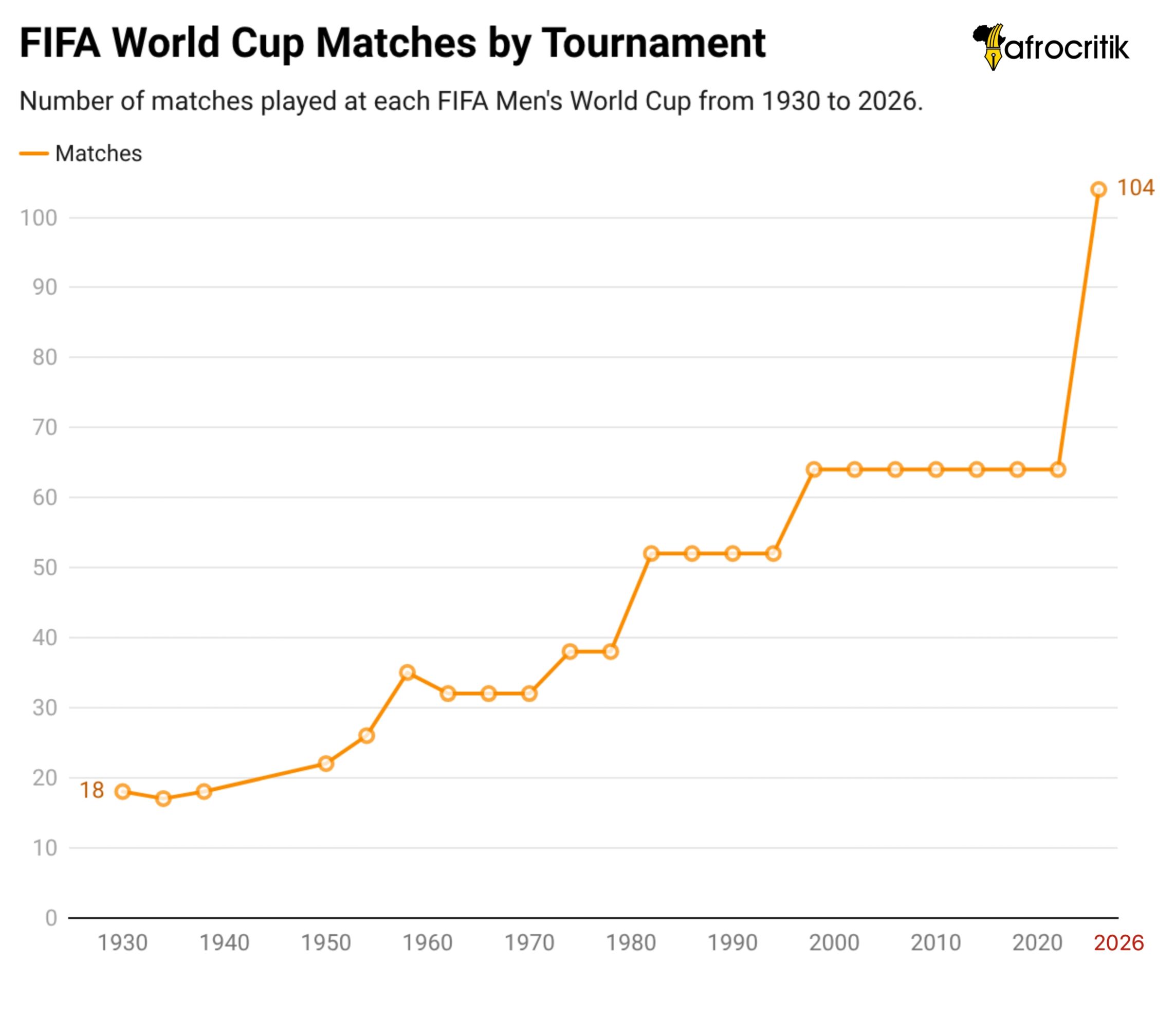
A tournament on a scale never seen before: 104 matches across 16 host cities in three countries. The 2026 FIFA World Cup kicks off in June across the United States, Canada, and Mexico. And according to FIFA President Gianni Infantino, this will be the biggest, best, and most inclusive World Cup ever.
But here we are, just weeks from kick-off, and millions of Africans — along with countless other fans whose countries have qualified — are left asking a question that goes beyond whether they can afford to be there. Will they even be allowed through the door, particularly into the United States? The reasons are as economic as they are political.
FIFA’s own travel guidance tells part of the story. But set against the real immigration climate, the currency collapse across the continent, and the enforcement machinery waiting on the other side of the border, the full picture is far bleaker than any official page will admit.
Start with the baseline. Even before factoring in travel bans or bond requirements, the structural challenge surrounding this tournament is immense — and it is embedded directly within the entry systems of all three host countries.

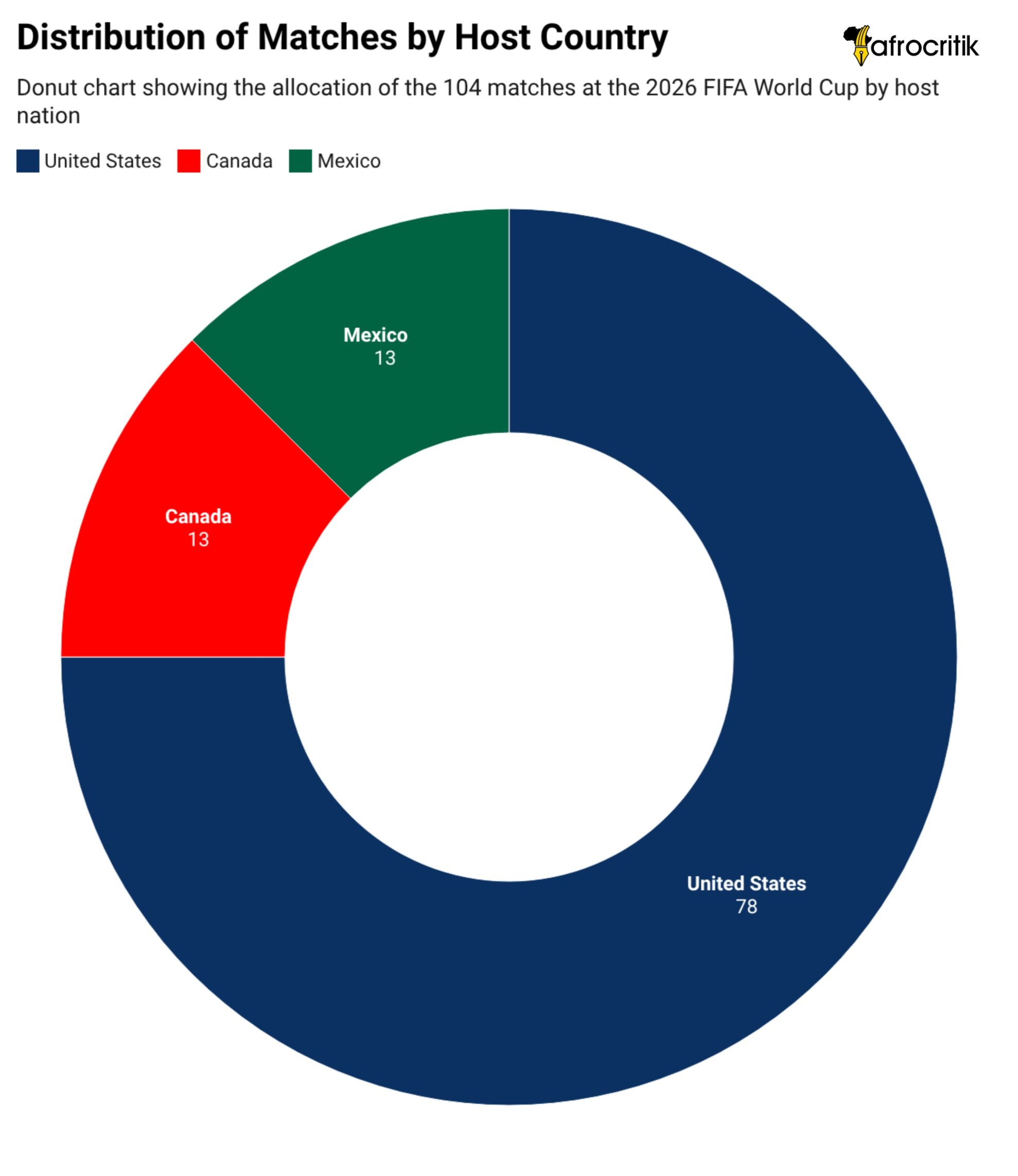
The United States will host 78 of the tournament’s 104 matches, including both semi-finals and the final at MetLife Stadium. In practical terms, that makes it the centre of the 2026 World Cup. It also means that access to the tournament is largely determined by the American immigration system — a system built on a deeply unequal distinction.
Supporters from the 42 countries in the US Visa Waiver Programme can apply for an ESTA online, receive approval within minutes, and travel for up to 90 days. For a fan from Germany, Spain, or Japan, the process is little more than an administrative footnote — one form, a modest fee, and they are on their way.
For everyone else, the process is altogether different. Fans from countries outside the Visa Waiver Programme must obtain a B1/B2 visitor visa to attend the World Cup.
That means completing the DS-160 form — a lengthy application in English that typically takes around 90 minutes — paying a non-refundable $185 fee, and securing an in-person interview at a US embassy or consulate. Applicants are also expected to provide employment history, travel history, accommodation details, a proposed itinerary, and evidence of strong ties to their home country. In effect, they must prove not only that they want to attend the tournament, but that they intend to leave afterwards. And all of this must be done before any visa approval is guaranteed, leaving fans to commit time and money with no certainty of outcome.
FIFA’s response to this structural imbalance was the FIFA Priority Appointment Scheduling System, known as FIFA PASS. Launched in November 2025 at a White House event attended by President Trump, Secretary of State Marco Rubio, Secretary of Homeland Security Kristi Noem, and FIFA President Gianni Infantino, the system grants ticket holders priority access to visa interview appointments.
It is, at best, a faster queue.
FIFA PASS does not guarantee that a visa will be issued. It does not relax eligibility criteria. It does not reduce scrutiny. It simply helps applicants reach the same decision point more quickly. FIFA’s own ticketing terms are explicit: if a ticket holder fails to obtain the required visa or is denied entry, no compensation will be provided. And the pricing has yet to be addressed.
The fast track still leads to the same gate. And for millions of African supporters, that gate remains firmly locked.
Canada offers no dedicated pathway at all. There is no special World Cup visa, no expedited approval system, and no meaningful regulatory concession. Three group-stage matches involving Ghana, Côte d’Ivoire, and Senegal are scheduled in Canada, with additional fixtures possible depending on how teams progress through the knockout rounds. Fans travelling to Toronto or Vancouver must apply as ordinary tourists, providing bank statements, travel history, and proof of financial stability. The only accommodation on offer is a suggestion that applicants include the phrase “FIFA World Cup 26” in a free-text section of the form. That is the entirety of the special treatment.
Mexico is perhaps the genuine bright spot. Fans who already hold valid visas or residency permits for the United States, Canada, the United Kingdom, Japan, or the Schengen Area can enter Mexico without obtaining a separate tourist visa. For members of the African diaspora, this is a useful and meaningful concession. But for a supporter travelling directly from the continent — particularly from sub-Saharan Africa without prior international documentation — the standard Mexican visa process still applies.
So even before additional restrictions are considered, the structural disparity is impossible to ignore. A fan from Europe may barely notice that an immigration process exists. A fan from anywhere on the African continent faces a months-long administrative gamble, a non-refundable fee, and the very real possibility of being turned away before the tournament even begins.
Now add the travel bans, and the story shifts from difficult to devastating.
Following two proclamations from the Trump administration, the United States restricted or limited entry for nationals of 39 countries. Among the nations that have qualified for the 2026 World Cup, supporters from Côte d’Ivoire, Haiti, Iran, and Senegal are affected. Two of those four countries are African.
Their players will still be allowed to compete. Athletes, coaches, and support staff are formally exempt. Their supporters are not. They will be barred from entering the United States to watch their teams.
Senegal open their campaign against France on 16 June in a match played on American soil. Côte d’Ivoire face Ecuador in their first US-based fixture on 14 June. Fan groups that travelled to Qatar in 2022 are now being told they cannot make the journey this time. The players will be on the pitch. Their own supporters will not be in the stands.
The timing of the expanded restrictions is particularly revealing. On 5 December 2025, at the World Cup draw in Washington, DC, FIFA President Gianni Infantino presented Donald Trump with the inaugural FIFA Peace Prize, praising him as “a leader that cares about the people”. Just three days earlier, Trump had used the closing moments of a White House cabinet meeting to describe Somalis as “garbage” and to say that “their country stinks”. The expansion of the travel restrictions — which included Senegal and Côte d’Ivoire — followed the next week. FIFA chose optics over advocacy, and African supporters are now paying the price.
FIFA PASS offers these fans no relief whatsoever. The priority appointment system is available only to supporters already eligible to apply for a visa. For nationals of banned countries, the programme is entirely meaningless — you cannot fast-track an application that the government will not accept in the first place.
For African nations not subjected to an outright travel ban, the United States has introduced something arguably more insidious: the Visa Bond Pilot Programme. It sounds bureaucratic, almost innocuous. In practice, it is a financial barrier of staggering proportions.
As of 2nd of April 2026, the US State Department expanded the programme to cover 50 countries, requiring certain travellers to post a bond of up to $15,000 before entering the country on a temporary visa for business or tourism. Five African nations that have qualified for the World Cup are directly affected: Algeria, Cabo Verde, Côte d’Ivoire, Senegal, and Tunisia.
Officially, the policy is presented as an immigration control measure targeting countries with historically high B1/B2 visa overstay rates. Depending on the outcome of the visa interview, applicants may be required to deposit $5,000, $10,000, or $15,000 as a condition of travel. The money is technically refundable, provided the visitor departs the United States on time — but there is a catch within the catch: paying the bond does not guarantee that a visa will be granted.
Set against the economic realities of the countries affected, the scale of the requirement is extraordinary. In several of these nations, average annual income hovers around $5,000. At the upper end, a $15,000 bond amounts to roughly three years of earnings — and that is before a supporter has paid for flights, accommodation, local transport, or even the match ticket itself.
Here again, FIFA’s much-publicised PASS system offers no meaningful solution. Priority interview access does not waive the bond requirement. A supporter can purchase a legitimate match ticket, register through FIFA’s official platform, secure a faster appointment, and still be told, in effect, that entry depends on producing $15,000 upfront. The tournament’s headline administrative fix collapses at the precise point where many African fans need it most.
The response from supporters has been telling. Fan groups in affected countries have begun calling for coordinated travel boycotts, urging fellow supporters to watch from home because attending in person has become financially impossible. This is not a matter of reluctance or fading enthusiasm. It is an organised withdrawal in the face of an impossible demand.


The chilling effect extends beyond the five nations formally identified. Reports suggest that bond requirements have also been flagged for applicants from countries such as Algeria, Angola, Benin, Botswana, Cameroon, the Democratic Republic of Congo, Gabon, and Ghana.
So while fans from qualifying nations struggle to gain entry, supporters from non-qualifying countries face the same barriers — unable to attend even as neutral spectators. The financial and administrative gauntlet is formidable enough on its own. The visa bond requirements make it something else entirely.
Take South Africa, a country not directly affected by either policy. Bafana Bafana open their tournament in Mexico City in what is their first World Cup appearance in more than a decade. For a South African fan to attend all three group-stage matches, the total cost ranges from R73,000 to R135,000 — roughly $4,000 to $7,500. That estimate includes flights, visa fees, match tickets, accommodation, food, local transport, and travel insurance. Measured against South Africa’s average monthly salary, the trip would cost between ten and twenty-five months of income.
And South Africa is far from the most difficult case.
Across Sub-Saharan Africa, currencies remain under severe pressure against the dollar. The Kenyan shilling has weakened under the strain of external debt repayments. The Mozambican metical continues to suffer from the combined effects of public debt and repeated natural disasters. Even the West African CFA franc — pegged to the euro for relative stability — represents purchasing power far below what dollar-denominated travel demands. North Africa is not immune, and while the pressure there is arguably less acute, it is still significant.
That matters because virtually every element of attending this tournament is priced in hard currency. Flights from Africa to North America are long-haul by definition. Hotels, tickets, and insurance are all paid in dollars. If a team advances, supporters face additional domestic flights between host cities, each adding another layer of expense.
There is also no unified World Cup visa. Fans planning to attend matches across the United States, Canada, and Mexico must navigate three separate immigration systems, with three distinct application processes, three sets of supporting documents, and three separate fees. A US visa may, in some cases, facilitate entry into Mexico — but it does not remove the need for separate authorisation to enter Canada.
The US visa application fee alone is $185. For many African supporters, that represents several months of disposable income before a single ticket is purchased or a flight is booked. Even without travel bans or bond requirements, the 2026 World Cup remains financially out of reach for much of the continent.
Put all of this together, and the picture is damning. Getting to a World Cup has never been easy — ask any supporter making the trip from South America or East Asia, anywhere that requires serious miles and serious money. The costs are brutal. The logistics are brutal.
But African fans are not dealing with just that. They are dealing with something steeper: a compounding of financial, administrative, and political barriers that exists nowhere else in the tournament’s supporter base to the same degree.
That is the central irony. FIFA has spent months telling the world that 2026 is the biggest, most inclusive World Cup in history — the most teams, the most matches, the most of everything. And yet, for a significant portion of the global football community, the gates are effectively shut before a single ball is kicked.
This is what the World Cup is supposed to be: cultures in the same stadiums, flags in the same concourses, strangers from opposite ends of the earth watching the same game. That has always been the idea. Whether 2026 actually delivers on it is another question entirely.
It does not help that the primary host nation is one where football is still fighting for oxygen. If the supporters who feel this sport most deeply cannot afford to be there — cannot get a visa to be there — what remains?
For now, one can only hope the barriers prove smaller than they look. Hope that 2026 earns its billing. But hope is not a policy. And right now, the policy is failing the very fans the tournament claims to celebrate.
Tuka Letura is an experienced sports writer with over five years of experience in the craft. He uses data and statistics to provide analysis and commentary. From regional to worldwide competitions, he has covered a wide range of sports-related events and topics. He is devoted to sharing his enthusiasm for sports with his audience and engaging them with interesting anecdotes and viewpoints.