


The straw of the thriving skincare business in Nigeria could also be traced to the gut of a market reared on materialism.
By Fortune Akande
Skincare, organics, natural glow, skincare routine, glowing skin, and natural skin essentials are some of the words, phrases flurrying in the Nigerian beauty market since the last two, three years. And so when, in October 2025, BusinessDay reported Nigeria’s local skincare market at an estimated 14 Trillion Naira — approximately $9.5 billion — the news landed without much surprise. But fourteen years earlier, in 2011, the WHO had written the nation as the bleaching capital of the world. That that designation now feels as though it were a different country — a different conversation entirely — is itself the story.
Social media being the engine of this hype cycle, young people today — content creators, influencers, celebrities as well as regular users — have become the major drivers of this uptrend seeing serums, cleansers, sunscreen and moisturisers sell like hot cakes. Viral posts trumpeting “glowing” or “sunkissed” faces fuel the desire for this new cool and, as ever, desire begets the quest for satisfaction; in response to which scores of “skinfluencers” then flood the supply chain providing recommendations, prescribing routines, posting Get-Ready-With-Me’s, and vlogs. The content creation era also blurs the line between consumer and producer when satisfied consumers give reviews, or, in an interesting cycle, post their own “skincared” faces, and possibly go viral themselves.
These elastic forces that have sent the market flying are not unfamiliar, though. In his text on social psychology, Social Foundations of Thought and Action, Albert Bandura resolved their archetypes into “vicarious reinforcement” and “reciprocal determinism”. The former explains what happens when a person who repeatedly encounters desirable “skincared” faces alongside their formulas surrenders to the indulgence. “Seeing that the actions of others produce good results increases the likelihood that observers will behave in a similar way”, Bandura notes.
However, the agents of behaviour and environment that pillar his theory are only two points on the loci of his “triadic interacting system”. Bandura insists that behaviour, environment, and personal factors all operate interactively as determinants of each other. This implies that an individual’s desire for their skin to look good is just enough to rouse action; the effort involved, convenient or not, is almost entirely disregarded (vicariously enforced). It is this way that personal preference collides with environment and behaviour to establish reciprocal determinism — and in their continuous interplay — create a half-real, half-virtual milieu where skincare is king.
The Bleaching Epidemic
Naturally, at the nexus of these interweaving fiscal and cognitive lines lies one thing: a product. And for this, the country has seen the importation of supplies as much as the ambition of local businesses. These duo, however, are not new boats in the ocean of the country’s beauty market. What is different is the gradual replacement of the notorious skin-whitening, brightening, lightening mixtures with their melanin-friendly counterparts.
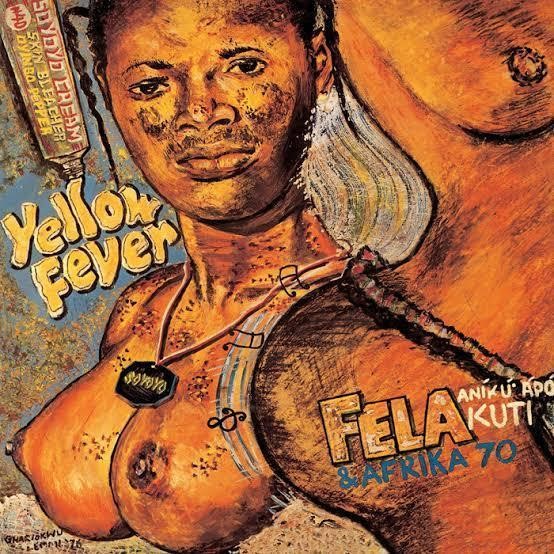
In Nigeria, the bleaching epidemic dates far back. From Fela Kuti’s 1976 satire, “Yellow Fever”, to Burna Boy’s “Comma” forty-four years later. Through many years of latency in a mutative colonial era, the light skin gained a foothold, notably among women and the younger population, as a status symbol and the endorsed beauty standard. Perennial monikers rooted in colourism, such as yellow pawpaw and òyìnbó pepper (òyìnbó, which is Yoruba for “white person”), are proof enough.
Listen to the 1963 Highlife classic, too, “Omo Pupa” by Dr Victor Olaiya, a yearning for the love of a light-skinned woman: Omo Pupa l’emi n fẹ — A light-skinned lady is my desire. Seemingly innocuous — say, a statement of sheer preference — still, there is something about how it subtly others an antithetical dark skin, especially when one considers the social context of its release.
On this matter of “othering”, cultural scholar Stuart Hall’s famous treatise on cultural identity offers surplus. Hall, at first, recognises the othering imputable to the Eurocentric spectrum of representation. But then, alluding to post-colonial scholar Frantz Fanon, he sets this othering apart from another where the minority that has been othered becomes subject to the knowledge of their own othering, “not only as a matter of imposed will and domination, but by the power of inner compulsion and subjective conformation to the norm.”
What Hall emphasises here is that, over time and across generations, minority groups start to believe nothing of their identity other than this imposed inferiority. It is a virus that has eaten deep, this inner compulsion. And amidst its many festerings, this self-rejection of one’s skin is the most noxious. A people that have incorrectly internalised a Eurocentric lens refract an apparition of Whiteness at their psychological zenith, against an antithetical Blackness at the nadir — turning themselves into a herd of social climbers in the process. And what can be worse than a target than the most salient symbol of their iconography?
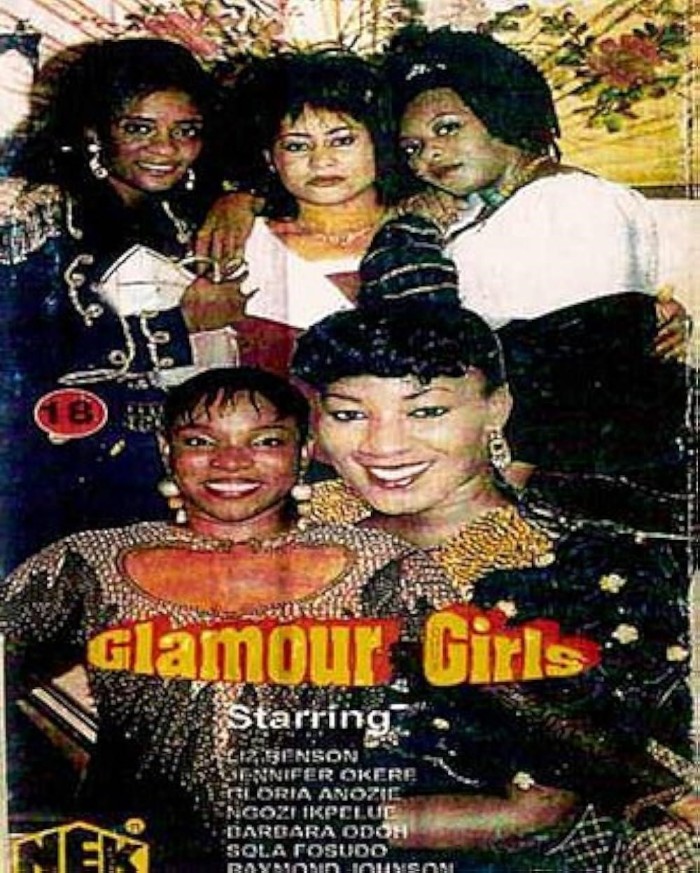
But the music is not alone in it. Nollywood has long been the doyen of colourism in the media. Castings and storylines are coloured the same as the flag of allegiance to a superior light skin, with women the sole object of this bias. A large number of the home videos of the early 2000s through the DVDs and films of the 2010s feature sophisticated women or those occupying higher social strata as light-skinned, at once covertly and overtly tending to the deciduous tree of colourism. Dark-skinned actresses and video vixens have often reported insidious comments along the lines of their skin not being lighting-favourable, amongst other put-downs, leading some to bleaching.
From the classroom to markets to business meetings, job interviews, public relations, dating and sex work, colourism has long toned the monochromes of everyday interactions. The most potent catalyst of the influential Nigerian cross-dresser Bobrisky’s meteoric rise was the change in their skin colour. Bobrisky would also, alongside a lifestyle of showboating, start their own line of bleaching creams that catered to the insecurities of wanting women.
Men, too, preferred light-skinned women — it satisfied their colour bias while implying, by the logic of a skin being “expensive to maintain”, that he was a high-value man to husband such a woman. So it was only natural that, in marriages, women uninhibitedly bleached their skins to keep their husbands. The only hope of tiny, local natural skincare brands, then, to maintain cash flow was to adopt the bestselling baits: whitening, brightening, lightening.
The Climate Is Changing
Healthy skin products are gaining mainstream appeal today, especially among youths in Nigeria: from local to natural, and organic to imported. For Adewoyin, after getting badly burned in 2023, she only uses imported products. “And a bulk buy that includes oils, serums, acne wash, sunscreen and more costs me seventy to eighty thousand currently,” she adds.
For Loóre, locally-made, natural products have remained faithful to her skin. “I use Dudu-Osun for my general body wash, and moisturise with shea butter and coconut oil,” she says. “And the oil is the most essential for me; I have dry skin.”
While, for Ochuko, her regimen is more holistic. “I use one soap and a traditional net sponge, but I also enjoy my face wash. For my face too, I switch between solid cocoa butter and unpackaged shea butter, a natural ingredient. Cold-pressed jojoba oil, too, from time to time, or I just go in with my sunscreen because of my oily skin. Then there is my lip-balm; I drink a lot of water; and I make sure to eat at least a fruit or vegetable at least every two days. My semi-monthly routine: exfoliation, steam treatment, egg-white mask and cucumber slices.” Ochuko’s products are both imported and local, too. “My sunscreen is the most essential,” she says. “My skin is very sensitive, and so it tends to react almost immediately.”
From these accounts, it becomes clearer what is meant by evolving consumer values: those “personal factors” Bandura swore by. The Eurocentric lenses are losing their curvature, wearing off; the skin as a site of becoming. On social media too, TikTok, for instance, users are often seen sharing before-versus-now posts showing skin, once bleached, recoiling and finding its natural self again. Persons living with albinism are not left out of the party: More than ever before, hydration and broad-spectrum sun protection regimens have come to the fore. But while the vitality of social media is agreeably the conduit of much of this change, so many other routes have led to this point.
Depleting the Bleaching Ozone
Take “Brown Skin Girl”, the 2020 hit led by Beyoncé and Nigerian star, Wizkid, which went on to clinch a Grammy for its stunning montage celebrating the beauty of Black women; or the 2019 documentary, Skin, by Nigerian actress Beverly Naya, which unravelled, through a chain of interviews, the complexities of skin bleaching in Nigeria; or even the “no filter” social media countertrend. All of these are fresh iterations of the “Black is Beautiful” ethos.
But if we opine that certain consumer values in beauty are evolving, among Nigerian youths especially, the case of skincare can not be an isolated one. If anything, it is the working of a grander schema behind the scenes.
Wellness
The wellness syndrome — to give it a name — has surreptitiously crept into the youth subculture in Nigeria, sprouting its strong arms, not only into the skin department, but through the sleeves of new trends as well: gym culture, running clubs, no-soda challenges, the rising use of lip gloss among men, the reception of natural dreads, calibrated water bottles, etc. A 2023 article by Elle situates this beauty/wellness fad in a global context. Through this outlook, the hype cycle in the Nigerian skincare market, beyond the myriad of influences already stated, finds an umbrella.
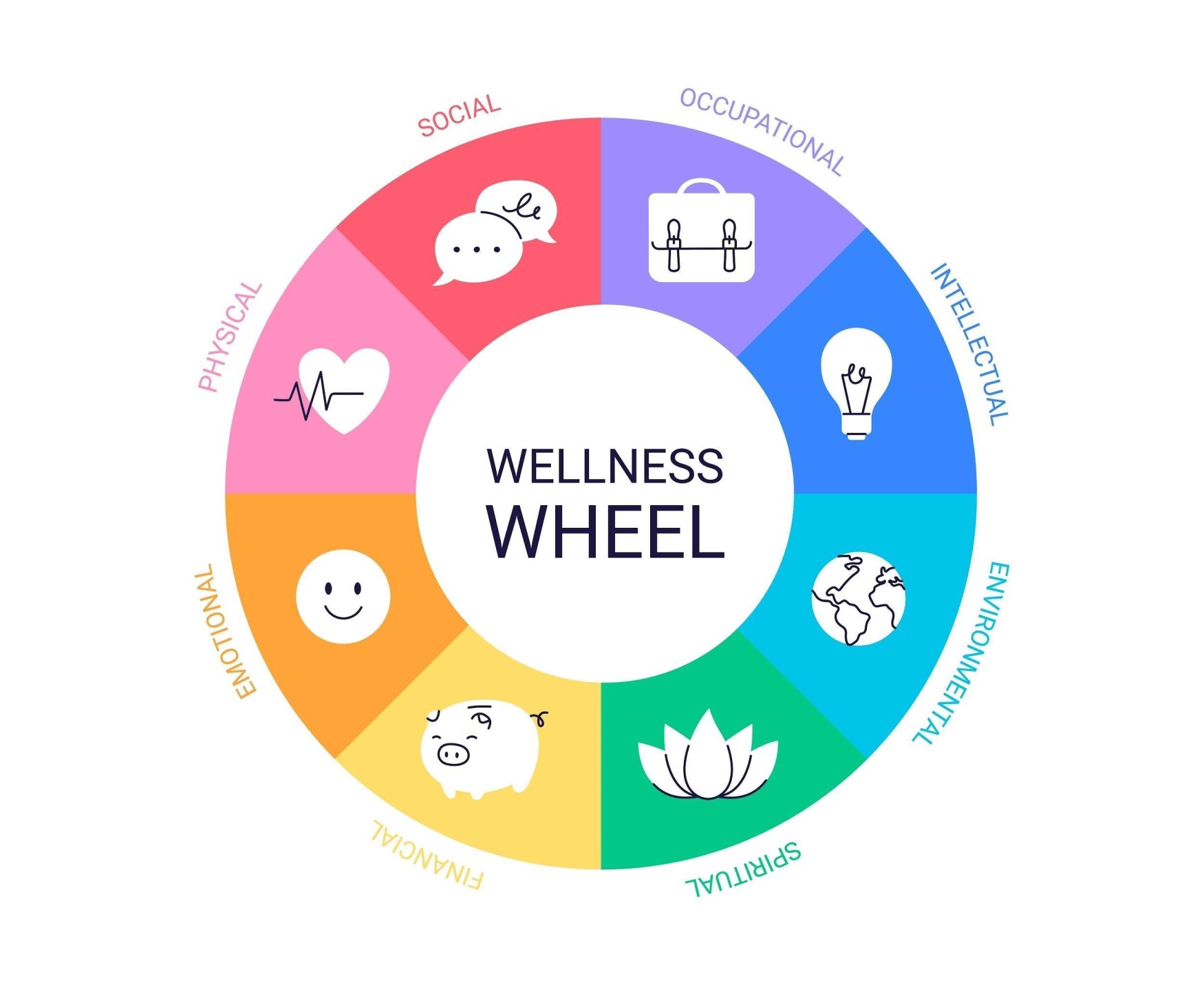
Wellness is the selling point of skincare. Wellness takes the bare concept of beauty, “looking good”, and reaches for its emotional core, advertising some kind of harmony of body and soul. Cleansing, moisturising and sun protection make the basics of these routines; the multi-step and intermittent acts of slathering and rubbing share semblance with a ritualistic performance to obtain dermal salvation. Since gaining global momentum at the turn of the decade, the social media sharing culture has also propagated this wellness trend, particularly leading to a groundswell of healthy skincare advocacy parried away by social media algorithms. What started off as scattered needles of rain has now gone and become a torrential affair.


Marginalia
The straw of the thriving skincare business in Nigeria could also be traced to the gut of a market reared on materialism. And materialism, as Marxist philosopher Guy Debord theorised, favours the spectacle over substance. In his The Society of the Spectacle (1967) he defines the spectacle not as a collection of images, but as a social relationship mediated by them, transforming “being” into “having”, and finally into “appearing”. So while some negotiate the market for identity and experimentation, for others it signals status. An all-boxes-checked skincare package costs as much as eighty thousand naira, for a start, says Adewoyin, and that is more than the country’s minimum wage (seventy thousand naira), making high-end skincare an indulgence of the privileged, and echoing the standards that sponsored bleaching in the first place.
Home-grown Skincare Brands
Alongside this changing climate, too, has come a string of innovations in local natural skincare brands: the sunny-side-up of homemade bleaching products. At its 2025 edition in September, “Beauty in Motherland” — one of the largest gatherings of beauty professionals in Africa — featured a heavy presence of skincare brands. A 2023 Vogue article, too, documents the early ascension of these African brands to global relevance, chronicling their efforts at flagshipping natural ingredients and expanding their product line.
“I feel like this is one part the Nigerian beauty industry needs to come out on a lot more,” says Ifeoluwa Tojola, founder of Orchid Skinn & Orchid Skinic in an exclusive interview, while answering to the peculiarities of the Nigerian skin her brand caters to. “We understand our skin better than, say, a Korean would,” she adds. Tojola also mentions that on the Fitzpatrick skin-type chart, dark African skin lies between types IV and VI; “And that makes us prone to hyperpigmentation,” she says. “In our formulas, we try to factor our climate — making lightweight products, combating trans-epidermal water loss — and we are also able to control melanogenesis from different angles.”
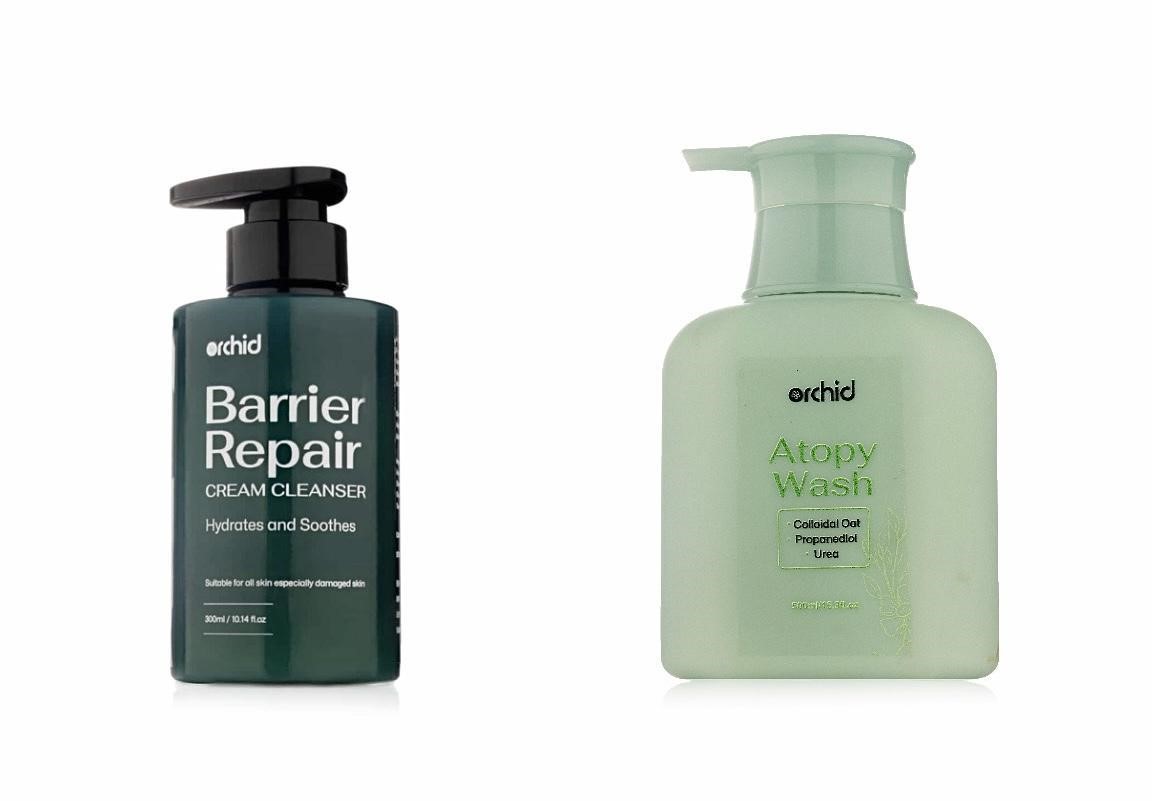
“Running a Nigerian skincare brand is not ‘cute,’” Tojola says time and again. Apart from the challenges she continuously faces, such as high shipping costs for formulating ingredients, stifling requirements from regulatory bodies, competition with imports, and an unstable economy, there is also the work of educating consumers. “So there are two categories of customers. There is the ‘educated but sceptical’ — often less than 35 years old, and more familiar with imported products — and there is the ‘uneducated and impatient’ — usually older, and expecting quick fixes.” She explains that this education is the responsibility of brands, to build trust across both categories.
“There is a [primary] desire for value now [among customers]. There is inflation, so as a brand, you have to find a way to balance quality, accessibility, and sustenance.”
The advent of homegrown brands like this — it is clear — is significant not only for the country’s economy, but for effective cultural reclamation. French historian and philosopher Michel Foucault’s idea of pouvoir-savoir is instructive here, where he parses the dynamics of power and knowledge creation. That is to say that a sure grip (power) on the nature of the finished goods consumed locally helps set straight what beauty means (knowledge), or should mean to a Nigerian. Images of radiant natural skin are employed for the visual aesthetics of these brands, and is a way of, gradually, rewriting the visual language of modern sophistication.
Whistle-blowing
However, bleaching remains widespread, which is one way to say colourism persists. In January 2025, Nigeria’s Minister of State for Health and Social Welfare spoke in a regional workshop in Gabon, campaigning for the elimination of mercury-containing cosmetic products. Also, neighbouring countries remain complicit in this problem, smuggling bleaching products into markets nationwide. There is the case of misinformation, too. Bleaching products are labelled with euphemisms, or impostors like “toners”, or marketed by their sellers to potential buyers as products meant to “maintain their skin.”
The Bigger Picture
Healthy skin care practices are much more prevalent. In August 2025, the country’s President Bola Ahmed Tinubu placed a ban on the export of raw shea nuts. As the world’s largest producer, the policy aims at improving its value locally. The holes in that regulation aside, it is evidence that positions the hype cycle as beyond a mere trend and more as a movement: evidence of a new generation of Nigerians more comfortable in their skin, and a government catching the hint of a possible hotspot.
Frankly, this counterculture attests to the pervasive theory in (feminist) cultural studies that, at many points in history, women are often at the heart of popular cultural trends, positioning women as caryatids of popular culture. However, certain identity-related topics, such as that of hair grooming — where the growing out of African hair, both in boys and girls, is perceived as untidy and condemned to being shaved off — still suffer from backward ideas. But so is the case: that with the skincare movement being nothing short of a revolution, one could only wonder what’s next.
Fortune Akande is a Nigerian writer & visual artist mostly working across journalism and film. His cultural studies have appeared in The Republic Journal, Deeds Magazine, Kurating, & elsewhere. He also edits the pan-African literary journal, Lounloun.
Cover image credit: Black Skin Directory