

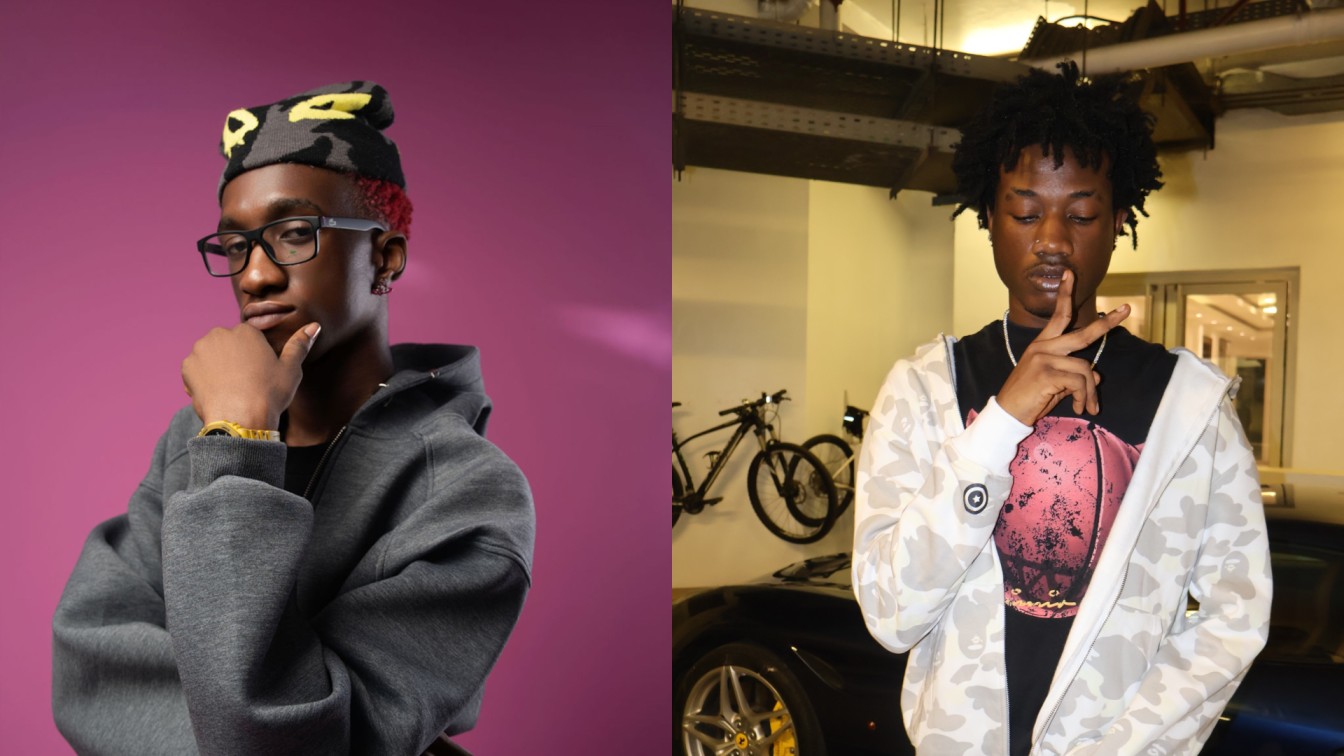

Mavo’s generation takes creative inspiration from hiding: they’re almost elitist in the use of coded language. They are saying, you have to belong among our circles to understand this music.
By Emmanuel Esomnofu
During a recent scroll through Instagram, I saw something interesting: a video clip of an artiste named EF Moon, surrounded by young people playing roles in what seemed like a post-apocalyptic film; a girl who he stands beside, and a guy who carries a mirror past him. Despite the strange composition of that clip, what I found most striking was the music itself: a twisting of several forms, there was a swooning undercurrent that was everywhere and nowhere, carried on the back of assured storytelling. “I like the load / I like the load wey I carry for my back/ wey no body help me, na me choose am,” the artiste sings in the opening lyrics.
Was this a good song? Those who commented had varying reactions. Many people lambasted what they thought was alt-leaning just for the fun of it. While some others liked the strangeness, I leaned more towards likeness, but it was also an acute demonstration of where Nigerian music has reached in 2026.
Anyone who has ears to the ground would surely be familiar with a wave of experimental artistes who are seeking pathways into mainstream relevance. It won’t be the first time this is happening; the first generation of Alté artistes came as far back as the 2000s, but the following decade, the likes of Cruel Santino, Odunsi (The Engine) and Lady Donli made it even more popular. What seems to be the issue now is Afrobeats’ dwindling powers on a global scale, with critics inscrutably pointing at what they deem to be a lack of conscious projection within the music.

These concerns, while valid, are not entirely correct if we are to do some housekeeping. Anyone who listened to Terry G in the 2000s must have thought him a shift from the ‘normal’. So would a Charley Boy have been: brazen-minded creators who wanted to carve unique spaces within the generalised sphere of our pop music. There is no time in history when we haven’t had such crazy ‘scientists’ who uprooted the status quo to implant something different, perhaps crazier.
The prime shortcoming of this era’s ‘scientists’ is that some of them have not acquired the necessary tools for such a project. And when these artistes make such efforts, the weight of their ambition sometimes comes crashing on them. It is not immediately apparent, but between 2022 and now, we have witnessed at least three different styles ‘threaten’ to become the dominant sound.
We have had the Fuji choral-driven style of Asake, massively duplicated but barely effective beyond song-by-song basis; then we had the Victony and Oxlade-championed vocal stacking, where several artists utilised TikTok to promote the sweet allure of their offerings. Right now, it is evident we are in the era of the flashy, the daring: it is not so much a sound as it is a sensibility, that creeping sense that only the brazen lyric, the punchline, can deliver on the altar of virality.
Since this is a yearly report, let us use 2025 as an example. On one hand, you had the usual pop style of the Davidos and Wizkids of Afrobeats, whose celebrity level does not require them to overly experiment. And yet, even they had songs with the artiste Mavo, who embodies the depth of novelty that has often sparked divisive debates about the direction of our music.
Mavo’s music carries an overt strain of nonconformity. “Tumo Weto”, the song which introduced him to me, is perhaps his most regular song, yet its structure is quite distinct: it sprawls out as one long verse, punctuated by mentions of the titular phrase in select sections. His more popular songs like “Shakabulizzy” and “Escaladizzy” have drawn the most vivid reactions, with what some people are wont to describe as the ‘cananisation of Nigerian music’.
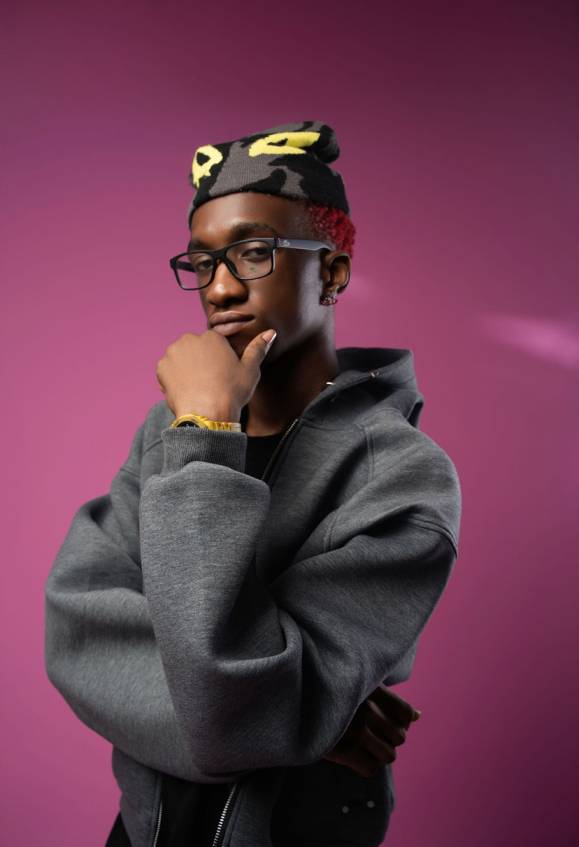
Artistes like WAVE$TAR and Monochrome have also created credible communities on the back of music like Mavo’s. They are your Nigerian versions of Playboy Carti and Trippie Redd, and it is telling that their musical education came from sections of the globalised internet. In their case, the experiences are subverted to mean something to the Nigerian who hears them, as we’ve seen in the case of its most popular purveyor.
Mavo’s themes are flashy, depicting his own coolness and often involve tales of shared pleasures with ladies as open and experimental as he is. His status as an undergrad arms him with a cache of sparkling catchphrases and terms, which would not sound as cool as they are if you aren’t open and experimental, or at least close in age and sensibilities to him.
This explains why the biggest section of his critics have been millennials; they harken back to a time in pop music culture, when language and imagery were intensely connected to the landscape of the larger Nigerian society.
Artistes like 2Baba and P-Square had a firm grasp on the language of their demographies in such a way that you never mistook what they were talking about. You connected instantly with the pulse of that communal-sourced creation, and their ambition was to find an elevation in the slant: from the implied, from the manipulation of voice and tone.
By contrast, Mavo’s generation takes creative inspiration from hiding: they’re almost elitist in the use of coded language. They are saying, you have to belong among our circles to understand this music. Cool shit doesn’t make itself accessible to everyone. Not everyone will agree with this position, but there is little doubt it connects among those it’s meant to connect with.
Zaylevelten is another one who falls into that zone of young, experimental artistes whose existence supposedly threatens the sonic direction of the genre. He taps into a similar lingual plane, but his brilliance is perhaps more audible on close listen. Producing his own music under the sobriquet Tenski, he revels in the creative freedom that has spurred the seminal then 1t g0t crazy, which would likely be a reference in the future for synth-heavy, swag-indebted rap music. Pidgin English is a flexible tool in his hands, situating his global aesthetic within the peculiar geography of mainland Lagos.
I would, however, like to caution, while considering these trendy attempts at experimentation, that the stronger the middle finger of any artiste, the more reliable the other four should be. Creating edgy music demands a depiction of belief, a currency of taste which affirms that there is an audience for this seeming madness.
That is why the EF Moon clip relies on the multiplicity of bodies; that is why you will always find these artistes with groups of people, mostly folk who share that self-absorbed belief rife amongst young Nigerian creatives.
It thus seems that present Nigerian music relies on clusters, on little sections of listeners who are connected to the everyday life of their favourite musicians. The generalised lyricism of P-Square and 2Baba created the national pop star, who you knew across demographics and spaces. Now, an artiste who is popular in Lagos might not be popular in Enugu, and vice versa.
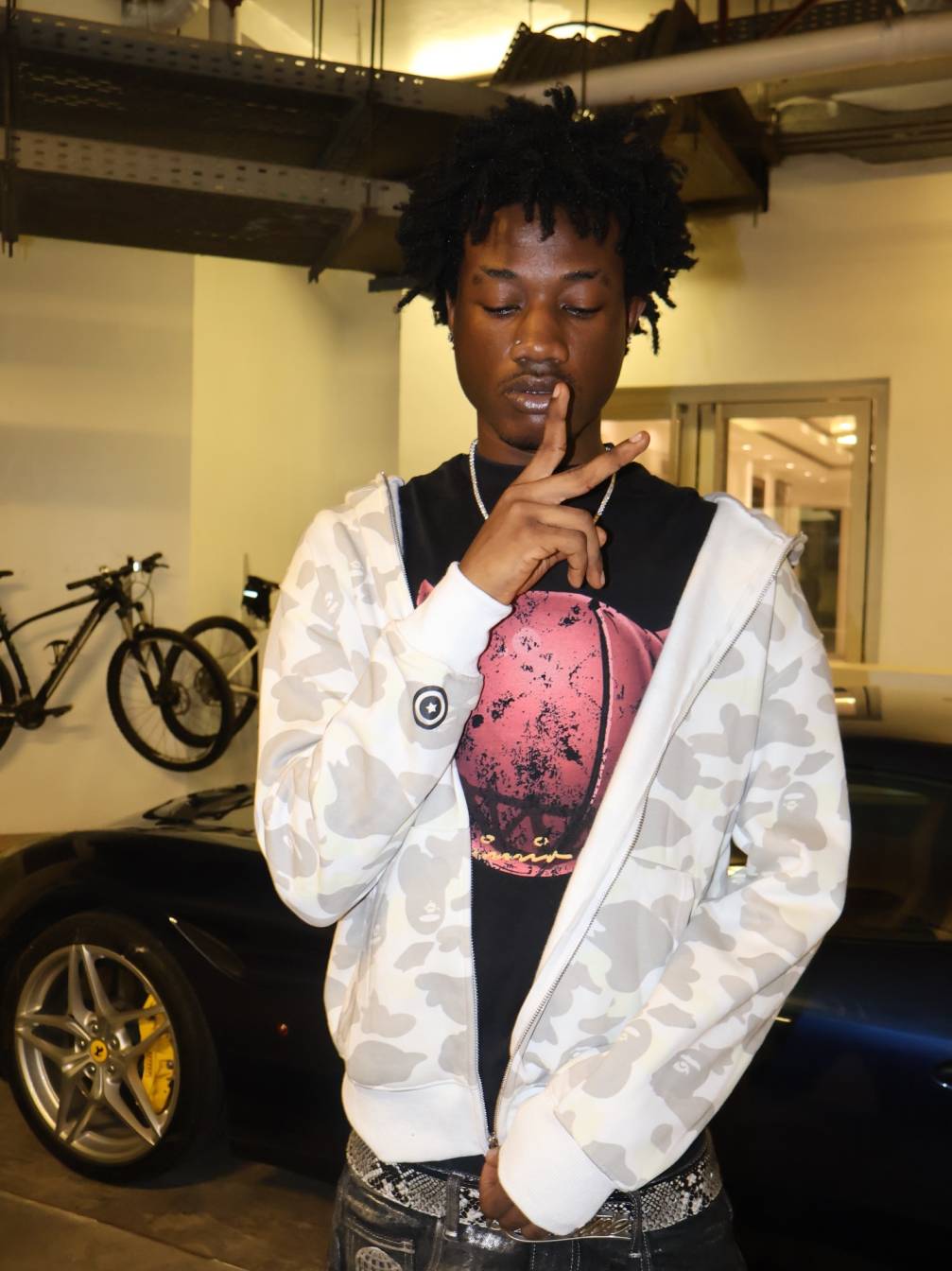
Northern Nigeria spawns unique talents by the day, although they are more intentional in crossing over to bridge the cultural deficit of their region. With streaming and an increasingly powered ecosystem made possible by AI and new technologies, artistes are seldom going through the label route, and are building their own communities with their coded languages.
Does this mean that the generalised experience, the ability of music to unite and create collective memories, will be erased? I do not think so. In recent times, songs like “Joy Is Coming” and “With You” thrived in the sense of community.
Other artistes still make music that owes a lot to society, except that they now have to compete with cool kids who know how to brand themselves better, and who are more savvy on how to utilise the aforementioned tools of the internet. For now, however, the numbers are with the mainstream acts for the sake of their larger audience, but that may very well change.

What obtains in the music scene should never be a bleak image. What is therefore missing is the projection of our differences, the beautiful variance that makes any music industry thrive. We have always had different sorts of artistes, but what crowns these options is deliberate curation, knowledge building from people within the scenes, who are curious—almost anxious even—to see its story told.
As we know it, today’s Nigeria thrives on a sort of pitiful individualism resulting from a crippling economy, of being conversant with a political class that fuels selfishness, ethnic bigotry, corruption, and immoral financial acquisition and the flaunting of the same.
Our music, too, carries the strain of these anxieties: you get the sense that everyone is singing for pecuniary gain, and when this happens, the executives want in on their monetary gains as well. This extends to the press, then the audience, via handouts, popularly known as ‘giveaways’, which is ultimately linked to the practice of asking their favourite acts for money on the streets.
Previous generations had presses and awards and ways of fostering a sense of homeward ambition, a beacon to guide the artiste back home. Nowadays, Afrobeats is a game played on foreign lands, where we agonise about losing Grammy awards or the Grammys misrepresenting our sound; meanwhile, we have almost nothing to point to at home as institutions or hallmarks of music ownership.
It is like the proverbial man who leaves his burning house to chase rats. Afrobeats have been chasing rats for a while, and those who make a claim to the house are not the problem. Rather, it is imperative that when the chasing man returns, he makes peace with what is left of the old house. Could he rebuild it from memory? Does he abandon the old and seek newness?
No one knows for sure where his working arm will swing. With the seeming inability of even the pop stars to connect beyond an ephemeral level (the critic Ayomide Tayo has noted how pop albums are barely resonant lately), it is not impossible we will continue to see music created from the fringes, where the likes of Jeriq and Aguero Banks connect the world with their Igbo raps drenched in survival and triumph; where the gospel troubadours like Anendlessocean and Kaestrings will attend to their own audiences; where Fimitheflow creates a rap persona like Sampha The Great: ambitious and conceptual. The trado-influenced Ife Musiq and DOTTi The Deity, shining from the example of their forebears; experimental genre-benders like Obongjayar and J4v1nny, yet fingering the nerves of our perception—there is indeed enough variance for those who want to find them.
What is clear is that the music listener in 2026 must be intentional about digging beneath the surface for the music they like. As in 1970, as in 2003, as in 2018 and now, there have always been different ideas going into music.
If popular music is not connecting on the intrinsic level that contributes towards a country’s cultural history, I hereby state that the issues stretch beyond the artiste’s singular task of making a song. It goes into the plain of the generational, weakening memories and structures; it goes beyond any one person, and if we must reclaim that quality, then some of the biggest figures in the scene must have to let go of some of the generation’s pleasures. You cannot enjoy the benefit of technology’s wild hand and rebel against it elsewhere. Life seeks balance, more so music, the most potently charged element of life.
*This essay, among other cultural essays, is published in The Afrocritik Report 2025. Download the report here.
Emmanuel Esomnofu is a Nigerian writer and culture journalist. He was awarded ‘Best Writer of 2024’ by The Republic and was named among the ‘30 Under 30 Power Players in Nigerian Music’ by Turntable. He’s working on his debut manuscript.