

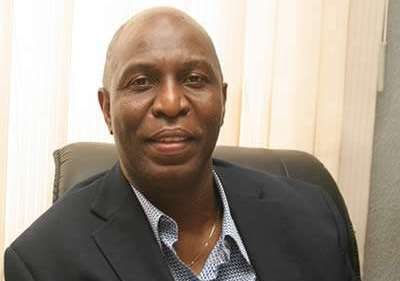

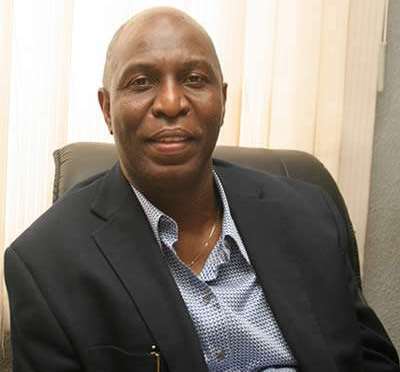
Institutionally, it is perhaps best ethical if Sam Omatseye and The Nation pay silence to matters regarding Tinubu and this government, to save their once good, already tainted names from further destruction.
By Adedayo Agarau
When Governor Seyi Makinde, hosting the National Summit of Opposition Political Party Leaders at the Government House Banquet Hall in Ibadan on April 25, 2026, told the assembled delegates that “those that are carrying on as if there’s no tomorrow… should remember that Operation Wetie started from here. This is the same Wild Wild West”, he was invoking the 1965 Yoruba uprising against federal-imposed electoral fraud as warning rather than threat.
Sam Omatseye, writing in The Nation on May 4 in a column titled “The Yoruba Traitors”, framed the matter as one of Yoruba honour and named Makinde as the latest figure to fail it. The column argues that there is a recurring Yoruba political pathology of high-status defection, with Akintola in 1966 as its founding case and a line of figures running through Akin Omoboriowo in 1983, Olu Onagoruwa in 1994, Lateef Jakande, and Olusegun Obasanjo, into which Makinde now enters. The classification depends on two assertions: that the lineage is real, and that Yoruba cosmology supplies the moral apparatus that forecloses such figures, with the omoluabi ethic of unstainable honour and the republican checks of the Oyo Mesi and Ogboni functioning as the cosmological architecture from which the contemporary judgment is drawn. The classification is deployed against Makinde’s convening of opposition forces, and it carries argumentative force only if the cases on which it rests survive contact with the public record. On inspection, they do not.
No northern governor, Omatseye writes, “could have hosted a meeting on their soil against a northern president like Muhammadu Buhari,” and “such a gathering would not happen in Igboland,” and “in the south-south, imagine a governor doing it under Jonathan.” The frame flatters every other region as more cohesive than it actually was: the North survived sustained internal critique of Buhari, the East survives ongoing critique from within Igbo political and intellectual life, and the South-South critiqued Goodluck Jonathan from within his own region. Omatseye’s “uniquely Yoruba” indulgence of internal opposition is itself a regional construction.
Behind the comparison sits the column’s load-bearing case: the death of Samuel Ládòkè Akíntọ́lá on January 15, 1966, and the meeting Akintola held with Ahmadu Bello, the Sardauna of Sokoto, on the evening before the Nzeogwu coup that would kill them both. Akintola, Omatseye writes, “had been abandoned by the NPC folks in the north and the Sardauna and Sir Kashim told him to make peace with his Yoruba brothers because they did not want any trouble with them anymore,” before flying back to Ibadan and dying the next morning at his Premier’s Lodge in defiance of “offers of surrender” because, according to Omatseye, “he could not kneel, in his towering pride, to Awo and his AG folks.” Omatseye is explicit that he reads the killing as a chosen death: “It is my view he committed suicide by default.”
Read this way, Omatseye positions Akintola as a tragic figure betrayed by his own pride rather than by the political alignments he himself had constructed. It lets the column treat his death as evidence of the larger thesis about Yoruba defectors. None of it survives contact with the eyewitness record. Mallam Mohammadu Maradun, the Sardauna’s personal driver, told Punch in 2019 that he was inside the Kaduna residence when Akintola arrived: “Chief Samuel Akintola, the Premier of the Western Region, called Sardauna on the telephone to say he was coming to see him in Kaduna… When Akintola arrived at Sardauna’s residence, while they were having a discussion, I overheard Akintola asking Sardauna if he was aware that the military wanted to overthrow their governments?”
Ajayi Memaiyetan, the last reporter to interview the Sardauna on January 14, 1966, told The News Nigeria in November 2025 that “Akintola wanted both of them to escape, but the Sardauna dismissed the warning with a wave of the hand.” In Omatseye’s own February 2026 column “Did Akintola commit suicide?”, the source of his current reading, the message Tunji Yusufu reports the Sardauna conveying to Akintola is “the Yoruba don’t like Akintola. Please, call Akintola and tell him that this alliance is off. Let him go and sort out his problem with the Yorubas.” Even on Yusufu’s account, the message is that the federal-regional alliance was being dissolved on the eve of the coup, not that Akintola was being instructed to make peace with Awolowo. The agency in the meeting ran from south to north; the Yoruba premier had come to warn his Northern patron about a coup, not to be scolded.
Beyond the eyewitnesses, the structural setting of January 1966 makes the column’s account harder still to sustain. Obafemi Awolowo had been in Calabar prison for nearly two and a half years, serving a ten-year treasonable-felony sentence prosecuted by the very federal–regional alliance Akintola had helped consolidate, and that the column now treats as having abandoned him on the eve of the coup. There was no free Awolowo for Akintola to refuse to kneel to and no Action Group leadership in any negotiating position; the AG had been politically dismantled by Akintola’s own machinery, with its leader imprisoned and its parliamentary base split by the 1962 floor crisis.
The political architecture of January 14, 1966, was a regional premier, defended by federal security, presiding over a region whose opposition leadership he had helped imprison and whose 1965 election he had helped rig. Operation Wetie was the response to that rigging, and Makinde’s invocation of that memory at Ibadan in 2026 references Yoruba resistance against federal-imposed electoral consolidation — precisely the resistance Akintola in 1965 was suppressing. In Captain Emmanuel Nwobosi’s interview with Max Siollun (now deleted by Omatseye’s The Nation), Nwobosi confirmed that he himself was wounded by Akintola’s fire from inside the Lodge before his men killed the premier; “offers of surrender” do not appear in any near-primary reconstruction of the gunfight.
The Akintola passage matters disproportionately because it anchors everything that follows in the column, and the column’s argumentative method depends on its accuracy. If the historical inversion holds for the foundational case, and on the public record it does, the inversion is not a marginal slippage but the column’s working procedure: a procedure of reconstructing the Yoruba political past so that the present figure under judgment can be assigned a place in a moral lineage the record does not support. Omatseye has written an ahistorical piece, blurring the record with narrative gymnastics to render Makinde a latter-day Akintola.
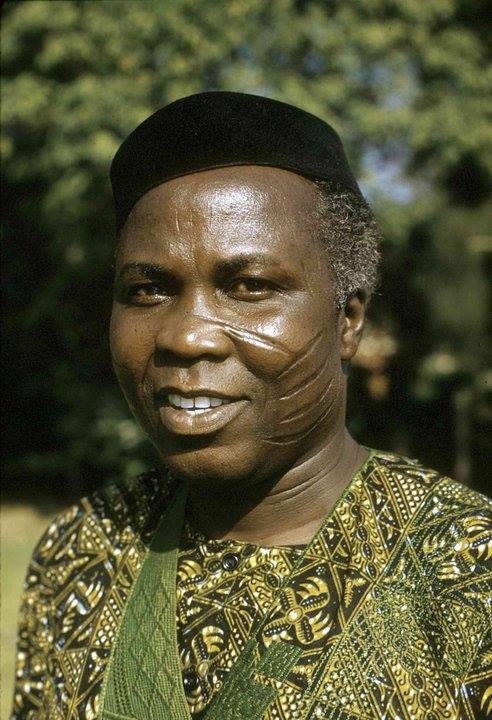
The procedure operates differently in the column’s treatment of the 1983 Ondo crisis, in which the argumentative work is done by omitting context rather than by inventing an incident. Akin Omoboriowo had served as Deputy Governor of Ondo State under Michael Ajasin from October 1979 to August 1983 and stood for the UPN gubernatorial primary in late 1982, which he lost to the incumbent governor and which Andrew Apter, conducting anthropological fieldwork in an Ekiti town in Ondo State during the elections, recorded in his 1987 essay in The Journal of Modern African Studies as having been understood by UPN politicians themselves to have been rigged against him; in Apter’s reconstruction, Omoboriowo’s defection to the NPN involved opportunism and a sincere grievance against a party that had refused him its nomination through the same kind of internal manipulation the party would soon accuse the federal NPN of practicing against it. In any case, the defection cost him in the August 1983 gubernatorial election. The Federal Electoral Commission declared him the winner over Ajasin on August 16; the Supreme Court overturned the result on November 17 in favour of Ajasin; and Major-General Muhammadu Buhari’s coup of December 31, 1983, dissolved the political class altogether before Ajasin could be restored long enough to govern.
What is missing from the column’s account is the moral framework that the period itself deployed for the events that followed the FEDECO declaration. Apter’s fieldwork, conducted in a town he gives the pseudonym Akeke during the months around the August 1983 elections, reconstructs the riots that swept Ondo State after Omoboriowo was declared winner not as expressions of an omoluabi code refusing to forgive its defectors but as ritually organised responses to NPN federal corruption, in which the local figure of demonisation is not Omoboriowo, who appears in the local frame at most as a distant referent for a federal rigging operation, but the town’s own UPN organiser who had defected with him to the NPN, whom Apter calls Chief Ikoko.
The ritual register through which Ikoko is condemned is one of juju neutralisation. His house is burned only after women urinate on his medicines, and his shrine to Osanyin, the orisa of medicinal efficacy, is dismantled before the gutting; the Yoruba women who chant curses at the destroyed compound do so as priestesses with ase and alligator pepper in their mouths, and the chants are understood to acquire their force at the market shrines where they are uttered. The 1983 ritual idiom is not the omoluabi honour code refusing to readmit the stained, but the ritual technology of juju neutralisation deployed against an internal collaborator with federal corruption, with the town turning, in Apter’s framing, against the State rather than against itself.
By 2003, Omoboriowo was Pro-Chancellor and Chairman of the Governing Council of the University of Ado-Ekiti under Governor Ayo Fayose. On his death in April 2012, the sitting Ekiti governor, Kayode Fayemi, of the political tradition Awolowo had built, described Omoboriowo’s passing as a loss to the state, the Yoruba race, and the nation. The column’s claim that high-status Yoruba defectors cannot be rehabilitated does not survive contact with the Yoruba public’s actual practice in the case the column treats as exemplary, where rehabilitation came not by gradual public forgetting but by direct political incorporation into the same lineage from which Omoboriowo had been said to have defected.
Built by Awolowo and his Action Group circle in the mid-twentieth century, the cosmology the column invokes to foreclose such rehabilitation is a political construction rather than an inheritance. The Egbe Omo Oduduwa, the cultural organisation that became the AG’s organisational base, was founded by Awolowo and a small circle of London-based Nigerian students in 1945 and formally launched in Ile-Ife in June 1948, and Apter notes that Awolowo “capitalised on the Ife-centric myths” of origin and sacred kingship to consolidate Yoruba political support, bringing the Ooni of Ife into AG politics. The pan-Yoruba cosmology Omatseye treats as the inheritance of a singular Yoruba people under threat of stain by its defectors is a mid-twentieth-century political project produced by precisely the AG tradition the column now uses to discipline dissent against the AG tradition’s current heir.
And it is important to note that specific architectural claims fare no better under scholarly scrutiny because Akinwumi Ogundiran’s The Yoruba: A New History, published by Indiana University Press in 2020, includes a footnote on Ogboni governance that complicates Omatseye’s central institutional claim. The now partisan veteran writer places “the Ogboni for senate” as the second of two cosmological checks on the Alaafin, alongside “the Oyo Mesi that stands for today’s house of assembly,” and treats the pairing as the basis for the claim that “there is no authoritarian in the Yoruba world view.”
Ogundiran’s note, citing J. A. Atanda’s 1973 essay on the Yoruba Ogboni cult in The Journal of the Historical Society of Nigeria, reports that the Oyo metropolitan area is the exception to the otherwise widespread Ogboni presence in Yorubaland, with Ogboni “neither a significant presence nor a part of governance” in Oyo. The Ogboni as senate is a figure of Egba and Ijebu political organisation, where the merchant capital revolution of the eighteenth century gave Ogboni a mediating role between the merchant class and the political authorities; it is not a figure of the Oyo polity that supplied Aole and the Oyo Mesi tradition the column draws on. The political-cosmological architecture the column constructs is a syncretism of separate institutions assembled to do its argumentative work, rather than a description of any historical Yoruba political form.
Deeper than the architectural problem is the moral framework that the column attributes to the cosmology. Segun Gbadegesin, in African Philosophy: Traditional Yoruba Philosophy and Contemporary African Realities, argues specifically that Yoruba ethics is pragmatic and tolerant rather than absolute and exclusionary, organised around iwa pele, the gentle character whose father is suuru, patience, and centred on the recognition that even those who fall short of communal expectation remain incorporable into the community’s life. Gbadegesin gives, as one proverb supporting the pragmatic reading, the rule that one does not throw a child to the tiger because the child is bad, since even a bad child has its day of usefulness. The Yoruba tradition Gbadegesin describes is one of accommodation and reincorporation rather than expulsion and permanent stain; the operative virtues are tolerance and patience rather than the unbendable honour code the column invokes. The “cannot be rehabilitated” register Omatseye deploys against the figures he names is the negation of the iwa pele tradition rather than its expression.
If the moral framework the column invokes is unrecognisable to the philosophical literature on omoluabi, the literary framework fares no better. Omatseye reads Wole Soyinka’s Death and the King’s Horseman (1975) as a play that “reveals this trait of perfidy” in the Yoruba, in which Elesin Oba reneges on his vow to follow his Alaafin into death because life is too full of luxuries for self-oblation. Soyinka’s Author’s Note refuses precisely this reductive reading, naming “clash of cultures” as a “prejudicial label” and directing the would-be producer instead to “the play’s threnodic essence.” As Ryan Topper notes in his 2019 essay in Research in African Literatures, Soyinka writes in the same Author’s Note that “the confrontation in the play is largely metaphysical,” and develops elsewhere in Myth, Literature and the African World a Yoruba aesthetic of cosmological transition that is regenerative rather than punitive: when, in Soyinka’s framing, gods die or fall to pieces, the carver is summoned and a new god comes to life, with the new invested in the powers of the old. The Yoruba metaphysics Soyinka describes does not foreclose the regeneration of the figure who has failed; it specifies how the regeneration occurs.


Having misread Soyinka as a moral fable, Omatseye also misread Chinua Achebe as license, where he cites Things Fall Apart (1958) in support of the claim that the Igbo, unlike the Yoruba, can reabsorb their fallen leaders. “Hence Okonkwo goes into exile but returns as Okonkwo, still grand and respectable,” Omatseye writes, “embraced again in the holy of holies.” Okonkwo, in the novel itself, hangs himself after killing a court messenger in a futile attempt to lead resistance against the British, and his body is treated by his clansmen as cursed under Igbo law that forbids them to touch a man who has taken his own life; the novel ends with the District Commissioner planning to reduce Okonkwo’s life to a paragraph in his account, The Pacification of the Primitive Tribes of the Lower Niger. Omatseye also writes, of his hypothetical Igbo reaction to a Makinde-style summit, that “the Igbo would do what Achebe recommended. A big stick will hound the backs of the violators.” Achebe recommends no such thing in Things Fall Apart; the novel’s actual closing image, of the colonial bureaucrat reducing an entire human life to a paragraph in a colonial pamphlet, is exactly the kind of disciplinary apparatus the column itself is performing in 2026.
It is undeniable at this point that the function of the column is to convert dissent against the Tinubu administration into stained-honour expulsion from the Yoruba political community by any means necessary, even if it means misreading canonical texts, revising history or landing heretic critical judgments on Yoruba matters. Olu Onagoruwa, whom Omatseye places “in the same hall of infamy as Awolowo’s Brutuses,” illustrates the contemporary stakes. Onagoruwa served as Sani Abacha’s Attorney-General and Justice Minister and, on September 6, 1994, called a press conference at which he disowned the eight decrees the regime had published in his name without consulting his ministry, including the proscription of The Guardian, Concord, and Punch. His press release, dated September 7 and titled “In the Public Interest,” declared that the decrees would “sweep away our liberties.” He was sacked five days later. His son Toyin was assassinated by agents of the regime’s Directorate of Military Intelligence on December 18, 1996, with the killers later named at the Oputa Panel hearings of 2000–2001 as Barnabas Mshelia, “Sergeant Rogers,” and Frank Omenka. The framing of the period press deployed for the 1994 disownment was the framing of an Awoist whose disownment came late but stood; the framing the column deploys in 2026, of a Brutus to be classified with Akintola and Omoboriowo, is a retrospective construction. Grafting the Omoluabi register onto Onagoruwa’s case scrubs the Toyin Onagoruwa assassination from the political ledger. It grafts onto a man who lost a son to state violence the moral failure of having ever entered state service.
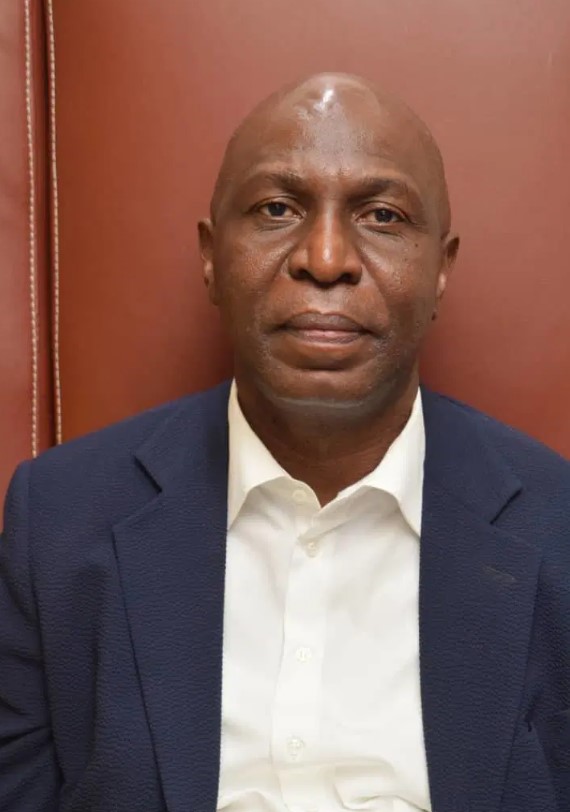
Institutionally, it is perhaps best ethical if Omatseye and The Nation pay silence to matters regarding Tinubu and this government, to save their once good, already tainted names from further destruction. The Nation is published by Vintage Press Limited, owned by Bola Tinubu, per the documentary record assembled in former Alpha Beta Consulting MD Dapo Apara’s October 2020 writ of summons at the Lagos High Court, which detailed transfers of N1 billion and more from Alpha Beta to Vintage Press, neither denied nor refuted by Tinubu’s office—Sam Omatseye, the poet of heresy, chairs the paper’s Editorial Board. The column is internal to the administration’s own publishing apparatus. Omatseye writes that “Tinubu’s associates who ate and played and fought with him suddenly are fraught. From cheek-to-cheek to cheeky,” an aside that names what the omoluabi frame is being deployed to perform, which is the conversion of ordinary political opposition into personal moral failure, with Yoruba cosmology supplying the affective register the personalisation requires.
What the column’s apparatus conceals is the empirical content of the opposition it is converting into stained-honour expulsion. The administration the column defends has, on the available record, moved on five fronts that bear directly on the AG/Awoist tradition the column invokes. On press freedom, the Cybercrimes (Amendment) Act of February 2024 narrowed the cyberstalking provision that the ECOWAS Court had ruled in March 2022 was “arbitrary, vague and repressive,” but in a form whose operational use against journalists has continued. The lawyer and writer Dele Farotimi was arrested in December 2024 on sixteen counts of defamation at the Ekiti Magistrate Court, followed days later by twelve fresh counts of cybercrime under Section 24 at the Federal High Court, Ado-Ekiti, all over a book about judicial corruption. The Centre for Journalism Innovation and Development verified one hundred and ten attacks on the press in 2024, with the first three quarters alone exceeding the entire 2023 figure. Justice Mark Chidiebere, the blogger known as Justice Crack, was arraigned at the Federal High Court Abuja on May 4, 2026, the same day Omatseye’s column appeared, on a three-count cybercrime charge after he posted videos questioning soldiers’ welfare and the killing of NYSC member Abdulsamad Jamiu; he had disappeared from Abuja on April 28, surfaced in army custody, and was denied bail at the arraignment, where Omoyele Sowore and Peter Akah were among the activists protesting at the courthouse.
On the capture of the institutions that elections require, the record is contemporary. The Federal Capital Territory Administration under Minister Nyesom Wike inspected forty residential houses for judges of the Federal High Court, Court of Appeal, Industrial Court, and Code of Conduct Tribunal on May 8, 2026, and described them as “ninety-nine percent ready” for inauguration as part of Tinubu’s third-anniversary activities; recipients keep the houses on retirement. The Nigerian Bar Association, through its president, Afam Osigwe, publicly objected in April 2026, stating that the practice “creates a terrible perception of closeness between the executive and the judiciary, undermining public trust.” The INEC chairman Joash Amupitan SAN, sworn in October 23, 2025, was traced via his email and phone number to a 2023 X account that replied “Victory is sure” to APC National Youth Leader Dayo Israel on the day of Tinubu’s election and “Asiwaju” — leader — to a Tinubu support account a month later, before being renamed and locked on April 10, 2026 after the posts surfaced. Sahara Reporters reported in April 2026 that more than twenty-nine senior INEC officials had received Abuja land allocations from Wike’s FCT Administration, with each plot estimated at over ₦180 million; the INEC National Commissioner for FCT, Mohammed Kudu Haruna, confirmed the land allocations on the record while denying associated cash gifts. A 30-hectare parcel originally allocated to serving and retired military personnel was, the same reporting alleged, revoked by Wike and reallocated through proxies to Amupitan.
On welfarism, the World Bank’s Nigeria Development Update reports that poverty rose from 56% in 2023 to 63% in 2025, putting 140 million Nigerians below the line; headline inflation reached 34.8% in December 2024, the highest in three decades; and the 2025 Global Report on Food Crises documents Nigeria recording the largest single-year increase in acute food insecurity globally in 2024, with 6.9 million additional people brought to a total of 31.8 million. The administration’s response has included the August 2024 purchase of a $150 million Airbus A330 as a presidential jet, a presidential yacht that the National Assembly publicly refused to fund, and Cadillac Escalade SUVs at roughly ₦950 million each. On public resources, the Minister of Humanitarian Affairs, Betta Edu, was suspended in January 2024 after directing ₦585 million in welfare funds to a private bank account; combined EFCC investigations of Edu, her predecessor, Sadiya Umar Farouq and NSIPA coordinator Halima Shehu have recovered N32.7 billion and $445,000, with no probe reports released and no prosecutions fifteen months in. On security, Amnesty International’s May 2025 report documents hundreds killed in rural attacks across Benue, Borno, Katsina, Plateau, Sokoto and Zamfara since May 2023, with over two hundred villages sacked in Benue alone producing 450,000 internally displaced persons; HumAngle’s conflict tracker counted 1,420 Nigerians killed and 537 kidnapped in the first quarter of 2025; new armed formations — Lakurawa in Sokoto and Kebbi, Mahmuda across Kogi, Kwara, Nasarawa, and Niger — have emerged under the administration’s watch. During the August 2024 #EndBadGovernance protests, Amnesty International documented at least thirteen protesters killed by security forces.
Set against this record, the selective application of the omoluabi frame across the column’s cases completes the apparatus. Olusegun Obasanjo, a former president who has continued to publicly oppose Tinubu, is classified by the column as a Yoruba traitor for his role in the political dismantling of the Alliance for Democracy in the early 2000s. Tinubu, the Lagos governor who departed AD to co-found the Action Congress in 2006, absorbing the remnants of AD’s Yoruba electoral base after Obasanjo’s PDP had already swept the South-West in 2003, is not classified at all. The criterion of Yoruba treachery is not, when followed across the column’s cases, defection from the AG tradition or violation of the omoluabi code. By every measurable indicator of the AG inheritance the column claims to defend — welfarism, the management of public resources, the protection of judicial and electoral independence, the basic security of life, the figure most defected from that inheritance is the column’s own benefactor.
What Makinde did in Ibadan was convene a political meeting against a sitting Yoruba president whose policies have, on the available record, included the prosecution of writers under the Cybercrimes Act, the criminalisation of judicial criticism through defamation litigation, the arraignment of bloggers in real time for posts about military welfare, the gifting of houses to forty judges by an executive minister, the appointment of an INEC chairman with documented partisan loyalty whose senior officials have received Abuja land from the same minister, and the consolidation of regional political authority at federal expense. Whether his coalition will hold or fracture, whether his political project will succeed or fail, are questions the historical record cannot settle in advance, and that no Yoruba cosmology, properly read, settles in advance either. The honour code, in the philosophical literature that has explored it, does not foreclose the political subject who has failed his community. The cosmology was a political construction of the very tradition that Tinubu’s administration claims to inherit. The historical lineage does not survive contact with the period press, secondary scholarship, or the texts cited by the column. What remains is the column’s actual political function, which is to convert opposition into shame and to license, through the rhetoric of an unstainable honour, the disciplinary apparatus of a state that, on the day the column was published, was arraigning a citizen for posting a video, building forty houses for the judges who would hear his case, and seating a partisan loyalist at the head of INEC which would conduct the next election.
Adedayo Agarau’s debut collection, The Years of Blood, won the 2026 Nossrat Yassini Poetry Prize. He won The Future Awards Africa Prize for Literature in 2025, and his poem “Halloween, Iowa” won the C.P. Cavafy Prize. Adedayo was a Wallace Stegner Fellow, a Cave Canem Fellow, and a 2024 Ruth Lilly-Rosenberg Fellowship finalist.