


Jail Time Records is visually stunning, musically extraordinary, and emotionally honest in ways that feel genuinely hard-won.
By Joseph Jonathan
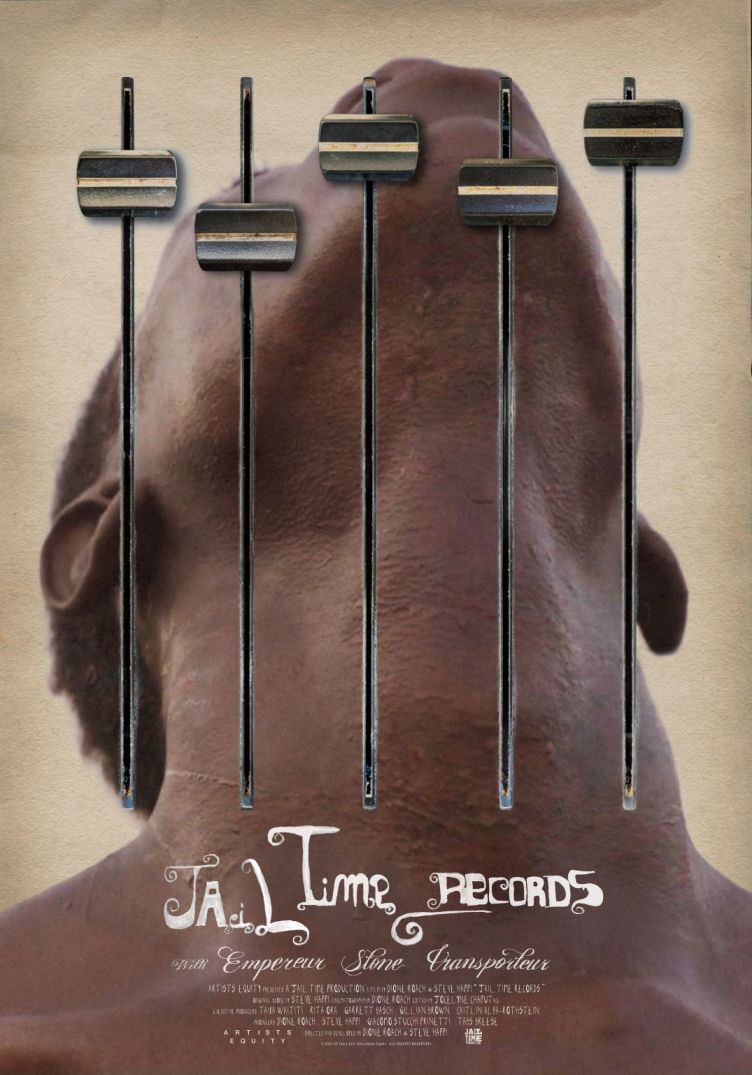
I was scrolling through Facebook a few days ago when I came across a quote which said: “No time is late in life. Just stay alive, and don’t be in prison”. I didn’t fully grasp the enormity of the latter part of the quote until I finished watching Dione Roach and Steve Happi’s Jail Time Records, a documentary feature that does something I have rarely experienced in the form: it drops you inside a world so specific, so overflowing with life and contradiction and colour, that by the time it ends you feel less like someone who has watched a film and more like someone who has returned from somewhere. The somewhere in question is New Bell prison in Douala, Cameroon. New Bell prison is one of the most overcrowded prisons in the world, built to hold 800 inmates and currently housing nearly 6,000.
The documentary’s existence is itself a story worth telling before the story it tells. Steve Happi, co-director, composer, and one of its central presences, was incarcerated at New Bell for nearly two years, during which time he created hundreds of musical tracks. Dione Roach, co-director and cinematographer, met him in 2018 while volunteering on a social impact project inside the prison.
Together, they founded the Jail Time Records non-profit — a record label and recording studio built from behind bars, the first of its kind in an African prison — and spent six years shooting inside New Bell to make this documentary. This is not a documentary made about a place from a careful external distance. It is a documentary made from inside, by people whose relationship to the material is personal in ways that reshape every creative decision.
What strikes you immediately upon entering the documentary’s world is that New Bell does not look or feel like the prisons that Western documentary tradition has taught us to expect. It looks, with uncomfortable precision, like a village; an impossibly dense, improvised, chaotic village that happens to have walls around it. The camera moves through its interior with the restless curiosity of someone navigating a market, revealing commerce, social hierarchy, territorial arrangement, and the full spectrum of human adaptation to impossible conditions. Inmates who cannot secure indoor space sleep in the open courtyard under the night sky, earning themselves, with the specific dark humour that extreme conditions tend to produce, the nickname “penguins”. Those fortunate enough to have a roof exist in a different social register entirely. The prison has its own economy, its own power structures, its own celebrity. It is, in every functional sense, a society, one that the state has created and then largely abandoned to govern itself.
This detail matters because it reframes the documentary’s central paradox in ways that neither a simple prison exposé nor a straightforward music documentary could achieve. The Jail Time Records studio, accessible to inmates within this under-administered and chronically overcrowded facility, does not function the way that institutional rehabilitation programmes typically function, as carefully controlled spaces of reflection, monitored and managed by the system.
It functions, instead, as a pathway to local celebrity, to influence, to a kind of power that the prison’s official hierarchy cannot fully contain. The inmates who record there do not become more docile. They become more visible. More known. More themselves. Whether this is rehabilitation in the conventional sense is a question the documentary wisely declines to answer definitively. What it shows, with extraordinary clarity, is that creative expression in conditions of extreme confinement does not merely soothe. It transforms, and not always in the directions that the institutions permitting it would prefer.
The artists we meet are vivid and irreducible. Josué Aristide Ticky Moulende, known as L’Empereur, commands his portion of the prison with the specific authority of a man who has made himself indispensable to the facility’s informal economy. His involvement in drug distribution runs alongside his musical ambitions without apparent contradiction, because in New Bell, these things are not contradictions but coexisting dimensions of survival.
Hamadou Daibou, known as Transporteur, writes lyrics that have the surprising quality of being simultaneously absurd and devastating, a combination that only makes sense when you understand that absurdity and devastation are the two emotional registers that extreme injustice most reliably produces. He has been waiting over three years for sentencing on an anti-government charge that could take decades of his life. He keeps writing. Dilan Nyamsi, known as La PJ — the documentary’s unofficial guide, sporting a hat that carries more authority than any official uniform in the building — introduces the audience to the prison’s geography and social logic with the proprietary ease of a man who has made this chaotic place legible to himself.
The cinematography by Roach, Happi and Uberto Rapisardi treats each of these men with a formal attentiveness that shifts register depending on who is in the frame, one of the documentary’s most impressive technical achievements. The editing, which can only be described as musical in its instincts, moves between the observational rawness of cinema vérité and the heightened visual language of the music video sequences with a fluency that never feels forced. Each artist receives their own visual grammar, their own tonal palette, their own way of being seen.
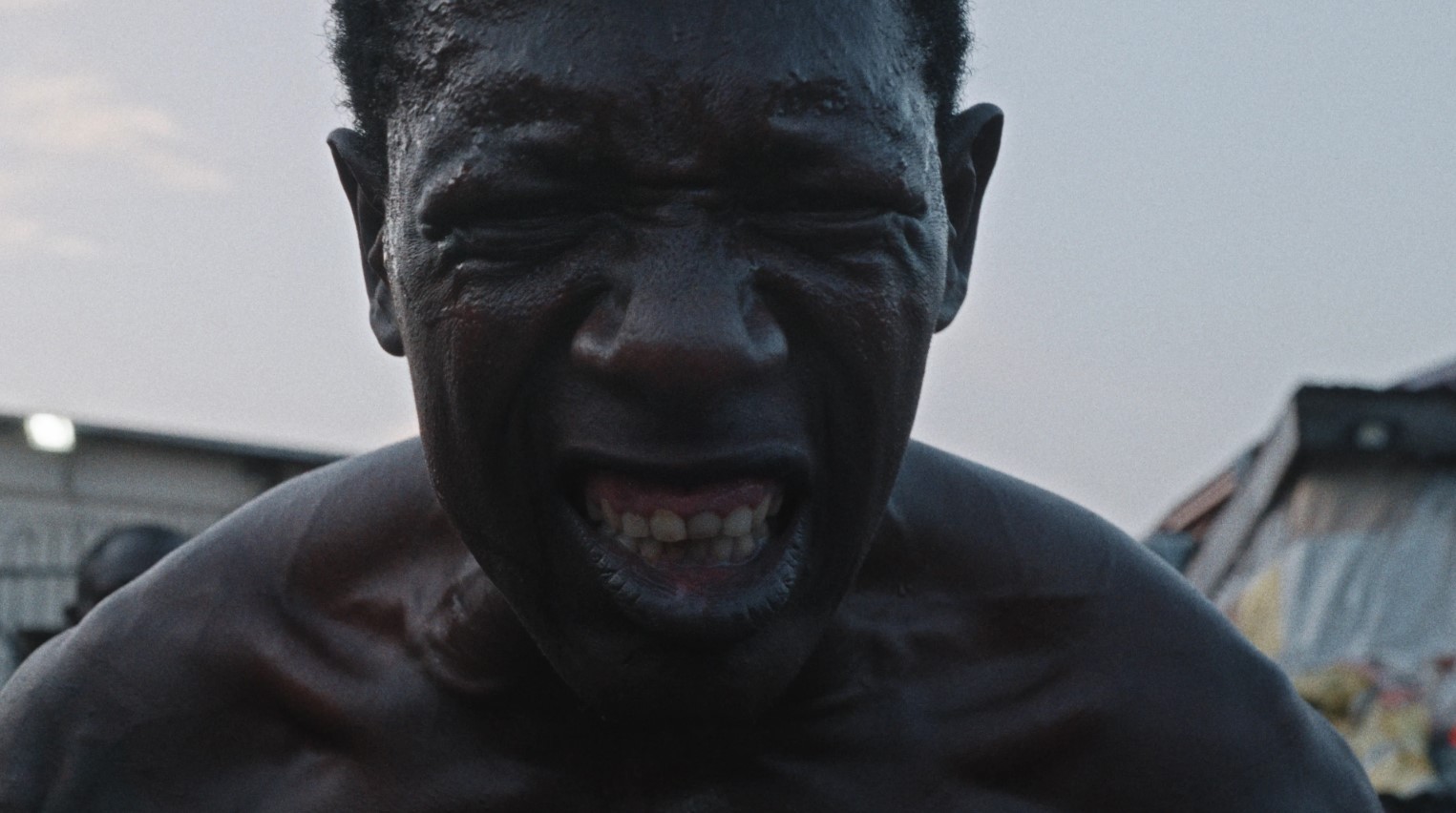
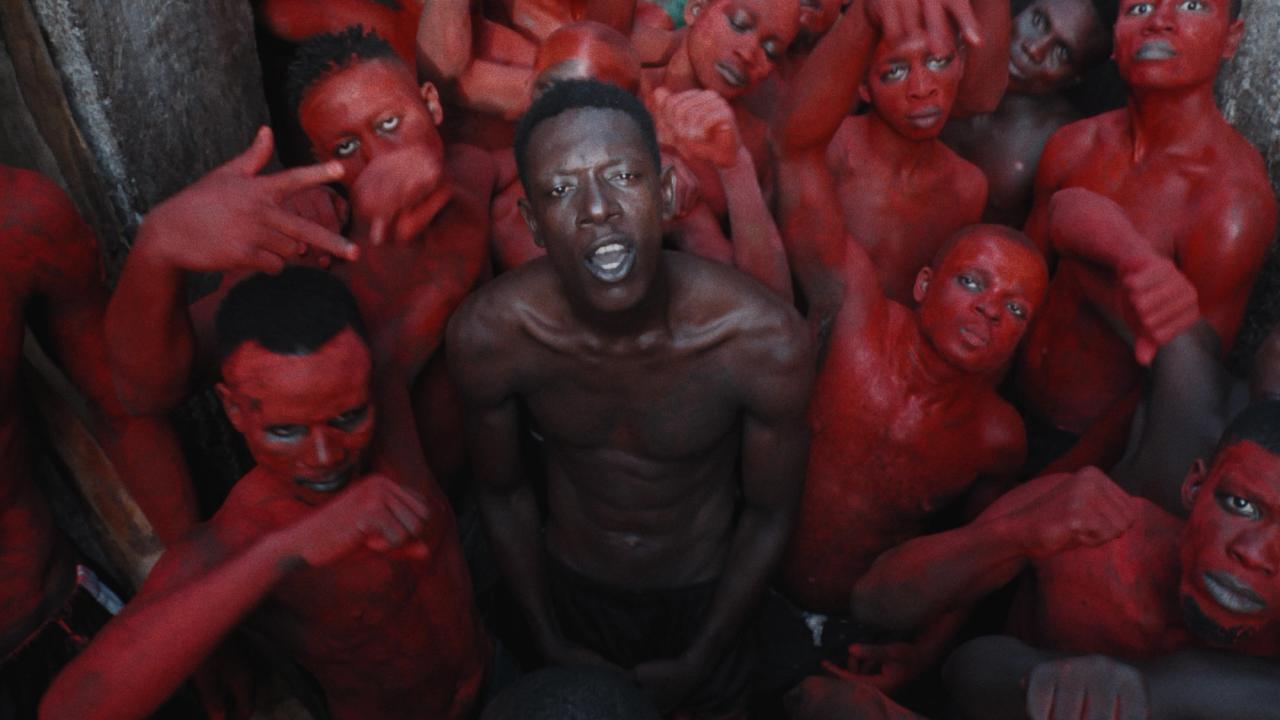
When Jail Time Records transitions into the music video sequences (produced inside the prison using homemade props, improvised choreography, groups of dancer-inmates, and a brightness of colour that seems almost defiant against the grey of the facility) the effect is genuinely astonishing. These are not illustrations of the music. They are arguments. They are inmates insisting, with every frame, that beauty is available even here, that performance is possible even here, that they exist as artists and not merely as inmates.
The comparison that comes to mind, though the contexts are vastly different, is Wim Wenders’ Buena Vista Social Club (1999); another documentary about musicians whose talents existed largely outside the frame of what the world was paying attention to, another film whose greatest achievement was simply the act of listening carefully enough to what was already there.
Jail Time Records has that quality. It does not impose a narrative on its subjects. It follows them, listens to them, and trusts that what they have to say and sing and perform is sufficient. In an era of documentary filmmaking that frequently mistakes access for insight, and subject matter for argument, this restraint is its own form of artistic intelligence.
There are moments of transcendence here that would be remarkable in any film. A shot in which exhaled smoke seems, in a single held breath of a moment, to transform into a bird and drift upward, an image so perfect in the symbolic compression that it could have been staged, but lands with the authority of something simply noticed and held.
Corridor after corridor of crumbling institutional architecture, and then suddenly a wall painted with lush green palms; the specific shock of beauty appearing precisely where it has no business appearing. These are the images that stay. They are also the documentary’s most honest argument for what art does in conditions designed to extinguish it: it makes the escape that the body cannot make.

The “in memoriam” section near the documentary’s end is where the accumulated emotional weight of Jail Time Records makes itself fully felt. By this point, the audience has spent enough time with these men to have developed the specific attachment that comes not from being told to care but from simply being present long enough for care to arrive naturally.
The losses registered in those final frames hit with a force that no amount of conventional documentary rhetoric about prison conditions and criminal justice could manufacture. This is the documentary’s most significant formal achievement: it creates the conditions for genuine grief in an audience that arrived as strangers to these lives.
If the documentary has an underexplored dimension, it is the broader social architecture of New Bell itself. That is the full complexity of a prison that has become a city, with all the attendant politics, commerce, and human organisation that implies. There are glimpses of this world that suggest an entire parallel documentary living alongside the music story, and there are moments where you want the camera to linger longer in those spaces, to follow those threads further. But this is less a criticism than an acknowledgement of abundance; the documentary has more material than it can fully hold, which is a better problem than most documentaries face, and Roach and Happi make the right choice in staying anchored to their central characters and their creative process rather than dispersing attention across the full complexity of the world they are inhabiting.
Jail Time Records is the kind of documentary that reminds you what the form is capable of at its most committed and most alive. It understands that the most devastating argument for prison reform is not a statistic or a policy paper but a human face, fully seen, a voice, fully heard. And it makes that argument, over and over, for every minute of its runtime, with the specific force of people who know, from the inside, exactly what is at stake.
Rating: 4/5
* Jail Time Records premiered at the Tribeca Film Festival 2026, where it picked up awards for Best Documentary Feature, Best New Documentary Director, and Best Cinematography in a Documentary Feature.
Joseph Jonathan is a historian who seeks to understand how film shapes our cultural identity as a people. He believes that history is more about the future than the past. When he’s not writing about film, you can catch him listening to music or discussing politics. He tweets @Chukwu2big