

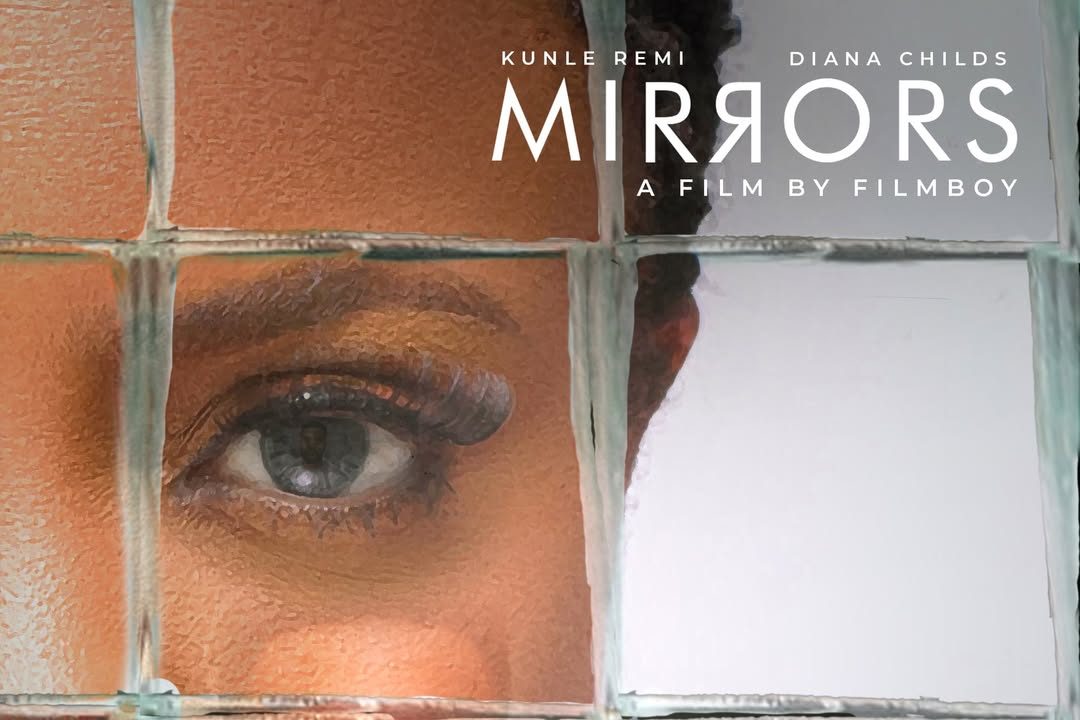

For a film built on conversation and emotional intimacy, Mirrors never quite finds the depth of feeling needed to make those questions truly resonate.
By Joseph Jonathan
Marriage stories often begin where romance ends.
Long after the wedding photographs have faded into family albums and social media memories, what remains are the quieter negotiations of everyday life: money, grief, expectation, resentment, compromise. It is in this difficult terrain that Mirrors, directed by Yemi “Filmboy” Morafa and written by and starring Diana Childs, situates itself. Released on Prime Video, the film strips away the distractions of spectacle and secondary plots to focus almost entirely on two people confronting the wreckage of a marriage that neither seems fully prepared to let go of.
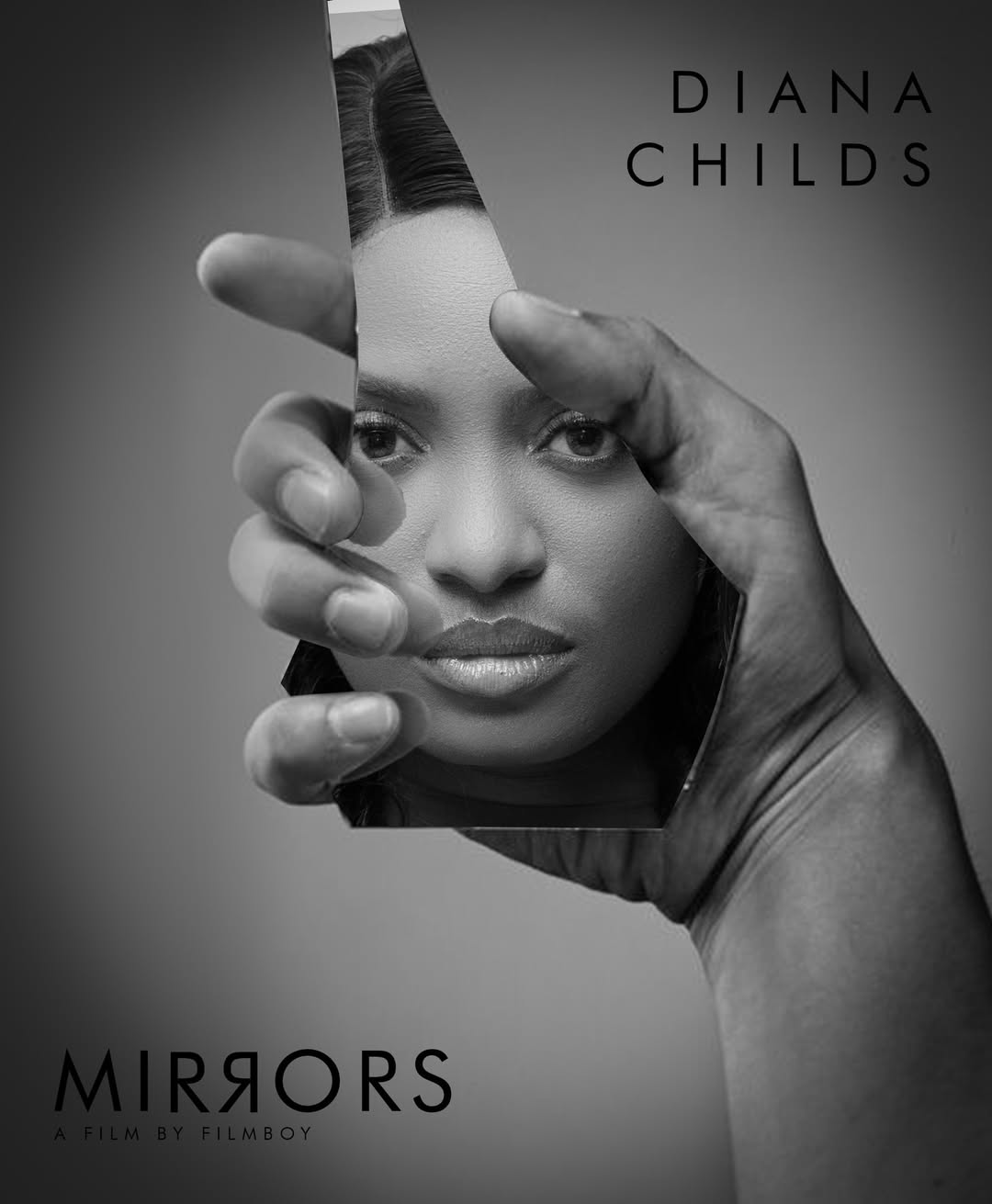
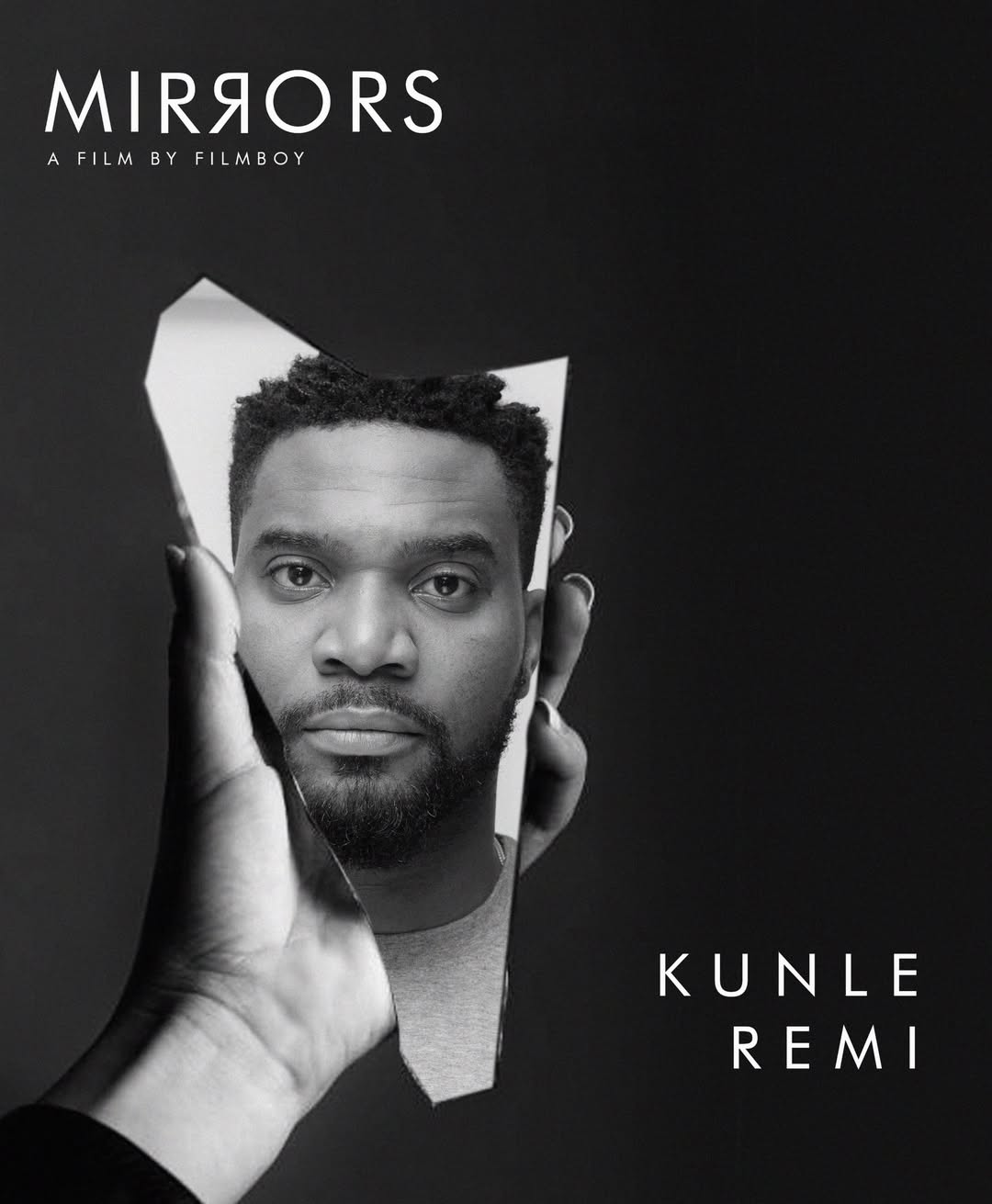
In an industry where relationship dramas often rely on sprawling ensembles, melodramatic twists, or comedic diversions, Mirrors makes a more unusual choice. It is essentially a two-hander (a film centred primarily on two characters and their relationship), built around a single extended conversation between Eddy (Diana Childs) and Yemi (Kunle Remi), a couple standing at the edge of divorce. Eddy is in the process of moving out. Divorce papers have been served. Yet before the separation becomes final, the pair sit down for one last conversation, revisiting the story of their relationship and attempting to understand how a marriage built on love eventually collapsed under the weight of its contradictions.
The premise recalls films such as Noah Baumbach’s Marriage Story (2019) and Richard Linklater’s Before Midnight (2013). Throughout the conversation, Eddy and Yemi recount shared memories that unfold in flashbacks, with each character offering their own interpretation of events. The technique highlights a simple but often overlooked truth about relationships: no marriage contains a single story. There is only perspective. Every disagreement produces competing narratives, every hurt carries its own justification, and every memory becomes a site of negotiation.
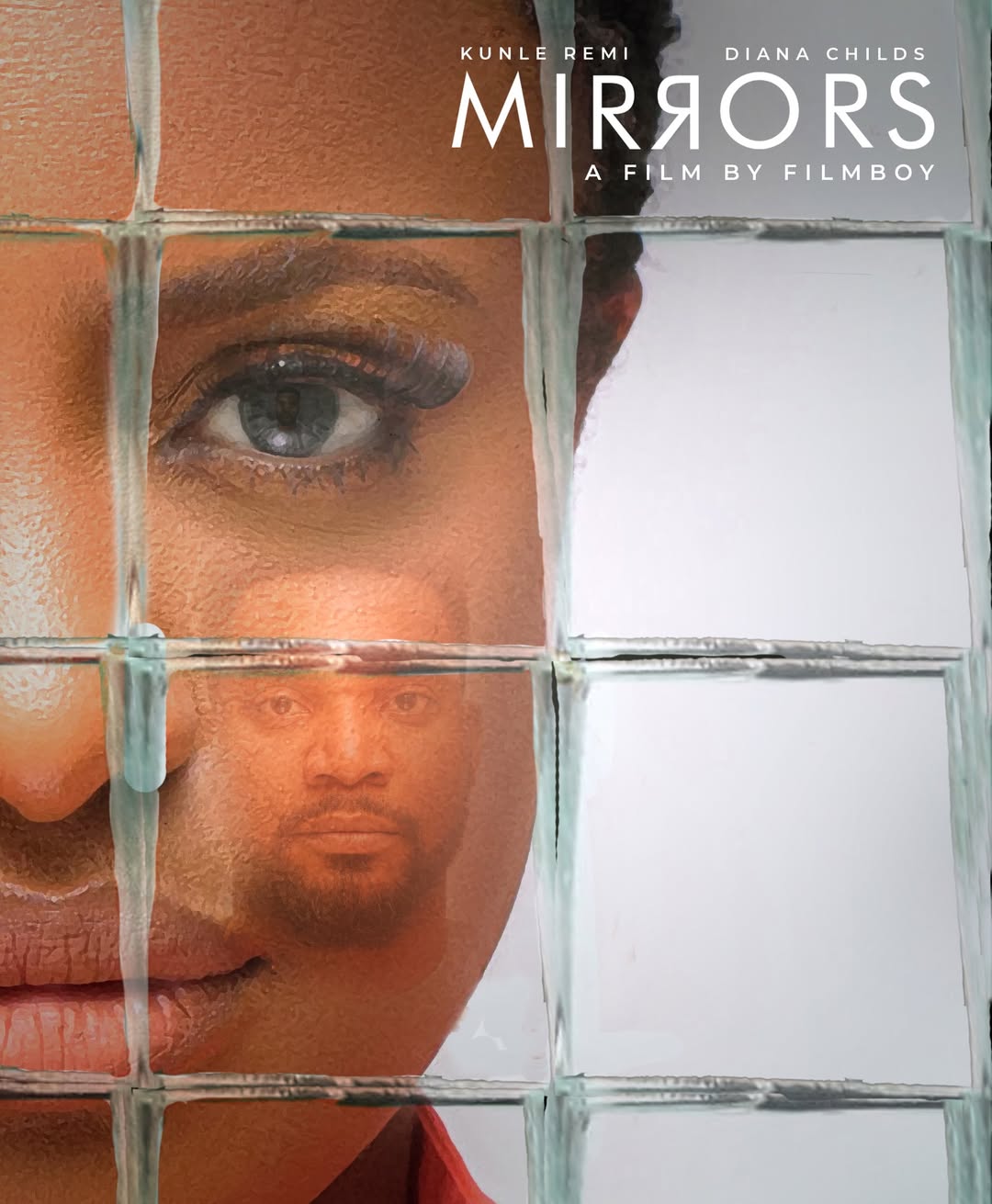
What emerges from these recollections is not a portrait of two people who never loved each other, but rather two people whose love proved insufficient against deeper incompatibilities. Eddy comes from a modest background; Yemi is the sole heir to considerable wealth. Their differing attitudes toward money become one of the fault lines running through the marriage. Yemi frequently approaches problems through provision and ownership. His instinct is to point toward what he has purchased, provided, or secured. Eddy, meanwhile, seeks emotional partnership rather than financial reassurance. To her, Yemi’s language of provision gradually begins to feel like a language of possession.
The film becomes particularly compelling when examining how grief exposes these differences. Following a miscarriage, the couple find themselves mourning in fundamentally different ways. Eddy retreats inward, yearning for comfort and emotional intimacy. Yemi, conditioned to respond to problems with provision rather than presence, gives her everything except what she needs.
They grieve the same loss in completely different languages, and the distance between those languages is where the marriage quietly dies. The tragedy itself is devastating, but Mirrors is ultimately more interested in the emotional distance that tragedy creates. The question is not whether the couple suffered; it is whether they knew how to suffer together.
There is something refreshingly mature about the film’s willingness to interrogate the limits of love. Nigerian cinema often treats marriage as an institution whose preservation is inherently virtuous. Separation is frequently framed as failure, while endurance becomes its own moral achievement. Mirrors push against that assumption.
The film repeatedly suggests that love alone cannot sustain a relationship. Communication, emotional intelligence, shared values, and mutual understanding matter just as much. Sometimes, the film argues, the healthiest thing two people can do is recognise that their differences have become irreconcilable.
It is an idea that feels particularly resonant within a Nigerian context, where cultural and religious expectations continue to place immense pressure on couples to remain together regardless of circumstance. Yemi embodies much of this worldview. His commitment to the sanctity of marriage is sincere, even admirable. Yet the film quietly asks whether preserving a marriage should always take precedence over preserving the people inside it.
Morafa deserves credit for embracing such a minimalist framework. In many ways, Mirrors represents the kind of formal experimentation Nollywood often needs more of. It resists the temptation to dilute its central premise with unnecessary subplots and instead commits itself to character, conversation, and emotional excavation. The decision is risky because it leaves the film with nowhere to hide. Every scene depends on the strength of the writing and the performances. Unfortunately, that is where the film begins to struggle.
For a story built almost entirely around dialogue, the conversations frequently lack the emotional texture needed to sustain them. Rather than feeling like two people excavating years of accumulated hurt, many exchanges feel overly constructed, as though the characters are explaining themselves to the audience rather than speaking to each other. Important emotional revelations arrive, but they rarely land with the force they should because the dialogue often feels too neat, too deliberate, and occasionally too flat.
The performances face a similar challenge. Childs and Remi both demonstrate an understanding of their characters’ emotional journeys, and there are moments where genuine vulnerability breaks through. Yet too often, the acting feels restrained in ways that undermine the film’s emotional ambitions. A project this intimate requires performances capable of transforming ordinary conversations into compelling drama. When those performances remain merely competent, the film’s emotional stakes become harder to fully invest in.
The film’s limitations are further exposed by the foundational logic of its central premise. The decision to frame the entire narrative around a final conversation between two people in the process of divorcing raises a question the film never satisfactorily answers: why are they having it? What is the purpose of this conversation for these characters? In legal and emotional terms, the divorce is already in motion; the papers have been served, Eddy is moving out, and the decision has been made.


A final conversation of this intimacy and duration, in which old wounds are reopened and old love is briefly visible again, requires a dramatic justification that Mirrors does not provide. It is possible to accept the conversation as a structural device — a container for the film’s thematic content — but the best two-handers, from Before Sunrise (1995) to Marriage Story, earn their conversational architecture by making the conversation itself feel necessary to the characters rather than merely useful to the filmmaker. Here, the conversation occasionally feels like it exists because the screenplay needs it to rather than because Eddy and Yemi need it to.
This issue is compounded by pacing. At just under eighty minutes, Mirrors is not especially long, yet its slow-burn structure occasionally stretches scenes beyond their natural endpoint. Certain exchanges linger longer than necessary, creating a sense of repetition that tighter editing might have alleviated. The film clearly wants audiences to sit with discomfort and reflection, but there is a fine line between contemplative and stagnant.
Yet even with these shortcomings, there is something admirable about what Mirrors attempts. In an era where much of Nollywood’s streaming output gravitates toward familiar formulas, Morafa and Childs choose a more difficult path. The film is interested in emotional ambiguity rather than easy answers. It trusts conversation over spectacle. It understands that relationships often end not because of a single catastrophic event but because of countless smaller fractures accumulating over time.
That ambition alone makes Mirrors noteworthy. It may not fully succeed in translating its ideas into compelling drama, but it points toward a kind of filmmaking that remains relatively uncommon in mainstream Nollywood. One hopes more filmmakers will take similar risks, while recognising that projects this stripped-down demand extraordinary precision in both writing and performance.
In the end, Mirrors is perhaps most interesting as an experiment. It asks worthwhile questions about love, grief, class, and the expectations we bring into marriage. It challenges romantic notions that love can overcome every obstacle. And it demonstrates a welcome willingness to break from convention. But for a film built on conversation and emotional intimacy, it never quite finds the depth of feeling needed to make those questions truly resonate. What remains is a thoughtful, ambitious work whose ideas are ultimately stronger than its execution.
Rating: 2.6/5
Joseph Jonathan is a historian who seeks to understand how film shapes our cultural identity as a people. He believes that history is more about the future than the past. When he’s not writing about film, you can catch him listening to music or discussing politics. He tweets @Chukwu2big