

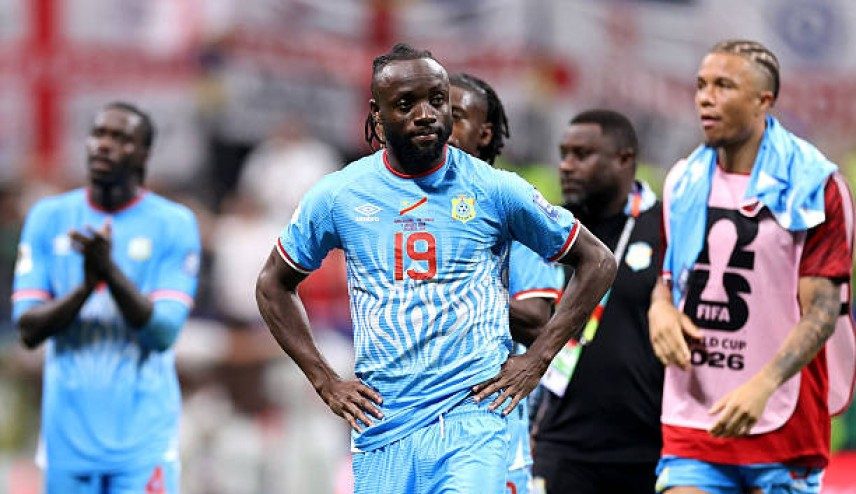

It is a deeply concerning pattern that suggests African teams at the 2026 World Cup continue to lose concentration, composure and control in matches they are capable of winning.
By Tuka Letura
Of the 10 African teams that qualified for this year’s FIFA World Cup and reached the expanded 48-team tournament, nine progressed to the Round of 32 from the group stage. The only exception was Tunisia, which sacked its head coach midway through the tournament but still failed to pick up a single point.
Of those nine teams, only two progressed to the Round of 16: the controversial winners of the last Africa Cup of Nations, Morocco and Egypt. Two North African sides reached that stage, and now only Morocco remain in the competition after Egypt were knocked out disappointingly.
On the surface, this does look a little concerning. The fact that so many African teams are already out of the tournament is disappointing. However, the manner in which five of them were eliminated genuinely raises questions about the mentality and game management within African football, in what might otherwise have been dismissed as mere coincidence.
If something happens once, it is a mistake. If it happens twice, it can be overlooked. But when it happens a third, fourth and fifth time, all to teams from the same continent, it is no longer a coincidence. It is a pattern worth highlighting. And that is exactly what happened to five of these African teams.
Senegal were the first. The Teranga Lions capitulated after surrendering a two-goal lead against Belgium. They looked in complete control until the 86th minute, when Romelu Lukaku pulled one back after a flurry of missed Senegalese chances. Three minutes later, Youri Tielemans equalised to force extra time. Then, with the final kick of extra time, Belgium were awarded a penalty, which Tielemans converted to send the Red Devils into the Round of 16 and Senegal crashing out.
It was not an isolated case. DR Congo suffered a remarkably similar fate against England. Chipenda gave the Leopards an early lead inside the opening 10 minutes, and they defended resolutely for much of the match. Mbassi made several crucial saves, while Aaron Wan-Bissaka cleared Marcus Rashford’s effort off the line. But, like Senegal, they failed to see the game out. Harry Kane struck twice from open play late on, turning the tie on its head and bringing DR Congo’s World Cup campaign to an end.
Côte d’Ivoire’s exit followed a different script but arrived at the same conclusion. The Elephants created several promising opportunities against Norway and equalised through substitute Amad Diallo in the 74th minute. Rather than settling for extra time, they continued to push for a winner, only to be caught on the break when Erling Haaland scored in the 86th minute to send Norway through.
Then came South Africa. Locked in a tense contest with Canada, Bafana Bafana looked set to force extra time before conceding in the second minute of stoppage time. Stephen Eustáquio’s late winner completed a worrying trend, making it four African teams eliminated after conceding decisive late goals.
What makes the pattern even more concerning is that every African team to have played in the Round of 32 conceded after the 85th minute, with Morocco being the only side to survive it. South Africa conceded in the 92nd minute. Côte d’Ivoire conceded in the 86th minute to Haaland. DR Congo conceded the winner in the 86th minute after Harry Kane had equalised 11 minutes earlier. Senegal conceded in the 86th and 89th minutes before ultimately conceding the decisive penalty in the final minute of extra time.
The pattern did not end there. Egypt became the fifth African side to see a knockout tie slip away in the closing stages. The Pharaohs had done almost everything right against Argentina. They took an early lead before seeing Lionel Messi’s penalty saved, and although Mostafa Ziko had a second goal ruled out for a foul on Lisandro Martínez, he restored Egypt’s two-goal cushion 10 minutes later to make it 2-0 in the 67th minute.
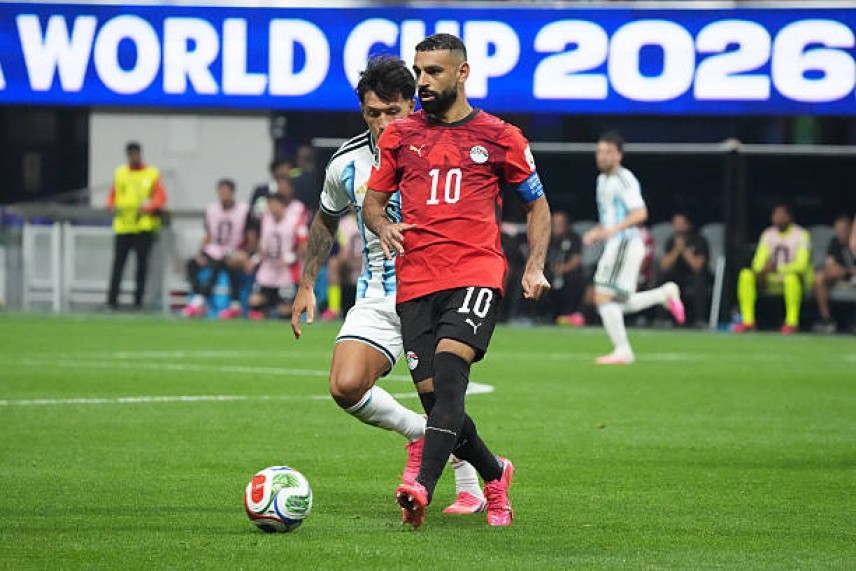
But, like the African sides before them, they could not hold on. Injuries forced Emam Ashour and Hossam Hassan off, with Hamdi Fathi and Trezeguet introduced in their place, before Argentina mounted their comeback. Cristian Romero pulled one back in the 79th minute, Messi levelled four minutes later, and Enzo Fernández completed the turnaround in the second minute of stoppage time, sending Argentina through and extending an increasingly troubling trend for Africa’s representatives.
It is a deeply concerning pattern that suggests African teams continue to lose concentration, composure and control in matches they are capable of winning. Whether the issue lies with mentality, in-game management, coaching decisions or individual execution, it is becoming an increasingly difficult pattern to ignore.
Every one of these matches proved the same point. Senegal outplayed Belgium for long stretches. DR Congo had England, one of the tournament’s most heavily fancied sides, chasing shadows for an hour. Côte d’Ivoire matched Norway phase for phase, Haaland and all. South Africa took Canada to the 92nd minute. These were not teams that were outclassed. They were teams that, at some point, were ahead, level, or firmly in the fight, and lost anyway.
The instinctive explanation would be to point to mentality. We will, but not yet. It would be unfair to suggest these repeated collapses are rooted in mentality alone.
The talent argument does, in fact, hold water. African football appears to be in the middle of a transition. Several of its traditional heavyweights are rebuilding, with experienced generations gradually giving way to younger ones. Morocco are the obvious exception. They remain the continent’s most complete side, balancing established leaders with emerging talent, and that is reflected in their results. They are the only African team in the quarter-finals, just as they were four years ago. In fact, Morocco alone accounts for half of Africa’s quarter-final appearances in FIFA World Cup history.
Their run to the semi-finals in 2022 was followed by another deep run at the Africa Cup of Nations, while years of sustained investment in coaching, infrastructure and player development have created a team comfortable competing against the world’s elite. Even when Morocco needed penalties to reach the quarter-finals, they responded with a commanding 3-0 victory over Canada in the Round of 16, underlining a resilience absent elsewhere.
Senegal arguably possesses the closest thing to Morocco’s level of talent. Although the golden generation built around Sadio Mané, Kalidou Koulibaly and Edouard Mendy is beginning to age, the squad remains strong enough to compete with almost anyone. Their defeat to Belgium was not the result of an obvious talent deficit but of an inability to close out a game they controlled for more than 85 minutes.
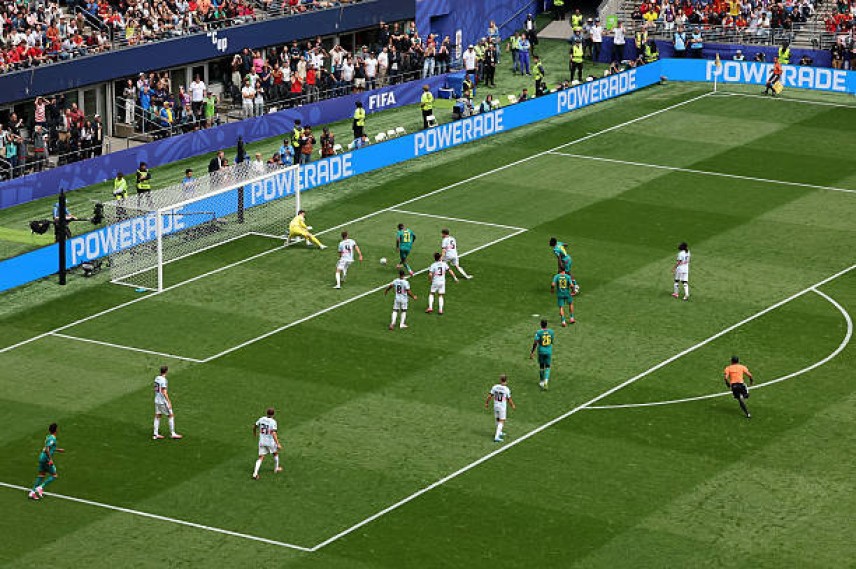
The same applies elsewhere. Côte d’Ivoire had enough chances to beat Norway. South Africa were seconds away from taking Canada to extra time. Egypt were 2-0 up against Argentina. Even DR Congo, despite facing one of the tournament favourites in England, had the match exactly where they wanted it before everything unravelled.
With the possible exception of England and Argentina, none of these was ties in which the African side was overwhelmingly outclassed. The margins were fine. The opportunities were there. The performances were good enough to win.
Which is why the conversation inevitably shifts from talent to mentality. If the quality is sufficient to compete, why does the belief disappear when the finish line comes into view? Why do games repeatedly slip away in the closing moments? And why does the pattern seem to affect African teams far more often than anyone else?
The uncomfortable answer is inexperience, a lack of belief and, at times, arrogance.
Watch the sides that dominate major tournaments, and you notice something beyond quality: an unwillingness to be embarrassed. Belgium, 2-0 down with four minutes left, did not panic. They did not treat the scoreline as final. They treated it as an insult to be corrected. That is arrogance in its purest footballing form: the refusal to accept that the game is over simply because the clock suggests it.
African teams, by contrast, have too often looked like they are managing an opponent’s comeback rather than preventing one. There is a difference between defending a lead and waiting to see whether you will survive it. Senegal’s approach to the final 10 minutes against Belgium had the shape of the latter. Chances kept coming and going, the game remained stretched, and the door stayed open long after it should have been shut. That is not merely a tactical malfunction. It is a confidence malfunction dressed up as one.
This is not a new conversation, and it would be dishonest to pretend it started at this tournament. African football has long carried this reputation, fair or not, of being spectacular in patches but fragile in moments that require control rather than flair. Part of that reputation has hardened into a self-fulfilling prophecy. When teams from the continent are repeatedly told by pundits, seeding committees and decades of quarter-final exits that they lack the game intelligence to close matches out, it becomes necessary to do a little introspection.


There is a psychological cost to being permanently cast as the plucky underdog rather than the deserving contender. Underdogs are conditioned to be grateful for a lead, not entitled to it. Gratitude is a dangerous emotion to carry into the 86th minute of a World Cup knockout match because it makes you cautious in the wrong ways. You become nervous about losing what you have instead of being ruthless about keeping it.
Morocco’s run offers a useful contrast, not because their football has been flawless, but because their body language has not wavered. This is a squad and coaching staff that have experienced a World Cup semi-final before. They know, structurally and psychologically, what it takes to reach that stage. It shows in how the team approaches the final 10 minutes of a one-goal game, whether it retreats into fear or stands firm in the conviction that it has already earned the result.
It would be easy to lay this entirely at the feet of the players, but coaching carries its share of the responsibility, arguably the larger share. A manager’s job in the 80th minute of a knockout match is not to inspire. It is to impose control.
Five African teams have now failed that exact test in this tournament. The common thread was not that they continued attacking recklessly. Quite the opposite. More often than not, they retreated, surrendered possession and invited sustained pressure onto themselves. Instead of controlling the game with the ball, they allowed their opponents repeated opportunities to penetrate their defensive block until it eventually gave way. Protecting a lead does not mean abandoning the ball, even against better opposition. It means controlling where the game is played, slowing its rhythm, disrupting the opponent’s momentum and forcing them to solve new problems rather than repeatedly attacking the same spaces.
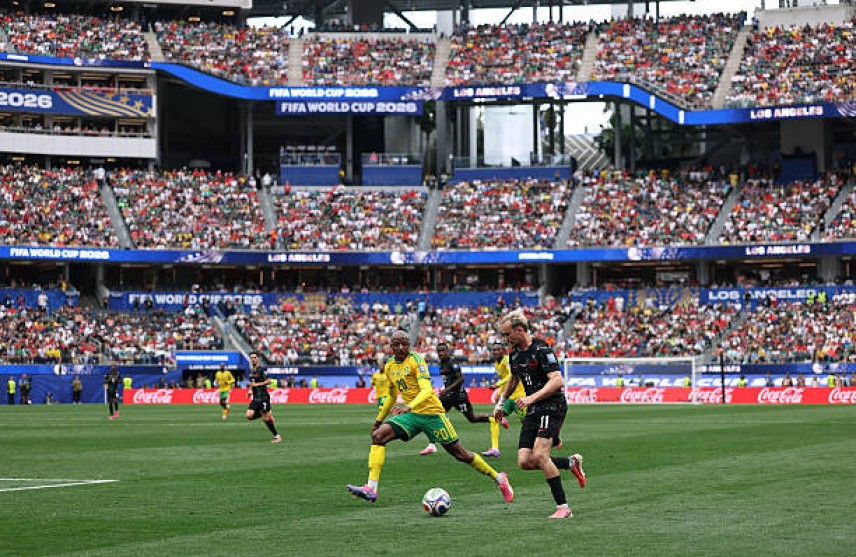
The best teams do not simply defend deeper when protecting a result. They also defend smarter. Sometimes that means keeping possession for a minute instead of 20 seconds. Sometimes it means drawing fouls, circulating the ball across the back line or forcing the opposition to chase. Every completed pass is one less attack to defend. Too many African teams have confused protecting a lead with surrendering the initiative. They stop dictating the match and start reacting to it. Against elite opponents, that is rarely sustainable for 10 or 15 minutes.
Ultimately, mentality, tactics and belief are inseparable. At international level, African football still too often plays as though it needs permission to win, especially in the knockout rounds. There is a hesitation in these closing moments that resembles disbelief, as though players are waiting for the twist, expecting the lead to disappear because generations of African teams have experienced exactly that.
Breaking this pattern will require more than simply producing more talent. It will also require teams and coaches who are willing to be more arrogant in the healthiest sense of the word. They must defend a lead as though it belongs to them, close out knockout matches with the same conviction Belgium showed while chasing one, and stop treating a two-goal cushion as fragile.
Until African football makes that psychological leap, until “we are ahead” is treated as a statement of authority rather than a temporary condition, these tournaments will continue to follow the same pattern.
Perhaps the biggest lesson from the 2026 FIFA World Cup is that the conversation around African football has to change.
For too long, there has been a tendency to celebrate respectable defeats or describe early exits as signs of progress. That mindset should end here. If Africa genuinely wants to produce a FIFA World Cup winner, then the standards have to rise, and with higher standards comes greater accountability.
Representing the continent is no longer enough. Narrow defeats against elite opposition may be encouraging, but they should not be the benchmark by which success is measured. No traditional football powerhouse celebrates being eliminated in the group stage or the first knockout round, regardless of the quality of the performance. The expectation is to progress. Africa must begin demanding the same of its own teams.
If the ambition is to lift the FIFA World Cup one day, then the expectations must first reflect that ambition. The bar has to be raised. Praise should follow achievement, not elimination. Only when surviving the knockout rounds becomes the minimum expectation, rather than the exception, will African football move closer to producing a genuine world champion.
Tuka Letura is an experienced sports writer with over five years of experience in the craft. He uses data and statistics to provide analysis and commentary. From regional to worldwide competitions, he has covered a wide range of sports-related events and topics. He is devoted to sharing his enthusiasm for sports with his audience and engaging them with interesting anecdotes and viewpoints.