


CAF’s reluctance to pick a fight concerning FIFA Forward Enterprise looks less like deference and more like arithmetic. A confederation whose members depend on FIFA funding for the basics of running a federation has a genuinely different calculation to make from one whose members sell their own broadcast rights for billions.
By Tuka Letura
A little over a week after Gianni Infantino lifted the World Cup trophy in front of Donald Trump and a stadium full of confetti, FIFA sent its 211 member associations a letter proposing something unrelated to football on the pitch. It outlined a new $20 billion company, FIFA Forward Enterprise, which would hold the commercial and operational rights to the World Cup, the Club World Cup and FIFA’s other flagship events, with private investors invited to acquire up to a fifth of the company. It would have been the most significant restructuring of FIFA’s finances since Infantino took office in 2016, and the first time any part of the World Cup’s commercial rights had been offered to private investors.
The proposal received sharply different reactions across FIFA’s continental confederations. UEFA, European football’s governing body, described the plan as a line that football’s governing institutions should never cross. Days later, its 55 member associations voted unanimously to explore boycotting FIFA competitions rather than accept it—an escalation UEFA had never before contemplated over a purely commercial dispute with FIFA.
CONCACAF’s 41 members rejected the proposal outright, along with the one-off payments FIFA had offered each federation in exchange for approving it, citing a lack of due process. The Asian Football Confederation joined them soon after, warning that the plan could not command the unity FIFA needed and calling on FIFA to conduct an urgent review of its own governance. Between them, they represented 143 of FIFA’s 211 voting members, a majority large enough on its own to sink the proposal.
The Confederation of African Football (CAF) did something different. It confirmed that it had received FIFA’s letter and said its Executive Committee, chaired by president Patrice Motsepe, would meet the following week to assess and evaluate the proposal. It encouraged its 54 member associations to study the document and take part in the consultation. That was, for the moment, all it said.
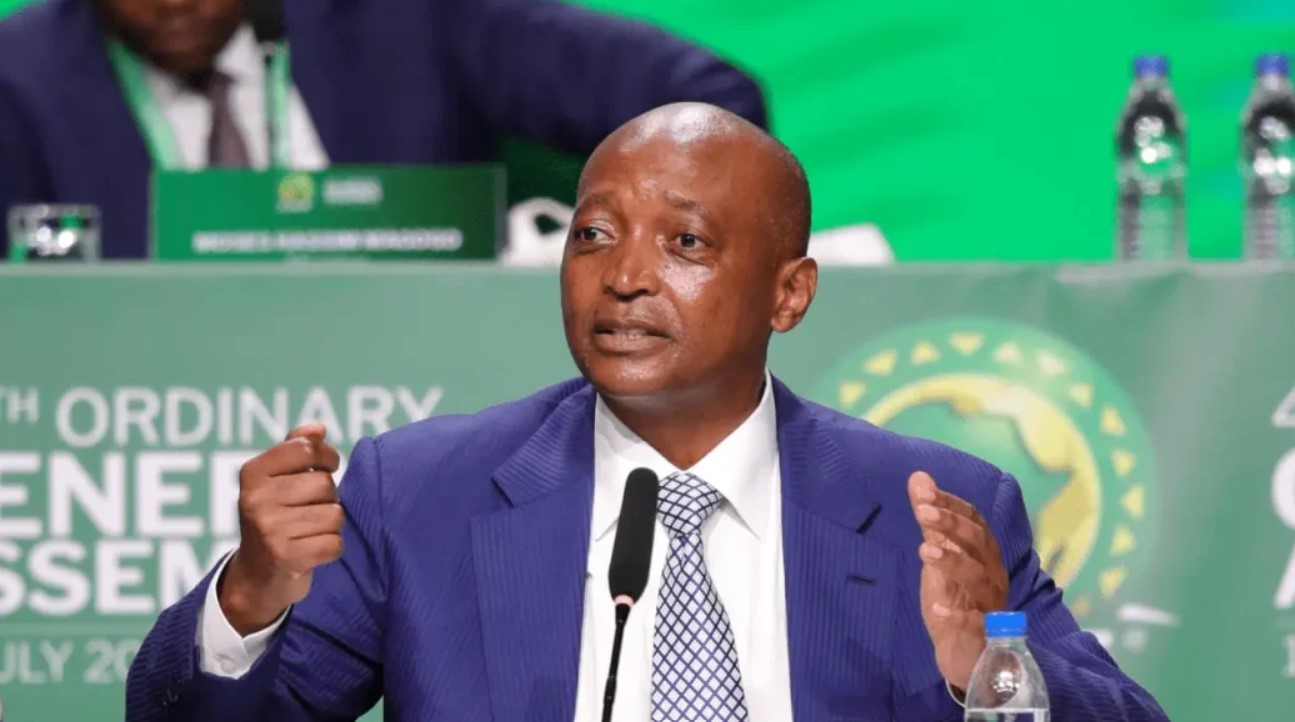
CAF was not alone in this. CONMEBOL and the Oceania Football Confederation also stopped short of opposing the plan, with the latter saying only that it would consider the matter at an executive committee meeting in August, while the former remained silent through most of the saga. But CAF is not a small confederation quietly waiting its turn. With 54 of FIFA’s 211 votes, it commands more votes than any confederation except UEFA, and its members had a greater stake in the outcome than almost anyone else.
A bloc with that much voting power choosing not to use it is very different from Oceania saying it needs until August. It is either a case of not recognising how much influence it holds over key decisions in world football or of recognising that influence and choosing to cower under Gianni Infantino’s leadership without blinking, as it almost always has.
To re-establish what this was all about: according to FIFA, FIFA Forward Enterprise would not have sold the World Cup itself. Instead, it would have taken the commercial machinery surrounding FIFA’s tournaments—broadcast deals, sponsorship, ticketing, licensing—and the job of staging them, and placed both inside a single subsidiary valued at $20 billion. FIFA would have retained majority ownership. Outside investors, led initially by Thrive Capital, the firm founded by Joshua Kushner, with JP Morgan running the fundraising, would have been offered up to 20 per cent, a stake FIFA hoped would raise around $4.2 billion.
FIFA argued that the World Cup had been under-monetised relative to other global sporting properties, and that dedicated commercial management, coupled with outside capital, could close the gap. Some of the proceeds would have funded a significant increase in FIFA Forward, the programme that funds member associations directly, lifting the regular allocation for the 2027–2030 cycle from $8 million to $20 million per association, with a further optional payment on top for federations that approved the plan by 19 September.
Combined, FIFA told its member associations they could receive up to $40 million over four years. The Times reported that Infantino could become commissioner of the new entity once his current FIFA term ends. However, FIFA’s published proposal stated that it did not establish a role or compensation for any individual. Approval required a majority of FIFA’s 211 member associations, backed by the FIFA Council, putting the threshold at 106 votes.
That arithmetic is precisely why the positions of confederations holding large voting blocs—Europe’s 55 and Africa’s 54 chief among them—carried more weight than any single federation’s view. Together, the two confederations represent just over half of FIFA’s member associations.
UEFA moved first and hardest, framing this as a fight over the soul and governance of the game rather than a financing question. CONCACAF’s rejection was more transactional: its members judged that the governance risk posed by the structure outweighed the immediate payment attached to it, and rejected both.
The AFC’s opposition was the most institutionally pointed of the three. Rather than simply objecting to private equity in football, the AFC argued that the episode had exposed fundamental weaknesses in FIFA’s consultation and decision-making processes, and called on FIFA to review its own governance regardless of what happened to FIFA Forward Enterprise itself.
FIFA did not back down at first. It insisted nobody was selling football, blamed leaked reporting for disrupting what it described as a planned consultation process, and pointed out that no single confederation could claim to represent all 211 of its member associations. It also introduced a new wrinkle: a voluntary “Fast Forward Programme” offering federations another $20 million in externally backed funding, separate from the equity sale, a sign that FIFA was already adjusting its offer under pressure just days after the original letter.
The resistance did not hold. By Friday, the pressure had reached FIFA’s own inner circle. Carlos Cordeiro, Infantino’s senior adviser and FIFA’s representative on a White House task force for the World Cup, resigned in protest and urged other senior staff to speak out. That evening, FIFA released a statement attributed to Infantino himself, conceding that the project had “created divisions” that no longer served its original purpose and that “this proposal will not proceed”.
Infantino framed the retreat as consistent with FIFA’s stated goal from the outset: to unite rather than divide. He said he intended to bring stakeholders back together in the coming days and weeks to continue pursuing funding for the federations that need it most. Nine days after it was announced, FIFA Forward Enterprise was dead.
Set against that, CAF’s public position read as almost administrative. Its own language committed it only to continued consultation in support of greater development funding for African football, without endorsing or criticising the private equity mechanism itself. There was no public defence of FIFA’s plan. There was no criticism of it either.
That was a defensible position to hold in isolation. Withholding comment on a critical issue can easily be interpreted as tacit support, and that would not have been a far-fetched conclusion given CAF’s history under Patrice Motsepe. While deliberation is not the same as endorsement, it leaves room for interpretation, and one that almost inevitably tilts in one direction.
Three things made CAF’s version of caution harder to read as simply procedural. The first was timing: CAF chose to deliberate at the exact moment three of its six sister confederations had already concluded that deliberation was not what the moment called for. The second was scale: with 54 votes, CAF was never a bystander in determining whether FIFA Forward Enterprise cleared the majority FIFA needed. Its eventual position would have mattered more to the outcome than that of almost any other confederation, which made choosing not to signal that position a form of leverage in itself, for FIFA as much as for CAF. The third was history, and it is worth setting out before drawing any conclusions from it.
CAF’s hesitation did not appear out of nowhere. Barely a week before FIFA’s letter was sent, Motsepe stood before reporters in Johannesburg and delivered an unprompted defence of Infantino, who was then facing criticism over a contested disciplinary decision involving American forward Folarin Balogun, newly introduced in-match hydration breaks, and a proposed expansion of the World Cup to 64 teams. Motsepe told reporters that Infantino was not just a good friend but a loyal one—loyal to Africa. It was an unusual thing for the head of one confederation to volunteer about the head of the global body that the confederation exists, in part, to hold accountable.
Nor was it new. In 2022, CAF’s 54 member associations resolved as a bloc to back Infantino for re-election before any rival candidate had even emerged, at the same assembly where Motsepe and Infantino jointly launched what was then called the African Super League. Infantino described it as proof that the project was being built within FIFA’s structures rather than against them, explicitly distinguishing it from the breakaway European Super League that UEFA spent years fighting in the courts. The competition was later reshaped into the African Football League, but the framing at its inception—a continental project built with FIFA’s blessing rather than despite it—has endured.

The expansion of the Club World Cup in 2025 tells a similar story in numbers. CAF rescheduled its own showcase event, the Africa Cup of Nations, by six months to make room for FIFA’s newly expanded 32-team tournament in the United States. All four CAF representatives—Al Ahly, Wydad, Espérance de Tunis and Mamelodi Sundowns—were eliminated in the group stage, and each collected a flat $9.55 million in prize money, the same amount paid to CONCACAF and AFC clubs and a fraction of the up to $38.19 million some European sides received. None of that proves a bargain was struck. It is evidence of a confederation that has repeatedly absorbed the disruption of FIFA-driven change and accepted a smaller share of its rewards without making FIFA absorb any of the cost to the relationship.
There is a more sympathetic reading of all this, and it deserves equal weight. African member associations are, in real terms, poorer than their counterparts elsewhere in world football, and FIFA Forward has mattered to them more than to almost anyone else in the game.
Since 2016, the programme has channelled roughly $1.06 billion into CAF’s 54 member associations, funding pitches, offices and youth competitions that many federations could not otherwise afford. The $20 million on the table for the next cycle was not an abstraction for federations operating on a fraction of that sum. Reporting by Ecofin Agency found that the figure would have been more than four times Senegal’s entire federation revenue in 2024, and close to half of Côte d’Ivoire’s record 2025 budget.
Set beside those numbers, CAF’s reluctance to pick a fight looks less like deference and more like arithmetic. A confederation whose members depend on FIFA funding for the basics of running a federation has a genuinely different calculation to make from one whose members sell their own broadcast rights for billions. UEFA can afford to gamble on a boycott. Whether CAF’s members could have afforded the same gamble is a fair question, and CAF choosing differently was not, in itself, evidence of anything other than acting in its members’ immediate interests.
The trouble is that dependency and deference can produce identical behaviour for opposite reasons and, from the outside, this week, they looked the same.
None of this proves that CAF’s Executive Committee, which was still due to meet this week, would have ended up endorsing FIFA Forward Enterprise. The review was never going to conclude before FIFA’s own reversal made it unnecessary, and Motsepe’s committee might yet have come down firmly on the side of the confederations that pushed back. What can be said is what actually happened: CAF never had to choose.
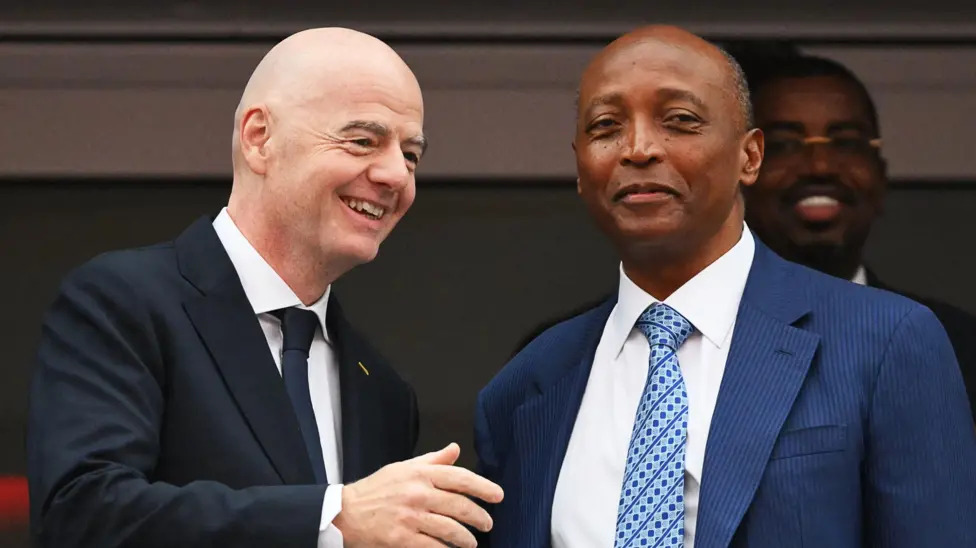
UEFA voted to boycott. CONCACAF and the AFC said no on the record, at real cost to their standing with the man who runs world football. CAF said it would look at the document, and nine days later the document no longer existed. The confederation with more votes than any other except UEFA ultimately had no say in a decision of that scale in world football. That is telling.
That is, in one sense, the definition of a strategy working and, in another, an illustration of cowardice and a lack of direction. It is also the clearest illustration yet of the pattern this saga has spent a decade writing: a Super League built with FIFA’s blessing rather than against it, a flagship tournament rescheduled around FIFA’s calendar, a president who defends FIFA’s leadership unprompted, and now a $20 billion proposal that collapsed under the weight of confederations CAF allowed to do the confronting.
Each instance has its own explanation, but together they describe an organisation whose default setting, whenever FIFA wants something and the rest of football pushes back, is to wait, let the resistance happen elsewhere, or ultimately concede. It rarely opposes, or takes a stand for itself or in favour of its member associations.
With the entire idea now dead, Infantino says he intends to bring interested parties back together in the coming days and weeks to continue pursuing funding for the federations that need it most, the same funding gap that made this proposal appealing to CAF’s members in the first place. When those conversations begin, CAF will once again hold more leverage in the room than almost anyone else in world football. Whether it uses that leverage, or waits again for someone else to expend theirs first, is the question its silence this week leaves unanswered.
In time, we will see whether CAF is truly an independent confederation representing the interests of African nations or simply Gianni Infantino and FIFA’s most reliable political ally.
Tuka Letura is an experienced sports writer with over five years of experience in the craft. He uses data and statistics to provide analysis and commentary. From regional to worldwide competitions, he has covered a wide range of sports-related events and topics. He is devoted to sharing his enthusiasm for sports with his audience and engaging them with interesting anecdotes and viewpoints.