


Nollywood is mostly at its best when it deploys humour to laugh at retrograde values and outdated social conventions rather than just laughing them off.
By Adedamola Jones Adedayo
* This essay contains spoilers for the films it references.
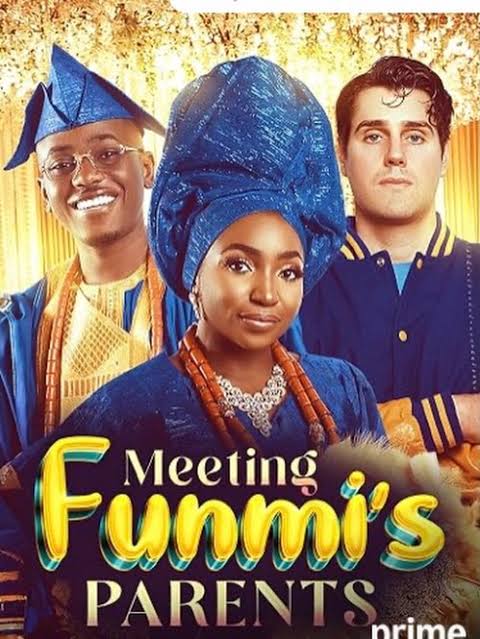
Meeting Funmi’s Parents (2024) opens at a restaurant, where a US-based Nigerian woman sits with her white American boyfriend. Her name is Funmi. His name is Jason. Jason proposes to her during the rendezvous, and they both agree to visit Nigeria to see Funmi’s parents. Upon arriving in Nigeria, the lady introduces the young man to her parents, but her father shows instant disapproval of her choice of a foreigner as a spouse.
When the patriarch, in a private moment between Funmi’s parents, says Jason should be offered the guest room instead—a gesture of inhospitableness—his wife playfully retorts, “Downstairs ke? He will stay in the toilets,” and they both end up making light of the situation. The exchange is almost negligible, but it provides a glimpse into the anxieties surrounding Nigerian marriages. The audience is reminded that the typical Nigerian marriage is a union of families rather than merely two individuals, and it is worth noting that this reminder is delivered through humour.
That choice is far from incidental. In Meeting Funmi’s Parents, writer-director Kevin Luther Apaa brings the audience into the dynamics of the contemporary Nigerian family, which is often still tethered to a traditional value system and its expectations of marriage. Recently released to diasporic audiences via Prime Video two years after its domestic theatrical run, the film navigates humour, romance, and family drama against a familiar sociocultural backdrop.
What Apaa’s film reinforces is a pattern in contemporary Nollywood where comedy functions as both a vehicle for thrills and entertainment, and a tool for scrutinising society. Rather than just being an outlet for laughter and escapism, comedy in Nollywood has been used to identify and soften conversations around deeply rooted sociocultural concerns. Questions around love, romance, marriage, and interracial relations are increasingly explored, revisiting the African marital tradition where the endorsement of families is just as important as the commitment between the couples themselves.
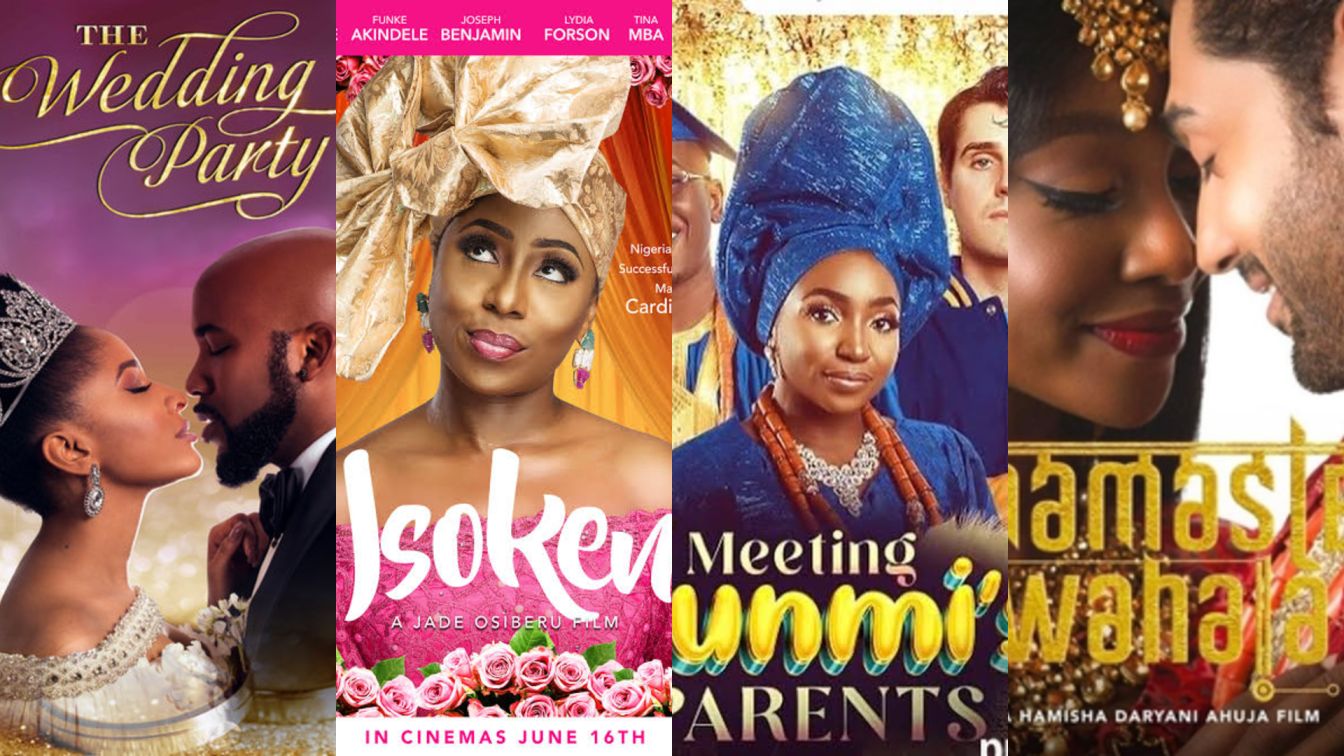
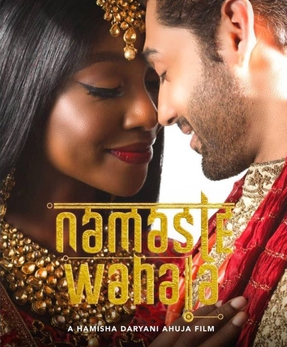
The pattern is conspicuous in earlier contemporary Nollywood titles such as The Wedding Party (2016), Isoken (2017), and Namaste Wahala (2021), all of which deal with changing cultural attitudes, intergenerational dynamics, and family expectations. Isoken, directed by Jade Osiberu, follows a 34-year-old unmarried woman who falls in love with a British man rather than the ideal Nigerian man her mother particularly wants for her. In Namaste Wahala, directed by Hamisha Daryani Ahuja, a Nigerian woman and an Indian man fall in love, but their families oppose the union because of their different cultures. The Wedding Party, directed by Kemi Adetiba, is set on the day of the long-awaited wedding of two sweethearts, Dozie and Dunni. However, the couple’s desire for each other is not enough to stop preparations and family involvement from descending into chaos, with much of the film’s conflict and humour arising from the clash of inter-ethnic and inter-class relations between their two families.
Humour is put to pragmatic use across all of these productions amidst the dramas that unfold therein, as they ultimately reveal age-old realities about family and culture that hold sway over modern romance. Yet, rendering these hardline “social truths” with the temperate voice that comedy offers comes with the risk of undermining the severity of the discourse, avoiding critical reflections, and forestalling progressive conversations that resonate beyond geographic boundaries. In latching onto humour, Nollywood sometimes becomes an accessory for blurring social vision and change where it ought to be a magnifier.
That contradiction speaks to one of Nollywood’s defining strengths. If there’s anything to be grateful for with Nollywood, it is how it captures the quintessential Nigerian experience, regardless of changing times. In doing so, it retains a decent dose of familiarity and authenticity, leveraging traditions and values that arise from the psychology of the country’s nationals. A prime example is the use of humour to cope, responding to difficult or stressful experiences by turning them into laughable scenarios that diffuse their emotional weight.
This reality is apparent in films like Namaste Wahala and Isoken, where modern couples are surrounded by friends who make light of their predicaments as the couples navigate traditional expectations of marriage imposed by their families. Here, contemporary Nollywood treats the clash between old and new values in such a manner that it appears less like a conflict and more like an entertaining social negotiation that the audience can easily learn from without being weighed down by its tensions.
For most Nigerian families, marriage is a milestone, with procreation considered essential to the preservation of the family name. Every eligible son or daughter is expected to have a suitor or bring home a potential partner that they intend to spend the rest of their lives with. When they do not fulfil this societal obligation soon enough, they may encounter social stigma. Nollywood explores this as well.
In the opening scene of Isoken, during the wedding ceremony of one of Isoken’s younger sisters, a family member, feigning surprise at how unperturbed Isoken is, subtly mocks the unmarried eponymous protagonist: “You are taking this very well. My dear, if it were some people, they would be crying and hiding by now.” The woman’s reproachful attitude hints at the extent to which marriage in Nigeria is glamorised. While expectations for both genders regarding marriage overlap, young women face more pressure as they are meant to contend with a perceived “biological clock” or risk becoming the target of ridicule among conservative family members.
The ideal Nigerian marriage is supposed to bring together families with the same social, religious, and cultural affiliations. Families see this as a means to strengthen their social networks, deepen cultural ties, and extend their legacies, even encouraging and recommending spouses for their children in order to make this happen.
In Meeting Funmi’s Parents, Mr Kunle Alabi prefers that his daughter, Funmi, reconcile with and marry her ex-boyfriend, Ayo, because he is also Yoruba. In Isoken, Isoken’s mother introduces Osaze, the successful son of her well-to-do friend, to her own daughter. Similarly, in Namaste Wahala, Chidinma’s father is convinced she and Somto, a diligent young man at his law firm, will make “a fantastic pair” even though the lady has no romantic attraction whatsoever for him.

Lady Obianuju Onwuka in The Wedding Party insists that her son, Dozie, could have chosen a wife from a more prominent family. In one scene, she points to a photograph in a magazine while lamenting to her friends and husband, “Why didn’t the famous roving Onwuka eye land on one of these?”
Where spouses emerge from different sides of social or cultural consciousness, there is bound to be tension among family members. This tension is palpable in Meeting Funmi’s Parents, as Mr Alabi constantly ridicules his daughter’s white American boyfriend in Yoruba for being out of touch with the culture. One particularly laughable scene sees the young man choosing to eat a local dish with a spoon before mispronouncing “gbegiri”, much to the older man’s disgust.
A similar tension around racial and cultural differences comes into play in Namaste Wahala. Upon meeting her daughter’s Indian boyfriend, Raj, Chidinma’s father spits out the water he is drinking in shock before bluntly rejecting the young man, informing his daughter right in Raj’s presence that “marriage is serious business.” Raj’s mother is equally dismayed when she meets Chidinma, insisting, “She can’t look after you the way I have. Can she make chola bhaturas like I make for you?”
The tension in The Wedding Party stems from class rivalry. Here, Lady Obianuju Onwuka believes her wealthy and socially prominent family is superior to the Cokers, considering Dunni to be beneath Dozie. As she repeatedly looks down on the Cokers, her supercilious attitude is met with firm resistance from Tinuade Coker, Dunni’s mother, who matches her energy as their rivalry devolves into a power struggle over wedding arrangements, with their competition eliciting humour.
When humour works in Nollywood, it functions like satire, with its elements of exaggeration and dry wit helping the audience realise that something is wrong or questionable. This is particularly true of how humour is used to interrogate society’s perceptions of marriage through engagements with family and friends, as seen in the films under consideration here. Meeting Funmi’s Parents makes fun of ethnocentrism and cultural intolerance through Funmi’s father’s refusal to accept Jason despite the young American’s repeated attempts to embrace the family’s culture. Overprotective of his daughter, he monitors her to ensure she does not spend the night in Jason’s room, a behaviour that is both controlling and comical, and seizes every conversational opportunity to steer her back towards Ayo, her more culturally acceptable suitor.


Namaste Wahala lands its punches with an attack on racial prejudice and cultural stereotypes. A certain scene where both Raj and his mother are hosted to dinner at Chidinma’s family house involves a bitingly eye-opening conversation that leads the young lady’s initially recalcitrant father to genuinely recognise his daughter’s legal potential and accept her marital choice. Also, in Isoken, scenes in which Isoken and her unmarried friends playfully downplay their singlehood, especially during social gatherings, alongside her mother’s acerbic remarks that repeatedly magnify the issue at family events, lampoon the societal pressure placed on spinsters and the rigid expectations surrounding the ideal husband.
The Wedding Party, which seems to be the most melodramatic of all the four films here, takes a jab at the Nigerian wedding culture, especially when dressed as a status competition and avenue for ostentatious display of wealth and power rather than a milestone and celebratory gesture. Rather than uniting, the matriarchal figures from both families seek to outdo each other in wedding preparations, with a particularly ludicrous scene having them disagree over which family first gets called up on stage to dance.

However, despite the noble use of humour in all these narratives, there are times when it distracts the audience from fully assessing the situation critically beyond laughing over it. In some of these situations, humour dangerously excuses serious concerns, softening their intensity where it ought instead to reprimand and radicalise.
An example of this in The Wedding Party is the revelation of Dozie’s infidelity or close attempt at it. Such a betrayal is supposed to raise serious concerns over fidelity, trust and accountability. Instead, the crisis is absorbed in a series of comic misunderstandings and sentimental reconciliation, as the couple and guests soon resume the proceedings.
Isoken repeatedly interprets the mother’s nagging about her daughter as an innocuous display of affection and concern that should only be laughed over at the end. Humour strips the film of any attention to the psychological impact of mockery and scathing remarks. In one scene, while the family is having dinner, Isoken expresses her desire for greater professional advancement. Her mother publicly questions her priorities in front of the entire household, reducing her ambitions to a subject of ridicule. Choosing not to dwell on how such public humiliation amounts to emotional abuse, the film reduces the situation to a source of humour. With moments like this treated as mere comedic outlets, it sidesteps the emotional abuse experienced by women dealing with family and societal pressures.
Similarly, in Meeting Funmi’s Parents, while Funmi’s father isn’t receptive towards inter-racial marriage, his overall demeanour is laced with dry wit and slightly heightened gestures, such that the audience is unlikely to take him too seriously. The film does not justify the father’s prejudice, and even though the marriage eventually falls apart, it presents a different—and rather convenient—reason for the failure.
Nollywood is arguably at its best when it deploys humour to laugh at retrograde values and outdated social conventions rather than just laughing them off. This translates to a more intentional approach towards advocating change within the contemporary family and marital institutions through storylines rather than romanticising or sacrificing serious concerns on the altar of comic getaways.
The films examined in this discourse already serve as a reminder of the steps made so far while exposing existing gaps that need to be covered. In the end, it makes sense that the pursuit of the much-needed social transformation also requires using humour as a thoughtful, provocative and revolutionary tool in contemporary Nigerian cinema.
Adedamola Jones Adedayo is a film journalist and critic with special interest in African cinema. Through writing and audiovisual mediums, he creates conversations around cinema in Africa and the Diaspora. You can find him on Instagram @jonesthegoodboy and X on AdedamolaAdeda4.