

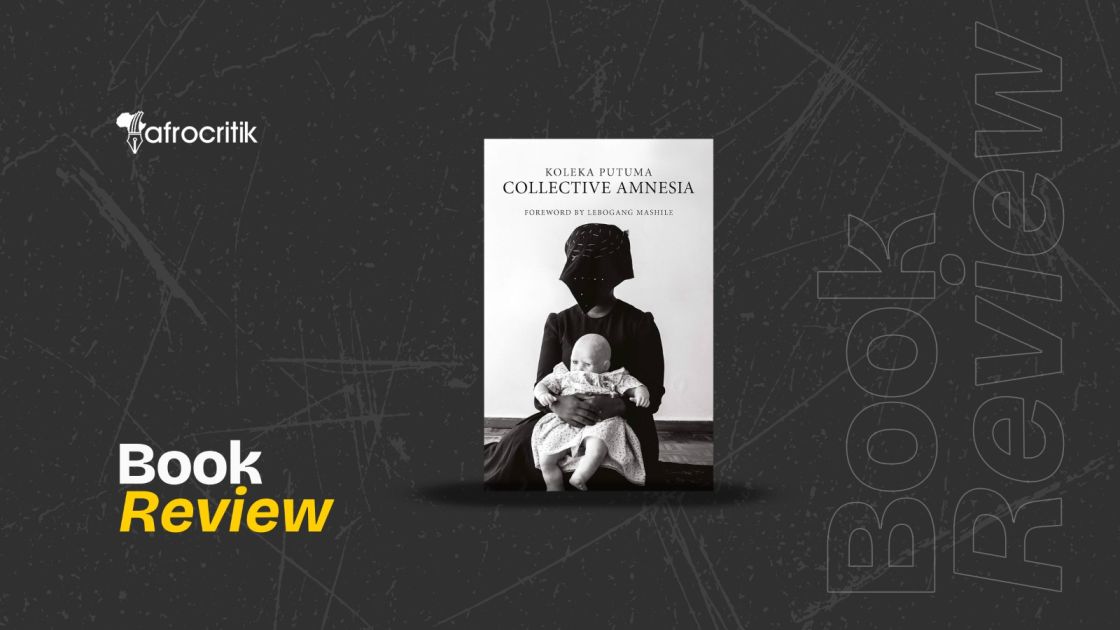

Collective Amnesia has the kind of reach that performance poetry often achieves—quotable lines, public arguments, a voice built to travel. The question that kept returning while reading was medium: how much of the work’s force depends on the room, the mic, the call-and-response, the audience’s willingness to be cued into outrage.
By Moses Emeka
Four years ago, during the Lagos International Poetry Festival, I sat with friends at a screening of #WeAreDyingHere (2021), Siphokazi Jonas’ film on femicide in South Africa. The sound in my memory moves like a haunting of a river—deceptive in the way it appears shallow. Partway through, one of the female friends I made there ran out in tears. I looked at my hands in shame: no tissue to give her, nothing concrete to offer, only consolatory noises that felt small and inadequate.
My earliest brushes with international news were Oscar Pistorius and the murder of Reeva Steenkamp. I was young then but old enough to stare at the TV in dismay while everyone around me carried on like something incredibly evil hadn’t happened. This film screening returned me to that same disbelief, and then pushed it further: grief became immediate and physical. It moved people out of their seats.
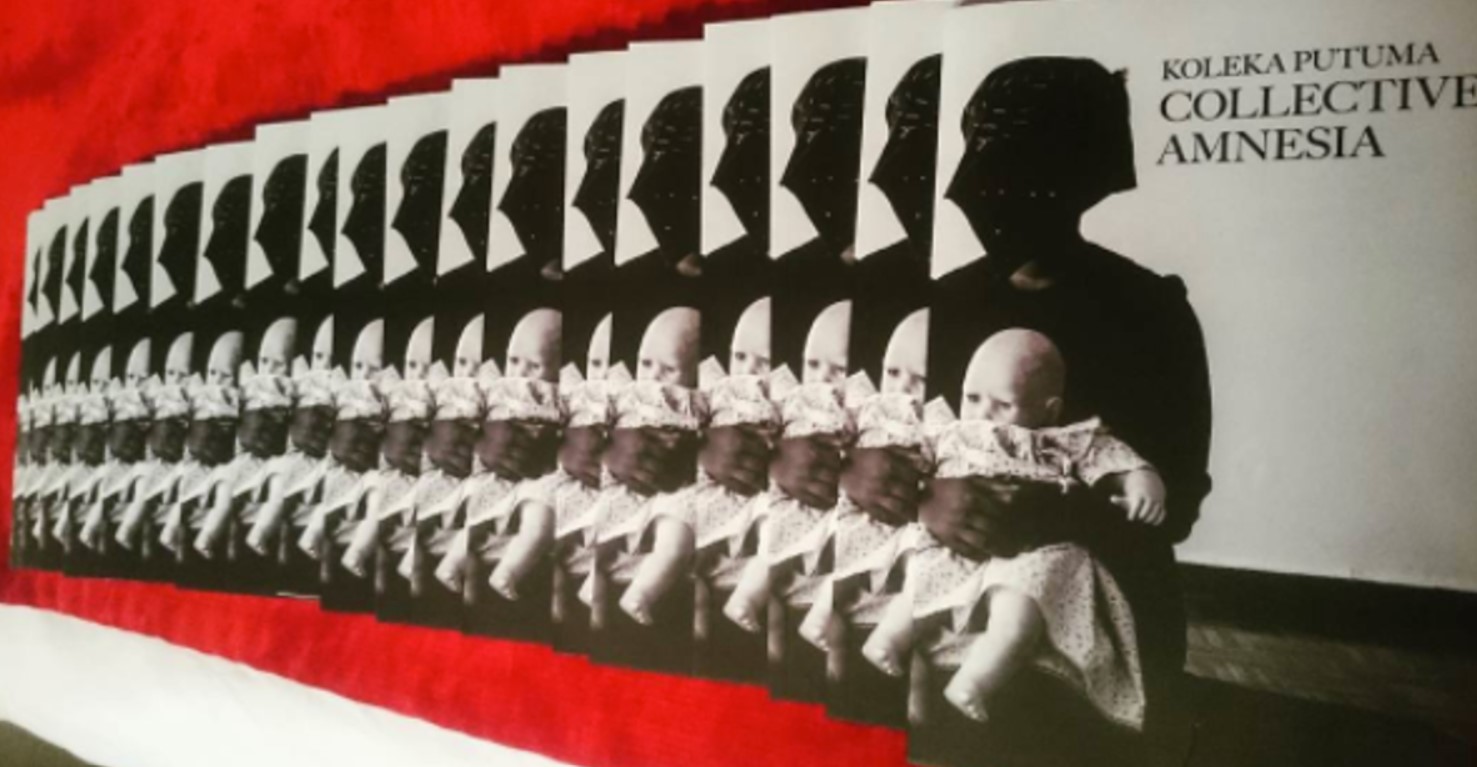
That memory sat behind my reading of Koleka Putuma’s Collective Amnesia, a book that arrived already consecrated—published by uHlanga in 2017, widely reviewed, awarded, and loudly praised. The subjects are heavy, and the daring is real. The collection wants to speak into blackness, womxnhood (as she refers to it), faith, queer life, state violence, rape culture, memory— it wants to be an African mouthpiece and a mouthpiece for black queer womxn at once. Reading it now, the experience felt like being addressed from a lectern on a school assembly ground. There’s a message. There’s a lot of messaging. The book instructed and heckled.
Political poetry can do both—carry a world and still delight. Chris Abani’s Kalakuta Republic (2000) does. Terrance Hayes’ American Sonnets for My Past and Future Assassin (2018) does. Wanda Coleman does, with her anger braided into invention and nerve. Lucille Clifton’s “song at midnight” (1992) does, with praise that stays strange and musical. Putuma can reach that level in flashes. Too often in Collective Amnesia, the poems lean on repetition of grievances and slogans, politics as posture, applause lines and mic-drop endings, crowd-cue pauses—performance markers flattened onto the page. In an audience, with the hmms and ahhss and ohhss supplied at the right moments, some of that might land differently. On the page, it can turn gauzy, then cliché.
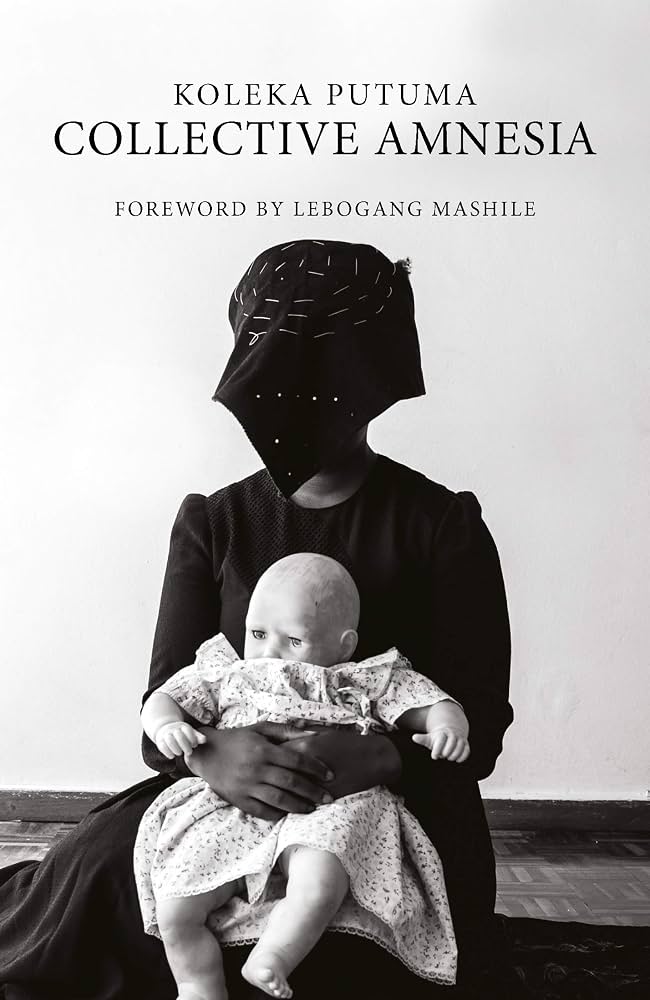
The disappointment begins early because the book opens with promise. “Black Joy,” the first poem in Collective Amnesia, starts with a surprise:
We were Spanked for each other’s sins
Spanked in syllables and the word of God
That entrance opens a door—sound, violence, religion, childhood, compressed into a few lines. Then the poem turns toward domestic image:
My grandmother’s mattress
knew each of my
siblings,
cousins,
and the neighbour’s children’s
morning breath
by name.
Then, toward the tail-end, the poem breaks the fourth wall and invites the reader to witness a seeming affront, with something that feels pulled from a dinky stand-up comedy stage in a seedy nightclub:
But
isn’t it funny?
That when they ask about black childhood,
all they are interested in is our pain,
as if the joy-parts were accidental.
I write love poems, too,
but
you only want to see my mouth torn open in protest,
as if my mouth were a wound
with pus and gangrene
for joy.
The irony aside, this complaint is familiar and very true; the delivery is where the poem starts slipping. The line breaks feel arbitrary and not carefully considered, and the voice keeps reaching for recognisable outrage rather than letting the image do the work.
In “Hand-me-downs,” the first third of the poem presents striking visual imagery, and then the momentum falters—verbose sentences that try too hard, an insistence that starts to feel like strain. The same pattern shows up in “Growing Up Black & Christian” and “Growing Up Black & Womxn.”
And still: Collective Amnesia deals with heavy subjects, and some poems are built with real attention.
“No Easter Sunday For Queers” takes the harrowing experience of being profiled and murdered for being a queer womxn in a list format, and in the lines leading up to it paints a picture of growing up working class and Christian in South Africa, breaking away from religious tradition to find yourself in queer collectivist spaces, and the shame of living a double life—being gay and trying to live with your family’s expectations. Putuma builds the poem like a map with two recurring locations—the Northern Suburb and the Southern Suburb—and keeps returning to them through repeated headers and stacked, list-like lines. Those lists feel like systems: in the North, church, scripture, family reputation, hiding; in the South, clubs, campus life, queer visibility, and a different kind of fear. The repetition makes each place feel like a set of rules the speaker’s body has to live inside.
A key structural hinge arrives when the poem compresses the whole geography into posture: “In the North, my hands are raised in worship. In the South, my hands are raised in protest.” That parallel sentence does a lot—same body, same raised hands, different public meaning. The line that follows (“Either way… surrendering”) locks the poem’s argument into the form: the switches aren’t scenic; they’re pressure tests.
After that, the poem tightens into a back-and-forth rhythm: Bible verses and church language in one column of attention, news-headline violence and WhatsApp pings in the other. The alternation starts clean and then gets messier—scripture bleeding into club cadence, theology colliding with pop and protest language—showing how the two spaces keep living inside the speaker at once, even when she moves between them.
The last movement narrows from suburbs to the father/pastor and the sermon space. Putuma returns to bullets and questions, as if writing sermon notes the church refuses to preach: queer deaths treated like crucifixions, bodies left without resurrection, and the final private question after service—if she became a headline, would he preach her as his daughter, or as a lesson, or at all? The poem ends by making “North” and “South” feel secondary to the real deciding force: who gets mourned publicly, who gets named, and who gets left in the tomb.
After that, the set of poems titled “Graduation,” “Footnotes,” and “Love” continues in the gauzy, clichéd line-work already established in the earlier poems. Family, desire, affection, self-actualisation—interrogated in a register that often feels pre-approved, already tuned for quotation.
That ends the first section, Inherited Memory. Then comes Buried Memory, more sombre, concentrated on death, grief, trauma, mental health challenges. Even there, the same tendencies return: a narrative persona slipping into hush and gossip, advice braided into confession, odd jabs aimed at God in poems like “In Debt” and “Index”. Maybe they aren’t jabs. Maybe it’s an attempt to humanise God by giving the divine the not-so-great parts of our humanity.
Post Memory is where the political zoom-out intensifies, and the posture starts to show its seams. In “Interview,” Putuma laments:
Black men and white womxn
always write about black womxn
as if we are already dead.
Seems like the world
does not know what a
Black womxn walking
really looks like when she is breathing.
She continues in the same vein in “On Black Solidarity”:
- Black solidarity does not include making my spine a doormat
- So that you can stand or have a backbone.
- Black solidarity at the expense of a black womxn’s anything, is a farce, a rip-off. ● The kind of violence they shred into laughter at the police station and replay in front of you just to make sure you got the joke.
The poems discussed so far should resonate sonorously with a certain liberal demographic whose politics never strays from vapid slogans, whose solidarity is fluent online and thin in the world—politics as caption, politics as posture, politics as a way to keep proving one’s correctness.
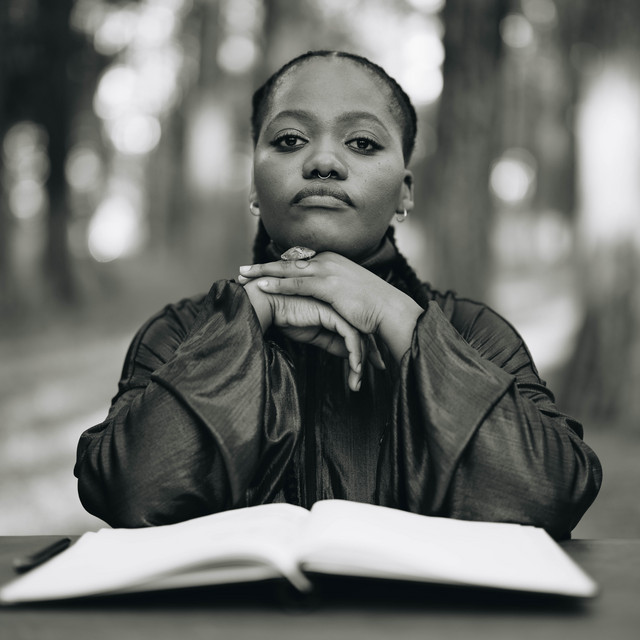
“OH DEAR GOD, PLEASE! NOT ANOTHER RAPE POEM” is where Collective Amnesia’s craft feels most deliberate. Putuma builds it as a mock academic document—Preface / Introduction / Body / Conclusion / Addendum / Reference list. The form carries the cold authority of “proper” knowledge-making, then fills it with what families and institutions usually treat as unsayable. The poem reads like evidence being filed, not confession being offered, and that framing anticipates an audience already tired, already defensive, already looking for a neat takeaway.
The preface is a thesis stated through image: daughters burned into warmth, relatives describing smoke instead of smelling it. It sets the central social mechanism: proximity to harm plus active avoidance. The poem’s argument begins there—violence isn’t only the act; it’s the family’s skill at narrating around it.
The introduction runs on anaphora—“sometimes…”—with bracketed nouns (“[hell]”, “[girls]”, “[uncle]”, “[the daughters]”). The brackets work like redaction and substitution at once: legal language, censoring, variables you can swap in. “Uncle” becomes a role, “girls” become a category. That’s the poem showing how abuse travels through euphemism, and through the way households turn people into functions.
The body starts with “many things are cultural” and lists festivals, brands, church—ordinary social life—then drills into the phrase “rape culture”. The poem treats that term as a linguistic downgrade: a phrase that lets violence sound like a lifestyle, an accessory, a trend, a meme, something to consume, wash, or pass around. It’s a critique of how public discourse can aestheticise and soften the event until it becomes commentary rather than emergency.
The conclusion shifts into the domestic: forks on plates, kitchens, the uncle entering the room, women staying busy so they don’t have to confront men. Sound becomes surveillance; chores become choreography. Religion is threaded through that scene—“gospel”, “salvation”, “vows”, “devil”—as the vocabulary that trains endurance and silence. The poem keeps the accountability structure in view: children policed for “lying”, adults protected for being “respected”, nightmares treated as an inconvenience.
The addendum is a final theatrical move: the poem stages the reader’s exhale—“oh dear God… not another rape poem”—as part of the text. It names the cultural reflex that meets testimony with fatigue and annoyance. The sigh becomes another cover-up mechanism: the public’s impatience joins the family’s denial.
The reference list is the poem’s sharpest structural weapon. It’s a bibliography made of excuses, commands, and stereotypes—patriarchs, modesty codes, “dirty laundry”, respectability, school status, protest hashtags, clothing policing, and the everyday instructions girls are made to perform (“greet uncle”, “hug uncle”, “sit on uncle’s lap”). It’s saying the “sources” of sexual violence aren’t hidden; they’re everywhere, cited daily, repeated until they sound like tradition.
Then in “Burial”, the poem is one long, breathy paragraph that moves like memory: it starts in play, stays in play, then quietly lets the meaning deepen without changing the scene. The first half is almost entirely action—kids burying each other, heads poking out, the “mother” role performed with exaggerated wailing, the dead person breaking character with giggles. The sentences pile on through repetition (“we,” “then”), so the rhythm feels continuous, like everyone is inside the same sweltering afternoon.
Inside that game, the poem stages adult life as a costume: funerals become a beach performance, and the children slip into roles—long-lost relatives, neighbours—complete with inheritance fights over sandcastles. Property and belonging are treated as childish improvisation: shares get assigned, disputes erupt, people storm off to build elsewhere. The beach makes all of it provisional, so ownership is real only for as long as the group agrees to pretend.
Then the poem turns with a series of plain “then” statements that function like quiet corrections from the future: acquiring land was easy, letting go was easy, coming home wasn’t loaded, speaking didn’t choke. The sea bulldozing the castle becomes the central image of impermanence—loss arrives, gets mourned, gets forgotten by morning—so grief is shown as something the body hasn’t learned yet.
The closing compresses the whole idea into a final claim: the children “died and rose again,” “played God,” treated life and death like a remote-controlled game. That last image doesn’t celebrate power; it underlines innocence—control without consequence—and leaves you hearing what isn’t said: the later moment when the remote disappears, coffins can’t be dismantled, and coming home starts to mean something heavier.
Then we come to “Water”. It starts with a familiar Black ritual—New Year’s Eve at the beach—and uses that scene as a pressure point for history. Elders policing how deep the children go becomes a way to show inherited fear living inside ordinary leisure: bodies at the shoreline carrying warnings that sound practical, but feel like survival doctrine. The poem keeps the beach tactile and specific (tights, plastic bags over hair, the choreography of “how we come out of water”), then lets that specificity widen into a collective register.
The craft is in how she converts a joke into an archive. The stereotype about Black people and swimming is treated as a public performance, then dragged back through the Atlantic: reeds as remembered chains, salt as accumulated tears, eyes burning as a bodily receipt.
The repetition of dates around late December and early January turns the beach trip into an annual re-enactment—skin meeting water as a recurring trigger, not a neutral act. Then the chant-like “we have come…” sequence frames the ocean as a site of baptism, ancestral contact, and cleansing, with “fear” renamed as a disciplined respect shaped by violence.

Midway, the poem folds the beach into a wider critique of spectacle and extraction: Black bodies made to serve as tour guides, entertainment, “authentic experience,” mass gatherings that feel like forced atonement. The recurring image of raised hands binds spiritual posture to political exposure—hands up in worship, hands up in protest, hands up to avoid being shot—so water, church, street, and state violence sit in one line of feeling.
The final stretch deepens the argument through religion: a white, colonised God; scripture treated as an agenda; a quick, unsettling opening for queer possibility inside the holy cast; rage and grief as the only honest “ingredients” left at the table. The closing repetition (“just for fun”) lands as bitter irony—swimming as a carefree act remains unequally available when history keeps reasserting itself in the body and in the news cycle.
Part of the poem’s popularity comes from that mix of immediacy and scale: it performs well aloud, it’s built from everyday language and sharp refrains, and it turns one shared memory into a public argument that people can carry and quote. It also arrived early in her rise: “Water” won the PEN SA Student Writing Prize and circulated with performance/video contexts that widened its audience beyond poetry readers. That reach feeds directly into why Putuma’s debut sold unusually well for a poetry collection, with multiple reprints and later milestones like 10,000 copies sold.
A witty poem I like is “1994: A LOVE POEM”:
I want someone who is going to look at me
and love me
the way that white people look at
and love
Mandela.
Someone who is going to hold onto my memory
the way that white people hold onto Mandela’s legacy.
A lover who will build Robben Island in my backyard
and convince me that I have a garden
and fresh air, a rainbow and freedom.
A TRC kind of lover.
You don’t know love
until you have been loved like Mandela.
You don’t know betrayal
until you have been loved like Mandela.
You don’t know fuckery
until you have been loved like Mandela.
The poem produced a chuckle out of me when I first read it, and it delights me to read it aloud.
We have the poem “Local” which I think shares similarities with “Aphasia” by Chris Abani, is built from bodily pressure and travel inventory: the mother tongue lodged “like an allergy” turns language into a physical threat, then the tight parallel (“die if I speak it / die if I don’t”) locks the speaker into a no-win reflex where silence and speech both cost.
The poem shifts from throat to luggage, listing bags (“overnight,” “tricks,” “survival toolkit,” “suitcase of DOs and DON’Ts”) the way someone rehearses what can safely be carried; each item is less a possession than a script for passing. The blunt claim—no space to pack or unpack histories or selves—frames identity as excess baggage under surveillance, and the closing sentence reads like a practised method: move lightly, look ordinary, hide absence and theft, keep loss from becoming visible enough to invite judgment.
“Sunday” works like a late-night backstage scene where church ritual is replayed as grotesque theatre: the opening line frames the pulpit and pews as a stage that keeps “re-enacting” stories after the congregation leaves, and the short, clipped sentences mimic skits—sanctified performance (“slaying in the spirit,” “falling over in tongues”) sliding into satire and blasphemous imagery. The white Jesus figure, reduced to a “sculpture” in a thong crawling for leftover communion wine, collapses reverence into farce and exposes how cheaply holiness can be manufactured and consumed; Mary’s complaint in the baptism tub adds the petty domestic note that undercuts the sacred.
The line about telling “the Blacks” to stop “vomiting the aftermath of colonialism” when they say amen turns prayer into a bodily expulsion and shows the congregation’s pain being treated as mess and bad manners; the final sentence lands as an institutional verdict—this space can host spectacle and control, but not the kind of healing that would require confronting what produced the sickness.
“Afterlife” closes the book by shifting the moral centre from private wrongdoing to collective consequence. The poem defines sin as what gets justified by liberation language—harm committed “in the name of the revolution”—so the sacred vocabulary of judgment is redirected toward the movement’s potential for cruelty, purity tests, and opportunism. The lineation-less rush reads like a pronouncement delivered in one breath, the syntax tightening into prophecy rather than argument, and that compression suits an ending: it feels final, like a last warning.
Its hell is disturbance—ancestral graves turned “inside-out,” a haunting that refuses closure. The haunted-house image makes freedom sound like a thin story told over unresolved dead; the demand for truth becomes the thing that will not stay buried. Then the poem flips worship into uprising: “Hallelujah” is recast as a bodily noise and then as a chant—“JUSTICE!”—with the repeated word becoming both sermon and protest refrain. As a final page, it leaves the reader with noise in the mouth: praise as insistence, afterlife as accountability that keeps returning.
Collective Amnesia has the kind of reach that performance poetry often achieves—quotable lines, public arguments, a voice built to travel. The question that kept returning while reading was medium: how much of the work’s force depends on the room, the mic, the call-and-response, the audience’s willingness to be cued into outrage.
In the poems where structure does the heavy lifting—“No Easter Sunday For Queers,” “OH DEAR GOD, PLEASE! NOT ANOTHER RAPE POEM,” “Burial,” “Water”—the craft holds, even when the subject is unbearable. In the poems that lean on posture and slogan, the page feels thin. The film screening at Lagos International Poetry Festival stays in my mind because it offers a brutal standard: grief presented without being turned into a prompt, violence shown without asking for applause.
Moses Emeka is an Igbo writer and editor based in Ibadan, Nigeria. His work engages African literary aesthetics and the critical life of books. His essays have explored writers such as Abdulrazak Gurnah within broader literary and philosophical contexts. His poems have appeared in online journals including Variety Pack, and he served as Political Editor at the now-defunct New York–based online zine, Mixed Mag. He has worked as a first reader and editor for emerging Nigerian writers and actively participates in conversations about the evolving directions of African literature. He is a 2022 SPRINNG Writing Fellow.