

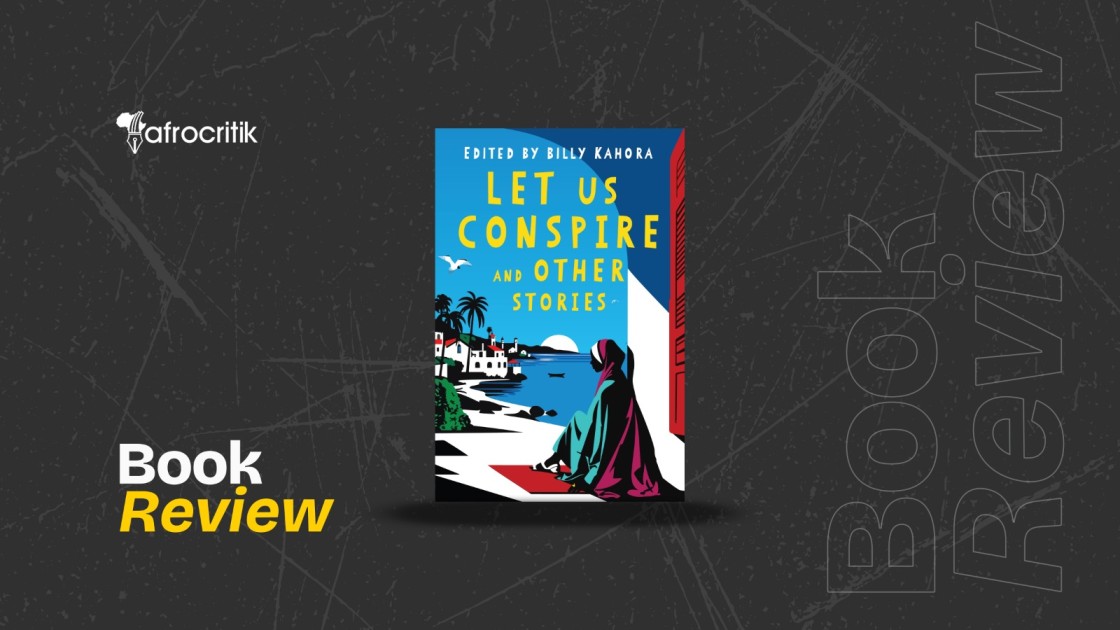

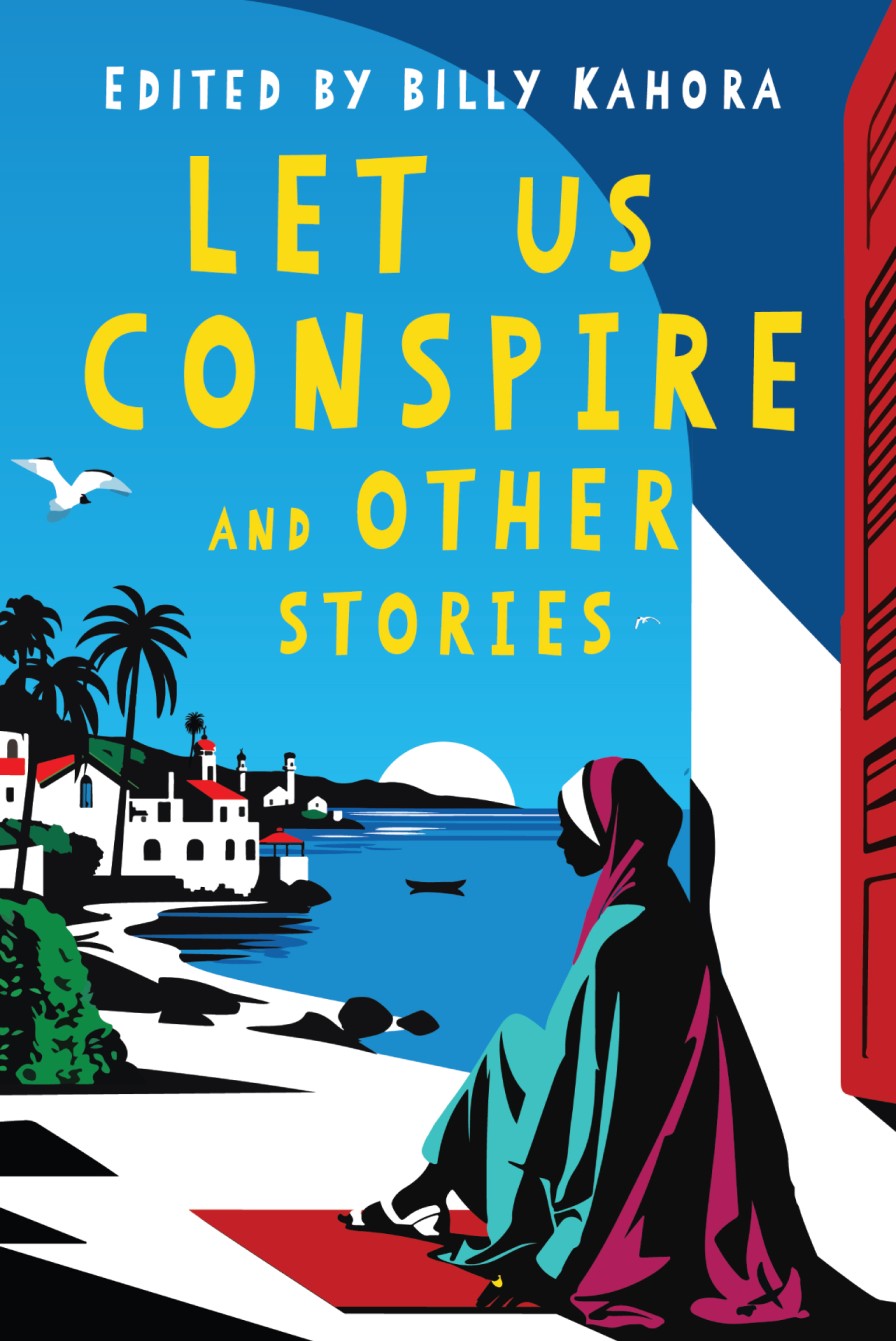
From the experimental to the conventional, with preoccupations at once personal and political, universal and individual, Let Us Conspire and Other Stories offers us a mirror to understand the times.
By Azubuike Obi
Stories are shaped by the histories that have forged them. This history, regardless of how long it may have been, continues to influence the life and work of those who dwell within those spaces. In Let Us Conspire and Other Stories, edited by Billy Kahora, we find vestiges and legacies of colonial violence and occupation in rural Kenya, the bloody trail of warring villages in the time before the white man’s ship docked at shore.
The writers anthologised here are reckoning with these histories as they tell and retell stories of marginal identities; of female emancipation and autonomy (or the lack thereof); of queerness and desires that lurk in bodies other than those we are accustomed to; of the grief that bind daughters to their fathers; of mothers who seek identities away from that which motherhood has conferred upon them; and of tradition’s persistent tug with modernity.
Let Us Conspire and Other Stories opens on a deeply personal note with Noella Moshi’s “When They Let Me Speak I Said Nothing”, an autofictional narrative about a daughter’s lifelong complicated relationship with her father. The narrator returns home at the event of her father’s passing and, journeying down memory lane, remembers the fraught days of her coming-of-age.
Inasmuch as this story is about how we grieve those whose love comes in shades of grey, whose love we do not understand, it is also about the anxieties that surround the demands tradition makes of us, how we react under these pressures, who bears the burden of our reactions — and how they go on to make a life of their own living with these burdens. Moshi relays all of this in clear, evocative prose.
Reality and superstitions convene in Kiprop Kimutai’s “The Taste of Honey”. It is a strikingly poignant story about grief and reproductive autonomy, and how we carry on living and loving even after grief has hollowed us out. The writers in this anthology are unafraid to embrace sentiment. While this makes for very evocative storytelling, taken together, it often tethers on the imagination of the singular trope.
Gladwell Pamba’s “The Last Shop” suffers from oversentimentality. It is a moving story about a burgeoning friendship between a child with “muddled speech” and Madam Supreme, a woman who spoke of death “with the familiarity of two old friends. Ndegwa Nguru shows remarkable promise in “How Many Minutes Till I’m Whole Again?”. Suffused with grief and guilt, and told in fragments, it is about being one’s truest self in the face of a stifling world. Munira Hussein’s “Immiscible Liquids”, however thought-provoking, is long-winded and without direction for the most part.
The subject of women’s autonomy is thoroughly explored here, too. Gender and its connotations have become an increasingly contentious issue across social media. Unsurprisingly, there is no shortage of interrogation by the young writers anthologised in Let Us Conspire and Other Stories: Florence C Mwaita’s “Not Another Year” is about a woman’s negotiation of her autonomy and what she must do to be free.
Buke Abduba’s “My Name is Blank” contests a culture that wrests selfhood from girls even before they become women, a culture that sets up a woman with tools for belonging— not to herself but to another first, yet fails to understand these women and the interior spaces of their individual bodies. Told with an eloquent melancholy, “My Name is Blank” follows the aftermath of a wedding night when a husband discovers that his wife did not bleed after he consummated the union.
In the tightly constructed title story from Idza Luhumyo, the 2022 winner of the AKO Caine Prize, feminist ideas come to what may be their truest realisation in the collection. Luhumyo chronicles the story of “poor little impressionable girls” of Mtaa wa Saba who are under the spellbinding storytelling of Bi Kizee. Here, storytelling is examined as both a form of representation and a means of escape. Escape for girls who want more than what society apportions them, and representation for their mothers who were once dreamers but have now been cowed, and so they begrudge Bi Kizee her freedom and her stories.


In one of the passages where Luhumyo’s exploration of her subject matter is at its sharpest, the narrator delineates: “She simply reminded them of the desires that they themselves had had to bury. They looked at Bi Kizee’s finger that was unburdened by a ring, then looked at her nose that was bare of a kipini, and then looked at her stomach that had obviously never carried a child and remembered this: there was a time, once upon a time, when they too had had desires—desires that had now been swamped by marriage, and children, and the endless domesticity that would be their lot until death came calling.”
Let Us Conspire and Other Stories is not short of experimental. Wildly so in form and structure, Florence Onyango regales with the lives and times of Agnes Akoth Odero in “In Memoriam”. Dennis Mugaa’s eponymously titled Nairuko explores “laibons”: a group of nine persons with clairvoyant powers that help them benefit from war-torn areas owing to an age-long trauma. Mugaa’s prose is simple and elegant, but his preoccupations are anything but. He asks, in “Nairuko”, how we keep on loving even when duty demands stoicism, how we hold onto our humanity in the face of unimaginable loss.
Unlike its Heinemann-published precursor, the David Cook-edited Origin East Africa (1965), Let Us Conspire and Other Stories is a testament to what can happen when we develop our own homegrown writing and publishing infrastructures. The majority of the stories are a product of Jahazi Press and Saseni! creative writing workshop. The anthology itself is published for a Nigerian audience by Masobe Books.
It is telling that the stories are not written with a non-Kenyan (or African) audience in mind; the writers do not steer towards anthropology: translations are spare, explanations of cultural context are expunged. From the experimental to the conventional, with preoccupations at once personal and political, universal and individual, Let Us Conspire and Other Stories offers us a mirror to understand the times.
Azubuike Obi is an Igbo storyteller who believes in the transformative power of language. He won second place in The Republic Student Writing Competition (2025), and was nominated for Chika Unigwe’s Awele Creative Trust Award (2024). His fiction and nonfiction has appeared online and in print in The Republic, The Weganda Review, Naira Stories, Afapinen, Efiko Magazine, and elsewhere. He is a regular contributor at Afrocritik.