


Starlomo finds the right setting and a compelling cultural premise, but its underdeveloped screenplay prevents these strengths from coalescing into a satisfying whole.
By Joseph Jonathan
In the late 1960s, a young Muslim street musician from Lagos named Sikiru Ayinde Barrister began fusing the Ajisari wake-keeping music of the Yoruba Islamic tradition with percussion, call-and-response vocals, and the rhythms of Lagos working-class life.
What emerged was Fuji, a genre that would become the soundtrack of the Lagos masses through the 1970s and 1980s. It played at motor parks, market stalls, and open-air celebrations, beloved by agbero, bus drivers, traders, and night watchmen, the people for whom the more expensive pleasures of the city’s formal entertainment economy were largely inaccessible.
Fuji was not merely music. It was cultural testimony, an artistic expression of a class whose labour sustained Lagos and whose presence remained largely invisible to the city’s official self-image. Its gradual displacement in the cultural mainstream by Afrobeats, a genre packaged for global consumption in ways Fuji never was and perhaps never intended to be, is not simply a story about changing musical tastes. It is also a story about which cultures get preserved, which get appropriated, and which get forgotten when the music industry’s economic incentives point elsewhere.
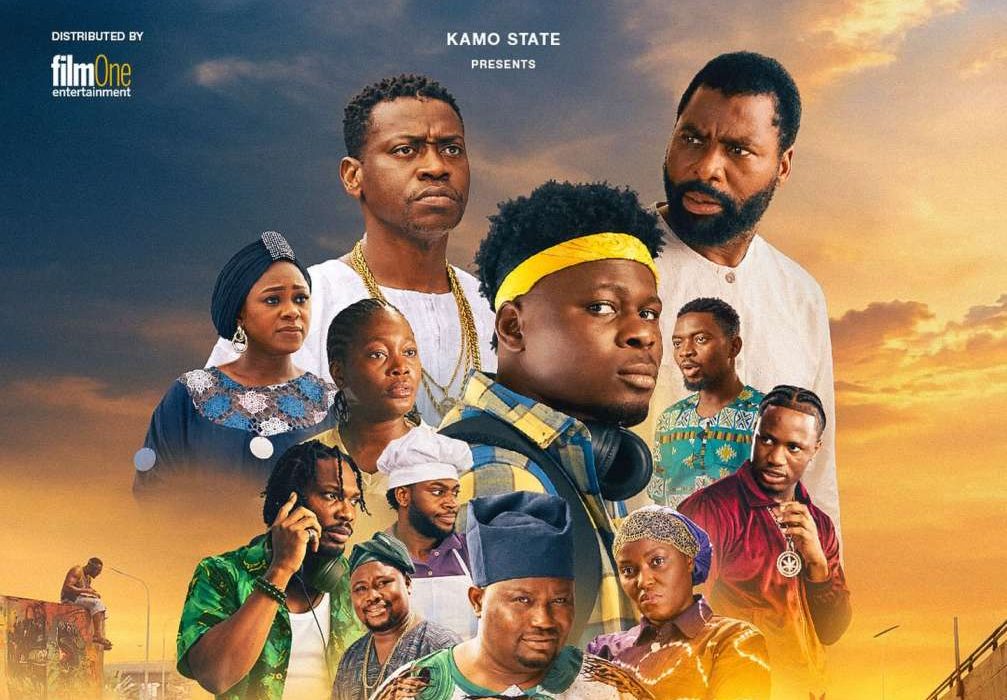
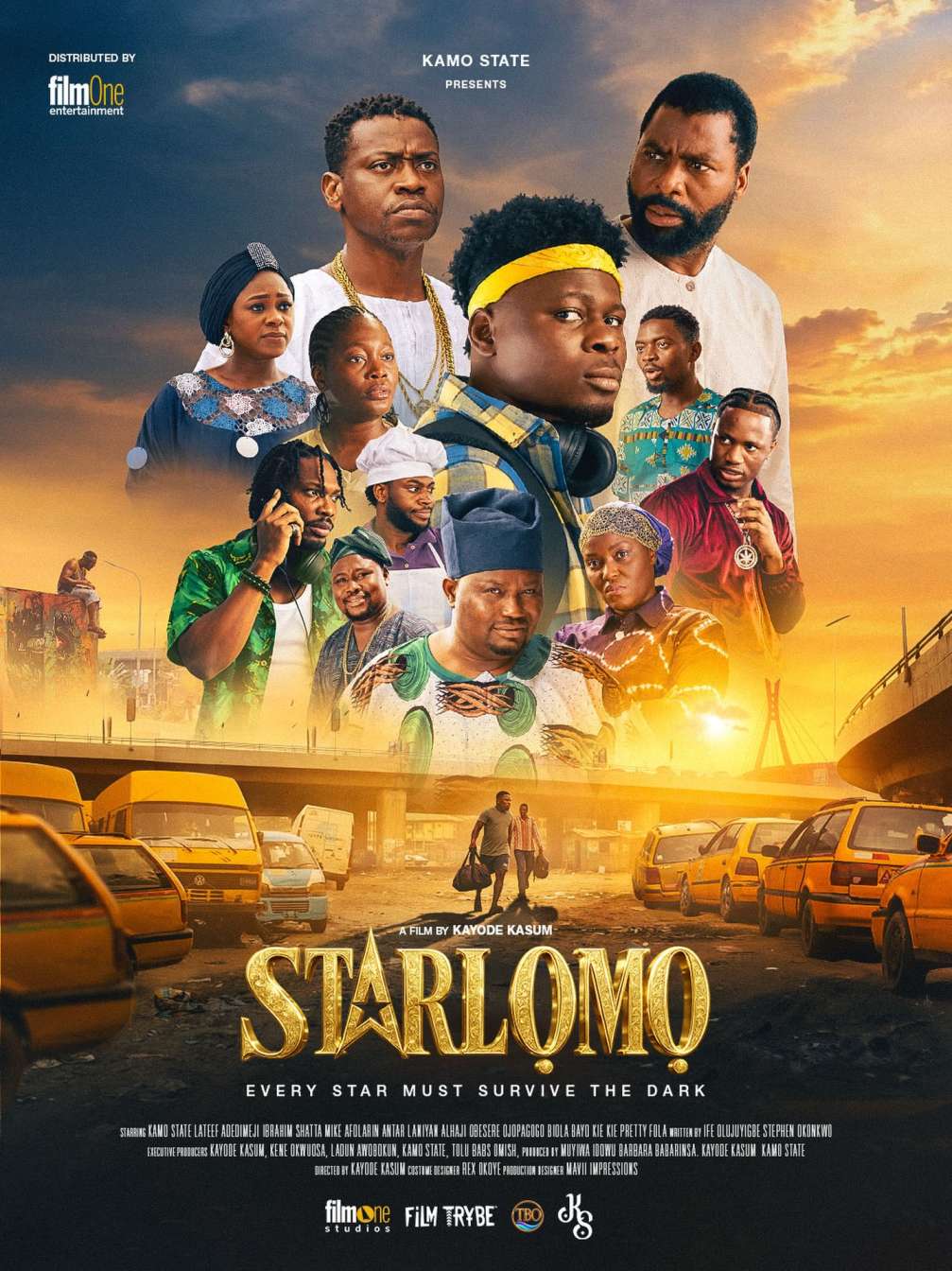
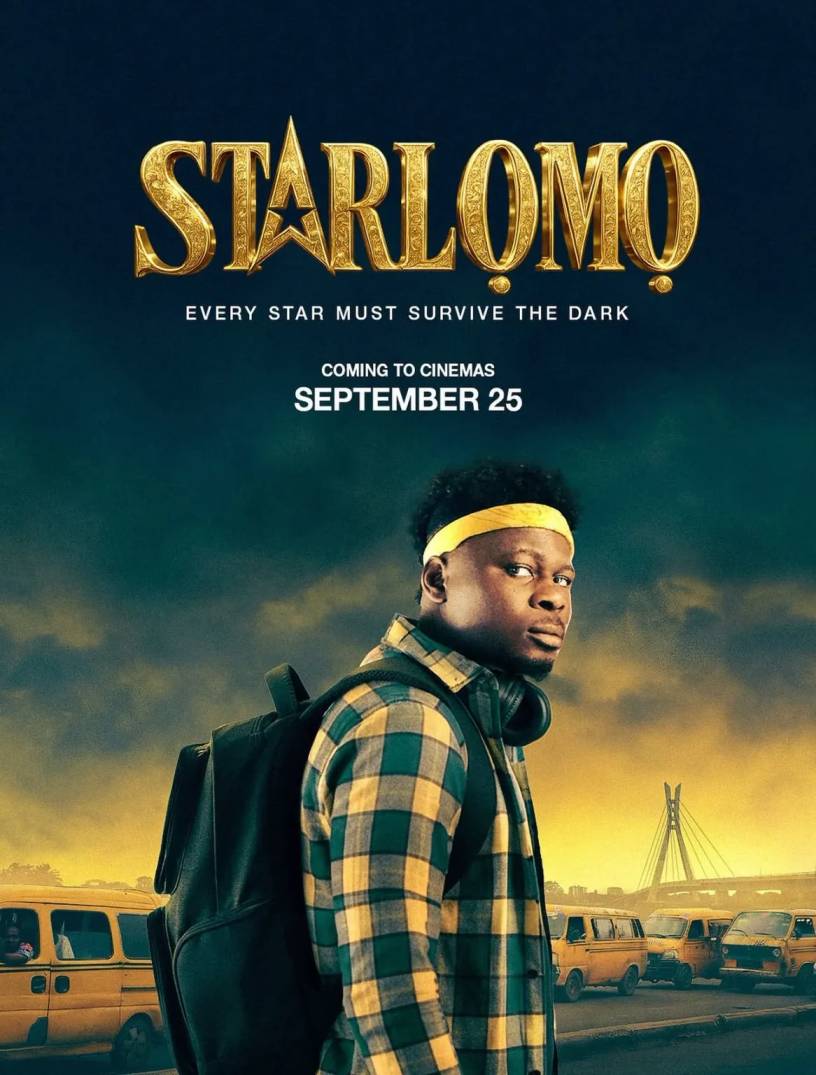
Starlomo, directed by Kayode Kasum and produced by Akinyoola Ayoola, better known as Kamo State, places itself within this history without fully understanding what it has stumbled into. The film follows Ayotide, known as Starlomo (Kamo State), whose pursuit of a music career in Lagos draws him into the exploitative world of a motor park boss, Dagogo (Lateef Adedimeji).
When a family tragedy forces him to confront his parents’ past, Ayotide discovers a legacy of Fuji music and lost artistic ambition that reshapes his understanding of his own future. The premise is among the most culturally ambitious in recent Nollywood cinema. The film does not consistently match that ambition, but it reaches for enough to deserve more than the casual engagement its marketing and its skitmaker provenance might invite.
The skitmaker-to-filmmaker pipeline has become one of the more persistent and complicated features of contemporary Nollywood’s relationship with digital entertainment culture. Its commercial logic is coherent: a performer builds an audience around a recurring character or comedic persona, that audience becomes a ready-made market, and the market is leveraged into a feature film. The creative logic is more treacherous.
What sustains a short-form comedy, including recognisable energy, a single situation, or a facial expression that communicates a worldview in two seconds, is structurally different from what sustains a feature film. A feature demands character interiority, narrative escalation, and the kind of sustained dramatic investment that ninety minutes of screen time requires. The skitmaker’s instinct, honed by the algorithmic demand for immediate engagement and rapid payoff, does not automatically translate into the filmmaker’s discipline of delayed gratification and accumulated meaning.
Starlomo is a more interesting case study in this pipeline than many recent examples because it does not simply fail at modest ambitions. It reaches for something substantial and delivers it only partially, which is both more admirable and more frustrating than straightforward failure. The motor park world Kasum and Kamo State have chosen is one of the most politically specific environments in Nigerian urban life.
A Lagos motor park is not merely a place where buses congregate. It is a social and economic system governed by its own hierarchy of agbero, park bosses, drivers, and touts. It is sustained by informal taxes and protection arrangements, and shaped by the violence of men who have turned the movement of people and goods into a source of profit. They defend their territory with the methods available to those for whom formal legal protection has never been reliably accessible. A film that places its protagonist inside this world and treats it as a subject rather than a colourful backdrop is doing something Nigerian cinema has not done often enough or well enough.
The film earns its most consistent credit in this dimension. The outdoor sequences, from the motor parks to life under bridges and the choreography of commercial bus operations, are shot with a documentary fidelity that communicates familiarity with the world being depicted. These are not sanitised, aestheticised versions of Lagos poverty, offering the texture of struggle without the discomfort of actually inhabiting it. They are specific, granular, and convincing in the way location authenticity can be when a filmmaker spends time in an environment rather than simply researching it.
The camera work deserves particular acknowledgement. The compositions capture Lagos Island in registers that feel observed rather than staged, revealing the motor park’s spatial logic and social hierarchy through visual organisation rather than expository dialogue. When Starlomo is at its most observational, watching its world with the patience of a filmmaker who knows what he is looking at, it achieves something its more conventionally dramatic sequences cannot match.
Lateef Adedimeji as Dagogo is the film’s most complete dramatic achievement, and his performance illuminates both what the film gets right and what it leaves undone. Dagogo is the motor park boss whose authority Ayotide must navigate. His power is rooted in the political economy of organised commercial transport, where the ability to grant or deny access to routes, vehicles, and passengers becomes a form of territorial sovereignty that the state has consistently failed to regulate or replace.
Adedimeji plays Dagogo without the theatrical excess the role might invite. His menace is quiet, rooted in the authority of someone who has never needed to raise his voice because the consequences of his displeasure are understood by everyone around him.
The scenes between Dagogo and Ayotide are the film’s most dramatically alive, not simply because they are tense, but because they communicate a genuine power differential that the writing has built rather than merely asserted. You believe in Dagogo’s authority because Adedimeji makes you believe in it, and you believe in Ayotide’s vulnerability because Dagogo’s presence makes it feel like the only logical response.
The film’s central dramatic problem is the gap between the richness of its premise and the shallowness of its execution. The Fuji legacy at the heart of Ayotide’s journey, including the stolen music, his parents’ history, and the possibility of recovering what was lost, is potentially the most culturally resonant material the film possesses.
Yet it is handled with a briskness that suggests the screenplay understands its importance intellectually without committing the dramatic resources necessary to make it felt. The revelation about his parents should be the film’s emotional earthquake, the moment that reframes everything Ayotide has been and everything the audience has watched. Instead, it arrives and passes without generating the seismic shift it promises.
The idea of a cross-generational musical collaboration, with Ayotide creating a new song using his deceased parents’ recorded voices, is genuinely beautiful. It contains the beginnings of an argument about cultural inheritance, technological mediation, and the specific Nigerian experience of having something taken from you and finding ways to reclaim it. The film does not explore this idea with the depth it deserves. A premise so closely tied to music, memory, and the recovery of a stolen legacy needs more than a few plot developments to make its emotional and cultural significance felt.


The unresolved ending is the film’s most significant structural failure and its most revealing one. A story about a young man pursuing musical recognition and recovering his parents’ stolen legacy should arrive at a destination commensurate with the journey. Starlomo ends short of the stardom its narrative has been building towards. This could be read as an honest refusal of the triumphalist arc the premise seems to promise. But such a refusal requires intentionality, and the ending does not feel like a deliberate rejection of resolution.
It feels as though the film runs out of story before reaching its conclusion. The success of the musical collaboration is conveyed as information rather than shown as the culminating emotional event of everything we have watched. The audience is left not with the productive dissatisfaction of a deliberately open ending, but with the frustration of having invested in a destination the film does not take us to.
Kamo State’s performance as Ayotide is more considered than the skitmaker pipeline often produces. He does not rely entirely on the comic energy and physical expressiveness his digital audience knows him for. Instead, he reaches for something quieter and more interior, with mixed results. There are scenes where the restraint works, where Ayotide’s combination of ambition and vulnerability comes through in the understatement.
In others, the performance retreats into a blankness the film has not established as a character choice. What might read as interiority instead feels like insufficient dramatic engagement with the material.
Kasum’s instincts for location and atmosphere are visible throughout. He has made a film that looks and feels like the world it depicts, earning its setting rather than merely using it. What he has not fully demonstrated is the control over narrative architecture that would allow the film’s considerable raw material to cohere into something structurally satisfying. The documentary texture of the motor park sequences and the dramatic force of the Dagogo scenes exist alongside a Fuji legacy story that never quite finds the formal language to connect them with the seamlessness all three elements deserve.
Fuji music survived the indifference of the Nigerian music industry’s formal structures because its audience would not let it disappear. The people whose lives it reflected continued to play it at celebrations, at mournings, and on ordinary Wednesday afternoons, regardless of whether it appeared on television or received radio play.
Starlomo draws on that legacy of cultural persistence, telling a story about recovering what was taken from a family by people who understood its value better than they were willing to admit. It is a story Nigerian cinema has not told often enough and deserves to tell better. Starlomo finds the right setting and a compelling cultural premise, but its underdeveloped screenplay prevents these strengths from coalescing into a satisfying whole. Starlomo understands the importance of the story it wants to tell, even when it struggles to tell it well.
Rating: 2.4/5
Joseph Jonathan is a historian who seeks to understand how film shapes our cultural identity as a people. He believes that history is more about the future than the past. When he’s not writing about film, you can catch him listening to music or discussing politics. He tweets @Chukwu2big.