

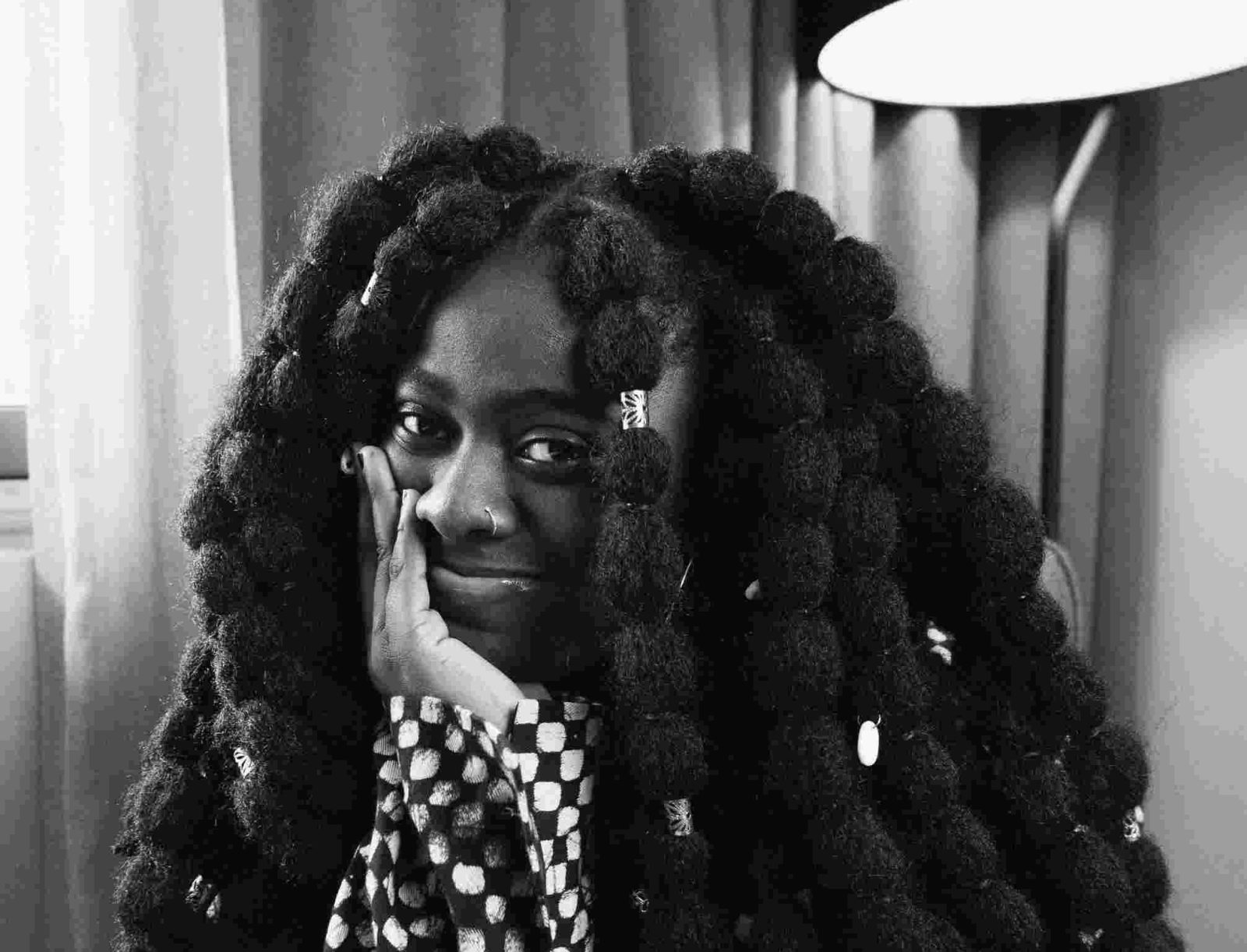

“I find my melody first, then I fill the melody with words. Sometimes I get my chorus first and build my verse around it”. — Ṣẹwà
By Rosemary Komolafe
Ṣẹwà was asleep when the message that would upend her week, and frankly the rest of her life, arrived. She had gone to bed after a long night in the studio and woke up to a wall of missed calls. She feared, briefly, that someone had died. Instead, she found out she had been nominated for the Headies. “Which category?” she remembers asking in disbelief. When she learned she’d been nominated in 4 categories, the screams that followed were loud enough to wake her housemate. The Nigerian community, however, did not mirror this celebration.
Within days of the announcement, Ṣẹwà found herself the subject of a much bigger conversation than she expected. She found herself explaining who she was to a country demanding an answer, some of it curious, much of it hostile. Strangers debated if she deserved a spot next to Ayra Starr, Qing Madi, Teni, Tems, and Tiwa Savage. “Who is Ṣẹwà?” became a trending question. This question is one Ṣẹwà had asked herself for years, long before she learned to play a single chord and before Detox (2025), her now 4-time Headies-nominated album. Naturally, she treated this discourse as an invitation to share what she had been waiting to answer, and she answered it in a video she posted. The next morning, hundreds of comments waited for her, but her only thought was a satisfied “Now we’re talking”.
The 18th edition of the Headies has Ṣẹwà receiving nods for Best Female Artiste, Best Vocal Performance (Female), Best Alternative Song (“Lagos Lovin’”), and Best Alternative Album (Detox). On a Saturday evening, days after the announcement, I spoke with Ṣẹwà over Zoom as she sat in her dimly lit home studio. She still couldn’t quite settle on how the nominations felt. “I think it feels right”, she says. “I feel out of place sometimes with this nomination, but it also feels like I’m supposed to be here”.
In the weeks since her nomination, she’s had to correct individuals and publications who have mistaken her for a similarly named Gospel artiste. Still, she stays careful about the scale of this moment, aware of where it sits next to artistes she’s always admired. If she weren’t herself, she admits, she would be asking the same question everyone was.
Ṣẹwà remains, in many ways, unknown. Success is often measured by how widely recognised an artist is, driving an arguably false narrative of overnight success. In his 2024 GQ cover story, Àṣàkẹ́ pushed back on the idea that his rise was sudden, pointing out that people count only the days you’ve been visibly successful, not the years of unseen work. For Ṣẹwà, these years of unseen work stretch back further than Toxic (2021), her debut project, to a version of her called Sharon.
Ṣẹwà, born Princess Sharon Awoyeni, is a singer, songwriter, multi-instrumentalist, composer, and producer. In one version of her life, none of that was inevitable. In that version, she hated music and thought it was noisy. She never learned to play guitar, never wrote her first song, never became a performing artiste, never shared a stage with Aṣa, and never earned four Headies nominations.
That version of her life ended in 2016, when a car accident set her on a different trajectory and unearthed a talent no one, including her, knew she had. Ṣẹwà describes losing her father in that accident as her first heartbreak, one that has shaped the music she creates.
In the aftermath, she taught herself guitar, strumming melodies to distract her mind and body from the pain. Reflecting on “Suicide Note”, the closing track on Toxic, she says plainly that music saved her life. Music gave her a way to process her feelings and find healing.
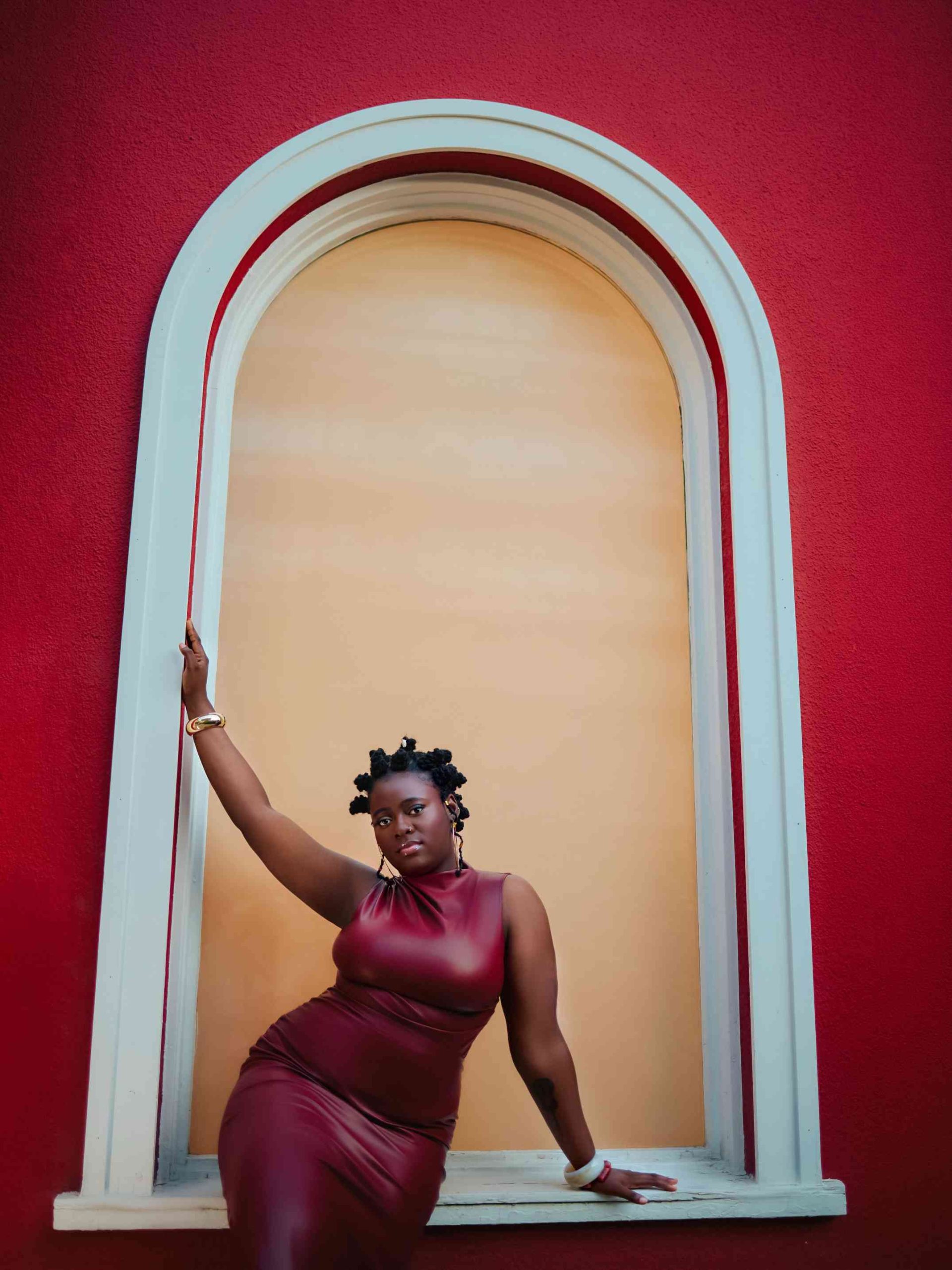
Years later, that gift, discovered by accident, would have her in a dressing room and subsequently on stage with Aṣa, the artiste whose music she credits with saving her life. This unplanned moment on stage with Aṣa would become one of the defining moments of her career. In 2006, Aṣa became the first-ever winner of the Headies Next Rated award. In 2008, she became the first woman to win Album of the Year, and she did it with a debut album, a record her self-titled Aṣa still holds. She has also been nominated for and won some of the categories Ṣẹwà now finds herself in: Best Alternative Album and Best Vocal Performance (Female). It feels only fitting that, twenty years later, Ṣẹwà may walk across that very same stage for these categories.
Ṣẹwà fought her way to open for Aṣa through unsolicited musical pitches after learning that Aṣa would be headlining in Toronto. “I’m a Toronto-based artiste, and I believe I’m the best person, sonically, that would match Aṣa as her opening act”, she remembers writing in a direct message to Cokobar, the show’s organiser. “You won’t find anyone better than me in this country. If you guys are looking for an opener, I am definitely open to opening”. She laughs, clearly still pleased with her wordplay.
Ṣẹwà recalls that on performance day, she was in her dressing room, minutes from going on, when she heard a soft hello, looked up, and saw Aṣa. She had come backstage to introduce herself and thank Ṣẹwà for opening, telling her she would be watching. Aṣa watched Ṣẹwà’s thirty-minute set, then, midway through her own, called Ṣẹwà on stage for an encore of “Carry Your Love”. “I like the song about your best friend”, Aṣa told her, “let’s sing that together”. What followed felt like an out-of-body experience, one Ṣẹwà would only piece back together later, watching it online like everyone else. It remains, she says, “the best night of her life”.
Ṣẹwà was raised in Kaduna by parents who spoke three languages between them, plus a fourth, secret one only the two of them understood. As a teenager, she lived with her grandmother, where she began to learn Yorùbá, though she admits her Yorùbá still isn’t perfect. That time with her grandmother gave her access to the language and, with it, a register of feelings English could never quite reach, a place to go when, as she puts it, “the English language is just not enough to communicate my feelings”.
Before strangers online began asking who Ṣẹwà was, she had already asked and answered that question herself, twice. First when she left Sharon behind for Ṣẹwà, and again when she left Lagos for Toronto. Only one person had ever called her Ṣẹwà, and that single point of connection carried more sentimental weight than she wanted. So, she gave the name to everyone, and took some of that power back for herself. It was also a practical choice, a name that, as she puts it, “matches the identity of the music I make”.
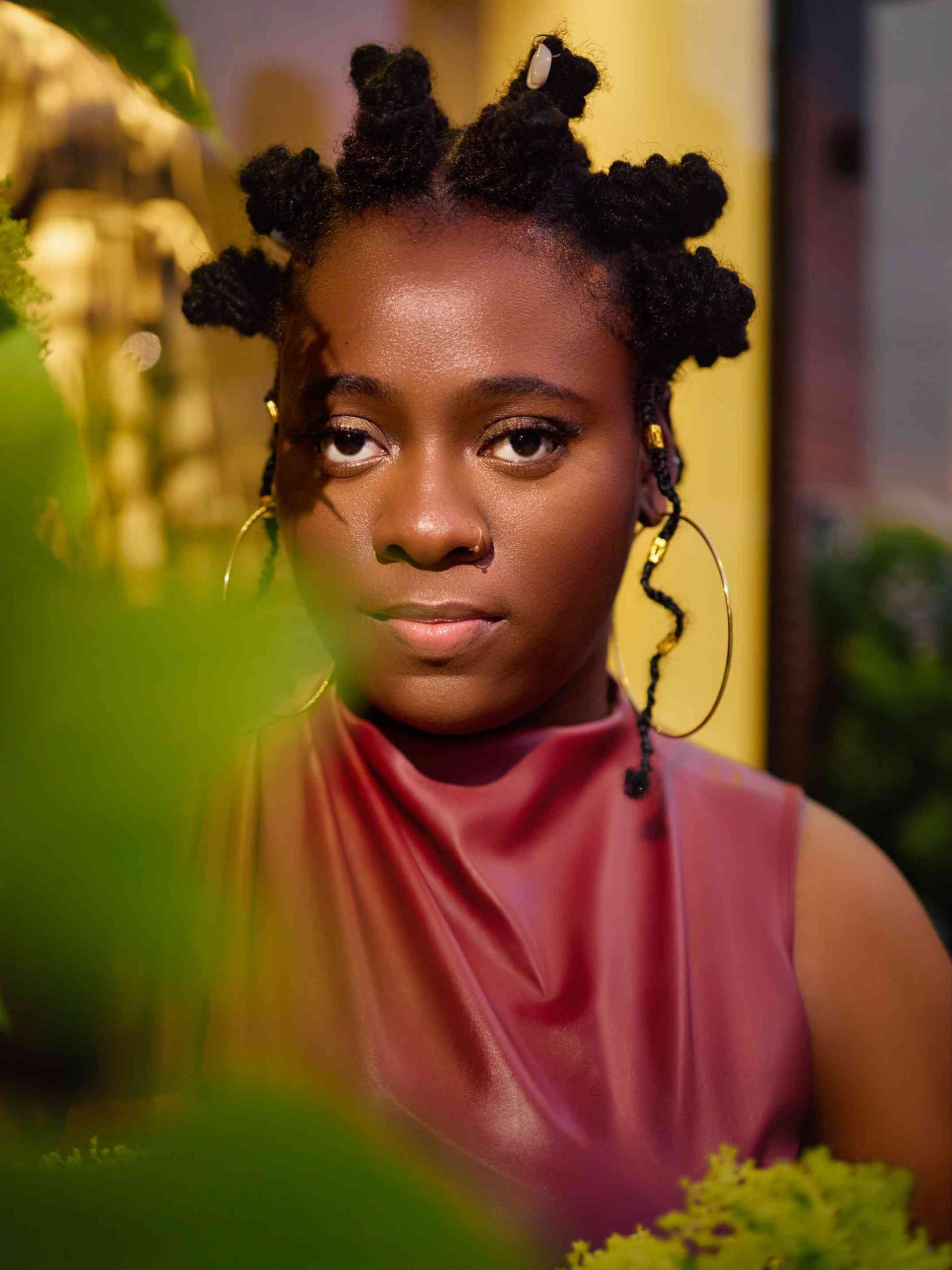
The answer to who Ṣẹwà is depends on who you ask. To strangers on the internet, she’s an industry plant, a label she is proud to wear like a badge. To her family, she’s Sharon. Her friends might call her a homebody who is likely to flake on plans, but they’ll add that she makes up for it with a sharp sense of humour. Ask Ṣẹwà herself, and even she isn’t entirely sure; her personality shifts, she says, “every three business days”, though the constant underneath it is simple enough. She is a musician and a creative, someone who obsesses over what she loves, right down to the anxiety she feels before she performs.
When she moved to Toronto in 2021, she first had to figure out her place, as an artiste finding her sound and as an immigrant finding her footing in a new city. For the first 18 months, she made no music. Instead, she enrolled in Seneca College’s Independent Music Production program and showed up to every karaoke night and open mic she could find. That search led her to her band, Ṣẹwà and the NATIVES, a fifteen-piece outfit built one relationship at a time, mostly on the strength of her conviction. She is, by her own admission, a dreamer dogged enough to talk almost anyone into believing what she believes.
Ṣẹwà’s music is expansive, breaking down genre walls. She blends Afrobeat, Fuji, Jazz, R&B, Soul/Blues, and Pop into a rich, genre-defying sound. The alternative space, Alté, is where Ṣẹwà has made a home for her sound. This space rewards experimentation but doesn’t always get weighed the same way commercially. This is one reason Ṣẹwà almost didn’t submit her work for consideration to the Headies. “Let’s be honest”, Ṣẹwà says with candour, “I’m not a mainstream artiste. When you think of Nigerian music, my music is not gonna come up in your mind”. Ṣẹwà thinks of her music as a community project and has collaborated with friends including Dwin, The Stoic, and Braye, as well as many others who have, at different points, produced, played instruments, sung background vocals, co-written, and engineered her music.


Ṣẹwà sold out her debut concert in Lagos shortly after she released her debut album. It was an intimate show where family, friends, and fans sang her lyrics. She has since headlined multiple sold-out shows, including A Night with Ṣẹwà, a 2024 concert at Burdock, and another sold-out night at Lula Lounge in October 2025. She returns to Lula Lounge in Toronto on October 18, 2026, this time as a four-time Headies-nominated artiste. Throughout her budding career, Ṣẹwà has shared stages with some of Nigeria’s biggest artistes, including Johnny Drille, Simi, and Burna Boy, and has performed at major events such as Afrofest Canada, Afrovibes Festival, and Sofar Sounds.
Being an independent artiste is not without its challenges. For Detox, Ṣẹwà produced 16 of the album’s 18 tracks. What label support would change for Ṣẹwà begins somewhere unglamorous. “I would not have to worry about my rent, and I could walk into a studio and record without worrying about the logistics”. And yet, she isn’t chasing a label. What she’s after is closer to a distribution partnership; she sees herself in the mould of artists like Raye and Megan Thee Stallion, women who have fought to own the music they create and want the same for herself.
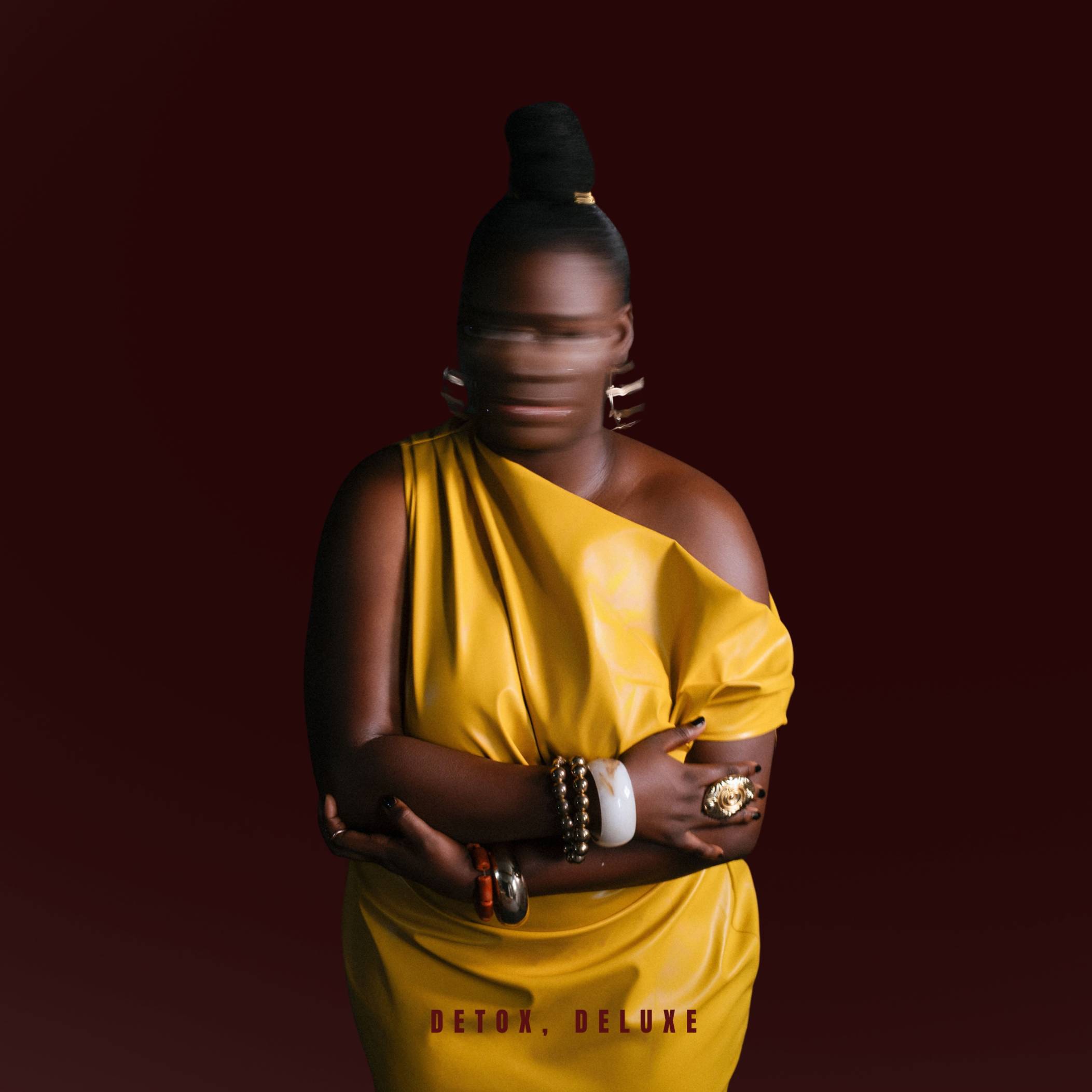
Ṣẹwà has an uncanny ear for sound. “Dead Inside” was supposed to follow a different drum groove until, during rehearsal, her drummer missed a kick, and she stopped the take. She built that missed beat into the bossa nova pulse we now hear layered underneath one of the most devastating songs on Detox. In describing her process, she says, “I find my melody first, then I fill the melody with words. Sometimes I get my chorus first and build my verse around it”.
This process produced the chorus and first verse of “Lagos Lovin’”, her most popular song, in 30 minutes. She fleshes out a demo and has her band play it live, then records the final song. As I listen, I’m reminded of some of music’s most instinctive architects. Jon Batiste, who writes entire songs live, and Erykah Badu, who often hums a song into existence before writing a word.
Ṣẹwà’s music tells heartbreaking stories of loss, grief, and identity struggles. But strings, incredible percussion, and masterful arrangements guide you through the story and still move you to dance. When asked why her writing leans so heavily into sad themes, she responds, characteristically unbothered. “Adele makes a lot of money from it, why can’t I, too?” On whether her themes will change once she’s in love, she’s just as cheeky. “I guess we’ll find out”.
Heartbreak is one thread in Detox’s much wider tapestry. On “Who Have I Become”, she reckons with her insecurities and the difference between the happy child with big dreams she was and who she is now. On “Àsìkò”, she lands somewhere closer to acceptance. “Femi”, the subject of most of her songs, is as much a person as he is a concept, a stand-in for whatever she’s writing about. She sees it as a funny callback she’ll keep around for a long while. Detox is less a heartbreak album than it is a portrait of a person in motion, grieving, wanting, raging, and healing, with all of it sometimes happening within the same song.
Ṣẹwà is a sound you can listen your way into. Her music is bare, sometimes too honest for her comfort. But if you listened to her, you would know her, and maybe even understand her.
For Ṣẹwà, this is only the beginning of her story.
Rosemary Komolafe (she/her) is a Nigerian physician and writer based in Baltimore, United States. She writes essays, profiles, and cultural commentary on music and art. Her work has appeared in Afrocritik, The Kalahari Review, RADR Africa, and Pendical, and she publishes the Substack newsletter Through Rose’s Coloured Glasses. When she isn’t writing, she’s adding to her small but growing vinyl collection or talking to her plants more than she’d care to admit. Find her on X (formerly Twitter) at @quietlybeing_.