

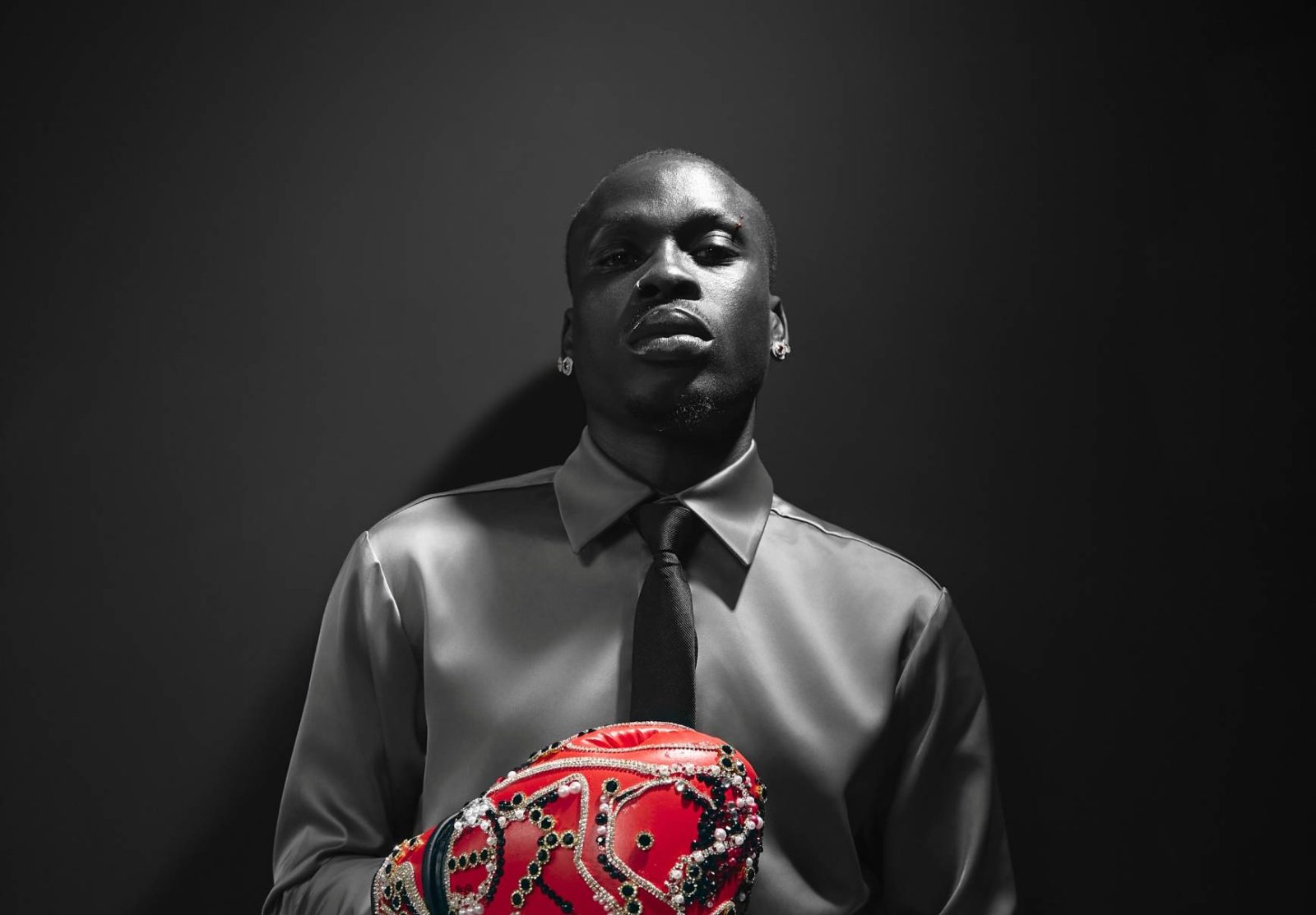

ZUKO! was made to be immersed in as a body of work; it reveals something new with every listen.
By Rosemary Komolafe
Laughter, Tears and Goosebumps (LTG) was one of the strongest debuts in the Nigerian music scene. Released in 2019, it established Fireboy DML (Adedamola Adefolahan) as one of Nigeria’s finest musicians. Listeners loved the balladeer, and every step away from him, whether the god on Apollo (2020) or the persona on Playboy (2022), was measured against the album that introduced him.
Released amid pandemic expectations of a sophomore slump and at the height of LTG’s success, Apollo had every reason to disappoint. Instead, it won him Album of the Year at the 14th Headies. With its biggest hits, “Bandana” and “Peru”, Playboy became his most cheerful album yet, his most commercially successful record, and his first Billboard 200 entry. His 4th studio album, Adedamola (2024), featured a guest list that showed how much respect he had earned among his peers: Jon Batiste, Wande Coal, Seun Kuti, and even Lagbaja, famously private, with his catalogue largely absent from streaming services. With Adedamola, Fireboy regained his listeners’ love and admiration, and the album served as the perfect prelude to ZUKO!
The ZUKO! campaign began with a single red streak in a video released in April 2026 and, at six months, ran longer than most album rollouts, with fewer singles than any of his previous albums. The rollout suggested it would break more than sonic boundaries; for the first time, he paired the album release with the Red Couch Sessions, a therapy-style tell-all that put him in charge of his own narrative.
Zuko is a largely misunderstood character from Avatar: The Last Airbender (2005). Banished by his father, he spends the early series as a villain, chasing the Avatar to restore an honour he believes he’s lost. Over three seasons, he wrestles with who he’s expected to be and who he really is, and ends the series as a hero, ruling on his own terms. Defined by an identity crisis and a redemption arc, he’s an unexpectedly fitting namesake for Fireboy DML.
Online, people called Fireboy “Zuko”, to mean he had fallen off and was no longer relevant. On his Red Couch Session, he said he was slightly offended, but mostly amused. That offence went through the five stages of grief and landed somewhere near acceptance when he began working on the album that would carry the name.
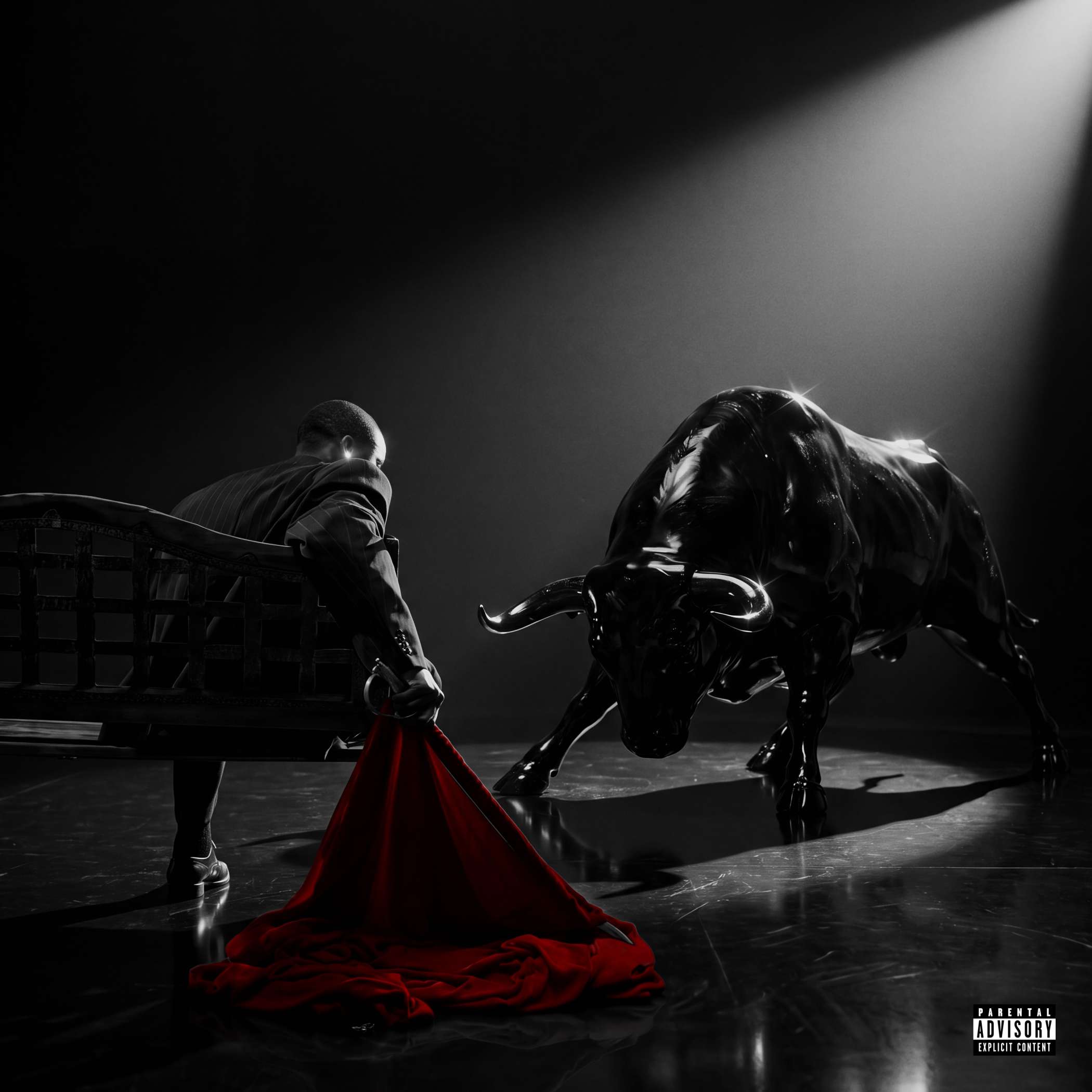
ZUKO! is his response, retort, and reclamation. It is about defiance, because he did things his way, and confidence, the persona he carries on this album. With it, he is proving himself and others wrong. Like Beyoncé’s Sasha Fierce, Zuko is an assured, confident alter ego that Fireboy DML banks on. The album cover captures it. He poses in a matador stance while holding a red cape opposite a glossy black bull. He stares down what he described as the greatest fear of his life, unsure how he’ll conquer it, but with an almost insane conviction that he will.
A first look at the tracklist, shared three days before release, showed a small, deliberate guest list. “Dear Father” featured Judah Earl, a Los Angeles-based film composer. Masicka (Jamaica) appeared on “CLAAT!”, and JAZZWRLD and Thukuthela (South Africa) appeared on “IMALI”, both already released as singles. Lojay, a close friend and collaborator, was the only guest returning from Adedamola.
The languages spread across the continent and beyond. “C’est La Vie” is French for “that’s life”, “Mimi Nawe” is Swahili for “me and you”, and “Kilowi” is Yoruba for “what did you say?” Some of the titles also allude to a fight. “By Fire!”, “One Man Regiment”, “Fighting”, and “Light of Dawn” match the defiance and confidence on the album cover. On paper, ZUKO! looked ready for war.
Pressing play, though, the first thing you hear isn’t a fight. “DEAR FATHER” opens like the first scene of a motion picture, and that’s no accident. Judah Earl is a composer known for cinematic, ambient music in the tradition of Hans Zimmer and John Powell. The music sits beneath a story, and here, the story is a prayer: “Hear me, answer me, don’t let me fall”. The line repeats in a chant-and-litany style, carried forward by strings, and as the choir and the award-winning Czech Philharmonic Orchestra rise around him, the song grows as grand as the fear he confesses.
While Fireboy’s lyricism sits front and centre on most of his records, his voice stays tucked into the mix, favouring groove and texture over the runs and range. Songs like “Like I Do (2019)”, “Dreamer (2020), and “Ready (2024)” are examples where his vocal dexterity really stands out. On “DEAR FATHER”, he shows a range he rarely puts on display. Earl gives the prayer the scale of an epic, then pulls it back to almost nothing as Fireboy trails off into a whisper. This opening uncertainty ironically sets up the rest of the album’s conviction.
If “DEAR FATHER” is the prayer, “BY FIRE!” is the answer, and it’s where Zuko makes his entrance: He declares “I’m a shaker”, and later, “I’m a fighter, I’m a born warrior”. Fireboy, who grew up singing in his church choir, builds that persona out of the Bible he was raised on, and he does it cleverly. He is Samson before Delilah, David bringing down Goliath, and Elijah calling fire from heaven to prove himself before those who doubted him. Here, Fireboy is the thorn, the problem his critics can’t shake. After a single verse, he skips the second entirely, and the “Ke hossana” refrain takes over to the end, the clearest sign that he’s doing things differently this time. It’s a fitting entrance for Zuko, a firebender whose early power came from anger. This is Fireboy at his most combative, fire aimed squarely at his enemies.
From church, the album slips into the club so seamlessly it’s easy to miss. Released first as a single, “CLAAT!”, a dancehall fusion with Masicka, makes far more sense here. It’s a risqué, brazen take on desire. While desire isn’t an uncommon theme in Fireboy DML’s music, it usually came with a cover. On “Tattoo (2020)” it was wrapped in tenderness, on “Playboy (2022)” it hid behind a persona, and on “Ecstasy (2024)” it was dressed up as love and destiny. “CLAAT!” drops it all, and it’s impossible to hear it and still think of him as the shy balladeer.
“GODDESS” softens the heat without cooling it. Lojay, whose records lean toward smooth, sensual Afro-R&B, plays the flirt, and his verse is the song’s raunchiest part. This is the grown sexiness the album promised—a bolder, more physical, unbothered sexiness. Fireboy plays the sincere lover, and beneath his flattery lies a request for honesty. But the trust he asks for doesn’t hold. On “C’EST LA VIE”, pure mid-tempo Afrobeats with a bouncy bassline and light percussion, his love isn’t enough for her. In true Afrobeats fashion, it’s a heartbreak song you can dance to, sorrow set to a groove. He drowns it in alcohol, smoke and parties, and swears he will never love again.
Heartbroken, he throws himself into work. On “IMALI”, the drinking is still going (“it’s been so long since I’ve been sober”), but love has been swapped for money. “Imali” is Zulu for money, and the chorus, “njalo ngisebenzela imali”, loosely translates to “I’m always working for money”. “ONE MAN REGIMENT” turns the grind into a battle. Like much of ZUKO!, it opens stripped-down and builds slowly before the beat drops into reggae, a switch hidden so well it catches you off guard, and the horns credited on the track give it the brass of an army on the march. He calls himself a true-born champion while insisting it isn’t a competition, just a marathon he’s only begun. “Everything made sense when I found purpose”, he sings. “I was going in circles”. In Avatar, Zuko loses his firebending when he changes sides because his fire was fuelled by rage, and he only gets it back when he learns that fire comes from purpose. Fireboy reaches the same place here.
Then the armour cracks. “KILOWI” is an honest song about yearning and the closest ZUKO! comes to pure heartbreak. It opens like something from Wande Coal’s catalogue, smooth pop and R&B, surges into an EDM-style build and drop, then eases back down. The song circles between disbelief, pleading, and self-doubt, and near the end he switches to Yoruba, reminding us he’s still a poet with real mastery of the language.
Just as the album seems to wind down, “ONAZO!” picks the energy back up with dry, rattling, hand-played percussion. It’s a jet-set flex in the same lane as “Peru,” down to the St. Tropez vacation and a bit of Spanish (“ándale”). He is off the clock, phone off, and enjoying the money.
Then he sets his terms. “S.L.U.T.” is a misleading title, and probably deliberate: the acronym unfolds into sex, love, understanding, and trust. After the heat of “CLAAT!”, the plea of “GODDESS” and the heartbreak of “C’EST LA VIE,” it’s the album’s romantic thesis, bringing together the physical and emotional sides of desire that the earlier songs kept apart, set to a slow, sultry groove with guitar running through it. “LIGHT OF DAWN” is its relaxed counterpart, alternative R&B about a night of seduction he wants to last until morning, with no pleading and no heartbreak. The title promises daybreak, but the song is about making the night last long enough to see it.
Then the bravado falls away. “MIMI NAWE” begins with a quiet, reverent call before settling into a stripped, acoustic, cinematic folk song led by piano and strings. It’s the album’s most exposed moment, and it takes us back to the prayer of “DEAR FATHER”. The one-person regiment now admits he can’t do it alone. Fireboy arrives here tired, lonely, and certain he’ll find his way home.
After an album of declarations, the closing song turns the camera inward. On “FIGHTING”, he admits it isn’t an easy life, that he wears a fake smile on stage, that he can’t stay sober, and that when he says he’ll be fine, he’s not sure anymore. He’s grateful for days like this, even with tears in his eyes. He’s still a soldier, still on the road, holding on to his friends and family. The song closes on a repeated chant that keeps moving as it fades, as if he’s carrying himself forward one step at a time. Zuko declared war at the start of the album. By the end, it’s Damola who’s left standing, tired, uncertain, and still fighting.


With ZUKO!, Fireboy rewrites what a Fireboy DML song is allowed to sound like, and spends the album unlearning the sound we expected from him. Everything here is more grown: the romance, the sensuality, the confidence. There’s more grit too, more anger and more pain. This is Fireboy as a musician in the fullest sense, with the range to move across genres, the fluency to blend them, the songwriting to anchor them, the willingness to take risks, the musicality to know what each song needs, and the storytelling to tie it all together.
Taken as a whole, ZUKO! refuses to settle on a genre. It opens with an orchestral prayer, turns into a church chant, then moves through dancehall, Afro-House, Reggae, EDM-style builds, Alternative R&B and Acoustic Folk. On a first listen, the changes can feel jarring, and it’s fair to ask if there’s a plan. The album mostly treats genre as a tool rather than a home. Each song takes the sound its story needs—a hymn for the prayer, dancehall for desire, folk for loneliness.
That range took many hands; this project had twelve producers and four co-producers, around twenty-two writers, five guest artistes, horns, guitarists, and the Czech Philharmonic, a 130-year-old, award-winning national orchestra of the Czech Republic. Led by chief conductor Semyon Bychkov, it was named Gramophone’s Orchestra of the Year in 2024. Pheelz, a fixture on three of his four previous albums, isn’t here. Instead, a new production circle forms around Ramii, who produces four tracks, including “CLAAT!” and “FIGHTING”. The few holdovers from Adedamola include Lojay, producer Nxrth and engineer Mike Seaberg.
With all those hands, nothing sounds crowded. The arrangements are precise and patient. Songs open stripped-down and build deliberately, strings swell into choirs, slow grooves give way to four-on-the-floor dance beats, and drops land in genres you don’t see coming. Baby D records most of the album, one of eight recording engineers, and Seaberg mixes and masters nine of the thirteen tracks, helping this varied album feel like one body of work. Even the endings are crafted, with most songs closing on a vocal-less outro that lets the production have the last word.

For all its craft, ZUKO! doesn’t always hold together. The sequencing is less settled. The album rarely holds a pace for long: slow builds give way to fast dance tracks, then pull back again, so the energy rises and falls across the album. The move from “By Fire!” to “CLAAT!” is seamless, but elsewhere the shifts feel a little jarring. It may be deliberate, but it makes ZUKO! harder to sit with in one listen. The pull toward versatility is appreciated and novel, but an album this ambitious needs songs that flow into each other and tell a continuous story.
The cover shows a matador facing a bull, and the title suggests a combative album and promises an alter ego at war, but after “By Fire!”, Zuko all but disappears. He returns only in echoes, a fighter who finds his purpose on “One Man Regiment” and a tired soldier on “Fighting”. His Red Couch Session set the tone for a tell-all, and an expectation for the album to dig beneath the desire and bravado, the sex, money, and parties that fill so much of it.
In Avatar, Zuko’s story is about a man wrestling with who he’s expected to be and who he really is, and I wanted to see Fireboy’s ZUKO! wrestle the same way. I hoped to meet the deeply complex, layered person behind the persona. Zuko gets his redemption arc; Fireboy’s is still unwritten. As a person, I don’t know him any more or less than I did after Adedamola, the album I consider his most introspective body of work.
Admittedly, I went into ZUKO! hoping for some of the familiarity of LTG. I hoped to see who Fireboy has become since 2019, and musically, the album delivers. He’s a better lyricist, songwriter and vocalist, and a bolder musician overall. What I wanted most, though, was insight.
Still, what ZUKO! holds back in revelation, it makes up for in craft, and time will tell how it lands. Reviews will likely be polarising, because listeners (and the charts ) favour the instant gratification of a ballad or a club hit. ZUKO! was made to be immersed in as a body of work; it reveals something new with every listen. Everything he shows us here is assured. Like fine wine, it will age well and grow on fans and strangers alike. The craft on ZUKO! is undeniable, but it feels like there was more to say.
Rosemary Komolafe (she/her) is a Nigerian physician and writer based in Baltimore, United States. She writes essays, profiles, and cultural commentary on music and art. Her work has appeared in Afrocritik, The Kalahari Review, RADR Africa, and Pendical, and she publishes the Substack newsletter Through Rose’s Coloured Glasses. When she isn’t writing, she’s adding to her small but growing vinyl collection or talking to her plants more than she’d care to admit. Find her on X (formerly Twitter) at @quietlybeing_.