

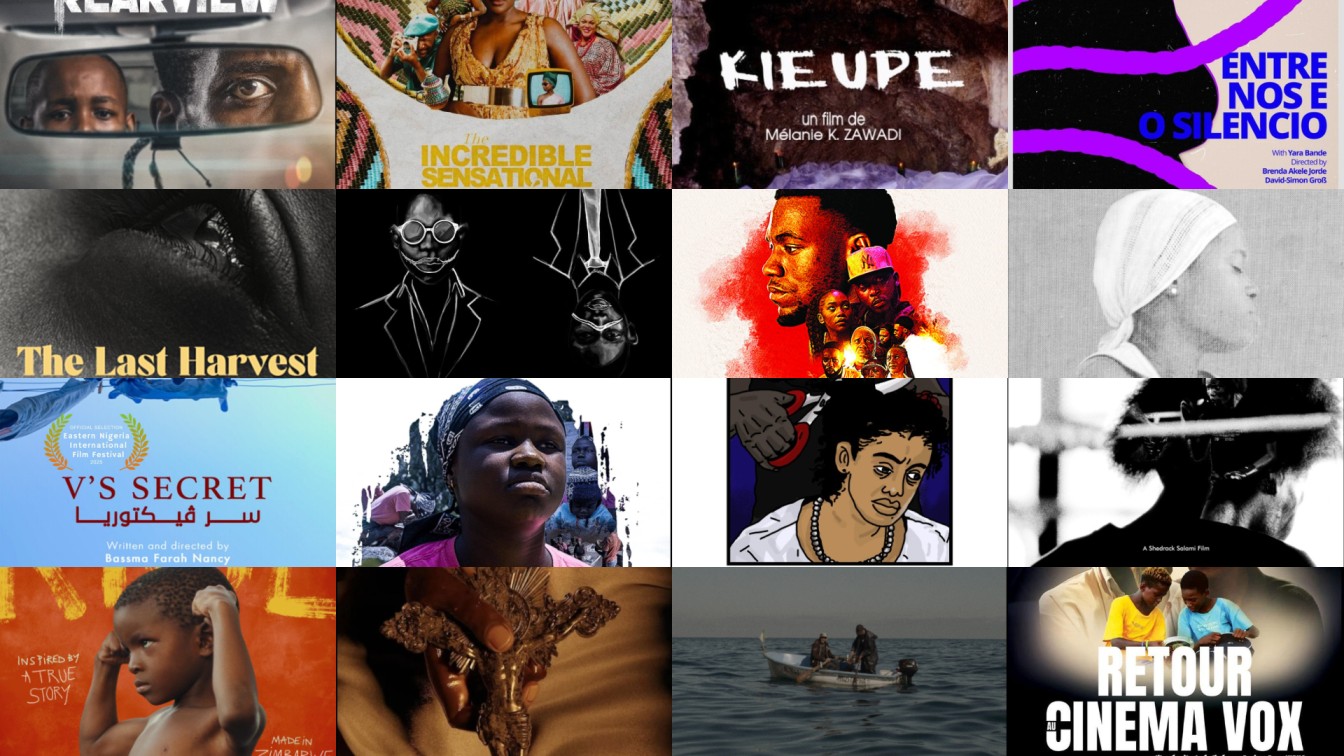

African filmmakers have continued to take advantage of the short film form, and the most successful ones have compressed vast sociopolitical, economic, and emotional realities into tightly wound cinematic experiences.
By Afrocritik’s Film Board
Across the continent, short films have played a vital and underappreciated role as a filmmaking launching pad, a learning field, and a playground for invention and innovation. This 2025, African filmmakers have continued to take advantage of the short film form, and the most successful ones have compressed vast sociopolitical, economic, and emotional realities into tightly wound cinematic experiences, from the interrogation of cultural norms to conversations on migration and the spotlighting of stories too often left at the margins.
For Afrocritik’s Remarkable African Short Films of 2025, we considered African shorts that premiered between 1st December 2024 and 30th November 2025, as well as 2024 African shorts that continued touring the African and African-diasporan festival circuit or had a public African release between 1st December 2024 and 30th November 2025. We also considered African stories without direct African production, but only among special mentions.
In no particular order, these are Afrocritik’s 20 Remarkable African Short Films of 2025.
Beyond Olympic Glory (Nigeria)
Beyond Olympic Glory, a documentary short directed by Nigerian filmmaker Shedrack Salami, follows Nigerian boxer Cynthia Ogunsemilore from the slums of Bariga, Lagos, to the cusp of the Paris 2024 Olympic Games, tracing a rise powered by grit, passion and resilience. The film’s rupture comes brutally, with a doping allegation and suspension just before her first Olympic bout, collapsing not only a career milestone but the economic hopes of her family.

Carried by Salami’s assured direction and Ogunsemilore’s honesty and charm, Beyond Olympic Glory has enjoyed huge success on the film festival circuit, winning more than fourteen awards, including Best Documentary wins at the Regal Film Festival and Awards (REFFA), Black Star International Film Festival (BSIFF), The Annual Film Mischief (TAFM), and Lagos Fringe.
Read our review of Beyond Olympic Glory here.
Don’t Wake the Sleeping Child (Senegal/Morocco)
In Don’t Wake the Sleeping Child (Ne Réveillez Pas L’Enfant Qui Dort), resistance takes the odd form of stillness. The debut film by French-Cameroonian director Kevin Aubert follows a 15-year-old girl in Dakar whose dream of becoming a filmmaker collides with her family’s plan to force her into an arranged marriage. Her response is inexplicable and radical: she falls into a deep, unyielding sleep.

Selected for the Berlin International Film Festival 2025 in the Generation 14plus section, where it won the Special Prize of the International Jury for Best Short Film, the film frames adolescence as a contested terrain and treats slumber as a dreamlike refusal to participate in one’s own erasure.
Rearview (South Africa)
A fast-paced, high-stakes thriller from Swiss-born, South African-raised, Congolese actor and filmmaker, Chris Djuma, Rearview weaponises memory against motion, fuses action with moral urgency, and asks the simple but layered question: how far are you willing to go to help a stranger?

Set in Johannesburg, the film follows a Congolese war refugee (played by Djuma) whose routine collapses when a deaf seven-year-old boy leaps into his car on the anniversary of the Kivu Massacre—a trauma he still carries. When he is mistaken for the kidnapper of the city mayor’s son, he is plunged into a relentless chase through the city where xenophobia is rife, and the stakes are literally life and death.
A short from Sisanda Henna Films’ Little Africa anthology, Rearview premiered at the American Black Film Festival as part of the “South African Stories” showcase, before making other festival stops, including Soweto International Film Festival and Africa International Film Festival (AFRIFF).
God’s Wife (Nigeria)
In God’s Wife, Nigerian filmmaker, Dika Ofoma, situates drama in South-Eastern Nigeria, as faith, tradition, and patriarchy converge with brutal efficiency. A newly widowed young mother, still raw with grief, is confronted by her brother-in-law, who invokes an Igbo custom to demand sexual access and lifelong submission—backed by the threat of eviction and dispossession.

Running at just 15 minutes, God’s Wife exposes the inhumane conditions that widows are often subject to, particularly around property rights and ritual obligation, drawing stylistic lineage from old Nollywood social dramas. But beyond just exposition, Ofoma ensures the agency and dignity of his female lead, and he does it with stark fierceness, subverting the prevailing gendered film culture on nudity.
God’s Wife premiered at the S16 Film Festival in December 2024, where Ofoma won the Rising Star Award. It later screened at the International Film Festival Rotterdam (IFFR), New York African Film Festival (NYAFF), and Trinidad and Tobago Film Festival (TTFF), all in 2025.
Kieupe (Democratic Republic of Congo)
Set in an urban landscape in the Democratic Republic of Congo, where the people have been scarred by decades of war and insecurity, Kieupe, a 21-minute drama from Congolese director Mélanie K. Zawadi, imagines a hidden, mystical guardian whose emblem of peace—a simple piece of white fabric—brings solace to a people battered by violent conflict.

Rather than escape reality, Kieupe leans into allegory as a way of bearing it, a striking approach to channelling collective sorrow. This audacity earned Kieupe a Special Jury Mention at the All African Independent Film Festival 2025 (AAIFF Africa) and an official selection at AFRIFF.
Deadlock (Algeria)
The film debut of Algerian-French director Mahdi Boucif and French director Lucien Beucher, Deadlock is a poignant documentary set in Algiers, specifically at a waterfront overlooking the Mediterranean Sea. The human subjects are two young men, childhood friends who feel stuck in Algiers and whose brothers have taken a perilous journey across the sea in desperate attempts to seek greener pastures in Europe. But the sea is itself also a character, one with the power to transport or to drown.

A symbolic and deeply felt contemplation on migration, hope, loss, and fear, Deadlock premiered at the Sundance Film Festival and also screened at DOC NYC.
Saint Simeon (Nigeria)
Nigerian filmmaker Olubunmi Ogunsola’s debut short, Saint Simeon, set in Enugu in 1997, centres on a young seminarian unravelling in the wake of his roommate’s controversial suicide. The film approaches grief obliquely, through the ache of the institutional silence of the Church, where questions may be treated as sins. Anchored by formidable performances, the 18-minute drama resists easy answers, allowing ambiguity to fester rather than resolve, and leaving the audience with an unease that lingers.

Its world premiere at the Venice International Film Festival 2025, where it was nominated for the Orizzonti Award for Best Short Film, marked a rare moment of global recognition for a Nigerian short so inward-looking and so morally unsettled.
L’mina (Morocco)
Moroccan artist and director Randa Maroufi combines the documentary format with staged reconstruction to archive a town’s industrial history and its forgotten working-class voices. Set in Jerada, a mining city in Morocco where the coal town operations were officially banned in 2001, L’mina authentically documents the labour of the workers in the coal pits, recapturing a dangerous present where workers, left with no viable economic alternatives, unofficially and secretly continue to mine coal.

L’mina is the third and final part of Maroufi’s trilogy about Moroccan cities and their unique realities, after Le Park (2015) and Bab Sebta (2019). It won the Leitz Cine Discovery Prize at the 2025 Cannes Film Festival and was a nominee for the Short Dox Award in the International Docs Competition at the Dokufest International Documentary and Short Film Festival 2025.
The Incredible Sensational Fiancée of Sèyí Àjàyí (Nigeria)
The Incredible Sensational Fiancée of Sèyí Àjàyí is set in Alkebulan, a hyperreal Pan-African utopia rendered in lush colour and retro-futurist textures. The 16-minute short, from Nigerian-American filmmaker Abbesi Akhamie, follows Dr. Constance Moumie, a brilliant scholar who stages a public unmasking of her fiancé after her eight-year relationship collapses in the most modern way possible, as she discovers, via television, that her fiancé has quietly upgraded himself into royalty.

Although the film premiered at AFRIFF in November 2024, it screened widely throughout 2025, winning Best Short Film at the FAME Shorts Film Festival and earning a nomination for Best Short Film at the Africa Magic Viewers’ Choice Awards (AMVCA).
Back to the Theatre Vox (Senegal)
Senegalese director Amina Awa Niang blends an ode to cinema with a heartwarming tale of friendship and reconnection in the modest, earnest and sentimental Back to the Theatre Vox. The film follows two boys who audaciously make it their mission to complete the film their grandfathers started as young men, show it at the abandoned local theatre, and repair a long-lost friendship.

Back to the Theatre Vox screened throughout 2025 at Film Africa, Accra Indie Film Festival, Eastern Nigeria International Film Festival (ENIFF), and S16 Film Festival.
Read our review of Back to the Theatre Vox here.
Black Sands (Nigeria)
Violent extremism in Nigeria has been in the news for a good part of 2025, with a number of films, both shorts and feature-lengths, attempting to capture this horror on screen from different perspectives. Black Sands, directed by Nigerian director, Agatha Doowuese Akaahar, approaches the theme from an oft-ignored perspective, centring a deaf girl and her family whose lives are ruptured when they are thrust into the middle of an attack in Benue State.

Black Sands premiered in 2025 as part of the Rollpay Africa and Filmmakers Mart “Nigeria Through My Lens” competition.
Intsikelelo Yamanzi (South Africa)
Intsikelelo Yamanzi, a short film from South African directors Michelle Name and Onke Meje, takes place in Cape Town during a time when a water shortage is triggering desperation. An essential look at scarcity, resilience and generosity, the 8-minute film follows a boy navigating the crisis with little understanding but a bountiful heart.
Intsikelelo Yamanzi screened at the New York African Film Festival and the Female Filmmakers Festival Berlin in 2025.
Rise (Zimbabwe)
Zimbabwe-raised British filmmaker Jessica J. Rowlands frames her debut film, Rise, around a bruised boy and a reluctant boxing coach. Yet, what unfolds is larger than mentorship or sports. Rise approaches childhood vulnerability as something shaped by environment and abandonment, and it treats dignity as hard-won rather than as a gift.

A film that benefits greatly from precision, from the intimacy of its close-ups to the physical poetry of its boxing sequences, Rise uses craft to mirror transformation: how a body learns to occupy space, and how trust is built through repetition rather than promises.
Rise made history as the first Zimbabwean film to premiere at the Tribeca Film Festival in 2025 and won Best Narrative Short at ENIFF 2025.
Read our review of Rise here.
Leaving Ikorodu in 1999 (Nigeria)
Visually stunning and heavily nostalgic, Leaving Ikorodu in 1999 follows a ten-year-old on a road trip to the airport with her aunt and uncle. Directed by British-Nigerian filmmaker, Rashida Seriki, the film debates the merits and demerits of migration, exploring familial bonds and loss in the wake of migration.

Leaving Ikorodu in 1999 screened at AFRIFF 2024 and S16 Film Festival 2024. It continued touring the festival circuit in 2025, with screenings at Raindance Film Festival, BlackStar Film Festival, and Melbourne International Film Festival (MIFF), where it won the City of Melbourne Grand Prix for Best Short Film.
The Last Harvest (Cape Verde)
The lives of three Cape Verdeans in Lisbon intertwine in The Last Harvest, a short film from Cape Verdean director Nuno Miranda. An experimental fiction, the film follows its intergenerational characters—a boy, a mother, and an elderly man—exploring their memories, losses, and fears for the future, as they navigate life and identity as part of the Cape Verdean immigrant community in the Portuguese capital city.


After its premiere at the International Film Festival Rotterdam (IFFR), The Last Harvest went on to win the Jury Award for Best Short Narrative at the BlackStar Film Festival and Best Experimental Film at the Oslo Film Festival. A co-production between Cape Verde and Portugal, it won Best Southern European Short Film at the European Short Awards and was a nominee for the Efere Ozako Award for Best Short Film at the African Movie Academy Awards (AMAA).
Vʼs Secret (Egypt)
Directed by Egyptian filmmaker, Bassma Farah Nancy, V’s Secret turns a minor domestic mishap into a deftly observed exploration of masculinity, paranoia, and social performance. When a man accidentally drops his wife’s underwear onto a neighbour’s balcony, what begins as embarrassment escalates into an absurd, tension-filled encounter that unpacks male pride, suspicion, and the invisible rules governing urban relationships.

Nancy’s direction balances comedy and discomfort with precision, while examining how small, everyday incidents can illuminate broader anxieties about trust, gender, and neighbourly interactions.
A humorous and incisive study of human behaviour, V’s Secret premiered at the Durban International Film Festival, screened at ENIFF, and won the award for Africa’s Best Student Film at AAIFF Africa.
Read our review of V’s Secret here.
Girl-Boy (Nigeria)
A radical documentary, Girl-Boy tells the stories of four masculine-presenting women, not with sensationalisation but with interiority. By allowing their lives to unfold without editorial coercion, the film expands the visual language through which Nigerian cinema has historically engaged gender, queerness, and masculinity.
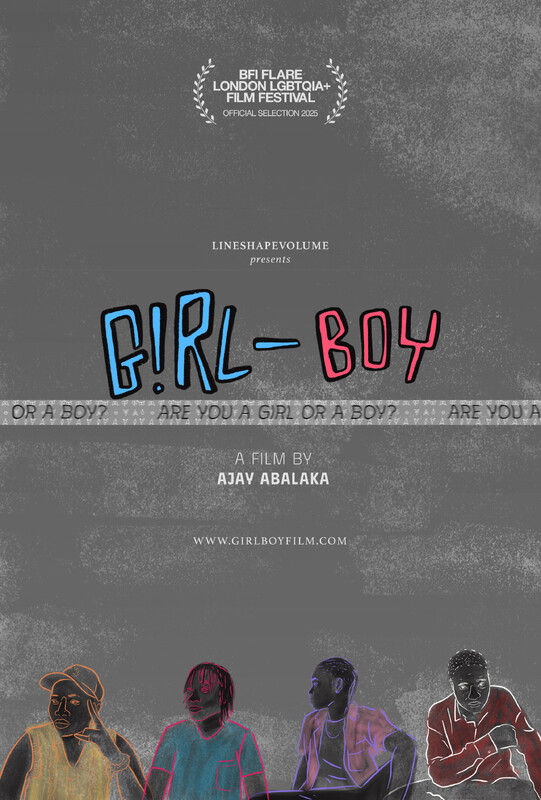
Directed by Nigerian filmmaker, Ajay Abalaka, Girl-Boy presents gender as lived and deeply contingent, resulting in a short that feels like a reclamation of space, where definition exists on the subjects’ own terms.
Read our review of Girl-Boy here.
Entre Nós e o Silêncio (Between Us and Silence) (Mozambique)
Ghanaian-German filmmaker, Brenda Akele Jorde, collaborates with German co-director David-Simon Groß on Entre Nós e o Silêncio, a documentary short that quietly insists that emotional pain, especially within African domestic spaces, is worth being named and heard. Focusing on Yara, a young Mozambican woman suffocating under inherited silence and maternal repression, the film treats mental health not just as a diagnosis, but as a daily negotiation.
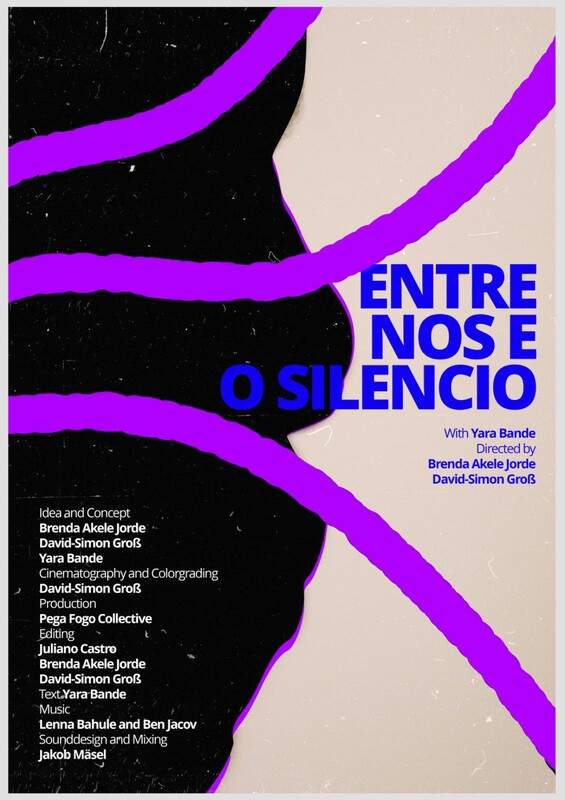
In a context where depression is often spiritualised or dismissed outright, Entre Nós e o Silêncio frames speech itself as an act of defiance, and vulnerability as a form of resistance, offering a rare, compassionate articulation of generational harm and the fragile courage it takes to interrupt it.
Entre Nós e o Silêncio premiered at Afrika Film Festival Köln (AFFK) in Cologne, screened at TSWA Film Festival, Abuja, and won Best Documentary at South African Indie Film Fest.
Read our review of Entre Nós e o Silêncio here.
Jimbi (Uganda)
Ugandan filmmaker Tusabe Ivan literalises guilt while metaphorising moral decay through folklore and cultural myth in the fantasy horror short, Jimbi. After a young man looks away from a sexual assault, he starts to develop a mysterious rash threatening to transform him into a mythical creature known as the Jimbi, forcing him to confront his guilt and the consequences of his inaction.

Jimbi screened at the FAME Shorts Film Festival 2025, Accra Indie Filmfest, and Abuja International Film Festival.
Read our review of Jimbi here.
Together Apart (Nigeria)
Built on a premise that promises violence but prioritises emotional stakes, Together Apart finds its tension in what is spoken and what has been avoided for years. Damilare Williams-Shires’ interesting debut uses the idea of two former contract killers on a final job as a container for something more fragile and vulnerable: a reckoning between two people who have mistaken proximity for safety and silence for self-control.

Produced as a student film, Together Apart premiered at an October 2024 gathering in Lagos and started its festival tour at Cardiff University’s 1st Annual Film Festival in December 2024. It screened at the Abuja International Film Festival 2025.
Read our review of Together Apart here.
Special Mentions
- Boomerang Atomic (France) – Dir. Rachid Bouchareb
- Le Grand Calao (France) – Dir. Zoé Cauwet
- Mango (United Kingdom/France) – Dir. Joan Iyiola
- Food for the Soul (United States) – Dir. Chisom Chieke
- Jazz Infernal (Canada) – Dir. Will Niava
Vivian Nneka Nwajiaku is a writer, film critic, TV lover, and occasional storyteller writing from Lagos. She has a master’s degree in law but spends most of her time watching, reading about and discussing films and TV shows. She’s particularly concerned about what art has to say about society’s relationship with women. Connect with her on X @Nneka_Viv
Joseph Jonathan is a historian who seeks to understand how film shapes our cultural identity as a people. He believes that history is more about the future than the past. When he’s not writing about film, you can catch him listening to music or discussing politics. He tweets @Chukwu2big
Frank Njugi, an award-winning Kenyan Writer, Culture journalist, and Critic, has written on the East African and African culture scene for platforms such as Debunk Media, Republic Journal, Sinema Focus, Culture Africa, Drummr Africa, The Elephant, Wakilisha Africa, The Moveee, Africa in Dialogue, Afrocritik, and others.