


At a time when digital culture often prioritises speed over substance, Afrocritik has remained committed to the belief that criticism, reflection, and context are essential parts of cultural development.
By Afrocritik’s Editorial Board
Five years ago, Afrocritik was founded on a simple but ambitious premise: that African stories deserved to be documented, celebrated, interrogated, and understood through perspectives rooted in the continent and its diaspora. At a time when conversations around African arts and culture were becoming increasingly global, there remained a need for a platform that could engage these conversations with rigour, context, and critical depth.
Since then, the media landscape has shifted repeatedly. New platforms have emerged. Audiences have changed their habits. The pace of cultural production has accelerated. Yet, through these changes, Afrocritik has remained committed to its founding vision: projecting Africa while contributing meaningfully to the conversations that shape how African culture is understood, both within the continent and beyond it.
When co-founders Samson Jikeme and Owanate Max-Harry conceived Afrocritik in 2021, the vision was to conscientiously explore the length of African and Black culture and to stir up conversations about people of colour globally. What has emerged, five years later, is something that exceeds even that ambition. Afrocritik has become, in the most deliberate sense, an archive; a living, growing repository of African cultural thought that generations of critics, artists, scholars, and curious minds will return to long after the specific cultural moments it documents have passed.
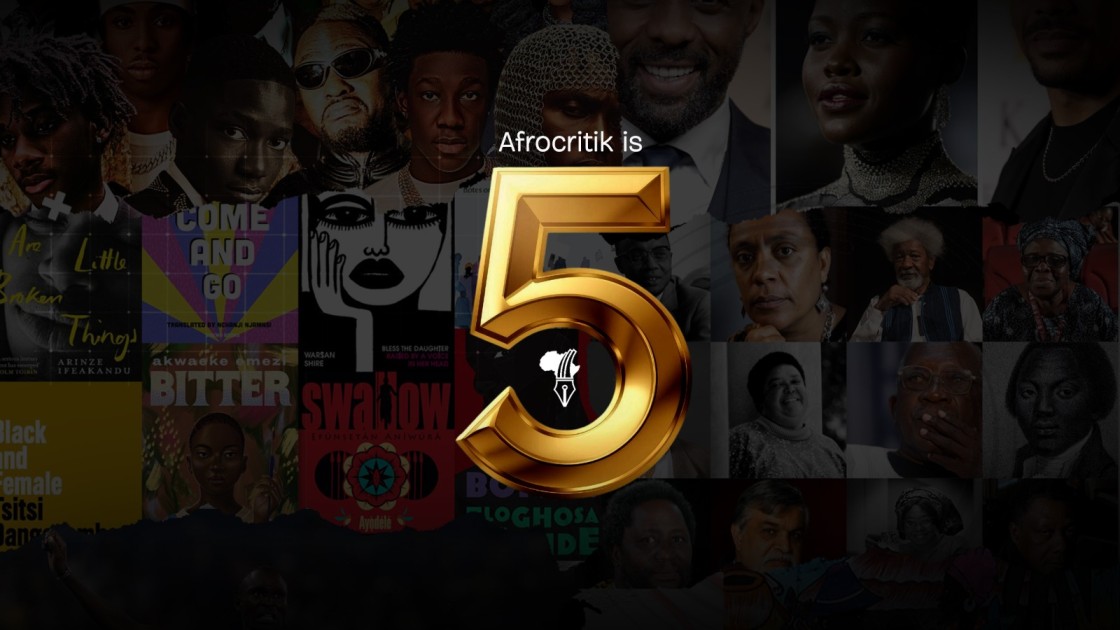
As Afrocritik marks its fifth anniversary, this milestone offers an opportunity not only to celebrate longevity but also to reflect on growth. More importantly, it invites a consideration of what the platform has become. What began as a publication dedicated to African cultural criticism has gradually evolved into something larger: an institution committed to documenting, preserving, and contributing to African cultural discourse. In many ways, this distinction matters.
A publication publishes stories. An institution helps shape the ecosystem within which those stories are produced, discussed, archived, and remembered. Over the past five years, Afrocritik has sought to do both. From its coverage of music, film, literature, sports, and fashion, to its explainers, interviews, essays, and cultural analyses, the platform has consistently engaged African creativity with seriousness and nuance. At a time when digital culture often prioritises speed over substance, Afrocritik has remained committed to the belief that criticism, reflection, and context are essential parts of cultural development. This commitment has increasingly found expression beyond individual articles.
In recent years, Afrocritik has expanded its role within the broader cultural landscape through initiatives designed not only to document culture but also to support the conversations surrounding it. The Afrocritik Prize for Criticism, launched to encourage critical engagement with African literature, reflects the platform’s investment in nurturing thoughtful criticism and supporting emerging voices. Similarly, initiatives such as the annual Notable Essay list, expanded end-of-year rankings across music, film, sports and literature, and the continued growth of “Afrocritik Spaces” and the Newsletter have helped create avenues for discovery, engagement, and cultural exchange.
Taken together, these initiatives are more than editorial projects. They represent an evolving commitment to institution-building: creating structures that encourage critical engagement with African creativity while contributing to the preservation of cultural memory. This past year, in particular, offered perhaps the clearest indication yet of that evolution.
One of Afrocritik’s most significant undertakings was the publication of the inaugural edition of The Afrocritik Report, a project designed to document, analyse, and contextualise developments across Africa’s creative industries. More than a retrospective account of cultural happenings, the Report is an annual cultural and intellectual record, reflecting a broader commitment to knowledge production and documentation. In an era where cultural moments often disappear as quickly as they emerge, the importance of creating records that capture trends, achievements, challenges, and transformations cannot be overstated.
The Report embodies a fundamental belief that documentation is itself a form of cultural stewardship. For African creative industries to grow, there must exist not only the artists and practitioners producing remarkable work but also the critics, journalists, researchers, and institutions willing to record, analyse, and preserve those developments for future generations.
This same commitment to participating in broader cultural conversations was reflected in Afrocritik’s coverage of the 2026 Cannes Film Festival. For the first time, Afrocritik had a physical presence at the world’s most prestigious film festival, providing on-the-ground coverage of a global event that continues to shape conversations around cinema and storytelling. Beyond the significance of attending Cannes itself, this milestone represented something larger: the increasing visibility of African critical voices within international cultural spaces.
African films, artists, and stories continue to command greater attention globally. Equally important is the presence of African journalists, critics, and publications participating in the conversations that surround those works. Afrocritik’s presence at Cannes reflects the growing recognition that African perspectives belong not at the margins of global cultural discourse but at its centre.
Taken together, these developments point toward an important reality: the work of cultural criticism extends beyond reviewing books, films, albums, or exhibitions. It involves creating archives, fostering conversations, nurturing communities, preserving histories, and helping societies better understand themselves through the art they produce.
This responsibility feels particularly urgent in the African context. Across the continent, artists continue to push boundaries, challenge conventions, and create work that speaks to both local realities and global audiences. Yet, the task of documenting these developments remains ongoing. Cultural memory does not preserve itself. It requires institutions willing to undertake the often-unseen labour of recording, analysing, and contextualising the moments that shape a generation.
For five years, Afrocritik has contributed to that work. None of this would have been possible without the writers, editors, contributors, readers, critics, artists, collaborators, and supporters who have helped shape the platform’s journey. Every review published, every essay commissioned, every interview conducted, every conversation hosted, and every story documented has been part of a larger collective effort to build a space where African creativity can be engaged with seriousness, curiosity, and care.
Members of the Afrocritik editorial team reflect on five years of our work:
“It is incredible what you can accomplish in 5 years, having the very best of minds committed to excellence in journalism, criticism and upholding standards across the continent in general.
As Afrocritik takes a deliberate glance at its journey so far, we are poised to leap forward with even more certainty that the future of our continent largely depends on building cultural institutions which mirror the very core of African exceptionalism.
Cheers to an amazing future.”
Owanate Max-Harry
Co-Founder, Afrocritik.
“Afrocritik has always believed that criticism is an act of love; love for the work and the creators, and love for our readers that deserves to understand both. That belief has guided every pitch we have accepted and every conversation we have had with writers who have trusted us with their ideas. We have given serious attention to music, film, literature, sports, and visual art at a time when the world was finally catching up to what we already knew: that African creative expression is a movement, not a moment.
To the writers and critics who have shaped this publication, thank you. To our readers, who have shared and pushed us to be better, this is yours too.
Five years is a milestone. But honestly, it feels like the beginning. The conversations we want to have are bigger than ever. The stories waiting to be told are still waiting. The writers who need a home are still looking for one.
We are not done.”
Emmanuel “Waziri” Okoro
Managing Editor, Afrocritik.


“It has been both humbling and rewarding to grow into a leading voice in such a short period of documenting, celebrating, and contextualising African cinema for the benefit of the continent, the diaspora, and the global audience. We have established our presence on the international festival circuit, covering African films both home and abroad, from the Cannes Film Festival, the Berlin International Film Festival, and the Sundance Film Festival, to the Africa International Film Festival, the S16 Film Festival, and the African Diaspora International Film Festival.
We also take great pride in the work we do in platforming less visible but equally important formats and categories of film, through projects such as the Afrocritik Documentary Spotlight and our special interest in independent film. African cinema is evolving and travelling while still speaking to the audience at home, and it is truly an honour to be at the forefront of documenting that journey and stirring conversations in that regard.”
Vivian Nneka Nwajiaku
Editor and Head of Film Department, Afrocritik.
“When Afrocritik started, it was clear about its desire to capture the African cultural landscape in its entirety. One of the most successful nodes of its coverage has been literature. The work of covering and critically engaging a field like literature is not an easy task, but Afrocritik has shown that it understands what beginning and extending quality discourses entails.
Presently, in a world where critical engagements with books and intellectual products have become susceptible to the philistinism of capitalism’s great, ruthless axe, Afrocritik has chosen the integrity of organically building its own cultural capital and maintaining intellectual engagement with literature and the arts—which carry the weight of a generation’s cultural rhetoric. At the literature department here, we’re pledging to continue the work of rigorous documentation, archiving, and positioning of our literary culture.”
Chimezie Chika
Head of Literature Department, Afrocritik.
Five years is a significant milestone, but it is also a reminder that the work remains unfinished. The conversations continue. The stories continue. The culture continues to evolve. And as Afrocritik enters its next chapter, the core of its commitment remains unchanged: to document, critique, celebrate, and elevate African and Black creativity while contributing meaningfully to the cultural conversations that shape our present and future.
If the first five years were about establishing a voice, the years ahead may well be about strengthening the structures that ensure that voice continues to resonate across Africa and the world.
The journey continues.