


If the original plan was based on adequate research and consultation, CAF should be able to explain why a review is now necessary.
By Tuka Letura
It is not unusual for decisions made at the executive level to be reviewed. Such decisions often follow a period of reflection, research and reassessment of what works and what does not. Football is no different. The question, however, is whether the decision to change direction is informed by new evidence or exposes flaws in the thinking behind the original decision.
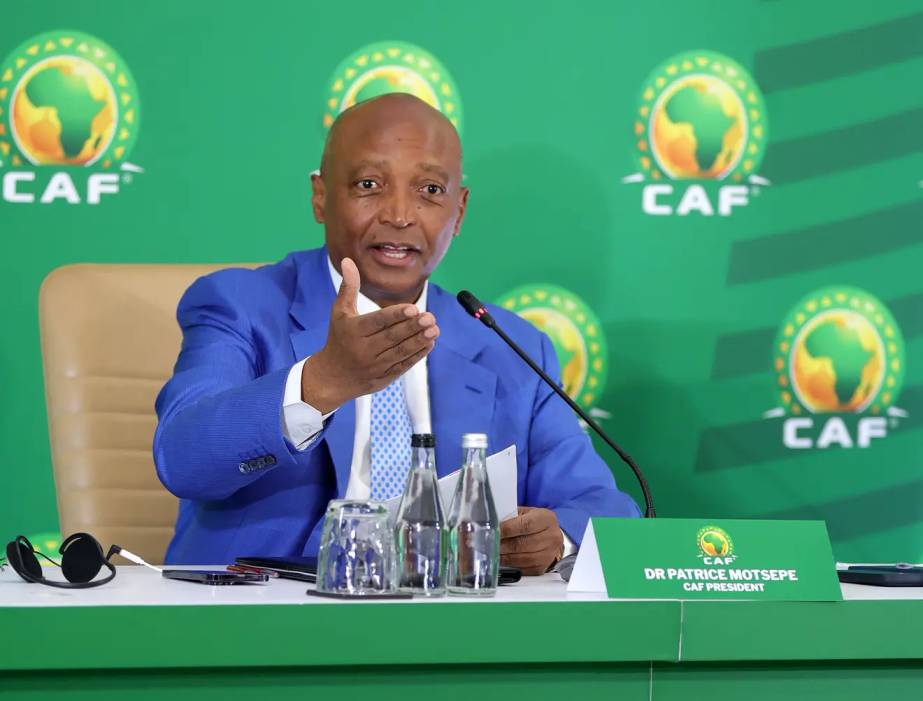
On Friday, 9 October, the Confederation of African Football (CAF), led by Patrice Motsepe, announced that it was reviewing its decision to move the Africa Cup of Nations (AFCON) from its traditional two-year cycle to a four-year format. In December 2025, CAF announced that it expected the change to take effect after the 2028 edition. Less than ten months later, CAF is reviewing that position, although it has not made a final decision to return to the biennial format at the time of filing this report.
The review itself is not the problem. Football’s governing bodies must be willing to reassess their decisions when circumstances change or when evidence suggests that an existing policy is no longer workable. What deserves scrutiny is the thinking behind CAF’s original decision, what has prompted the review, and whether either position reflects a coherent long-term vision for African football.
Why did CAF decide to move AFCON to a four-year cycle in the first place, and what has changed since December 2025? More importantly, what does this tell us about the Confederation’s ability to plan for the future of African football?
In my previous article for Afrocritik, I examined how African nations and CAF were failing to maximise the expanded international window for competitive football. The three-week window offered the opportunity to accommodate as many as four matches, yet African teams only used two of their fixtures for AFCON qualification, leaving the rest for friendly matches.
The concern was not simply that teams played too few competitive matches. It was that an expanded window offered an opportunity to improve the quality of international football, but African football was not making the most of it. Taking advantage of such opportunities requires coordination, preparation and a clear understanding of what the continent wants to achieve.
It raises a related question about CAF’s approach to planning. If the Confederation considered a four-year cycle necessary less than a year ago, it should be able to explain the reasoning behind that decision and what has since prompted it to reconsider. Has it reassessed the financial implications? Have member associations raised concerns? Has the Confederation identified problems with the proposed arrangement that were not adequately considered before the announcement?
These questions matter because changing the frequency of AFCON is not a minor administrative adjustment. It has implications for national teams, host nations, sponsors, broadcasters and the financial stability of African football. A decision of this magnitude requires more than an announcement. It requires a clear rationale, adequate consultation and a plan for implementation. How certain can we be that we won’t ultimately reverse the change in a few months?
Why did CAF want a four-year AFCON cycle?
There were reasons to consider changing the tournament’s format. The international football calendar has become increasingly crowded, with European club competitions expanding and clubs frequently losing important players during AFCON. The tournament’s scheduling has also created logistical difficulties for host nations, particularly where infrastructure, venue readiness and preparations have fallen short.
AFCON is also one of the Confederation’s most important commercial assets. Reducing its frequency could affect broadcasting income, sponsorship arrangements and the revenue available to support football development across the continent. For national teams, a longer gap between tournaments would mean fewer opportunities to compete for continental honours. For supporters, it would mean waiting longer for one of African football’s defining events.
CAF therefore had to weigh the benefits of a four-year cycle against its sporting and financial consequences. If the Confederation concluded that the existing format was no longer sustainable, it needed to explain how the proposed arrangement would address the problems without creating others.
The proposed African Nations League, which was also announced by Motsepe in December 2025, was intended to provide another platform for international competition within the revised calendar. But if CAF is now reconsidering the four-year AFCON cycle, questions also arise about the future of that competition and the broader structure it was supposed to support.
This is where the review takes on greater importance than debating whether AFCON should occur every two or four years. It raises questions about how CAF evaluates its options, anticipates the consequences of its decisions and ensures that individual changes contribute to a wider strategy.
If the original plan was based on adequate research and consultation, CAF should be able to explain why a review is now necessary. If new information has emerged, it should identify what has changed. Without that explanation, it is difficult to assess whether the review reflects a sensible reassessment or a weakness in the process that produced the original decision.
Hosting remains a question
The challenges associated with hosting major competitions provide another reason to examine CAF’s decision-making.
African football has repeatedly faced difficulties with tournament preparations, including securing suitable venues, meeting infrastructure requirements and delivering competitions within agreed timelines. Morocco has consequently become an important host for CAF competitions, including women’s football tournaments, on multiple occasions.
The 2027 AFCON, scheduled to be hosted jointly by Kenya, Tanzania and Uganda, also brings questions about preparations and venue readiness into the discussion. These challenges make it reasonable to ask whether CAF has adequately addressed the practical difficulties associated with staging its flagship competition more frequently.
Could the move to a four-year cycle have been intended, at least partly, to ease these pressures? If so, has CAF since identified a workable solution that would make a return to the biennial format sustainable?
These are legitimate questions, but the answers should come from CAF rather than speculation. The Confederation has not established that hosting difficulties are the reason for its review, and it would be premature to present them as such.
What CAF must demonstrate is that it has considered the realities of hosting AFCON, whether the tournament is held every two or four years. A change in frequency will not, by itself, resolve problems with infrastructure, preparation or the capacity of host nations to deliver the competition.
If the biennial format is retained, the Confederation must show that it has a credible plan to manage these challenges. If the four-year cycle is restored, it must explain how the longer interval would improve the tournament and benefit African football.
Either way, the decision should be based on a clear assessment of the available options rather than a change in direction without a convincing explanation.
How much influence does FIFA have?
The review also raises questions about the relationship between CAF and FIFA.
When Motsepe announced the four-year cycle in December 2025, FIFA president Gianni Infantino and the world governing body’s general secretary, Mattias Grafström, were involved in discussions surrounding the change. The proposal also came amid wider conversations about the international football calendar and the need to accommodate the interests of clubs, national teams and governing bodies.
That context makes it reasonable to examine FIFA’s influence on CAF’s decisions. It does not, however, establish that FIFA dictated the original decision or is responsible for the current review.
FIFA has considerable influence over the international game through its calendar, competitions and relationships with national associations and confederations. CAF cannot ignore those realities. African players compete across different leagues, and the Confederation must negotiate with other stakeholders to protect its competitions and the interests of its member associations.
However, there is a difference between cooperating with FIFA and allowing the priorities of the wider football calendar to determine the direction of African football.
If CAF believed a four-year AFCON cycle was necessary to accommodate the international calendar, it needed to explain why that arrangement was preferable for African national teams, supporters, broadcasters and member associations. If it is now reconsidering the format, it must explain what has changed in its assessment.


The question is not whether CAF should work with FIFA. It is whether CAF can do so without compromising its responsibility to African football.
Institutional independence is not demonstrated simply by a president insisting that his organisation makes its own decisions. It is demonstrated by the quality of those decisions, the interests they serve and the reasoning offered to justify them.
Motsepe and CAF must therefore provide more than assurances that the Confederation remains independent. They must show that African football’s needs are central to the decisions they make, even when those decisions intersect with the commercial and sporting priorities of the global game.
Motsepe’s record goes beyond revenue
Motsepe has not necessarily been the worst president CAF could have had. His administration has placed considerable emphasis on increasing the Confederation’s revenue and improving its commercial standing. These are important objectives for an organisation that needs financial resources to develop the game across the continent.
But football administration stretches beyond revenue generation. It requires sound planning, effective competition management, investment in development and the ability to make decisions that remain workable beyond the immediate circumstances in which they are announced.

Financial growth is important, but it cannot be the only measure of progress. CAF must also demonstrate that it can deliver its competitions reliably, maximise the opportunities available to its national teams and establish a clear direction for the development of African football.
The international-window debate and the AFCON review raise questions about these responsibilities. Neither issue, on its own, proves that CAF lacks a long-term strategy. Together, however, they make it necessary to examine how the Confederation turns its decisions into workable plans.
The concern is that CAF has yet to provide a sufficiently clear explanation of how these decisions fit into a broader vision for the continent’s football. Without that clarity, even decisions that may ultimately prove beneficial risk appearing reactive rather than strategic.
What does CAF want African football to become?
Ultimately, deciding whether to hold AFCON every two years or every four is not the main question. Adequate planning can support either format, as both have their pros and cons.
The more important question is whether CAF understands what it wants to achieve and can explain how its decisions will help it get there.
If the Confederation believes the biennial format remains the best option, it must explain why the concerns that informed the proposed change no longer justify moving away from it. If it concludes that the four-year cycle is preferable, it must demonstrate how the benefits outweigh the sporting and financial costs.
The review also offers CAF an opportunity to explain the future of the proposed African Nations League, its approach to hosting competitions and the place of AFCON within the wider international calendar. These issues deserve to be considered together rather than as separate administrative questions. They form connected parts of the same challenge: developing a sustainable structure for African football.
For now, the review remains a review. CAF has not confirmed a return to the biennial format, and it would be premature to treat the reconsideration as a settled reversal.
Until CAF provides that clarity, questions about its long-term vision under Motsepe will remain. The issue is not that the Confederation may change its mind. It is whether it has a sufficiently clear vision to know when, why and how it should.
Tuka Letura is an experienced sports writer with over five years of experience in the craft. He uses data and statistics to provide analysis and commentary. From regional to worldwide competitions, he has covered a wide range of sports-related events and topics. He is devoted to sharing his enthusiasm for sports with his audience and engaging them with interesting anecdotes and viewpoints.